
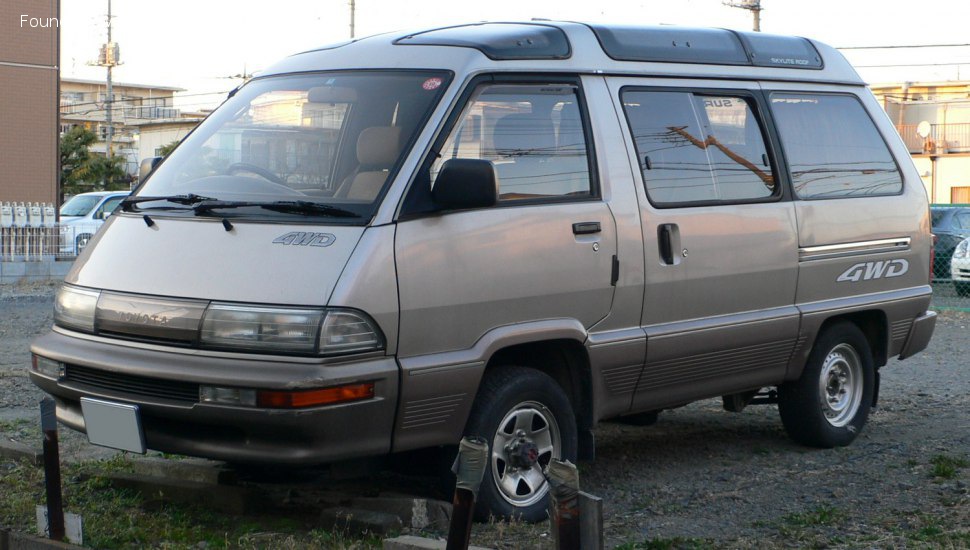
The Toyota MasterAce 2.0 i (97 hp) was a variant of the second-generation MasterAce, produced between 1988 and 1991. This model occupied a crucial position within the MasterAce lineup as a more accessible, economically-focused option, primarily aimed at commercial users and families seeking a practical and reliable minivan. The second-generation MasterAce (designated as the XM20 series) represented a significant shift from its predecessor, offering a more modern design, improved interior space, and a wider range of engine options. The 2.0 i, with its 97 horsepower output, served as the entry point to the range, offering a balance between affordability and functionality. It was positioned below the more powerful, often diesel-powered, variants geared towards heavier-duty commercial applications.
Toyota MasterAce 2.0 i: Overview and Positioning
The Toyota MasterAce, throughout its various generations, has been a mainstay of the Asian automotive market, particularly in countries like Japan, Indonesia, and the Philippines. The second-generation model, launched in 1988, was a significant step forward in terms of design and engineering. The 2.0 i variant, powered by the 1RZ-E engine, was specifically tailored for buyers who prioritized fuel efficiency and ease of use over outright performance. It was commonly used as a passenger van, a delivery vehicle, or even converted into small mobile businesses. The MasterAce competed with other Japanese vans of the era, such as the Mitsubishi Delica, Nissan Serena, and Honda Odyssey, though the MasterAce often held an advantage in terms of perceived reliability and durability.
Powertrain & Engine Architecture
The heart of the MasterAce 2.0 i is the 1RZ-E inline four-cylinder gasoline engine. This 1998cc (2.0-liter) engine is a naturally aspirated unit, producing 97 horsepower (72 kW) at 4,800 rpm and 136 lb-ft (184 Nm) of torque at 3,600 rpm. The 1RZ-E is known for its robust construction and relatively simple design, contributing to its reputation for longevity. It features a single overhead camshaft (SOHC) valvetrain with two valves per cylinder. Fuel delivery is managed by a Toyota electronic fuel injection (EFI) system, which optimizes fuel consumption and emissions. The engine block is cast iron, providing excellent durability, while the cylinder head is aluminum alloy, helping to reduce weight.
The transmission paired with the 2.0 i engine was typically a four-speed automatic transmission. This automatic was chosen for its ease of use, particularly in urban driving conditions, and its appeal to a broader range of drivers. While not known for its sporty performance, the transmission was reliable and well-suited to the engine’s torque characteristics. The gear ratios were optimized for fuel economy and smooth acceleration, rather than rapid acceleration. Manual transmission options were available in other MasterAce variants, but the automatic was the predominant choice for the 2.0 i, reflecting its target market.
Driving Characteristics
The driving experience in the MasterAce 2.0 i is best described as practical and comfortable. The 97 horsepower engine provides adequate power for everyday driving, but it’s not designed for spirited acceleration. Acceleration from 0 to 60 mph is estimated to be around 14-16 seconds, depending on the load and road conditions. The automatic transmission contributes to a smooth and predictable driving experience, although it can feel somewhat sluggish when attempting to overtake or climb steep hills. The emphasis is on usability and fuel efficiency. Compared to the diesel-powered MasterAce variants, the 2.0 i offers a quieter and smoother ride, but sacrifices the low-end torque and hauling capacity of the diesel engines. Compared to a manual transmission version, the automatic reduces driver workload but also diminishes some responsiveness.
Equipment & Trim Levels
The MasterAce 2.0 i was typically equipped with a relatively basic level of standard features, reflecting its positioning as an affordable and functional vehicle. Standard equipment generally included cloth upholstery, a basic AM/FM radio, and manual windows and door locks. Air conditioning was often an optional extra, as were power windows and central locking. The dashboard layout was simple and functional, prioritizing practicality over aesthetics. Interior space was a key selling point, with seating configurations varying depending on the specific model – ranging from seven to ten passengers. Trim levels were often differentiated by the addition of optional features, such as upgraded audio systems, improved interior trim, and exterior enhancements like alloy wheels (though these were rare on the base 2.0 i model).
Chassis & Braking
The MasterAce 2.0 i utilizes a body-on-frame construction, providing a robust and durable chassis. The suspension system consists of independent front suspension with MacPherson struts and a rear suspension with leaf springs. This setup prioritizes load-carrying capacity and ride comfort over sporty handling. The rear leaf springs are particularly well-suited to carrying heavy loads, making the MasterAce a popular choice for commercial applications. The braking system typically features disc brakes on the front wheels and drum brakes on the rear wheels. Power steering was often included as standard equipment, making maneuvering the large van easier, especially in tight spaces. Stabilizer bars were often omitted on the base models to keep costs down, impacting handling during cornering.
Market Reception & Comparison
The Toyota MasterAce 2.0 i received generally positive reviews for its reliability, durability, and practicality. Critics praised its spacious interior, comfortable ride, and fuel efficiency. However, it was also noted that the engine lacked significant power, and the automatic transmission could feel sluggish. Compared to other vans in its class, the MasterAce 2.0 i offered a compelling value proposition, particularly for buyers who prioritized reliability and low running costs. Fuel economy was a strong point, averaging around 20-25 mpg in mixed driving conditions. The diesel variants of the MasterAce were favored by those needing to haul heavier loads or cover long distances, while the 2.0 i appealed to those seeking a more comfortable and refined driving experience for shorter trips and urban use. The MasterAce’s reputation for longevity often translated to higher resale values compared to some of its competitors.
Technical Specifications
| Engine Type | 1RZ-E Inline-4 Gasoline |
| Engine Displacement | 1,998 cc (2.0 L) |
| Maximum Power | 97 hp (72 kW) @ 4,800 rpm |
| Maximum Torque | 136 lb-ft (184 Nm) @ 3,600 rpm |
| Fuel System | Electronic Fuel Injection (EFI) |
| Valvetrain | SOHC, 2 valves per cylinder |
| Transmission | 4-speed Automatic |
| Drivetrain | Rear-Wheel Drive |
| Brakes (Front) | Disc |
| Brakes (Rear) | Drum |
| Suspension (Front) | MacPherson Strut |
| Suspension (Rear) | Leaf Springs |
| Curb Weight | Approximately 2,800 – 3,200 lbs (depending on configuration) |
| Fuel Economy (Estimated) | 20-25 mpg |
Legacy
The Toyota MasterAce 2.0 i (97 hp) has proven to be a remarkably durable and reliable vehicle. Even today, many examples are still in service, testament to the quality of Toyota engineering. The 1RZ-E engine is known for its ability to withstand high mileage with minimal maintenance. In the used car market, the MasterAce 2.0 i remains a popular choice for those seeking an affordable and dependable van. While parts availability may be limited in some regions, the simplicity of the engine and transmission makes it relatively easy to repair. The MasterAce 2.0 i represents a practical and enduring example of Toyota’s commitment to building reliable and functional vehicles, cementing its place as a beloved workhorse in many parts of the world.
