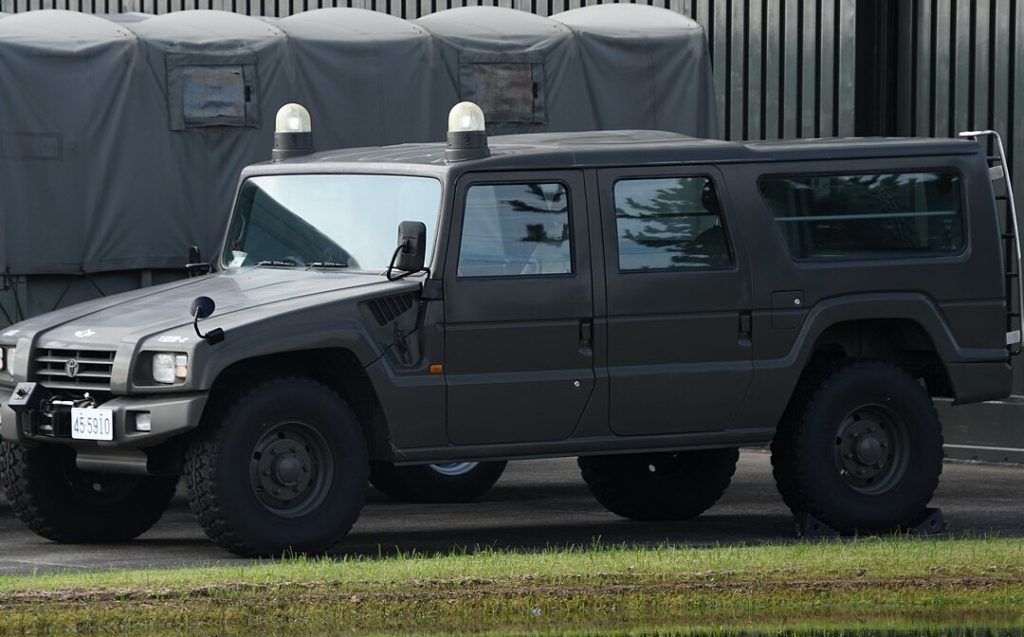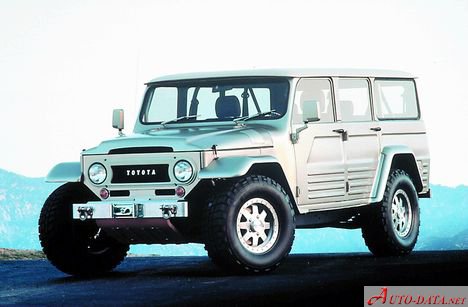
The Toyota Mega Cruiser (BXD20) was a unique, large-scale off-road vehicle produced by Toyota between 1995 and 2001. Designed primarily for utility and specialized applications – notably for the Japanese Self-Defense Forces – the Mega Cruiser was not intended for the general consumer market. It stands out for its imposing size, robust construction, and exceptional off-road capability. The 4.1 TD variant, equipped with a 4.1-liter turbocharged diesel engine and a four-speed automatic transmission, represents a significant configuration within the Mega Cruiser lineup, offering a balance of power and ease of operation for demanding tasks. This model was built on a heavy-duty chassis, prioritizing functionality over comfort or fuel efficiency.
Toyota Mega Cruiser 4.1 TD (BXD20): An Overview
The BXD20 Mega Cruiser emerged during a period where Toyota was exploring niche vehicle applications beyond traditional passenger cars and trucks. While the Land Cruiser series catered to recreational off-road enthusiasts, the Mega Cruiser was engineered for professional use, specifically for the Japan Self-Defense Forces (JSDF). Its design brief centered around providing a highly capable platform for reconnaissance, logistical support, and potentially even disaster relief operations. The 4.1 TD model, with its automatic transmission, was intended to broaden the vehicle’s usability by making it accessible to a wider range of operators, even those without extensive manual transmission experience. Production numbers were relatively low, contributing to its rarity today.
Powertrain & Engine Architecture
The heart of the Mega Cruiser 4.1 TD is its 4.1-liter (4104 cm3 or 250.44 cu. in.) inline four-cylinder diesel engine. This engine, designated as a turbocharged variant, produced 170 horsepower (Hp) at 3000 rpm and a substantial 422 Newton-meters (311.25 lb.-ft.) of torque at 1600 rpm. The engine employed a precombustion chamber injection system, a technology common in diesel engines of the era, designed to improve combustion efficiency and reduce emissions. The turbocharger significantly boosted power output, providing increased performance for the vehicle’s considerable weight. The engine’s robust construction and relatively low-stressed design contributed to its durability.
The engine is transversely mounted within the chassis, a configuration that aids in packaging and weight distribution. The four-speed automatic transmission was chosen for its ease of use and suitability for challenging terrain. While not offering the direct control of a manual gearbox, the automatic transmission simplified operation in difficult conditions, allowing the driver to focus on navigating obstacles. Specific details regarding the automatic transmission’s internal construction and gear ratios are limited due to the vehicle’s specialized nature and limited public documentation. However, it was designed to handle the engine’s high torque output and the vehicle’s substantial weight.
Driving Characteristics
The Mega Cruiser 4.1 TD’s driving experience is markedly different from that of a conventional passenger vehicle. Its immense weight (2900 kg or 6393.41 lbs. kerb weight) and large tires contribute to a deliberate, truck-like feel. The automatic transmission provides smooth, if not particularly quick, gear changes. The engine’s peak torque is available at a relatively low 1600 rpm, providing ample pulling power for off-road obstacles and steep inclines. However, acceleration is not a strong point; the vehicle’s weight-to-power ratio of 17.1 kg/Hp reflects its focus on capability rather than speed.
The 4×4 drivetrain, coupled with the vehicle’s high ground clearance, allows it to traverse extremely challenging terrain. The Mega Cruiser excels in situations where other vehicles would struggle, such as deep mud, rocky trails, and steep slopes. The power steering, utilizing a hydraulic system, assists in maneuvering the large vehicle, but requires significant effort at low speeds. Compared to a hypothetical Mega Cruiser with a manual transmission, the 4.1 TD automatic would offer greater ease of use for less experienced drivers, but potentially sacrifice some degree of control and responsiveness in demanding off-road situations.
Equipment & Trim Levels
Given its intended purpose, the Mega Cruiser 4.1 TD was not offered with a wide range of trim levels or luxury features. The interior is functional and spartan, prioritizing durability and practicality over comfort. Standard equipment included seating for six occupants, a basic dashboard layout with essential gauges, and a robust heating and ventilation system. The interior surfaces were typically covered in durable, easy-to-clean materials.
Optional extras were limited, but could include specialized communication equipment, additional lighting, and potentially winch systems for enhanced recovery capabilities. The vehicle’s focus was on providing a reliable and capable platform for its intended users, rather than offering a luxurious or feature-rich experience. The emphasis was on functionality and durability, reflecting its military and utility origins.
Chassis & Braking
The Mega Cruiser’s chassis is a heavy-duty ladder frame construction, designed to withstand extreme stresses and provide a stable platform for off-road operation. The suspension system utilizes coil springs at both the front and rear, providing a reasonable level of ride comfort despite the vehicle’s weight. The front and rear tracks measure 1795 mm (70.67 in.) and 1775 mm (69.88 in.) respectively, contributing to stability.
The braking system features ventilated discs at the front and solid discs at the rear, providing adequate stopping power for the vehicle’s weight. An Anti-lock Braking System (ABS) was included as standard equipment, enhancing safety and control during braking on slippery surfaces. The large 37/12.5 R17.5 tires provide significant grip and contribute to the vehicle’s off-road capability.
Market Reception & Comparison
The Toyota Mega Cruiser 4.1 TD did not receive widespread critical acclaim in the traditional automotive press, as it was not marketed to the general public. Reviews were primarily focused on its capabilities within its intended applications. It was praised for its exceptional off-road performance, robust construction, and ability to traverse extremely challenging terrain. However, its size, weight, and lack of refinement were also noted.
Compared to other trims within the Mega Cruiser lineup (if any existed beyond variations in equipment for the JSDF), the 4.1 TD automatic offered a balance of power and ease of use. It likely represented a compromise between the potentially more responsive experience of a manual transmission and the convenience of an automatic. Fuel economy was not a primary consideration, and the vehicle’s diesel engine, while durable, was not known for its efficiency.
Technical Specifications
| Brand | Toyota |
| Model | Mega Cruiser |
| Generation | Mega Cruiser (BXD20) |
| Type (Engine) | 4.1 TD (170 Hp) 4WD |
| Start of production | 1995 year |
| End of production | 2001 year |
| Powertrain Architecture | Internal Combustion engine |
| Body type | Off-road vehicle |
| Seats | 6 |
| Doors | 5 |
| Fuel Type | Diesel |
| Weight-to-power ratio | 17.1 kg/Hp |
| Weight-to-torque ratio | 6.9 kg/Nm |
| Power | 170 Hp @ 3000 rpm |
| Torque | 422 Nm @ 1600 rpm / 311.25 lb.-ft. @ 1600 rpm |
| Engine layout | Front, Transverse |
| Engine displacement | 4104 cm3 / 250.44 cu. in. |
| Number of cylinders | 4 |
| Engine configuration | Inline |
| Cylinder Bore | 108 mm / 4.25 in. |
| Piston Stroke | 112 mm / 4.41 in. |
| Compression ratio | 18.4:1 |
| Number of valves per cylinder | 2 |
| Fuel injection system | Precombustion chamber injection |
| Engine aspiration | Turbocharger |
| Kerb Weight | 2900 kg / 6393.41 lbs |
| Max. weight | 3830 kg / 8443.7 lbs |
| Max load | 930 kg / 2050.3 lbs |
| Fuel tank capacity | 108 l / 28.53 US gal | 23.76 UK gal |
| Length | 5090 mm / 200.39 in |
| Width | 2170 mm / 85.43 in |
| Height | 2075 mm / 81.69 in |
| Wheelbase | 3395 mm / 133.66 in |
| Front track | 1795 mm / 70.67 in |
| Rear track | 1775 mm / 69.88 in |
| Drive wheel | All wheel drive (4×4) |
| Number of gears and type of gearbox | 4 gears, automatic transmission |
| Front suspension | Coil spring |
| Rear suspension | Coil spring |
| Front brakes | Ventilated discs |
| Rear brakes | Disc |
| Assisting systems | ABS (Anti-lock braking system) |
| Power steering | Hydraulic Steering |
| Tires size | 37/12.5 R17.5 |
Legacy
The Toyota Mega Cruiser 4.1 TD remains a rare and sought-after vehicle among collectors and enthusiasts. Its limited production run and unique design contribute to its desirability. While its age and specialized nature mean that maintenance can be challenging, the robust construction of the engine and drivetrain generally ensures good long-term reliability. In the used car market, prices for well-maintained examples can be substantial, reflecting the vehicle’s rarity and unique appeal. The Mega Cruiser stands as a testament to Toyota’s engineering capabilities and its willingness to explore unconventional vehicle designs for specialized applications.