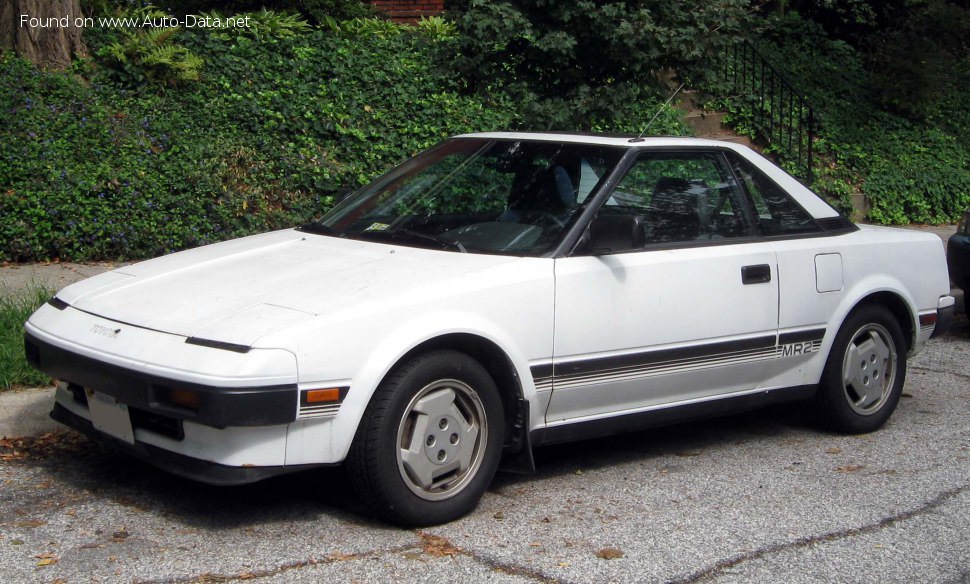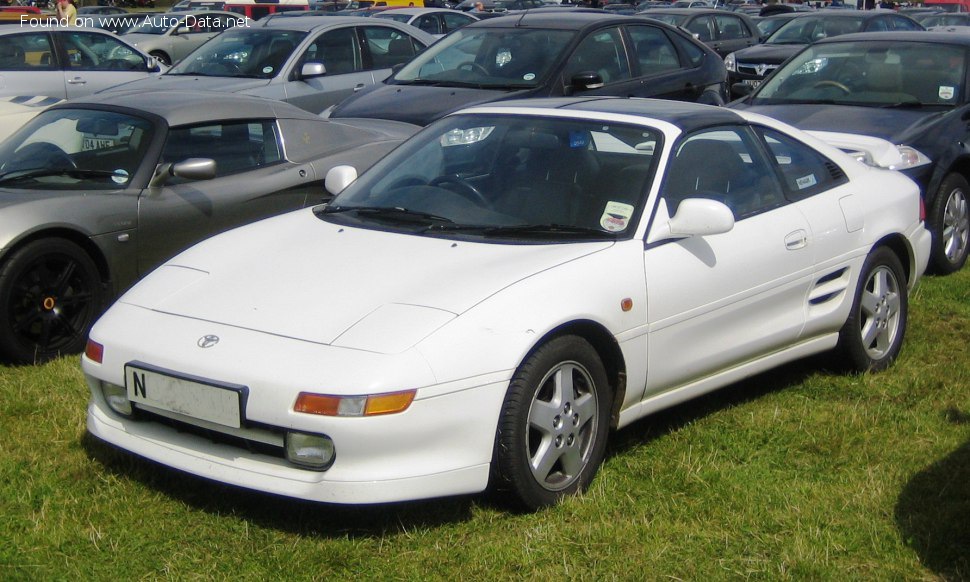
The Toyota MR2 (W20), produced between 1989 and 1999, represented a significant evolution of Toyota’s mid-engine sports car. This second generation, internally designated the W20, moved away from the pop-up headlights and more angular styling of the first generation (AW11) towards a smoother, more contemporary design. The 2.0-liter 16V variant, producing 175 horsepower, occupied a key position in the MR2 W20 lineup, offering a balance between performance and affordability. It served as the primary offering for much of the production run, bridging the gap between the base 1.6-liter models (available in some markets) and the later, more powerful supercharged versions.
Toyota MR2 (W20) 2.0 16V: An Overview
The MR2 W20 was built on a dedicated rear-wheel-drive platform, a rarity for Japanese sports cars of the era. This commitment to a focused driving experience, combined with its mid-engine layout, provided exceptional handling characteristics. The 2.0-liter 16V model was particularly popular due to its accessible power delivery and relatively straightforward maintenance requirements. It was marketed towards driving enthusiasts seeking a pure sports car experience without the complexities or higher price tag of more exotic alternatives.
Powertrain & Engine Architecture
At the heart of the MR2 2.0 16V lay the 3S-GE engine. This naturally aspirated, 2.0-liter (1998 cc) inline-four cylinder engine was a cornerstone of Toyota’s performance offerings in the late 1980s and 1990s. The ‘GE’ designation signified Toyota’s high-performance engine series. The 3S-GE featured a double overhead camshaft (DOHC) valvetrain with four valves per cylinder, contributing to its impressive breathing and high-revving nature. Fuel delivery was managed by a multi-port fuel injection system, ensuring precise fuel metering for optimal performance and efficiency.
The engine boasted a compression ratio of 10.3:1, and produced 175 hp at 7000 rpm and 186 Nm (137.19 lb-ft) of torque at 4800 rpm. The engine’s bore and stroke were both 86mm, resulting in a square configuration. The 3S-GE was known for its robust construction and ability to withstand modifications, making it a popular choice for tuners. The engine was transversely mounted in the rear of the vehicle, contributing to the car’s balanced weight distribution.
The standard transmission for the 2.0 16V MR2 was a 5-speed manual gearbox. While an automatic transmission was offered in some markets, it was less common and generally considered to detract from the car’s sporty character. The manual transmission provided precise shifts and allowed drivers to fully exploit the engine’s powerband.
Driving Characteristics
The MR2 2.0 16V offered a distinctly engaging driving experience. The mid-engine layout resulted in neutral handling characteristics, with minimal understeer or oversteer. The car felt remarkably balanced and responsive, particularly when cornering. The 175 hp engine provided ample power for spirited driving, and the relatively light weight of the vehicle (approximately 1260 kg or 2777.82 lbs) contributed to its quick acceleration. 0-60 mph times were consistently reported around 7.1-7.5 seconds, and the car could achieve a top speed of 225 km/h (139.81 mph).
Compared to the later supercharged MR2 variants, the 2.0 16V offered a more linear power delivery. While the supercharged models provided a significant boost in power, they also exhibited more pronounced turbo lag. The naturally aspirated 2.0 16V offered a more predictable and accessible powerband, making it easier to control and enjoy on a variety of roads. The 5-speed manual transmission featured relatively short gear ratios, allowing the engine to stay within its optimal power range.
Equipment & Trim Levels
The MR2 2.0 16V typically came equipped with a range of features designed to enhance the driving experience. Standard equipment included power steering, ventilated disc brakes on all four wheels, and an anti-lock braking system (ABS). The interior featured comfortable sport seats, a leather-wrapped steering wheel, and a comprehensive instrument cluster. Air conditioning was a common feature, though not always standard.
Optional extras included a sunroof (often a T-top configuration), upgraded audio systems, and alloy wheels. Interior upholstery was typically cloth, though leather options were available. The dashboard layout was driver-focused, with all essential controls within easy reach. The MR2 W20 was not a luxury car, but it offered a well-equipped and functional interior that complemented its sporty character.
Chassis & Braking
The MR2 W20 featured a fully independent suspension system, with wishbone suspension at the front and a spring strut setup at the rear. This suspension configuration provided excellent ride quality and handling precision. The car’s relatively low center of gravity further enhanced its stability and cornering ability. The steering system utilized a rack and pinion setup with hydraulic power assistance, providing precise and responsive steering feel.
The braking system consisted of ventilated disc brakes on all four wheels, providing ample stopping power. The ABS system helped to prevent wheel lockup during hard braking, enhancing safety and control. The car’s weight distribution, combined with its effective braking system, allowed for confident and controlled deceleration.
Market Reception & Comparison
The MR2 2.0 16V was generally well-received by automotive critics. It was praised for its handling, performance, and overall driving experience. Critics noted that the car offered a level of sophistication and refinement that was rare in Japanese sports cars of the era. Fuel economy was also a positive point, with combined fuel consumption averaging around 8.1 l/100 km (29 US mpg).
Compared to other trims in the MR2 W20 lineup, the 2.0 16V offered a compelling balance between performance and affordability. The supercharged models were more powerful but also more expensive and complex. The base 1.6-liter models were less expensive but lacked the performance of the 2.0-liter variant. In terms of reliability, the 3S-GE engine proved to be a durable and dependable unit, though regular maintenance was essential to prevent issues such as oil leaks and timing belt failure.
Technical Specifications
| Body Type | Targa, 2 Doors, 2 Seats |
| Fuel Economy (Combined) | 8.1 l/100 km (29 US mpg, 34.9 UK mpg, 12.3 km/l) |
| Fuel Type | Petrol (Gasoline) |
| Acceleration 0-100 km/h | 7.5 sec |
| Acceleration 0-62 mph | 7.5 sec |
| Acceleration 0-60 mph | 7.1 sec |
| Maximum Speed | 225 km/h (139.81 mph) |
| Weight-to-Power Ratio | 7.2 kg/Hp |
| Weight-to-Torque Ratio | 6.8 kg/Nm |
| Engine Power | 175 Hp @ 7000 rpm |
| Engine Torque | 186 Nm @ 4800 rpm (137.19 lb.-ft. @ 4800 rpm) |
| Engine Layout | Rear, Transverse |
| Engine Displacement | 1998 cm3 (121.93 cu. in.) |
| Number of Cylinders | 4 |
| Engine Configuration | Inline |
| Cylinder Bore | 86 mm (3.39 in.) |
| Piston Stroke | 86 mm (3.39 in.) |
| Compression Ratio | 10.3:1 |
| Number of Valves per Cylinder | 4 |
| Fuel Injection System | Multi-port manifold injection |
| Engine Aspiration | Naturally aspirated |
| Valvetrain | DOHC |
| Kerb Weight | 1260 kg (2777.82 lbs.) |
| Max. Weight | 1570 kg (3461.26 lbs.) |
| Max Load | 310 kg (683.43 lbs.) |
| Trunk (Boot) Space (Minimum) | 219 l (7.73 cu. ft.) |
| Fuel Tank Capacity | 55 l (14.53 US gal | 12.1 UK gal) |
| Length | 4180 mm (164.57 in.) |
| Width | 1700 mm (66.93 in.) |
| Height | 1235 mm (48.62 in.) |
| Wheelbase | 2400 mm (94.49 in.) |
| Front Track | 1470 mm (57.87 in.) |
| Rear Track | 1450 mm (57.09 in.) |
| Drivetrain | Rear wheel drive |
| Number of Gears | 5 |
| Gearbox Type | Manual Transmission |
Legacy
The MR2 2.0 16V remains a popular choice among driving enthusiasts today. Its combination of performance, handling, and affordability has made it a sought-after classic. While some maintenance issues are common with older examples, the 3S-GE engine is generally considered to be a reliable unit. Parts availability is good, and the car’s relatively simple mechanical design makes it accessible to home mechanics. The MR2 W20, and particularly the 2.0 16V variant, cemented the model’s reputation as a true driver’s car and a significant milestone in Toyota’s performance history.