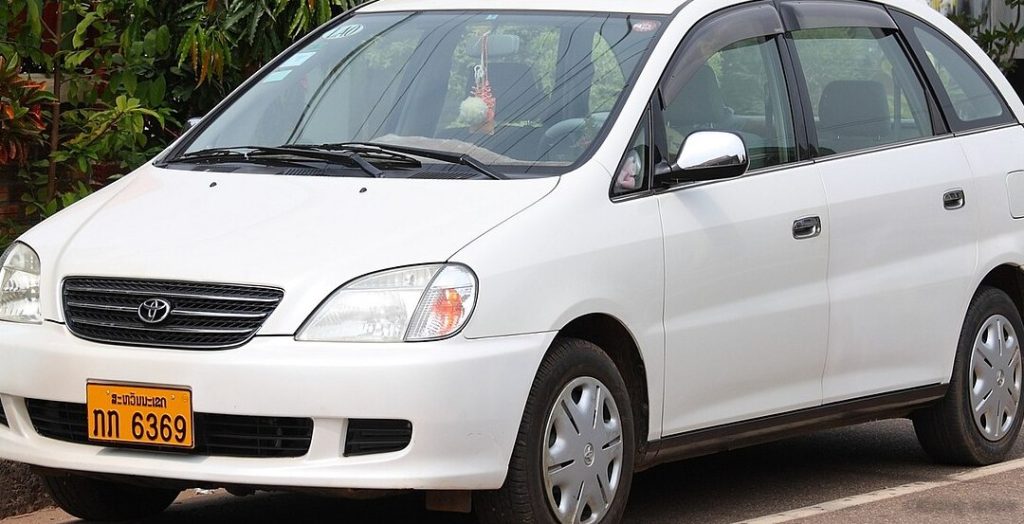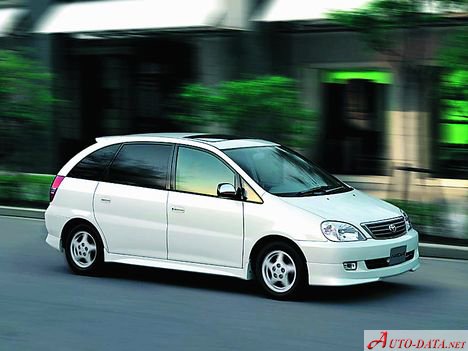
The Toyota Nadia (SXN10), specifically the 2.0 i (135 Hp) variant, represents a significant chapter in Toyota’s extensive lineup of multi-purpose vehicles (MPVs) designed primarily for the Japanese Domestic Market (JDM). Launched in 1998 and produced until 2003, the Nadia was a forward-thinking compact minivan that blended car-like driving dynamics with the practicality and spaciousness expected of a family-oriented utility vehicle. Positioned to cater to urban families seeking versatility without the bulk of larger minivans, the Nadia offered a compelling package of efficiency, reliability, and thoughtful design, embodying Toyota’s commitment to diverse mobility solutions.
Unlike many of Toyota’s globally recognized models, the Nadia remained largely exclusive to Japan, showcasing a distinct approach to meeting local consumer demands for compact, efficient, and highly functional vehicles. It carved out its niche as a five-door, five-seat minivan, designed for ease of maneuverability in congested city environments while providing ample interior volume for passengers and cargo. The SXN10 generation, powered by a capable 2.0-liter inline-four engine, cemented its reputation as a dependable and practical choice for its target demographic, further solidifying Toyota’s dominance in various segments of the JDM automotive landscape.
Powertrain & Engine Architecture
At the heart of the Toyota Nadia (SXN10) 2.0 i (135 Hp) was a meticulously engineered 2.0-liter (1998 cm³ or 121.93 cu. in.) inline-four gasoline engine. This powerplant was a testament to Toyota’s prowess in developing robust and efficient engines, featuring a Double Overhead Camshaft (DOHC) valvetrain with four valves per cylinder. The naturally aspirated engine utilized a multi-port manifold injection system to deliver optimal fuel mixture, contributing to both performance and fuel efficiency.
The engine produced a respectable 135 horsepower at 6000 rpm, providing adequate power for daily driving and highway cruising. Torque output stood at 133.5 lb.-ft. (181 Nm) at 4000 rpm, ensuring responsive acceleration and sufficient pulling power, particularly useful for a vehicle designed to carry passengers and cargo. With a compression ratio of 10:1, the engine was tuned for a balance of power and economy, running on standard petrol (gasoline). The engine code for this variant is typically designated as the 3S-FE, a well-established Toyota inline-four known for its durability.
Power was transmitted to the front wheels via a smooth-shifting 4-speed automatic transmission, emphasizing ease of use and comfort, which were critical attributes for its target market. This transmission, often the Aisin-Warner TF-60E, was chosen for its reliability and smooth operation, prioritizing a comfortable driving experience over outright performance. The gear ratios were optimized for fuel efficiency and everyday drivability, rather than aggressive acceleration. First gear was relatively short for quick take-offs, while the higher gears were geared for relaxed highway cruising.
Driving Characteristics
The Toyota Nadia 2.0 i with the automatic transmission offered a comfortable and predictable driving experience. Compared to manual transmission versions, the automatic naturally sacrificed some driver engagement and responsiveness. Acceleration from a standstill was adequate, but not particularly brisk. The 4-speed automatic, while smooth, lacked the gear ratios of more modern transmissions, resulting in slightly higher engine speeds at highway speeds. This could lead to a noticeable increase in engine noise during extended highway driving.
Compared to higher-output versions of the Nadia, such as those equipped with the 2.2-liter engine, the 2.0-liter automatic felt less powerful, especially when fully loaded with passengers and cargo. However, the 2.0-liter engine’s lighter weight contributed to slightly better fuel economy and improved handling in urban environments. The front-wheel-drive configuration provided predictable handling characteristics, but lacked the all-weather capability of an all-wheel-drive system. Overall, the driving experience was geared towards comfort and convenience, making it well-suited for daily commutes and family outings.
Equipment & Trim Levels
The Toyota Nadia 2.0 i typically came equipped with a reasonable level of standard features, reflecting its position as a mid-range offering within the Nadia lineup. Standard equipment generally included power windows, power door locks, air conditioning, and a basic audio system. Interior upholstery was typically cloth, available in a variety of colors. The dashboard layout was functional and straightforward, prioritizing ease of use over stylistic flair.
Optional extras available for the 2.0 i trim included alloy wheels, a more advanced audio system with a CD player, and a sunroof. Higher trim levels, such as the “X” variant, offered additional features like woodgrain interior trim, upgraded seating materials, and automatic climate control. Safety features, such as ABS, were often standard, but airbags were sometimes optional depending on the specific year and market.
Chassis & Braking
The Toyota Nadia (SXN10) utilized a relatively conventional chassis and braking system for a vehicle of its class. The front suspension employed a MacPherson strut setup, known for its compact design and ability to provide a comfortable ride. The rear suspension utilized a torsion beam axle, which was cost-effective and provided adequate stability for everyday driving. Stabilizer bars were typically fitted to both the front and rear axles to reduce body roll during cornering.
Braking duties were handled by ventilated discs at the front and drum brakes at the rear. This configuration was common for vehicles in this price range during the late 1990s and early 2000s. ABS was often standard, providing enhanced braking performance and stability in emergency situations. The steering system was a hydraulic rack and pinion setup, offering precise steering feel and ease of maneuverability.
Market Reception & Comparison
The Toyota Nadia 2.0 i Automatic received generally positive reviews in the Japanese automotive press. Critics praised its practicality, reliability, and comfortable ride. However, some reviewers noted that its performance was not particularly exciting, and its styling was somewhat conservative. Compared to other compact minivans in the JDM market, the Nadia offered a compelling balance of features and value.
In terms of fuel economy, the Nadia 2.0 i Automatic performed competitively with its rivals, achieving around 18.1 US mpg in urban driving and 29.4 US mpg on the highway. Its reliability was also a strong point, with Toyota’s reputation for build quality ensuring that the Nadia was a dependable vehicle. Compared to the higher-output 2.2-liter Nadia, the 2.0-liter automatic offered better fuel economy but less performance. Compared to the Honda Stream, the Nadia was often seen as more comfortable and refined, while the Stream offered a slightly more sporty driving experience.
Technical Specifications
| Category | Specification |
| Brand | Toyota |
| Model | Nadia |
| Generation | Nadia (SXN10) |
| Type (Engine) | 2.0 i (135 Hp) |
| Production Start | 1998 |
| Production End | 2003 |
| Powertrain Architecture | Internal Combustion Engine |
| Body Type | Minivan |
| Seats | 5 |
| Doors | 5 |
| Performance Specs | |
| Fuel Consumption (Urban) | 13 l/100 km (18.1 US mpg) |
| Fuel Consumption (Extra-Urban) | 8 l/100 km (29.4 US mpg) |
| Fuel Type | Petrol (Gasoline) |
| Maximum Speed | 180 km/h (111.85 mph) |
| Weight-to-Power Ratio | 10.1 kg/Hp (98.5 Hp/tonne) |
| Weight-to-Torque Ratio | 7.6 kg/Nm (132.1 Nm/tonne) |
| Engine Specs | |
| Power | 135 Hp @ 6000 rpm |
| Power per Liter | 67.6 Hp/l |
| Torque | 181 Nm @ 4000 rpm (133.5 lb.-ft. @ 4000 rpm) |
| Engine Layout | Front, Transverse |
| Engine Displacement | 1998 cm³ (121.93 cu. in.) |
| Number of Cylinders | 4 |
| Engine Configuration | Inline |
| Cylinder Bore | 86 mm (3.39 in.) |
| Piston Stroke | 86 mm (3.39 in.) |
| Compression Ratio | 10:1 |
| Valves per Cylinder | 4 |
| Fuel Injection System | Multi-port manifold injection |
| Engine Aspiration | Naturally aspirated |
| Valvetrain | DOHC |
| Space, Volume and Weights | |
| Kerb Weight | 1370 kg (3020.33 lbs) |
| Trunk (Boot) Space – Minimum | 810 l (28.6 cu. ft.) |
| Fuel Tank Capacity | 60 l (15.85 US gal) |
| Dimensions | |
| Length | 4435 mm (174.61 in.) |
| Width | 1695 mm (66.73 in.) |
| Height | 1625 mm (63.98 in.) |
| Wheelbase | 2735 mm (107.68 in.) |
| Front Track | 1470 mm (57.87 in.) |
| Rear (Back) Track | 1450 mm (57.09 in.) |
| Drivetrain, Brakes and Suspension Specs | |
| Drivetrain Architecture | Internal Combustion Engine drives the front wheels |
| Drive Wheel | Front Wheel Drive |
| Number of Gears & Gearbox Type | 4 gears, automatic transmission |
| Front Suspension | Wishbone |
| Rear Suspension | Coil spring |
| Front Brakes | Ventilated discs |
| Rear Brakes | Drum |
| Assisting Systems | ABS (Anti-lock braking system) |
| Steering Type | Steering rack and pinion |
| Power Steering | Hydraulic Steering |
| Tires Size | 195/65 R14 |
Legacy
The Toyota Nadia (SXN10) holds a specific, albeit understated, place in Toyota’s history, primarily due to its exclusive focus on the Japanese Domestic Market. It was not designed for global export, which allowed Toyota to tailor its features and dimensions precisely to the preferences and infrastructure of Japan. This strategy is common for many JDM models, reflecting unique consumer tastes for compact, highly functional, and often quirky vehicles that might not translate well to larger international markets like the United States.
In Japan, the Nadia competed in a crowded segment against other popular compact minivans and MPVs of its era, such as the Honda Stream, Nissan Presage, and Mazda Premacy (known as the Mazda 5 in some markets). What set the Nadia apart was its embodiment of core Toyota values: unflinching reliability, exceptional build quality, and a focus on practical utility. While it might not have been a design icon, its sensible approach to family transportation resonated strongly with Japanese buyers who prioritized longevity and low running costs.
Today, the Toyota Nadia (SXN10) is remembered as a dependable workhorse within the JDM landscape. While it didn’t achieve the global recognition of models like the Camry or Corolla, it played a crucial role in expanding Toyota’s utility vehicle offerings in its home market. Many examples of the Nadia continue to serve reliably in Japan, and some have found second lives in other right-hand-drive markets through used car exports, a testament to Toyota’s enduring engineering and manufacturing quality. Its legacy is one of quiet competence, a vehicle that perfectly fulfilled its mission to provide efficient, reliable, and versatile transportation for Japanese families at the turn of the millennium.