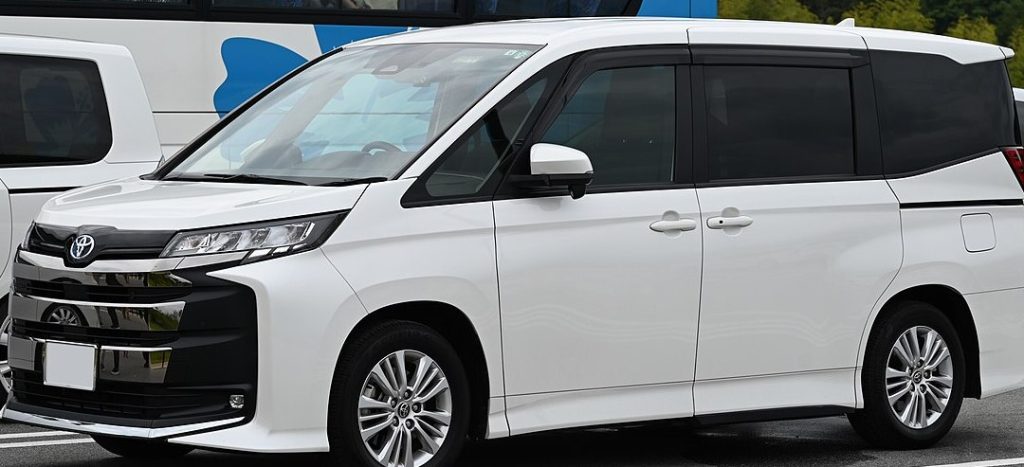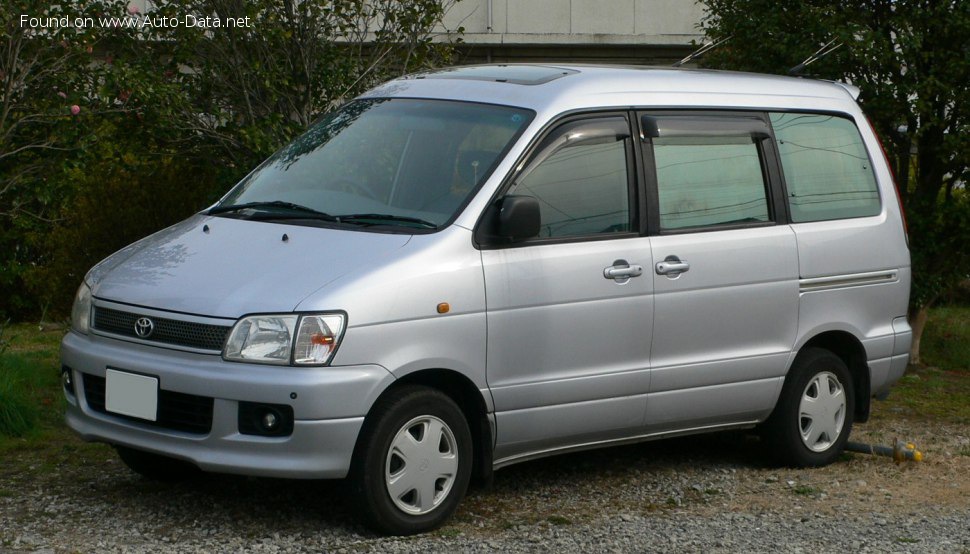
The Toyota Noah 2.0 i (156 Hp), produced between 2001 and 2004, represents the first generation (R60 series) of Toyota’s popular compact minivan. Primarily designed for the Japanese Domestic Market (JDM) and other Asian regions, the Noah was a direct successor to the LiteAce Noah, building upon its predecessor’s reputation for reliability and utility. Positioned as a versatile family vehicle, the Noah offered exceptional interior space, practical features, and a comfortable ride, making it a staple for urban families and small businesses alike. While never officially sold in the United States, its design philosophy and engineering ethos reflect Toyota’s global commitment to quality and efficiency, adapted specifically for the unique demands of its target markets.
The Toyota Noah 2.0 i: A Practical Family Vehicle
The Noah’s introduction marked a significant evolution in Toyota’s minivan lineup, moving towards a more contemporary design and enhanced powertrain options. The 2.0 i variant, equipped with Toyota’s advanced 1AZ-FSE direct-injection gasoline engine, provided a balance of performance and fuel economy crucial for its segment. Its focus on maximizing passenger and cargo room within a relatively compact footprint distinguished it in a competitive market, establishing the Noah as a benchmark for practical, everyday mobility.
Powertrain & Engine Architecture
At the heart of the Toyota Noah 2.0 i (156 Hp) lies the 1AZ-FSE engine, a 2.0-liter (1998 cm3 or 121.93 cu. in.) naturally aspirated inline-four gasoline unit. This engine was notable for its D-4 direct injection fuel system, a technology that was quite advanced for its time and contributed to both efficiency and power output. It delivered a respectable 156 horsepower at a peak of 6600 rpm, providing ample power for daily driving and highway cruising, especially when considering the vehicle’s primary role as a family hauler. Torque figures stood at 137.19 lb.-ft. (186 Nm) achieved at 4800 rpm, ensuring responsive acceleration and sufficient pulling power even with a full complement of eight passengers or a loaded cargo area.
The engine’s configuration was a transverse front-engine layout, driving the front wheels. This front-wheel-drive (FWD) architecture is typical for minivans of this class, offering efficient packaging, improved interior space, and generally better fuel economy compared to a rear-wheel-drive setup. The 1AZ-FSE engine featured a compression ratio of 10:1 and utilized a multi-port manifold injection system alongside its direct injection capabilities. With a bore and stroke both measuring 86 mm (3.39 in), the engine was designed for smooth operation and durability, hallmarks of Toyota engineering. Each cylinder was equipped with four valves, optimizing airflow for combustion and contributing to the engine’s power per liter rating of 78.1 Hp/l. The engine oil capacity was 4.2 liters (4.44 US qt), and the cooling system held 6.4 liters (6.76 US qt) of coolant, indicating robust thermal management for varied driving conditions.
Transmission
The 2.0 i variant was almost exclusively paired with a four-speed automatic transmission. This transmission was chosen for its ease of use and suitability for the target demographic, prioritizing comfort and convenience over sporty driving dynamics. While not offering the most advanced gear ratios, the four-speed automatic provided adequate performance for typical urban and highway driving scenarios. The transmission’s shift points were calibrated for smooth transitions and fuel efficiency, contributing to the Noah’s overall practicality.
Driving Characteristics
The Toyota Noah 2.0 i (156 Hp) with the four-speed automatic transmission offered a comfortable and predictable driving experience. Acceleration was adequate for merging onto highways and overtaking slower traffic, but it wasn’t particularly brisk. Compared to the manual transmission versions (available in some markets), the automatic resulted in a slight performance decrease due to the inherent power loss in the torque converter and the less aggressive gear ratios. However, the convenience of the automatic outweighed the performance difference for most buyers.
The gear ratios were optimized for everyday driving, with a focus on low-end torque to facilitate smooth starts and effortless cruising. The transmission didn’t offer a “sport” mode or manual shift capabilities, further emphasizing its comfort-oriented design. The overall driving experience was characterized by a quiet cabin, a comfortable ride, and predictable handling, making it an ideal vehicle for families and those prioritizing practicality over performance.
Equipment & Trim Levels
The Toyota Noah 2.0 i typically came equipped with a range of features designed to enhance comfort and convenience. Standard equipment generally included air conditioning, power windows, power door locks, and a basic audio system. Higher trim levels offered additional features such as alloy wheels, upgraded audio systems with CD players, and optional rear entertainment systems. Interior upholstery was typically cloth, with options for upgraded materials on higher trims.
The dashboard configuration was functional and straightforward, with easy-to-read gauges and intuitive controls. The seating arrangement was a key feature, offering flexible configurations to accommodate up to eight passengers. The rear seats could be folded or removed to create additional cargo space, making the Noah a versatile vehicle for a variety of needs. Optional extras included features like automatic climate control, navigation systems (rare for this era), and various exterior styling enhancements.
Chassis & Braking
The Toyota Noah 2.0 i utilized a MacPherson strut front suspension and a torsion beam rear suspension. This suspension setup provided a comfortable ride and adequate handling for its intended purpose. The torsion beam rear suspension was a cost-effective solution that minimized complexity while still providing acceptable ride quality. Stabilizer bars were typically included on both the front and rear axles to reduce body roll during cornering.
The braking system consisted of ventilated disc brakes on the front wheels and drum brakes on the rear wheels. This configuration was common for vehicles in this class and price range. Anti-lock Braking System (ABS) was standard on most trims, enhancing safety by preventing wheel lockup during hard braking. The braking performance was adequate for everyday driving, but it wasn’t particularly sporty or powerful.
Market Reception & Comparison
Critics generally praised the Toyota Noah 2.0 i for its practicality, reliability, and spacious interior. It was considered a strong contender in the compact minivan segment, offering a compelling combination of features and value. The 1AZ-FSE engine was well-regarded for its efficiency and durability, and the four-speed automatic transmission was appreciated for its ease of use. However, some critics noted that the performance was somewhat underwhelming compared to other vehicles in its class.
Compared to other trims in the Noah lineup, the 2.0 i offered a good balance between performance and fuel economy. It was more affordable than the higher-powered variants, making it an attractive option for budget-conscious buyers. In terms of reliability, the 2.0 i was generally considered to be as dependable as other Noah trims, benefiting from Toyota’s renowned build quality and engineering expertise. Fuel economy was typically in the range of 22-26 mpg in combined driving conditions, making it a relatively efficient vehicle for its size and class.
Technical Specifications
| Category | Specification |
| General Information | |
| Brand | Toyota |
| Model | Noah |
| Generation | Noah (First Generation, R60 series) |
| Type (Engine) | 2.0 i (156 Hp) |
| Start of Production | 2001 year |
| End of Production | 2004 year |
| Powertrain Architecture | Internal Combustion Engine |
| Body type | Minivan |
| Seats | 8 |
| Doors | 5 |
| Performance Specs | |
| Fuel Type | Petrol (Gasoline) |
| Power | 156 Hp @ 6600 rpm. |
| Power per liter | 78.1 Hp/l |
| Torque | 186 Nm @ 4800 rpm. (137.19 lb.-ft. @ 4800 rpm.) |
| Engine layout | Front, Transverse |
| Engine Model/Code | 1AZ-FSE |
| Engine displacement | 1998 cm3 (121.93 cu. in.) |
| Number of cylinders | 4 |
| Engine configuration | Inline |
| Cylinder Bore | 86 mm (3.39 in.) |
| Piston Stroke | 86 mm (3.39 in.) |
| Compression ratio | 10:1 |
| Number of valves per cylinder | 4 |
| Fuel injection system | Multi-port manifold injection |
| Engine aspiration | Naturally aspirated engine |
| Engine oil capacity | 4.2 l (4.44 US qt) |
| Coolant | 6.4 l (6.76 US qt) |
| Dimensions | |
| Length | 4580 mm (180.31 in.) |
| Width | 1695 mm (66.73 in.) |
| Height | 1850 mm (72.83 in.) |
| Wheelbase | 2825 mm (111.22 in.) |
| Front track | 1480 mm (58.27 in.) |
| Rear (Back) track | 1470 mm (57.87 in.) |
| Drivetrain, Brakes, and Suspension Specs | |
| Drivetrain Architecture | The Internal Combustion Engine (ICE) drives the front wheels of the vehicle. |
| Drive wheel | Front wheel drive |
Legacy
The Toyota Noah, particularly the 2.0 i (156 Hp) variant from its first generation, carved out a strong reputation in its primary markets as a highly reliable, practical, and family-friendly vehicle. It successfully continued the legacy of the LiteAce Noah, evolving its design and engineering to meet contemporary demands. The Noah’s appeal stemmed from its intelligent packaging, which provided maximum interior volume and flexibility within relatively compact exterior dimensions, making it perfectly suited for the often-narrow streets and dense urban environments of Japan and other Asian countries.
In its competitive landscape, the Noah faced rivals such as the Honda Stepwgn and the Nissan Serena. Toyota distinguished the Noah through its renowned build quality, the efficiency and durability of its 1AZ-FSE direct-injection engine, and its strong resale value. Its balanced approach to comfort, utility, and fuel economy made it a consistent bestseller in its segment. The Noah’s success reinforced Toyota’s dominance in various vehicle categories, demonstrating their ability to adapt global engineering principles to specific regional needs.
Historically, the Noah cemented the “box on wheels” minivan design as the optimal solution for maximizing interior space without significantly increasing the vehicle’s footprint. This design philosophy proved incredibly influential, shaping subsequent generations of minivans in its class. The first-generation Noah also highlighted Toyota’s commitment to integrating advanced engine technologies, such as direct injection, into mainstream family vehicles, improving both performance and environmental efficiency. Even today, used models are highly sought after for their dependability and practical utility, a testament to the robust engineering and thoughtful design of the original Toyota Noah 2.0 i (156 Hp).