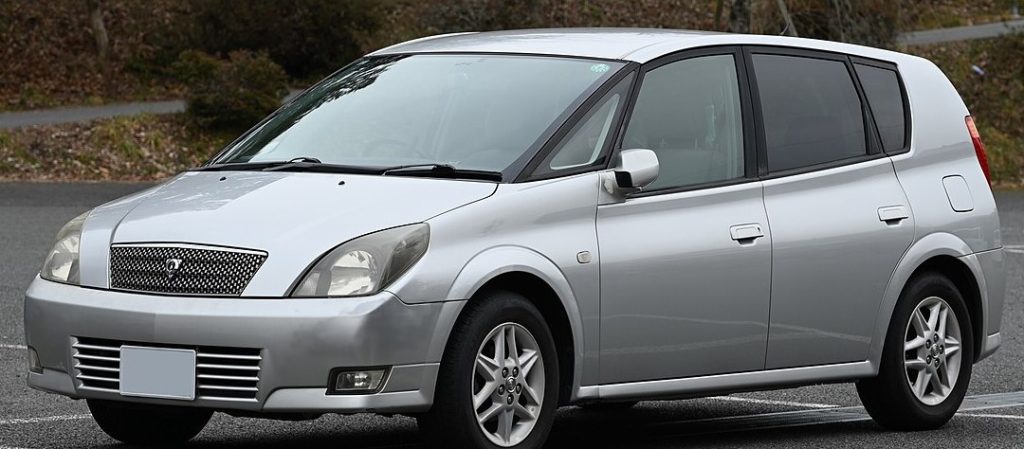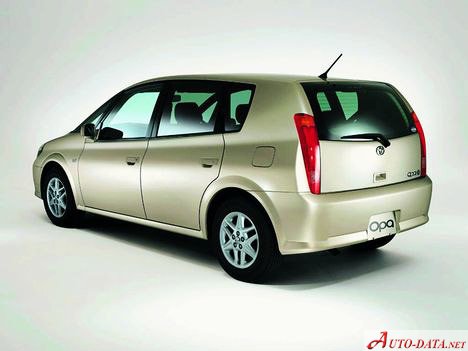
The Toyota Opa 1.8 i 16V (125 Hp) represents a unique and often overlooked chapter in Toyota’s extensive history of domestic market vehicles. Launched in Japan in 2000 and continuing production through 2005, the Opa was conceived as a “multi-activity vehicle” (MAV) designed specifically for Japanese consumers. It skillfully blended characteristics of a compact station wagon, a minivan, and a traditional sedan, aiming to maximize interior space and versatility within a relatively small vehicle footprint. Never officially sold in the United States, the Opa offered Japanese buyers a practical and comfortable option, distinguished by its distinctive styling and clever packaging. The 1.8 i 16V variant, producing 125 horsepower, was a popular choice, striking a balance between performance and fuel economy for its time.
The Toyota Opa Generation and Positioning
The Toyota Opa, with its name evoking notions of “king” or “grandpa” in some languages, was developed on Toyota’s New MC platform. This platform was shared with other successful Toyota models, including the first-generation Wish and the Allion/Premio, demonstrating Toyota’s efficient use of engineering resources. The Opa was targeted towards families and individuals desiring a vehicle adaptable to diverse lifestyles, from daily commutes to weekend trips. It represented a fresh approach to the compact family car, prioritizing ease of use, practicality, and Toyota’s renowned reliability. The 1.8 i 16V trim level occupied a mid-range position within the Opa lineup, offering a step up from the base 1.6-liter engine while remaining more affordable than potential future, higher-performance options that never materialized.
Powertrain & Engine Architecture: The 1ZZ-FE
The heart of the Toyota Opa 1.8 i 16V (125 Hp) was Toyota’s well-respected 1ZZ-FE engine. This 1.8-liter (1794 cc or 109.48 cubic inches) inline four-cylinder engine was a mainstay in numerous Toyota vehicles worldwide, celebrated for its robust construction and efficiency. The engine featured a Double Overhead Camshaft (DOHC) valvetrain with 16 valves – four valves per cylinder – and multi-port fuel injection. This naturally aspirated engine delivered 125 horsepower at 6,000 rpm. Its specific output was approximately 69.7 horsepower per liter, indicating a well-optimized and efficient powerplant for its displacement.
Torque output was a respectable 161 Nm (118.75 lb-ft) at 4,200 rpm, providing sufficient pulling power for both urban driving and highway cruising. The engine was mounted transversely at the front of the vehicle, a common configuration for front-wheel-drive and all-wheel-drive compact cars, maximizing interior space. Key engine specifications included a 79 mm (3.11 inch) bore, a 91.5 mm (3.6 inch) stroke, and a 10:1 compression ratio, contributing to its smooth operation and fuel economy. Power was delivered to all four wheels via a four-speed automatic transmission, enhancing traction, particularly in Japan’s varied weather conditions. The automatic transmission was a conventional hydraulic control unit, prioritizing reliability and smooth shifts over outright performance.
Driving Characteristics
The Toyota Opa 1.8 i 16V Automatic offered a comfortable and predictable driving experience. While not a performance-oriented vehicle, the combination of the 1ZZ-FE engine and the four-speed automatic transmission provided adequate acceleration for everyday driving. The automatic transmission’s gear ratios were tuned for fuel efficiency and smooth cruising, rather than aggressive acceleration. Compared to a hypothetical manual transmission version, the automatic would have resulted in a slight performance decrease due to drivetrain losses and the transmission’s inherent inefficiencies. However, it offered significantly greater convenience, particularly in congested urban environments. Compared to higher-output engines that were never offered in the Opa, the 1.8L provided a more economical and refined driving experience, prioritizing comfort and fuel efficiency over outright speed.
Equipment & Trim Levels
The Toyota Opa 1.8 i 16V typically came equipped with a range of standard features designed to enhance comfort and convenience. These included power steering, air conditioning, power windows, and a basic audio system. Interior upholstery was typically cloth, with a focus on durability and practicality. The dashboard layout was functional and straightforward, prioritizing ease of use. Optional extras available for this trim level included alloy wheels, upgraded audio systems, and a sunroof. Higher trim levels, if available, might have added features like leather upholstery, automatic climate control, and more advanced audio systems. The overall interior design emphasized spaciousness and practicality, reflecting the Opa’s role as a family-oriented vehicle.
Chassis & Braking
The Toyota Opa’s chassis was designed to provide a comfortable ride and stable handling. The front suspension utilized coil springs and MacPherson struts, while the rear suspension also employed coil springs. The rear suspension configuration varied depending on whether the vehicle was two-wheel drive or all-wheel drive. Braking duties were handled by ventilated discs at the front and drum brakes at the rear, a common setup for compact vehicles of that era, balancing cost and performance. The all-wheel-drive system, a significant feature for many Opa models, enhanced traction and stability, particularly in adverse weather conditions. Stabilizer bars were included at both the front and rear to reduce body roll during cornering, improving handling.
Market Reception & Comparison
The Toyota Opa 1.8 i 16V Automatic was generally well-received by Japanese automotive critics as a practical and reliable family vehicle. It was praised for its spacious interior, comfortable ride, and Toyota’s reputation for dependability. However, some critics noted that its styling was somewhat conservative and that its performance was not particularly exciting. In terms of fuel economy, the 1.8L engine offered a good balance between performance and efficiency, achieving approximately 14-16 kilometers per liter (33-38 miles per gallon) in real-world driving conditions. Compared to other trims in the Opa lineup, the 1.8L offered a more compelling combination of performance and fuel economy than the base 1.6-liter engine, while remaining more affordable than any potential higher-performance variants. It competed with other Japanese MAVs like the Honda Stream and Nissan Wingroad, offering a similar blend of practicality and versatility.
Technical Specifications
| Category | Specification |
| Brand | Toyota |
| Model | Opa |
| Type (Engine) | 1.8 i 16V (125 Hp) |
| Start of production | 2000 year |
| End of production | 2005 year |
| Fuel Type | Petrol (Gasoline) |
| Maximum speed | 190 km/h |
| Power | 125 Hp @ 6000 rpm |
| Torque | 161 Nm @ 4200 rpm |
| Engine displacement | 1794 cm3 |
| Engine Model/Code | 1ZZ-FE |
| Number of cylinders | 4 |
| Compression ratio | 10:1 |
| Number of gears and type of gearbox | 4 gears, automatic transmission |
| Drive wheel | All wheel drive (4×4) |
| Kerb Weight | 1210 kg |
| Length | 4250 mm |
| Width | 1695 mm |
| Height | 1530 mm |
Legacy
The Toyota Opa 1.8 i 16V, powered by the 1ZZ-FE engine and paired with a four-speed automatic transmission, has proven to be a remarkably reliable powertrain combination. The 1ZZ-FE engine is known for its longevity and relatively low maintenance requirements, provided it receives regular servicing. In the used car market today, Opas with this powertrain are generally sought after for their dependability and affordability. While not particularly collectible, they represent a practical and economical option for buyers seeking a reliable and spacious vehicle. The Opa’s legacy lies in its embodiment of Toyota’s commitment to building durable and dependable vehicles, catering to the specific needs of the Japanese domestic market. It remains a testament to Toyota’s innovative spirit and its ability to create vehicles that stand the test of time.