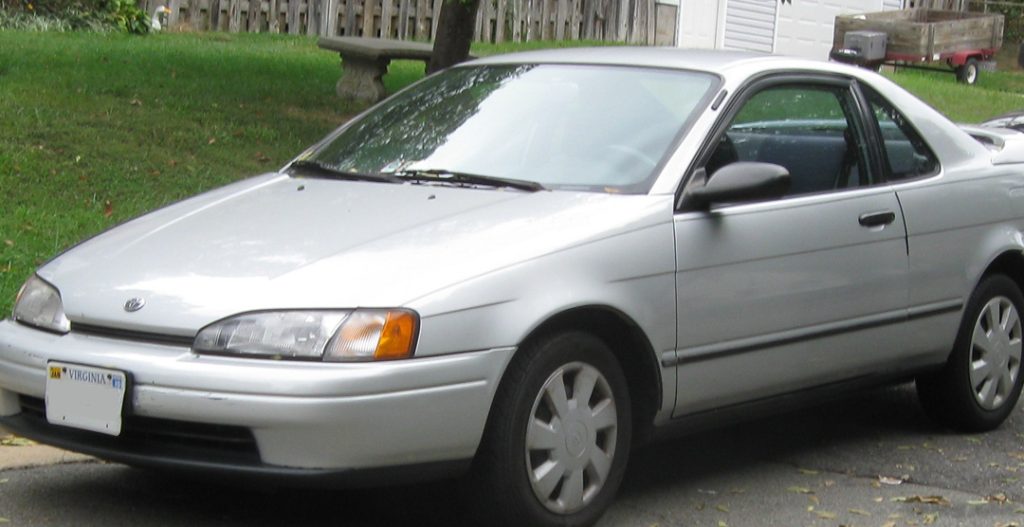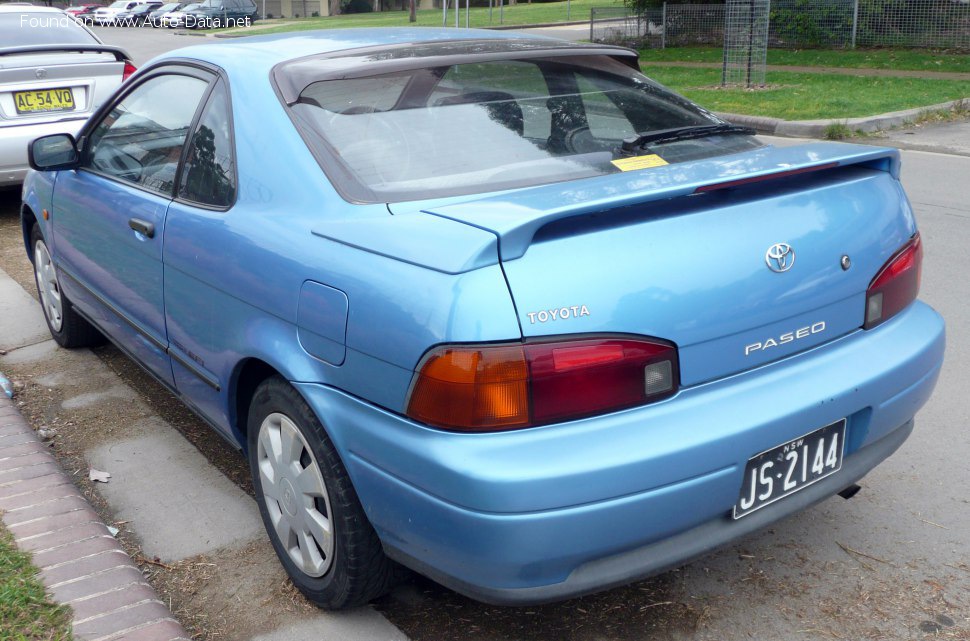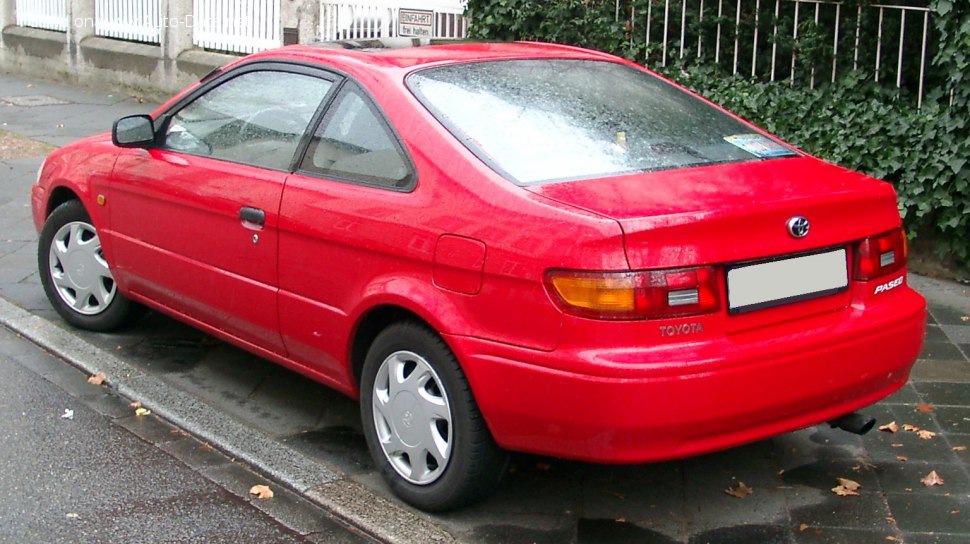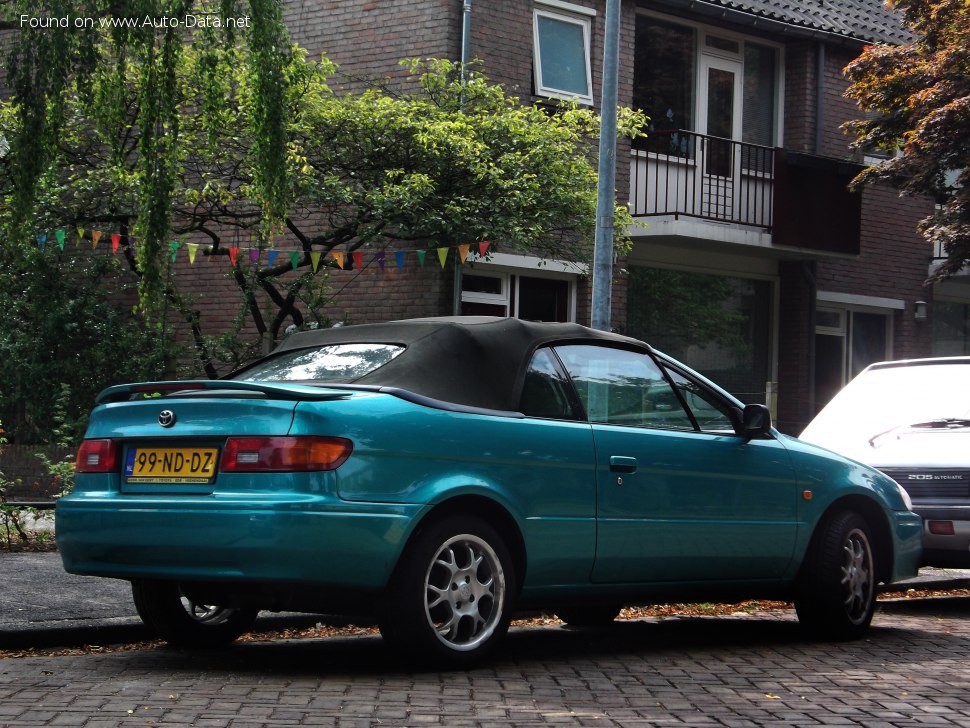
The Toyota Paseo, particularly the Cabriolet (_L5_) model produced between 1995 and 2000, represents a unique offering from Toyota during the 1990s. Positioned as a small, affordable, and stylish coupe/convertible, the Paseo was primarily aimed at the Japanese domestic market (JDM) and European consumers. While never a high-volume seller in the United States, it offered an alternative to other compact cars, emphasizing a sporty aesthetic and open-air driving experience. The Paseo Cabriolet, with its retractable soft top, was the more visually distinctive variant, appealing to buyers seeking a fun and fashionable vehicle.
Toyota Paseo Cabrio (_L5_) 1.5 16V: An Overview
The Paseo, meaning “stroll” or “walk” in Spanish, was intended to be a lighthearted and accessible vehicle. The Cabriolet version, denoted by the _L5_ chassis code, built upon the standard Paseo coupe by adding a fully automatic retractable soft top. This feature significantly enhanced the car’s appeal, transforming it into a desirable small roadster. The 1.5 16V engine, producing 90 horsepower, provided adequate performance for its intended market segment, focusing on fuel efficiency and everyday usability rather than outright speed. The Paseo’s design, while compact, aimed for a modern and somewhat sporty appearance, differentiating it from more utilitarian small cars of the era.
Engine & Performance
The Toyota Paseo Cabrio (_L5_) 1.5 16V is powered by the 5E-FE inline four-cylinder engine, displacing 1.5 liters (1497 cm3 or 91.35 cubic inches). This naturally aspirated engine utilizes multi-port fuel injection and a double overhead camshaft (DOHC) valvetrain with four valves per cylinder. It generates a maximum power output of 90 horsepower at 5400 rpm, and a torque of 130 Nm (95.88 lb.-ft.) at 4200 rpm. While not a powerhouse, the engine provides sufficient power for comfortable city driving and highway cruising. Acceleration from 0 to 100 km/h (0-62 mph) takes approximately 11.3 seconds, and 0 to 60 mph is achieved in around 10.7 seconds. The top speed is rated at 180 km/h (111.85 mph). The engine’s power-to-weight ratio is 11.7 kg/Hp, and the torque-to-weight ratio is 8.1 kg/Nm. Fuel economy is a strong point, with combined fuel consumption averaging 7.1 l/100 km (33.1 US mpg or 39.8 UK mpg), and CO2 emissions of 168 g/km.
Design & Features
The Paseo Cabriolet is a three-door, four-seater convertible. Its compact dimensions – 4160 mm (163.78 in) in length, 1660 mm (65.35 in) in width, and 1320 mm (51.97 in) in height) – contribute to its nimble handling and ease of parking. The retractable soft top is the defining feature of the Cabriolet, offering open-air driving enjoyment. The interior, while basic, is functional and designed to maximize space within the car’s small footprint. Safety features for the time included an Anti-lock Braking System (ABS). The front suspension utilizes an independent McPherson strut setup with coil springs and an anti-roll bar, while the rear employs a trailing arm configuration with a transverse stabilizer. Brakes are ventilated discs at the front and drums at the rear. The Paseo rides on 185/60 R14 tires mounted on 5.5J x 14 inch wheels. Trunk space is limited to 200 liters (7.06 cu. ft.) due to the convertible top mechanism.
Technical Specifications
| Brand | Toyota |
| Model | Paseo |
| Generation | Paseo Cabrio (_L5_) |
| Type (Engine) | 1.5 16V (90 Hp) |
| Start of production | 1995 |
| End of production | 2000 |
| Powertrain Architecture | Internal Combustion engine |
| Body type | Cabriolet |
| Seats | 4 |
| Doors | 3 |
| Fuel consumption (urban) | 9.4 l/100 km (25 US mpg, 30.1 UK mpg, 10.6 km/l) |
| Fuel consumption (extra urban) | 5.8 l/100 km (40.6 US mpg, 48.7 UK mpg, 17.2 km/l) |
| Fuel consumption (combined) | 7.1 l/100 km (33.1 US mpg, 39.8 UK mpg, 14.1 km/l) |
| CO2 emissions | 168 g/km |
| Fuel Type | Petrol (Gasoline) |
| Acceleration 0 – 100 km/h | 11.3 sec |
| Acceleration 0 – 62 mph | 11.3 sec |
| Acceleration 0 – 60 mph | 10.7 sec |
| Maximum speed | 180 km/h (111.85 mph) |
| Weight-to-power ratio | 11.7 kg/Hp |
| Weight-to-torque ratio | 8.1 kg/Nm |
| Power | 90 Hp @ 5400 rpm |
| Power per litre | 60.1 Hp/l |
| Torque | 130 Nm @ 4200 rpm (95.88 lb.-ft. @ 4200 rpm) |
| Engine layout | Front, Transverse |
| Engine Model/Code | 5E-FE |
| Engine displacement | 1497 cm3 (91.35 cu. in.) |
| Number of cylinders | 4 |
| Engine configuration | Inline |
| Cylinder Bore | 74 mm (2.91 in.) |
| Piston Stroke | 87 mm (3.43 in.) |
| Compression ratio | 9.4:1 |
| Number of valves per cylinder | 4 |
| Fuel injection system | Multi-port manifold injection |
| Engine aspiration | Naturally aspirated |
| Valvetrain | DOHC |
| Engine oil capacity | 3.7 l (3.91 US qt | 3.26 UK qt) |
| Coolant | 4.9 l (5.18 US qt | 4.31 UK qt) |
| Kerb Weight | 1055 kg (2325.88 lbs.) |
| Max. weight | 1385 kg (3053.4 lbs.) |
| Max load | 330 kg (727.53 lbs.) |
| Trunk (boot) space – minimum | 200 l (7.06 cu. ft.) |
| Fuel tank capacity | 45 l (11.89 US gal | 9.9 UK gal) |
| Max. roof load | 50 kg (110.23 lbs.) |
| Permitted trailer load with brakes (12%) | 1000 kg (2204.62 lbs.) |
| Permitted trailer load without brakes | 400 kg (881.85 lbs.) |
| Length | 4160 mm (163.78 in.) |
| Width | 1660 mm (65.35 in.) |
| Height | 1320 mm (51.97 in.) |
| Wheelbase | 2380 mm (93.7 in.) |
| Front track | 1405 mm (55.31 in.) |
| Rear (Back) track | 1395 mm (54.92 in.) |
| Minimum turning circle | 10.8 m (35.43 ft.) |
| Drivetrain | Front wheel drive |
| Number of gears and type of gearbox | 5 gears, manual transmission |
| Front suspension | Independent, McPherson with coil spring and anti-roll bar |
| Rear suspension | Trailing arm, Transverse stabilizer |
| Front brakes | Ventilated discs |
| Rear brakes | Drum |
| Assisting systems | ABS (Anti-lock braking system) |
| Steering type | Steering rack and pinion |
| Power steering | Hydraulic |
| Tires size | 185/60 R14 |
| Wheel rims size | 5.5J x 14 |
The Toyota Paseo Cabriolet (_L5_) 1.5 16V, while not a performance icon, offered a compelling package of style, affordability, and open-air enjoyment. Its enduring appeal lies in its unique character and its representation of a specific era in automotive design.