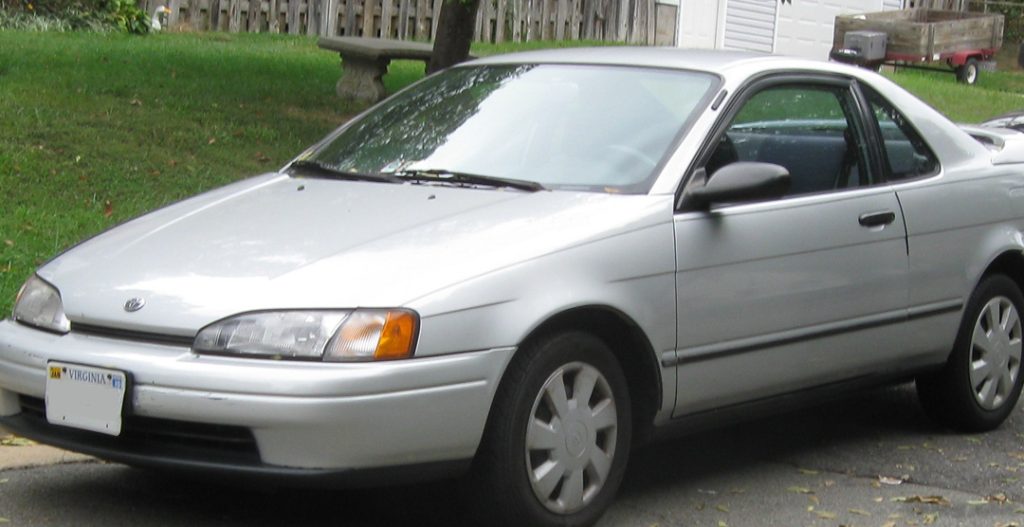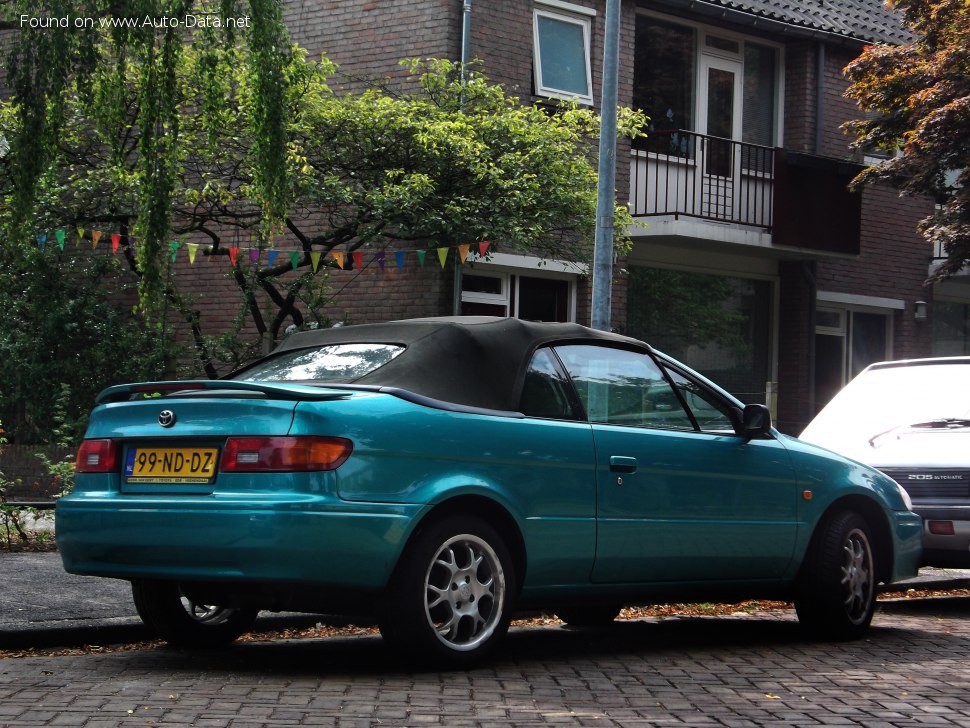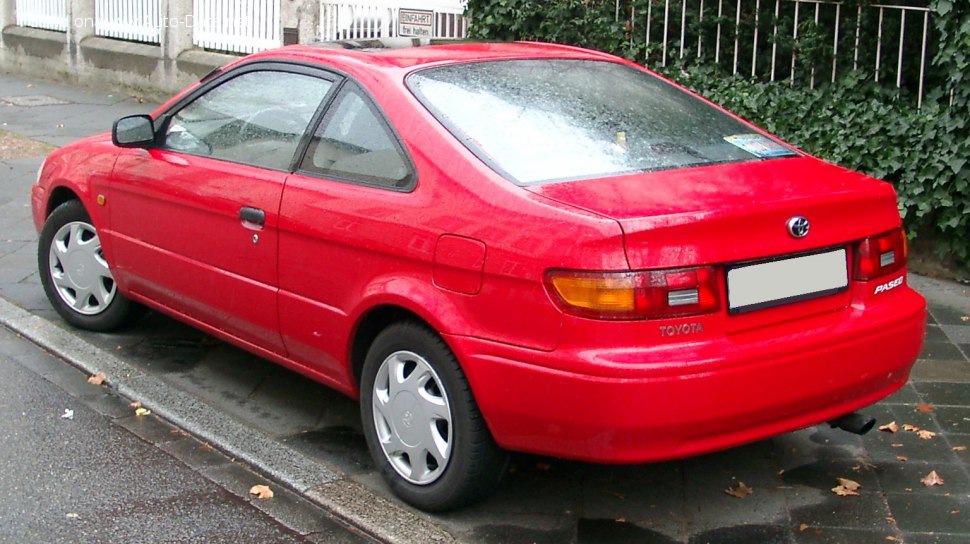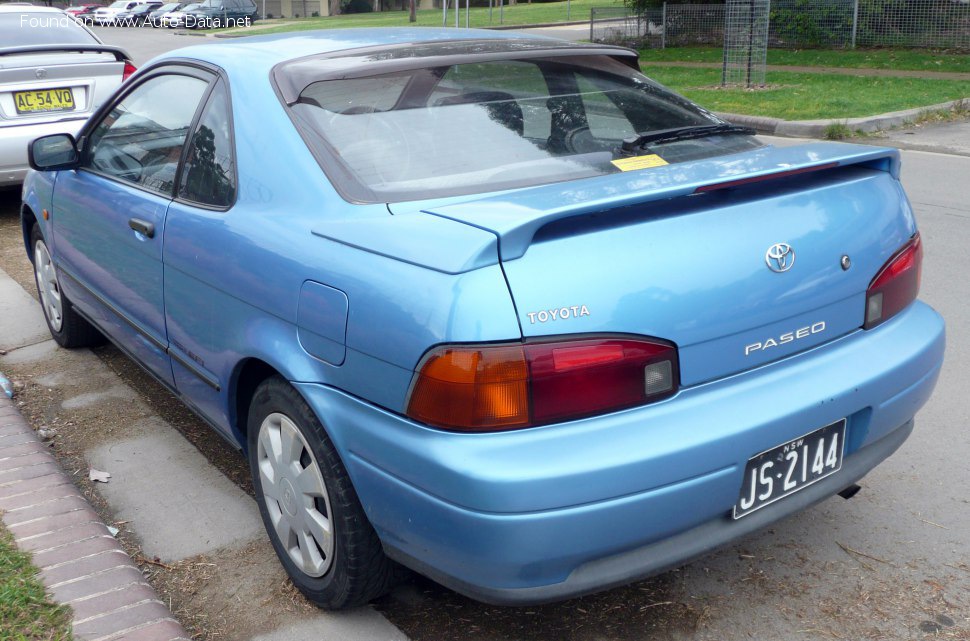
The Toyota Paseo is a compact coupe produced by Toyota from 1991 to 1996. Primarily marketed in Japan and Europe, the Paseo was not officially sold in the United States. It occupied a niche segment, offering a sporty and affordable option for buyers seeking a small, stylish coupe. The Paseo aimed to provide a more engaging driving experience than typical subcompact cars of the era, appealing to a younger demographic. This article details the specifications and characteristics of the Paseo (L4) 1.5i 16V model with the automatic transmission, a common configuration during its production run.
Toyota Paseo (L4): An Overview
The Paseo represented Toyota’s attempt to capture a segment of the market that desired a small, sporty coupe. It was based on the Starlet platform, but featured unique styling and a more powerful engine option. The “L4” designation refers to the inline-four cylinder engine. The 1.5i 16V variant, equipped with a 1.5-liter engine and a 16-valve cylinder head, was a popular choice, offering a balance of performance and fuel efficiency. The Paseo’s relatively low weight contributed to its nimble handling, making it a fun-to-drive vehicle for its class.
Engine & Performance
The heart of the Paseo 1.5i 16V is a 1.5-liter (1497 cm3 or 91.35 cu. in.) inline-four cylinder engine. This naturally aspirated engine produces 115 horsepower at 6600 rpm and 135 Nm (99.57 lb.-ft.) of torque at 3200 rpm. The engine features multi-port fuel injection and a double overhead camshaft (DOHC) valvetrain, contributing to its relatively high power output for its displacement – 76.8 horsepower per liter. Power is delivered to all four wheels via a four-speed automatic transmission. This all-wheel drive configuration, while not common in this class of vehicle, enhanced traction and handling, particularly in adverse weather conditions. The Paseo’s weight-to-power ratio of 7.6 kg/Hp and weight-to-torque ratio of 6.4 kg/Nm further highlight its performance capabilities. The vehicle achieves a maximum speed of 195 km/h (121.17 mph).
Design & Features
The Toyota Paseo is a two-door coupe with seating for four passengers. Its design was characterized by its rounded, aerodynamic shape, a departure from the more angular designs prevalent in the early 1990s. The coupe body style offered a sporty aesthetic, appealing to buyers seeking a more dynamic vehicle. The interior, while compact, was designed to be functional and comfortable. Features included basic amenities expected of a vehicle in its class, such as cloth upholstery, and an AM/FM radio. Safety features, while limited by the standards of the time, included an Anti-lock Braking System (ABS) which was becoming increasingly common on new vehicles. The rear seats could be folded down to expand the trunk space from a minimum of 220 liters (7.77 cu. ft.) to a maximum of 815 liters (28.78 cu. ft.), providing increased versatility for carrying larger items. The Paseo’s dimensions – 4145 mm (163.19 in.) in length, 1645 mm (64.76 in.) in width, and 1295 mm (50.98 in.) in height – positioned it as a relatively small and maneuverable vehicle.
Technical Specifications
| Brand | Toyota |
| Model | Paseo |
| Generation | Paseo (L4) |
| Type (Engine) | 1.5i 16V (115 Hp) Automatic |
| Start of production | 1991 |
| End of production | 1996 |
| Powertrain Architecture | Internal Combustion engine |
| Body type | Coupe |
| Seats | 4 |
| Doors | 2 |
| Fuel consumption (urban) | 10 l/100 km (23.5 US mpg, 28.2 UK mpg, 10 km/l) |
| Fuel consumption (extra urban) | 6 l/100 km (39.2 US mpg, 47.1 UK mpg, 16.7 km/l) |
| Fuel Type | Petrol (Gasoline) |
| Maximum speed | 195 km/h (121.17 mph) |
| Weight-to-power ratio | 7.6 kg/Hp |
| Weight-to-torque ratio | 6.4 kg/Nm |
| Power | 115 Hp @ 6600 rpm |
| Power per litre | 76.8 Hp/l |
| Torque | 135 Nm @ 3200 rpm (99.57 lb.-ft. @ 3200 rpm) |
| Engine layout | Front, Transverse |
| Engine displacement | 1497 cm3 (91.35 cu. in.) |
| Number of cylinders | 4 |
| Engine configuration | Inline |
| Cylinder Bore | 74 mm (2.91 in.) |
| Piston Stroke | 87 mm (3.43 in.) |
| Compression ratio | 9.8:1 |
| Number of valves per cylinder | 4 |
| Fuel injection system | Multi-port manifold injection |
| Engine aspiration | Naturally aspirated engine |
| Valvetrain | DOHC |
| Kerb Weight | 870 kg (1918.02 lbs.) |
| Trunk (boot) space – minimum | 220 l (7.77 cu. ft.) |
| Trunk (boot) space – maximum | 815 l (28.78 cu. ft.) |
| Length | 4145 mm (163.19 in.) |
| Width | 1645 mm (64.76 in.) |
| Height | 1295 mm (50.98 in.) |
| Wheelbase | 2380 mm (93.7 in.) |
| Front track | 1405 mm (55.31 in.) |
| Rear (Back) track | 1395 mm (54.92 in.) |
| Drive wheel | All wheel drive (4×4) |
| Number of gears and type of gearbox | 4 gears, automatic transmission |
| Front suspension | Coil spring |
| Rear suspension | Coil spring |
| Front brakes | Ventilated discs |
| Rear brakes | Disc |
| Assisting systems | ABS (Anti-lock braking system) |
| Steering type | Steering rack and pinion |
| Power steering | Hydraulic Steering |
| Tires size | 175/65 R14 |
| Wheel rims size | 14 |
The Toyota Paseo, while not a mainstream success in many markets, offered a unique combination of style, performance, and affordability. Its all-wheel drive system and sporty handling made it a distinctive choice for those seeking a compact coupe with a bit more personality than the average subcompact car. Though production ceased in 1996, the Paseo remains a fondly remembered vehicle among enthusiasts.