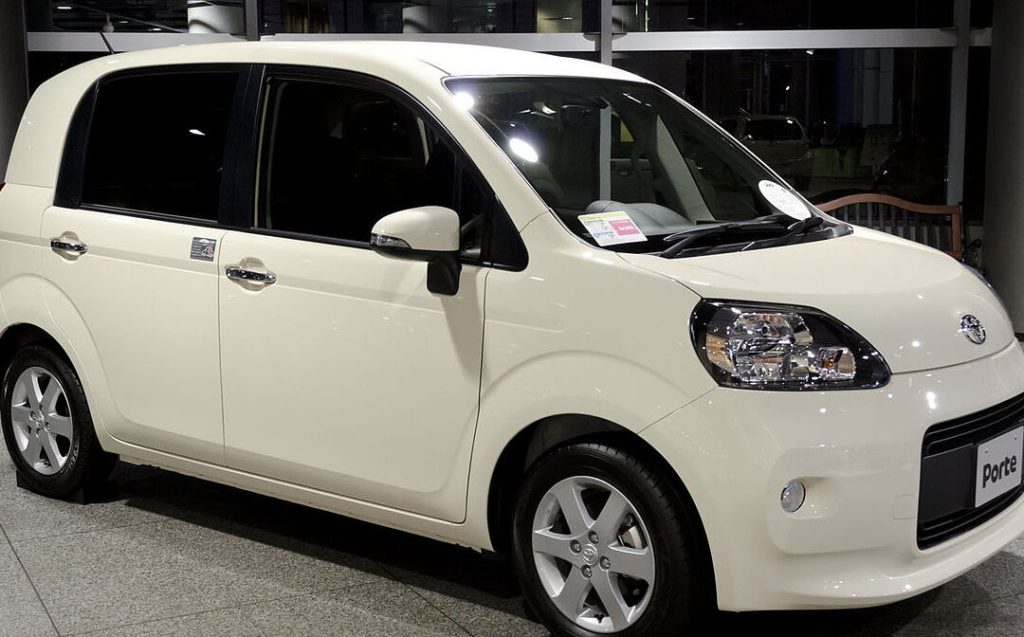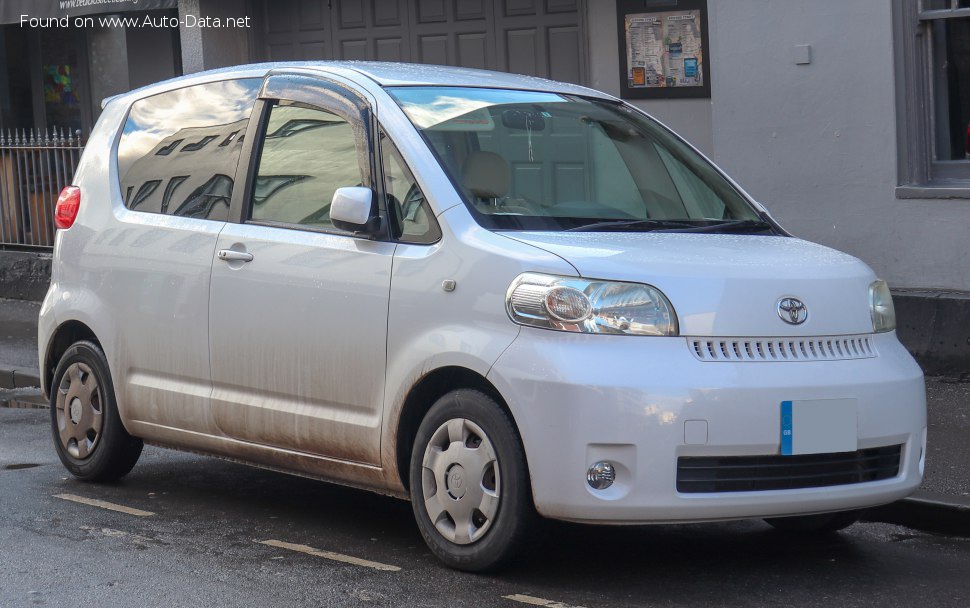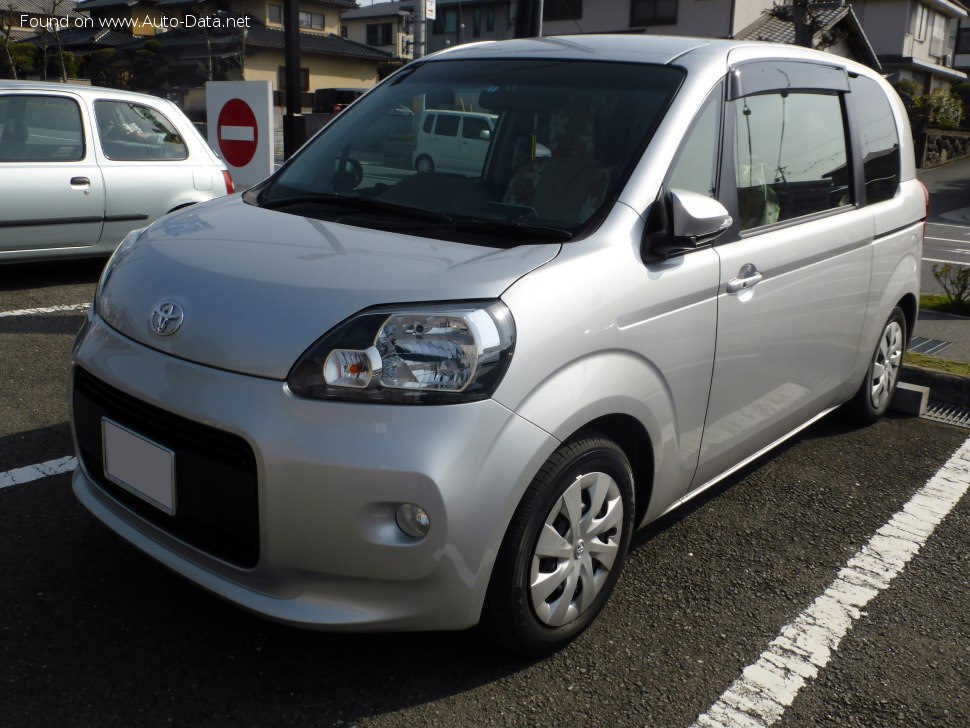
The Toyota Porte II 1.5i, released in July 2012, represents the second generation of a unique and practical compact hatchback primarily designed for the Japanese domestic market (JDM). While not officially sold in the United States, the Porte (known as the Toyota Ractis in some markets) carved a niche for itself as a versatile and space-efficient vehicle, particularly appealing to families and individuals seeking ease of access and a flexible interior. The Porte II continued this tradition, offering a distinctive blend of functionality, fuel efficiency, and compact dimensions. This article details the technical specifications and characteristics of the 1.5i variant, equipped with a 109 horsepower engine and a CVT-i transmission.
Toyota Porte II: An Overview
The second-generation Porte built upon the foundation of its predecessor, refining its design and enhancing its practicality. It falls into the subcompact hatchback segment, competing with vehicles focused on maximizing interior space within a small footprint. The key selling point of the Porte, and particularly the II, was its lack of a central pillar on the passenger side, creating a wide and unobstructed opening for easy entry and exit – a feature highly valued in Japan where parking spaces are often tight. The 1.5i model, powered by the 1NZ-FE engine, was a popular choice due to its balance of performance and fuel economy.
Engine & Performance
The Toyota Porte II 1.5i is powered by the 1NZ-FE 1.5-liter inline four-cylinder gasoline engine. This naturally aspirated engine produces 109 horsepower at 6000 rpm and 136 Nm (100.31 lb.-ft.) of torque at 4400 rpm. The engine features a multi-port fuel injection system and a double overhead camshaft (DOHC) valvetrain, contributing to its relatively efficient operation. Power per liter is rated at 72.9 hp/l, indicating a focus on usable power rather than outright performance. The engine is paired with a Continuously Variable Transmission with intelligence (CVT-i), which optimizes gear ratios for both fuel efficiency and smooth acceleration. The weight-to-power ratio of 10.7 kg/Hp and a weight-to-torque ratio of 8.6 kg/Nm demonstrate a reasonable power delivery for its intended purpose. Fuel economy is a strong point, achieving 6.9 l/100 km (34.1 US mpg) in urban driving and 5.0 l/100 km (47 US mpg) on the open road.
Design & Features
The Toyota Porte II maintains the distinctive boxy silhouette of the original, prioritizing interior space over aerodynamic styling. Its defining feature remains the absence of a B-pillar on the passenger side, providing a cavernous opening for easy access. The vehicle is a five-seater hatchback with three doors (two front, one rear). The interior is designed for practicality, with a focus on maximizing space and usability. While not a luxury vehicle, the Porte II offered features such as air conditioning, power windows, and a basic audio system. Safety features included Anti-lock Braking System (ABS) as standard equipment. The vehicle’s dimensions – 3995 mm (157.28 in.) in length, 1695 mm (66.73 in.) in width, and 1690 mm (66.54 in.) in height – reflect its compact nature. The wheelbase measures 2600 mm (102.36 in.), contributing to a relatively stable ride. Ground clearance is a modest 135 mm (5.31 in.).
Technical Specifications
| Brand | Toyota |
| Model | Porte |
| Generation | Porte II |
| Type (Engine) | 1.5i (109 Hp) CVT-i |
| Start of production | July, 2012 |
| Powertrain Architecture | Internal Combustion engine |
| Body type | Hatchback |
| Seats | 5 |
| Doors | 3 |
| Fuel consumption (urban) | 6.9 l/100 km (34.1 US mpg) |
| Fuel consumption (extra urban) | 5 l/100 km (47 US mpg) |
| Fuel Type | Petrol (Gasoline) |
| Weight-to-power ratio | 10.7 kg/Hp |
| Weight-to-torque ratio | 8.6 kg/Nm |
| Power | 109 Hp @ 6000 rpm |
| Power per litre | 72.9 Hp/l |
| Torque | 136 Nm @ 4400 rpm (100.31 lb.-ft. @ 4400 rpm) |
| Engine Model/Code | 1NZ-FE |
| Engine displacement | 1496 cm3 (91.29 cu. in.) |
| Number of cylinders | 4 |
| Engine configuration | Inline |
| Number of valves per cylinder | 4 |
| Fuel injection system | Multi-port manifold injection |
| Engine aspiration | Naturally aspirated |
| Valvetrain | DOHC |
| Engine oil capacity | 3.7 l (3.91 US qt | 3.26 UK qt) |
| Coolant capacity | 5 l (5.28 US qt | 4.4 UK qt) |
| Kerb Weight | 1170 kg (2579.41 lbs.) |
| Max. weight | 1445 kg (3185.68 lbs.) |
| Max load | 275 kg (606.27 lbs.) |
| Fuel tank capacity | 42 l (11.1 US gal | 9.24 UK gal) |
| Length | 3995 mm (157.28 in.) |
| Width | 1695 mm (66.73 in.) |
| Height | 1690 mm (66.54 in.) |
| Wheelbase | 2600 mm (102.36 in.) |
| Front track | 1485 mm (58.46 in.) |
| Rear track | 1475 mm (58.07 in.) |
| Ride height (ground clearance) | 135 mm (5.31 in.) |
| Minimum turning circle | 10.0 m (32.81 ft.) |
| Drivetrain Architecture | Front wheel drive, Internal Combustion engine |
| Drive wheel | Front wheel drive |
| Number of gears and type of gearbox | automatic transmission CVT-i |
| Front suspension | Independent coil spring |
| Rear suspension | Torsion |
| Front brakes | Ventilated discs |
| Rear brakes | Drum |
| Assisting systems | ABS (Anti-lock braking system) |
| Steering type | Steering rack and pinion |
| Power steering | Electric |
In conclusion, the Toyota Porte II 1.5i represents a practical and efficient compact hatchback tailored to the specific needs of the Japanese market. Its unique design, prioritizing ease of access and interior space, combined with its fuel-efficient engine and CVT-i transmission, made it a popular choice for urban drivers. While not available in the US, the Porte II exemplifies Toyota’s commitment to innovative and functional vehicle design.