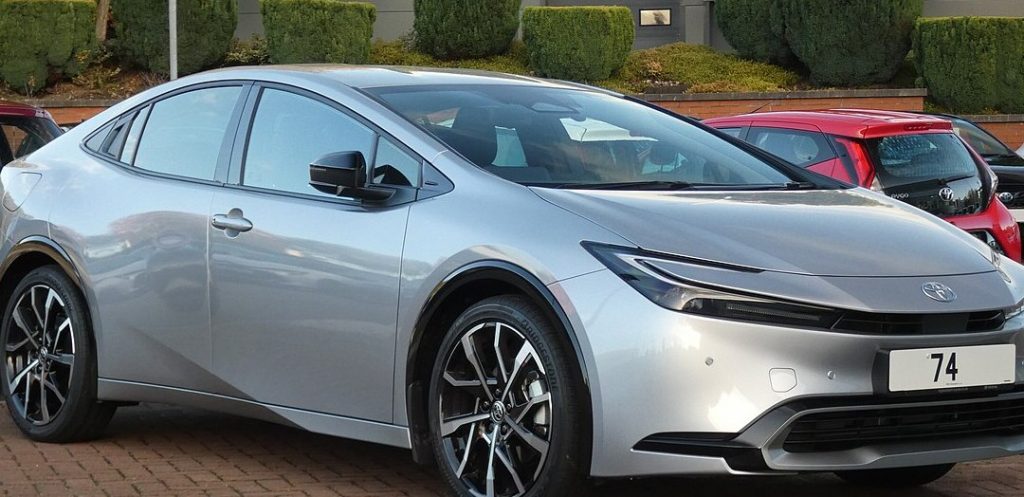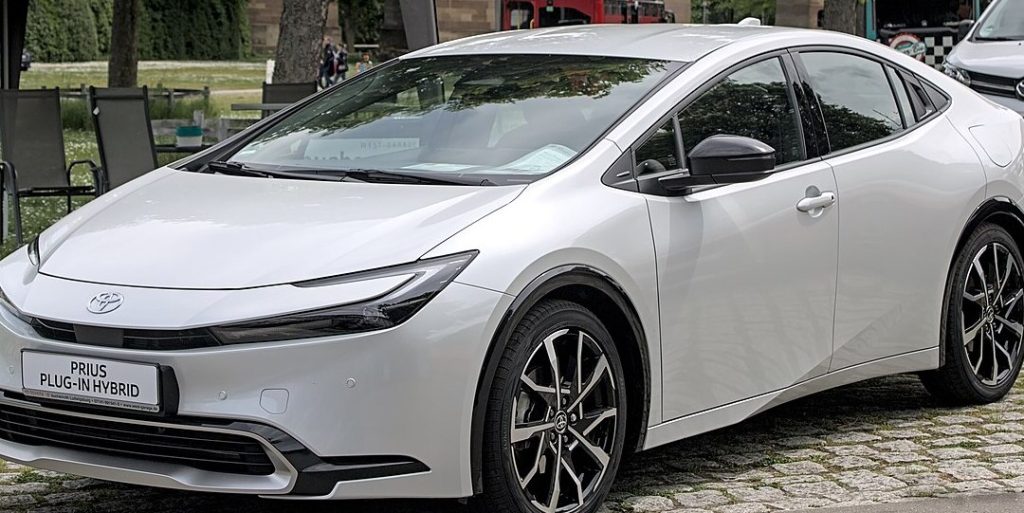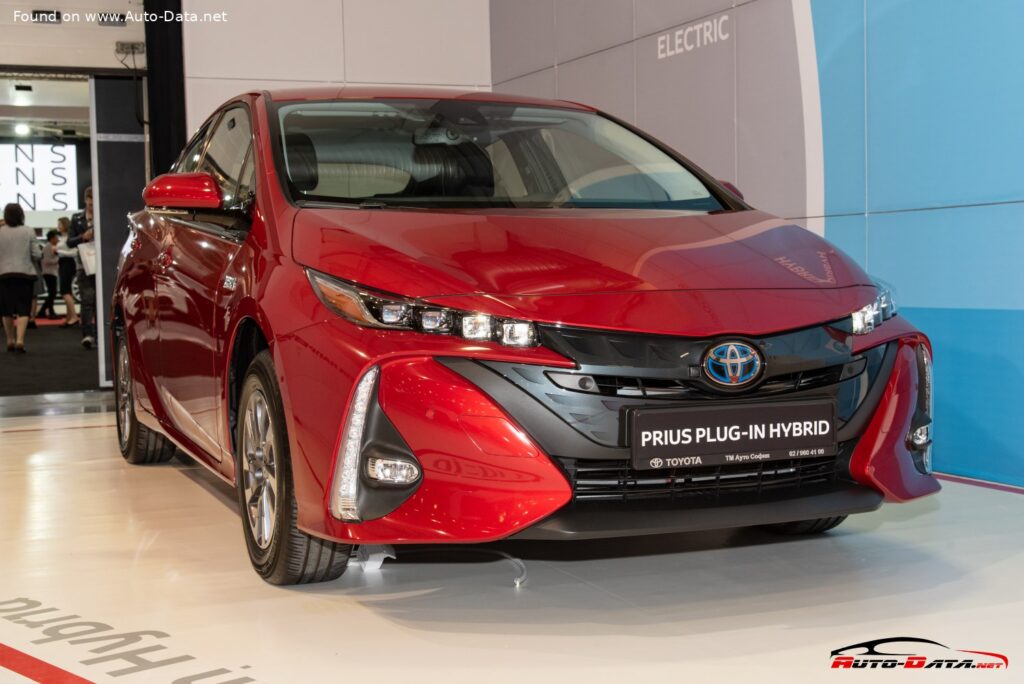
The Toyota Prius IV (XW50), produced from 2016 to 2018, represents the fourth generation of Toyota’s pioneering hybrid vehicle. As a plug-in hybrid (PHEV) liftback, the XW50 Prius aimed to build upon the success of its predecessors by offering increased fuel efficiency, a longer all-electric range, and enhanced practicality. While the Prius has always been a significant model in North America, its development and initial market focus were primarily geared towards Europe and Japan, where fuel economy and emissions regulations are particularly stringent. The XW50 continued Toyota’s commitment to hybrid technology, offering a compelling alternative to traditional gasoline-powered vehicles.
Toyota Prius IV (XW50): A Detailed Overview
Engine & Performance
The Prius IV (XW50) 1.8 utilizes a 1.8-liter (1798 cm3) inline four-cylinder gasoline engine, designated the 2ZR-FXE. This engine produces 98 horsepower (Hp) at 5200 rpm and 142 Newton-meters (104.73 lb.-ft.) of torque at 3600 rpm. The engine features a compression ratio of 13:1 and utilizes multi-port fuel injection. However, the total system output is 122 Hp, achieved through the integration of two electric motors. The primary electric motor, located at the front, delivers 72 Hp and 163 Nm (120.22 lb.-ft.) of torque, while a secondary motor contributes 31 Hp and 40 Nm (29.5 lb.-ft.). Power is delivered to the front wheels via an electronically controlled continuously variable transmission (e-CVT). This configuration allows for seamless transitions between gasoline and electric power, as well as regenerative braking to recapture energy. Acceleration from 0 to 100 km/h (0-62 mph) takes 11.1 seconds, and 0 to 60 mph is achieved in 10.5 seconds. The vehicle has a maximum speed of 162 km/h (100.66 mph).
Design & Features
The Prius IV (XW50) retains the distinctive liftback body style that has become synonymous with the Prius nameplate, offering a practical and aerodynamic shape. The design represents a significant departure from previous generations, with a more aggressive and modern aesthetic. Key design elements include sharp lines, a distinctive front grille, and unique headlight and taillight designs. The interior of the XW50 Prius prioritizes functionality and efficiency. It comfortably seats five passengers and offers a versatile cargo area. The trunk provides 191 liters (6.75 cu. ft.) of space with the rear seats up, expanding to 1204 liters (42.52 cu. ft.) when folded down. As a plug-in hybrid, the XW50 Prius offers an all-electric range of 45 km (27.96 miles) thanks to its 8.8 kWh lithium-ion battery pack, located under the trunk floor. Safety features include ABS (Anti-lock Braking System) and a comprehensive suite of airbags. The vehicle’s drag coefficient of 0.25 contributes to its aerodynamic efficiency and fuel economy.
Technical Specifications
| Brand | Toyota |
| Model | Prius |
| Generation | Prius IV (XW50) |
| Type (Engine) | 1.8 (122 Hp) Plug-in Hybrid e-CVT |
| Start of production | 2016 |
| End of production | 2018 |
| Powertrain Architecture | PHEV (Plug-in Hybrid Electric Vehicle) |
| Body type | Liftback |
| Seats | 5 |
| Doors | 5 |
| Fuel consumption at Low speed (WLTP) | 4.3-4.6 l/100 km (54.7 – 51.1 US mpg) |
| Fuel consumption at Medium speed (WLTP) | 3.8-4.2 l/100 km (61.9 – 56 US mpg) |
| Fuel consumption at High speed (WLTP) | 4-4.4 l/100 km (58.8 – 53.5 US mpg) |
| Fuel consumption at Very High speed (WLTP) | 5.5-6 l/100 km (42.8 – 39.2 US mpg) |
| Combined fuel consumption (WLTP) | 1.3-1.5 l/100 km (180.9 – 156.8 US mpg) |
| CO2 emissions (WLTP) | 28-35 g/km |
| Fuel Type | Petrol / electricity |
| Acceleration 0 – 100 km/h | 11.1 sec |
| Acceleration 0 – 62 mph | 11.1 sec |
| Acceleration 0 – 60 mph | 10.5 sec |
| Maximum speed | 162 km/h (100.66 mph) |
| Emission standard | Euro 6 |
| Weight-to-power ratio | 12.5 kg/Hp |
| Weight-to-torque ratio | 10.8 kg/Nm |
| Gross battery capacity | 8.8 kWh |
| Battery voltage | 352 V |
| Battery technology | Lithium-ion (Li-Ion) |
| Battery weight | 120 kg (264.55 lbs.) |
| Battery location | Under the trunk |
| All-electric range (WLTP) | 45 km (27.96 mi) |
| Average Energy consumption (WLTP) | 10 kWh/100 km |
| Max speed (electric) | 135 km/h (83.89 mph) |
| Electric motor power (1) | 72 Hp |
| Electric motor Torque (1) | 163 Nm (120.22 lb.-ft.) |
| Electric motor power (2) | 31 Hp |
| Electric motor Torque (2) | 40 Nm (29.5 lb.-ft.) |
| System power | 122 Hp |
| Power | 98 Hp @ 5200 rpm |
| Torque | 142 Nm @ 3600 rpm (104.73 lb.-ft. @ 3600 rpm) |
| Engine displacement | 1798 cm3 (109.72 cu. in.) |
| Number of cylinders | 4 |
| Cylinder Bore | 80.5 mm (3.17 in.) |
| Piston Stroke | 88.3 mm (3.48 in.) |
| Compression ratio | 13:1 |
| Engine oil capacity | 4.2 l (4.44 US qt | 3.7 UK qt) |
| Kerb Weight | 1530-1550 kg (3373.07 – 3417.17 lbs.) |
| Max. weight | 1930 kg (4254.92 lbs.) |
| Trunk (boot) space – minimum | 191 l (6.75 cu. ft.) |
| Trunk (boot) space – maximum | 1204 l (42.52 cu. ft.) |
| Fuel tank capacity | 43 l (11.36 US gal | 9.46 UK gal) |
| Length | 4645 mm (182.87 in.) |
| Width | 1760 mm (69.29 in.) |
| Height | 1470 mm (57.87 in.) |
| Wheelbase | 2700 mm (106.3 in.) |
The Toyota Prius IV (XW50) 1.8 Plug-in Hybrid represented a significant step forward in hybrid technology, offering a compelling combination of fuel efficiency, practicality, and environmental responsibility. Its advanced powertrain and thoughtful design cemented its position as a leader in the rapidly evolving automotive landscape.