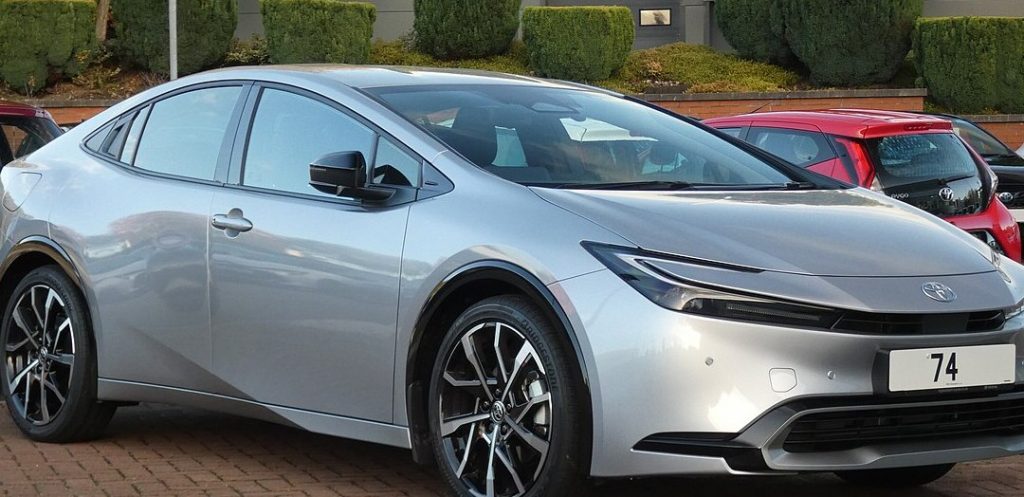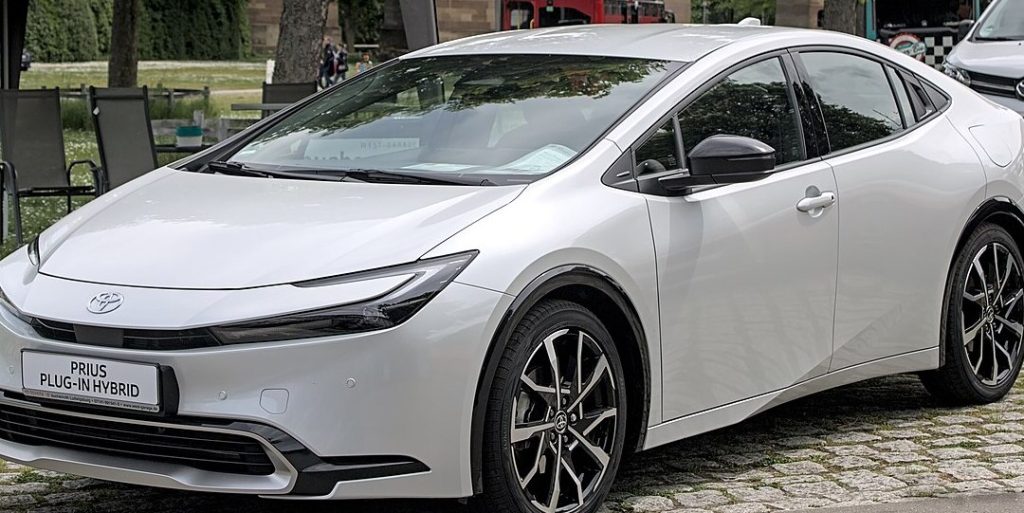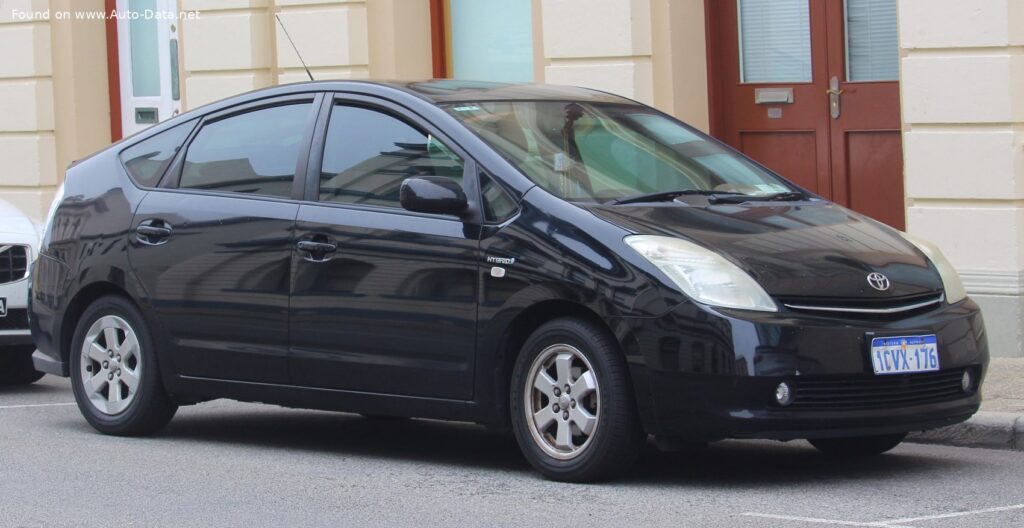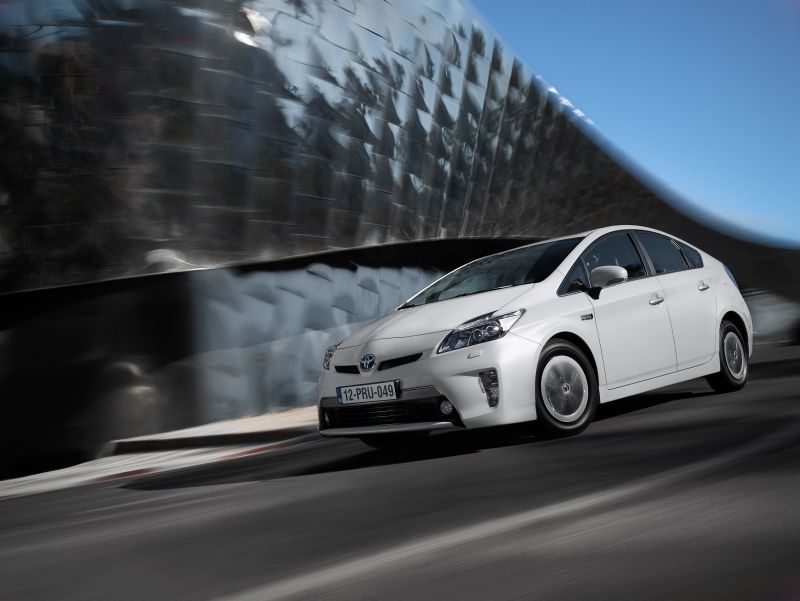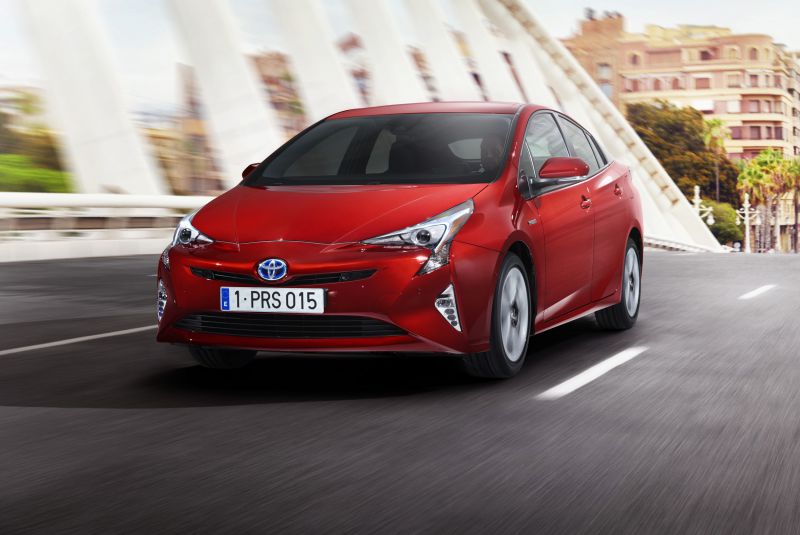
The Toyota Prius IV (XW50), launched in 2015 and produced through 2018, represents the fourth generation of Toyota’s pioneering hybrid vehicle. Building upon the success of its predecessors, the XW50 Prius aimed to refine the hybrid experience with improved fuel efficiency, enhanced styling, and updated technology. Primarily sold in global markets including North America, Europe, and Asia, the Prius IV continued to be a flagship model for Toyota’s hybrid technology, demonstrating the automaker’s commitment to fuel conservation and reduced emissions. It competes in the compact hybrid segment, appealing to environmentally conscious consumers seeking practical and fuel-efficient transportation.
Toyota Prius IV (XW50): A Detailed Overview
The XW50 Prius marked a significant departure in design from previous generations, adopting a more aggressive and aerodynamic profile. This fourth iteration focused on improving the overall driving experience while maintaining the core principles of the Prius – exceptional fuel economy and reliability. The vehicle’s hybrid powertrain was further optimized, and new safety features were incorporated to enhance passenger protection. The Prius IV’s success solidified its position as a leader in the hybrid vehicle market, influencing the development of hybrid technology across the automotive industry.
Engine & Performance
The Prius IV (XW50) 1.8 VVT-I utilizes Toyota’s Hybrid Synergy Drive system, a full hybrid (FHEV) powertrain. The heart of the system is a 1.8-liter (1798 cm3) inline four-cylinder gasoline engine, designated the 2ZR-FXE. This engine produces 98 horsepower and 142 Nm (104.73 lb.-ft.) of torque at 3600 rpm. The internal combustion engine is paired with a 72 horsepower electric motor, drawing power from a 1.31 kWh lithium-ion battery pack located under the rear seats. The combined system output is 122 horsepower at 5200 rpm. Power is delivered to the front wheels via an electronically controlled continuously variable transmission (e-CVT). This configuration allows the Prius to operate in electric-only mode at lower speeds, seamlessly transition between gasoline and electric power, or combine both for optimal performance. Acceleration from 0 to 100 km/h (0-62 mph) takes 10.6 seconds, while 0-60 mph is achieved in approximately 10.1 seconds. The Prius IV has a maximum speed of 180 km/h (111.85 mph).
Design & Features
The Prius IV features a distinctive liftback body style, offering a practical combination of passenger space and cargo capacity. The vehicle seats five passengers and offers 501 liters (17.69 cu. ft.) of trunk space. The exterior design is characterized by sharp lines, a low-slung profile, and a distinctive rear end. Inside, the cabin is designed with a focus on functionality and user-friendliness. Key features include a centrally mounted instrument cluster, a multi-information display, and available touchscreen infotainment system. Safety features were a priority, with standard equipment including Anti-lock Braking System (ABS) and a comprehensive airbag system. The XW50 Prius also benefited from improved sound insulation, enhancing cabin quietness. The vehicle’s aerodynamic design contributes to its exceptional fuel efficiency, minimizing drag and maximizing range. Available wheel sizes range from 6.5J x 15 to 7J x 17, paired with tires sized 195/65 R15 or 215/45 R17 respectively.
Technical Specifications
| Brand | Toyota |
| Model | Prius |
| Generation | Prius IV (XW50) |
| Type (Engine) | 1.8 VVT-I (122 Hp) Hybrid e-CVT |
| Start of production | 2015 |
| End of production | 2018 |
| Powertrain Architecture | FHEV (Full Hybrid Electric Vehicle) |
| Body type | Liftback |
| Seats | 5 |
| Doors | 5 |
| Fuel consumption (urban) | 2.9-3.3 l/100 km (81.1 – 71.3 US mpg) |
| Fuel consumption (extra urban) | 3.1-3.3 l/100 km (75.9 – 71.3 US mpg) |
| Fuel consumption (combined) | 3.0-3.3 l/100 km (78.4 – 71.3 US mpg) |
| CO2 emissions | 70-76 g/km |
| Fuel Type | Petrol (Gasoline) |
| Acceleration 0 – 100 km/h | 10.6 sec |
| Acceleration 0 – 62 mph | 10.6 sec |
| Acceleration 0 – 60 mph | 10.1 sec |
| Maximum speed | 180 km/h (111.85 mph) |
| Emission standard | Euro 6 |
| Weight-to-power ratio | 11.3 kg/Hp |
| Weight-to-torque ratio | 9.7 kg/Nm |
| Gross battery capacity | 1.31 kWh |
| Battery voltage | 207.2 V |
| Battery technology | Lithium-ion (Li-Ion) |
| Battery location | Under the rear seats |
| Electric motor power | 72 Hp |
| Electric motor Torque | 163 Nm (120.22 lb.-ft.) |
| Electric motor location | Integrated into the transmission |
| Electric motor type | Synchronous |
| System power | 122 Hp @ 5200 rpm |
| Engine Power | 98 Hp |
| Power per litre | 54.5 Hp/l |
| Engine Torque | 142 Nm @ 3600 rpm (104.73 lb.-ft. @ 3600 rpm) |
| Engine layout | Front, Transverse |
| Engine Model/Code | 2ZR-FXE |
| Engine displacement | 1798 cm3 (109.72 cu. in.) |
| Number of cylinders | 4 |
| Engine configuration | Inline |
| Cylinder Bore | 80.5 mm (3.17 in.) |
| Piston Stroke | 88.3 mm (3.48 in.) |
| Compression ratio | 13.04:1 |
| Number of valves per cylinder | 4 |
| Fuel injection system | Multi-port manifold injection |
| Engine aspiration | Naturally aspirated engine |
| Valvetrain | DOHC |
| Engine oil capacity | 4.2 l (4.44 US qt | 3.7 UK qt) |
| Coolant capacity | 6 l (6.34 US qt | 5.28 UK qt) |
| Kerb Weight | 1375 kg (3031.36 lbs.) |
| Max. weight | 1790 kg (3946.27 lbs.) |
| Max load | 415 kg (914.92 lbs.) |
| Trunk (boot) space – minimum | 501 l (17.69 cu. ft.) |
| Fuel tank capacity | 43 l (11.36 US gal | 9.46 UK gal) |
| Permitted trailer load without brakes | 725 kg (1598.35 lbs.) |
| Length | 4540 mm (178.74 in.) |
| Width | 1760 mm (69.29 in.) |
| Height | 1470 mm (57.87 in.) |
| Wheelbase | 2700 mm (106.3 in.) |
| Front track | 1530-1510 mm (60.24 – 59.45 in.) |
| Rear (Back) track | 1520-1540 mm (59.84 – 60.63 in.) |
| Ride height (ground clearance) | 123-136 mm (4.84 – 5.35 in.) |
| Minimum turning circle (turning diameter) | 10.2-10.8 m (33.46 – 35.43 ft.) |
| Drive wheel | Front wheel drive |
| Number of gears and type of gearbox | automatic transmission e-CVT |
The Toyota Prius IV (XW50) remains a significant vehicle in the history of hybrid technology, demonstrating Toyota’s commitment to fuel efficiency and sustainable transportation. Its combination of practical design, advanced technology, and exceptional fuel economy continues to appeal to a wide range of drivers.