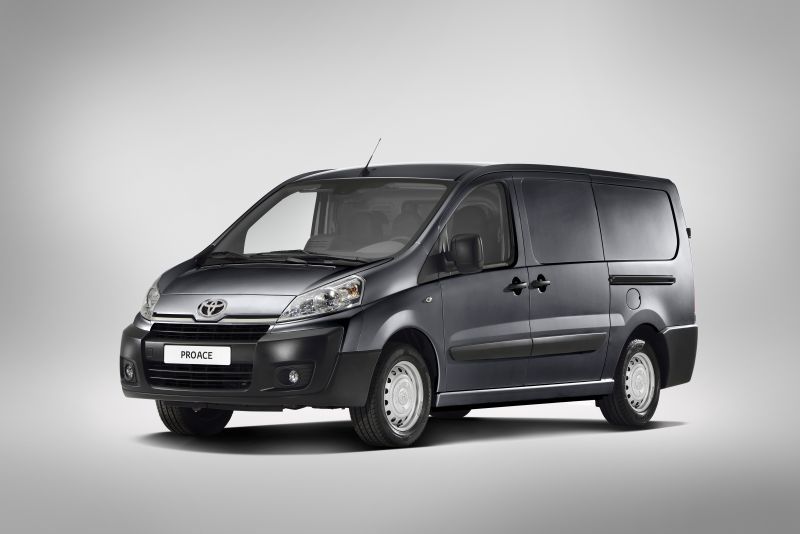
The Toyota Proace 2.0 D4-D (128 Hp) L1H1 represents Toyota’s entry into the competitive European mid-size light commercial vehicle (LCV) segment. Launched in 2013, this specific configuration – L1H1 denoting the shortest wheelbase and standard roof height – offered a versatile and maneuverable option for urban deliveries and commercial applications. This first generation of the Proace, produced from 2013 to 2016, wasn’t a wholly in-house Toyota design, but rather a rebadged version of the Sevel Nord platform, shared with the Citroën Jumpy, Peugeot Expert, and Fiat Scudo. This collaboration allowed Toyota to quickly establish a presence in a market where it had limited prior offerings, leveraging proven European engineering with Toyota’s reputation for quality and reliability.
Positioning within the Proace Lineup
The 2.0 D4-D (128 Hp) L1H1 variant served as the entry-level offering in the Proace range. It was designed to appeal to businesses prioritizing affordability and fuel efficiency over outright performance. Compared to potential higher-output versions that would appear in later iterations of the Proace, this model focused on providing a practical and cost-effective solution for everyday commercial tasks. It was positioned below any potential future high-performance or larger-capacity Proace models, targeting customers who didn’t require the extra power or cargo space.
Powertrain & Engine Architecture
At the heart of the Toyota Proace 2.0 D4-D (128 Hp) L1H1 lay a 2.0-liter (1997 cc) inline four-cylinder diesel engine, identified by the code 4WZ-FTV. This engine utilized Toyota’s D4-D (Direct Injection 4-stroke Common Rail Diesel) technology, known for its balance of power, fuel economy, and durability. The engine featured a turbocharger with an intercooler, boosting both output and efficiency. It produced 128 horsepower at 4000 rpm and a substantial 236.02 lb-ft of torque at 2000 rpm. This strong low-end torque was particularly beneficial for commercial applications, providing ample pulling power for hauling loads and navigating urban traffic.
Fuel Injection and Valvetrain
The 4WZ-FTV engine employed a common rail direct injection system, delivering fuel directly into the combustion chamber at extremely high pressure. This precise fuel delivery contributed to improved combustion efficiency, reduced emissions, and enhanced engine responsiveness. The engine also featured a double overhead camshaft (DOHC) valvetrain, optimizing airflow into and out of the cylinders for increased power and efficiency. The engine was paired with a smooth and durable 6-speed manual transmission, a common choice in European commercial vehicles for its reliability and driver control.
Driving Characteristics
The Toyota Proace 2.0 D4-D (128 Hp) L1H1 offered a practical and predictable driving experience. Acceleration from 0 to 60 mph took approximately 11.6 seconds, with a top speed of 105.63 mph (170 km/h). While not designed for speed, these figures were adequate for typical commercial routes, including highway driving. The engine’s strong low-end torque meant that it felt responsive in everyday driving situations, even when fully loaded. The 6-speed manual transmission allowed drivers to keep the engine in its optimal power band, maximizing efficiency and minimizing strain. Compared to potential higher-horsepower versions, this 128 hp variant prioritized fuel economy and drivability over outright performance.
Gear Ratios and Power Delivery
The 6-speed manual transmission featured carefully chosen gear ratios to optimize both fuel efficiency and load-carrying capability. Lower gears provided ample torque for starting from a standstill or climbing hills with a heavy load, while higher gears allowed for relaxed cruising on the highway. The power delivery was linear and predictable, making the Proace easy to control in a variety of driving conditions. The front-wheel-drive configuration contributed to a lower load floor, simplifying loading and unloading, and offered reasonable traction in most conditions.
Equipment & Trim Levels
The Toyota Proace 2.0 D4-D (128 Hp) L1H1 was typically equipped with a functional and durable interior. Standard features included a driver’s airbag, ABS brakes, electric front windows, and a basic audio system. The cabin offered seating for three occupants and featured a practical dashboard layout with ample storage compartments. The interior trim was designed for durability and ease of cleaning, utilizing robust materials that could withstand the rigors of daily commercial use. Optional extras included air conditioning, a rear parking sensor, and upgraded audio systems. The focus was on providing essential features for a work vehicle, rather than luxury amenities.
Chassis & Braking
The Proace’s chassis was designed to provide a balance of ride comfort and load-carrying capability. It featured a double wishbone front suspension and a semi-independent, coil spring rear suspension. The front brakes were ventilated discs, providing strong stopping power, while the rear brakes were discs. The inclusion of an Anti-lock Braking System (ABS) enhanced safety and control, particularly in emergency braking situations. Electric power steering made maneuvering the van easy, even when fully loaded. The minimum turning circle was 40.03 feet (12.2 meters), making it relatively maneuverable in urban environments.
Market Reception & Comparison
Critics generally viewed the Toyota Proace 2.0 D4-D (128 Hp) L1H1 as a practical and reliable work vehicle. Its fuel efficiency – rated at 36.8 US mpg combined – was a significant selling point, particularly for businesses concerned about operating costs. The Proace’s CO2 emissions of 168 g/km were also competitive for its era, meeting Euro 5 emission standards. Compared to its rivals, such as the Volkswagen Transporter and Ford Transit Custom, the Proace offered a compelling combination of value, reliability, and fuel economy. While it may not have offered the same level of refinement or performance as some of its competitors, its strong reputation for durability and low running costs made it an attractive option for many businesses.
Technical Specifications
| Category | Specification |
| General Information | |
| Brand | Toyota |
| Model | Proace |
| Generation | Proace (First Generation) |
| Type (Engine) | 2.0 D4-D (128 Hp) L1H1 |
| Start of Production | 2013 |
| End of Production | 2016 |
| Powertrain Architecture | Internal Combustion Engine |
| Body Type | Minivan |
| Seats | 3 |
| Doors | 5/6 |
| Performance Specs | |
| Fuel Consumption (Urban) | 7.6 l/100 km (30.9 US mpg) |
| Fuel Consumption (Extra Urban) | 5.8 l/100 km (40.6 US mpg) |
| Fuel Consumption (Combined) | 6.4 l/100 km (36.8 US mpg) |
| CO2 Emissions | 168 g/km |
| Fuel Type | Diesel |
| Acceleration 0 – 60 mph | 11.6 seconds |
| Maximum Speed | 105.63 mph (170 km/h) |
| Emission Standard | Euro 5 |
| Weight-to-Power Ratio | 13.8 kg/Hp (72.7 Hp/tonne) |
| Weight-to-Torque Ratio | 5.5 kg/Nm (181.7 Nm/tonne) |
| Engine Specs | |
| Power | 128 Hp @ 4000 rpm |
| Power per Liter | 64.1 Hp/l |
| Torque | 236.02 lb.-ft. @ 2000 rpm (320 Nm) |
| Engine Layout | Front, Transverse |
| Engine Model/Code | 4WZ-FTV |
| Engine Displacement | 2.0 Liters (1997 cm3 / 121.86 cu. in.) |
| Number of Cylinders | 4 |
| Engine Configuration | Inline |
| Cylinder Bore | 3.35 in. (85 mm) |
| Piston Stroke | 3.46 in. (88 mm) |
| Compression Ratio | 16:1 |
| Fuel Injection System | Diesel Commonrail |
| Engine Aspiration | Turbocharger, Intercooler |
| Valvetrain | DOHC |
| Engine Oil Capacity | 5.28 US qt (5 Liters) |
| Engine Systems | Particulate filter |
| Space, Volume and Weights | |
| Kerb Weight | 3882.34 – 4129.26 lbs (1761-1873 kg) |
| Max. Weight (GVWR) | 6389 lbs (2898 kg) |
| Max Load (Payload) | 2259.74 – 2506.66 lbs (1025-1137 kg) |
| Fuel Tank Capacity | 21.13 US gal (80 Liters) |
| Max. Roof Load | 374.79 lbs (170 kg) |
| Permitted Trailer Load with Brakes (12%) | 4409.25 lbs (2000 kg) |
| Permitted Trailer Load without Brakes | 1653.47 lbs (750 kg) |
| Permitted Towbar Download | 176.37 lbs (80 kg) |
| Dimensions | |
| Length | 189.49 in. (4813 mm) |
| Width | 74.61 in. (1895 mm) |
| Height | 77.95 in. (1980 mm) |
| Wheelbase | 118.11 in. (3000 mm) |
| Front Track | 61.81 in. (1570 mm) |
| Rear (Back) Track | 63.15 in. (1604 mm) |
| Minimum Turning Circle (Turning Diameter) | 40.03 ft. (12.2 m) |
| Drivetrain, Brakes and Suspension Specs | |
| Drivetrain Architecture | Front-wheel drive with Internal Combustion Engine |
| Drive Wheel | Front-wheel drive |
| Number of Gears and Type of Gearbox | 6 gears, Manual Transmission |
| Front Suspension | Double wishbone |
| Rear Suspension | Semi-independent, coil spring |
| Front Brakes | Ventilated discs |
| Rear Brakes | Disc |
| Assisting Systems | ABS (Anti-lock braking system) |
| Steering Type | Steering rack and pinion |
| Power Steering | Electric Steering |
| Tires Size | 215/60 R16 |
| Wheel Rims Size | 7J x 16 |
Legacy
The Toyota Proace 2.0 D4-D (128 Hp) L1H1 has proven to be a reliable and durable vehicle in the used car market. The 4WZ-FTV engine is known for its longevity, and with proper maintenance, can provide many years of service. Its fuel efficiency and relatively low running costs continue to make it an attractive option for businesses and individuals seeking a practical and affordable light commercial vehicle. While newer generations of the Proace offer more advanced features and higher performance, this first-generation model remains a viable and dependable choice for those prioritizing value and reliability.