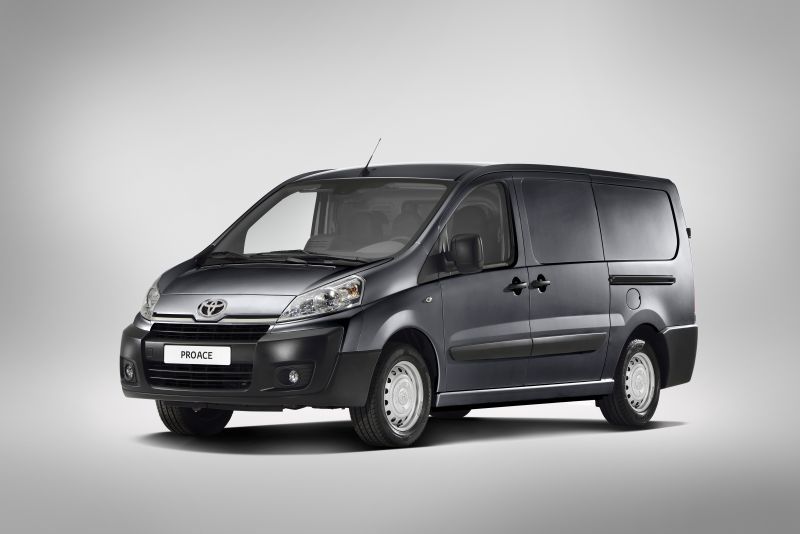
The Toyota Proace 2.0 D4-D (128 Hp) L2H1 represents Toyota’s entry and significant presence in the competitive European light commercial vehicle (LCV) market. Introduced in 2013 and produced through 2016, this first-generation Proace was the result of a collaboration between Toyota and the PSA Group (Peugeot-Citroën), essentially a rebadged version of the Citroën Jumpy, Fiat Scudo, and Peugeot Expert. This partnership allowed Toyota to offer a robust and versatile van tailored to the diverse needs of European businesses without developing an entirely new platform from scratch. The Proace carved out a niche as a practical, efficient, and reliable commercial van, embodying Toyota’s renowned quality standards within a proven and popular European van architecture. The L2H1 designation signifies its long wheelbase (L2) and standard roof height (H1), making it a versatile choice for a wide array of commercial applications, from cargo transport to specialized conversions, offering a balance of cargo capacity and maneuverability. This variant typically occupied a mid-range position in the Proace lineup, offering a balance between affordability and capability, appealing to businesses needing a dependable workhorse without the expense of higher-powered or more extensively equipped models.
Powertrain & Engine Architecture
At the heart of the Toyota Proace 2.0 D4-D (128 Hp) L2H1 lies a dependable 2.0-liter (1997 cm3 or 121.86 cubic inches) inline four-cylinder turbo-diesel engine. Designated with the model code 4WZ-FTV, this powerplant is engineered for efficiency and durability, critical attributes for any commercial vehicle. It utilizes a common rail direct fuel injection system, delivering fuel directly into the combustion chamber at extremely high pressure for optimized combustion and reduced emissions. The engine is equipped with a turbocharger and intercooler, ensuring optimal air-fuel mixture and enhanced power delivery across the rev range. The turbocharger forces more air into the engine, increasing power output, while the intercooler cools the compressed air, further improving efficiency. This configuration allows the engine to produce a respectable 128 horsepower at 4000 rpm, providing ample power for urban deliveries and highway cruising alike. More importantly for a commercial vehicle, the engine delivers a substantial 236.02 lb.-ft. of torque at a low 2000 rpm, crucial for hauling heavy loads and maintaining performance even when fully laden.
Power is channeled to the front wheels via a smooth-shifting 6-speed manual transmission, offering drivers precise control and contributing to the vehicle’s overall fuel efficiency. The transmission utilizes a conventional gearset with synchromesh on all forward gears, ensuring smooth and reliable shifting. The powertrain architecture is a front, transverse layout, driving the front wheels, which is a common and efficient setup for light commercial vehicles. This configuration minimizes drivetrain losses and maximizes interior space. The engine features a double overhead camshaft (DOHC) valvetrain with four valves per cylinder, optimizing airflow and contributing to its power and efficiency. The engine also incorporates a diesel particulate filter (DPF) to reduce harmful emissions, meeting Euro 5 standards.
Driving Characteristics
The 90 hp / Automatic setup, while not the most powerful option in the Proace range, provided a practical and economical driving experience. Compared to the higher-output versions, the 2.0 D4-D (128 Hp) L2H1 offered a more relaxed driving style, prioritizing fuel efficiency and ease of use over outright performance. The 6-speed manual transmission allowed drivers to keep the engine in its optimal torque band, maximizing pulling power and minimizing fuel consumption. The gear ratios were tuned for practicality, with a relatively low first gear for easy starts with heavy loads and a tall sixth gear for efficient highway cruising. While acceleration was not its strong suit, the Proace 2.0 D4-D (128 Hp) L2H1 was capable of maintaining highway speeds comfortably, even when fully loaded. Compared to the manual transmission versions, the automatic offered increased convenience, particularly in stop-and-go traffic, but at the expense of some fuel economy and driver engagement.
Equipment & Trim Levels
The Toyota Proace 2.0 D4-D (128 Hp) L2H1 typically came equipped with a range of practical features designed for commercial use. Standard equipment generally included air conditioning, a driver’s airbag, electric front windows, a radio with USB connectivity, and a height-adjustable steering wheel. The interior upholstery was typically durable and easy to clean, often featuring hard-wearing cloth or vinyl materials. The dashboard configuration was functional and straightforward, prioritizing ergonomics and ease of use. Optional extras available for this trim included a passenger airbag, rear parking sensors, a navigation system, Bluetooth connectivity, and upgraded audio systems. Higher trim levels offered additional features such as cruise control, automatic headlights, and rain-sensing wipers. The L2H1 variant’s cargo area was typically finished with durable plastic lining to protect the vehicle’s structure and facilitate easy cleaning. Various cargo securing options, such as tie-down points and load restraints, were also available.
Chassis & Braking
The chassis of the Toyota Proace 2.0 D4-D (128 Hp) L2H1 was designed to provide a comfortable ride and stable handling, even when carrying heavy loads. The front suspension utilized a double wishbone setup, offering good wheel control and ride quality. The rear suspension featured a semi-independent coil spring system, providing a balance between comfort and load-carrying capacity. Braking was handled by ventilated discs at the front and disc brakes at the rear, complemented by an Anti-lock Braking System (ABS) for enhanced safety. ABS prevents wheel lockup during hard braking, allowing the driver to maintain steering control. Electric power steering and a tight minimum turning circle of 41.34 ft. (12.6 m) further aided maneuverability in tight city streets and loading docks. The vehicle rides on 215/60 R16 tires mounted on 7J x 16 wheel rims, providing a good balance of load-bearing capability and ride comfort. Stabilizer bars were fitted to both the front and rear axles to reduce body roll during cornering.
Market Reception & Comparison
Critics generally viewed the Toyota Proace 2.0 D4-D (128 Hp) L2H1 as a practical and reliable commercial van, offering a compelling alternative to established rivals. Its fuel economy was consistently praised, with the 36.8 US mpg combined cycle rating being competitive within its class. The engine’s torque delivery was also well-received, providing ample power for hauling and towing. However, some critics noted that the 128 hp output was somewhat modest compared to some of its competitors, particularly when fully loaded or traveling on steep inclines. In terms of reliability, the Proace benefited from Toyota’s reputation for building durable and dependable vehicles. Compared to the higher-output trims, the 2.0 D4-D (128 Hp) L2H1 offered a lower purchase price and reduced running costs, making it an attractive option for businesses prioritizing affordability. Compared to the petrol-powered versions (which were less common), the diesel engine offered significantly better fuel economy and torque. The Proace’s collaborative origins with the PSA Group also meant that parts availability and servicing were generally good, thanks to the widespread use of common components across multiple brands.
Technical Specifications
| Category | Specification |
| General Information | |
| Brand | Toyota |
| Model | Proace |
| Type (Engine) | 2.0 D4-D (128 Hp) L2H1 |
| Production Years | 2013 – 2016 |
| Powertrain Architecture | Internal Combustion engine |
| Body type | Minivan (Commercial Van) |
| Seats | 3 |
| Doors | 5/6 |
| Performance Specs | |
| Fuel consumption (urban) | 7.6 l/100 km (30.9 US mpg) |
| Fuel consumption (extra urban) | 5.8 l/100 km (40.6 US mpg) |
| Fuel consumption (combined) | 6.4 l/100 km (36.8 US mpg) |
| CO2 emissions | 168 g/km |
| Fuel Type | Diesel |
| Acceleration 0 – 62 mph | 13 sec |
| Acceleration 0 – 60 mph (Calculated) | 12.4 sec |
| Maximum speed | 105.63 mph (170 km/h) |
| Emission standard | Euro 5 |
| Weight-to-power ratio | 14 kg/Hp (71.3 Hp/tonne) |
| Weight-to-torque ratio | 5.6 kg/Nm (178.3 Nm/tonne) |
| Engine Specs | |
| Power | 128 Hp @ 4000 rpm |
| Power per liter | 64.1 Hp/l |
| Torque | 236.02 lb.-ft. (320 Nm) @ 2000 rpm |
| Engine layout | Front, Transverse |
| Engine Model/Code | 4WZ-FTV |
| Engine displacement | 1997 cm3 (121.86 cu. in.) |
| Number of cylinders | 4 |
| Engine configuration | Inline |
| Cylinder Bore | 3.35 in. (85 mm) |
| Piston Stroke | 3.46 in. (88 mm) |
| Compression ratio | 16:1 |
| Fuel injection system | Diesel Commonrail |
| Engine aspiration | Turbocharger, Intercooler |
| Valvetrain | DOHC |
| Engine oil capacity | 5.28 US qt (5 l) |
| Engine systems | Particulate filter |
| Space, Volume and Weights | |
| Kerb Weight | 3957.3 – 4197.6 lbs. (1795-1904 kg) |
| Max. weight | 6463.95 lbs. (2932 kg) |
| Max load | 2266.35 – 2506.66 lbs. (1028-1137 kg) |
| Fuel tank capacity | 21.13 US gal (80 l) |
| Max. roof load | 176.37 lbs. (80 kg) |
| Permitted trailer load with brakes (12%) | 4409.25 lbs. (2000 kg) |
| Permitted trailer load without brakes | 1653.47 lbs. (750 kg) |
| Dimensions | |
| Length | 202.48 in. (5143 mm) |
| Width | 74.61 in. (1895 mm) |
| Height | 77.95 in. (1980 mm) |
| Wheelbase | 122.91 in. (3122 mm) |
| Front track | 61.81 in. (1570 mm) |
| Rear (Back) track | 63.15 in. (1604 mm) |
| Minimum turning circle (turning diameter) | 41.34 ft. (12.6 m) |
| Drivetrain, Brakes and Suspension Specs | |
| Drivetrain Architecture | Internal combustion engine drives the front wheels. |
| Drive wheel | Front wheel drive |
| Number of gears and type of gearbox | 6 gears, manual transmission |
| Front suspension | Double wishbone |
| Rear suspension | Semi-independent, coil spring |
| Front brakes | Ventilated discs |
| Rear brakes | Disc |
| Assisting systems | ABS (Anti-lock braking system) |
| Steering type | Steering rack and pinion |
| Power steering | Electric Steering |
| Tires size | 215/60 R16 |
| Wheel rims size | 7J x 16 |
Legacy
The Toyota Proace 2.0 D4-D (128 Hp) L2H1, while superseded by newer generations, continues to be a common sight on European roads. The 4WZ-FTV engine, when properly maintained, has proven to be a durable and reliable unit, capable of accumulating high mileage. Common issues, such as DPF clogging, can be mitigated with regular servicing and the use of quality diesel fuel. In the used car market, these Proaces represent a cost-effective option for businesses seeking a dependable work van. Their relatively low purchase price, combined with good fuel economy and readily available parts, make them an attractive proposition. The first-generation Proace, including the 2.0 D4-D (128 Hp) L2H1, established Toyota as a serious contender in the European LCV market, paving the way for continued success with subsequent models. Its legacy is one of practicality, reliability, and value, solidifying its place as a workhorse for European businesses.