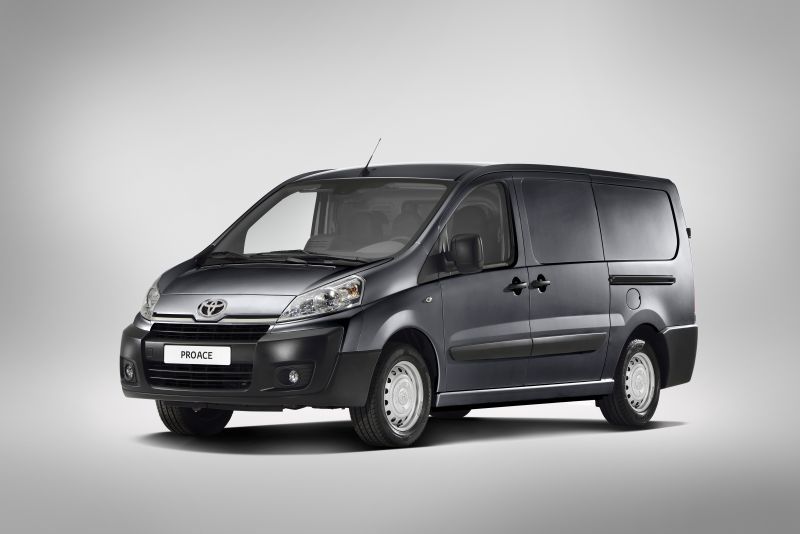
The Toyota Proace 2.0 D4-D (163 hp) L1H1, produced from 2013 to 2016, was a key model in Toyota’s first foray into the mid-size light commercial vehicle (LCV) segment in Europe. This variant represented Toyota’s response to the growing demand for versatile and efficient vans, aimed at businesses and tradespeople requiring a compact yet capable vehicle. The “L1H1” designation indicates a short wheelbase and standard roof height, prioritizing maneuverability and cargo volume within a relatively small footprint. The Proace, in general, was a collaborative effort between Toyota and PSA Peugeot Citroën (later Stellantis), sharing its platform and core components with the Citroën Jumpy, Peugeot Expert, and Fiat Scudo. This strategic partnership allowed Toyota to rapidly enter a competitive market without the extensive development costs associated with a completely independent design.
Toyota Proace 2.0 D4-D (163 hp) L1H1: Overview and Positioning
The first-generation Toyota Proace, launched in 2013, was designed to fill a gap in Toyota’s commercial vehicle lineup. Prior to the Proace, Toyota’s LCV offerings in Europe were limited, primarily consisting of smaller vans and pickup trucks. The Proace, leveraging the established platform of its PSA partners, allowed Toyota to compete directly with established players like the Volkswagen Transporter, Ford Transit, and Mercedes-Benz Vito. The 2.0 D4-D (163 hp) L1H1 trim occupied a middle ground within the Proace range. It wasn’t the base-level work van, but it wasn’t the highest-specification model either. It aimed to provide a balance between affordability, performance, and equipment, making it suitable for a wide range of commercial applications. It was positioned as a step up from the lower-powered engine options, offering increased capability for those regularly carrying heavier loads or traveling longer distances.
Powertrain and Engine Architecture
The heart of the Proace 2.0 D4-D (163 hp) L1H1 is a 2.0-liter four-cylinder diesel engine. This engine, designated as the DW10CTED4, is a PSA-developed unit, reflecting the collaborative nature of the Proace project. It utilizes common rail direct injection, a turbocharger with variable geometry, and an intercooler to achieve its 163 horsepower (161 bhp) output and 258 lb-ft of torque. The engine features a 16-valve DOHC (Double Overhead Camshaft) configuration. The fuel injection system operates at very high pressures (typically around 1,800 bar) to ensure efficient combustion and reduced emissions. The turbocharger’s variable geometry vanes adjust to optimize boost pressure across the engine’s operating range, improving both low-end torque and high-end power. The engine is Euro 5 compliant, incorporating a diesel particulate filter (DPF) and exhaust gas recirculation (EGR) system to minimize harmful emissions. The transmission offered with this variant was typically a six-speed manual gearbox, although a six-speed automatic transmission was also available as an option, albeit less common. The automatic transmission, sourced from Aisin, is known for its smooth shifting and reliability.
Driving Characteristics
The Proace 2.0 D4-D (163 hp) L1H1 offers a competent and practical driving experience. The 163 horsepower and 258 lb-ft of torque provide sufficient power for most commercial applications, even when the van is fully loaded. Acceleration is brisk, and the engine pulls strongly from low revs, making it well-suited for urban driving and stop-start traffic. The six-speed gearbox (manual or automatic) is well-matched to the engine’s characteristics, allowing for comfortable cruising at highway speeds. Compared to the lower-powered 90 hp or 128 hp versions of the 2.0 D4-D engine, the 163 hp variant offers a noticeable improvement in performance, particularly when carrying heavy loads or tackling inclines. The L1H1 configuration contributes to the van’s agility, making it easier to maneuver in tight spaces compared to the longer wheelbase or high-roof versions. The suspension is tuned for comfort and load-carrying capacity, providing a reasonably smooth ride even on uneven surfaces. However, it’s important to note that the Proace is a commercial vehicle, and its ride quality is not as refined as that of a passenger car.
Equipment and Trim Levels
The Proace 2.0 D4-D (163 hp) L1H1 typically came equipped with a range of practical features designed for commercial use. Standard equipment generally included air conditioning, a CD player with auxiliary input, electric front windows, central locking, and an adjustable steering wheel. Safety features such as ABS brakes, electronic brake-force distribution (EBD), and driver and passenger airbags were also standard. Higher trim levels, or optional packages, could add features such as a touchscreen infotainment system with navigation, Bluetooth connectivity, rear parking sensors, cruise control, and upgraded interior trim. Interior upholstery was typically hard-wearing fabric, designed to withstand the rigors of commercial use. The dashboard layout is functional and straightforward, with clearly labeled controls. The L1H1 configuration offers a cargo volume of approximately 5.1 cubic meters, making it suitable for a variety of goods and equipment. The load bay is typically equipped with tie-down points and protective panels to prevent damage to the vehicle and its contents.
Chassis and Braking
The Proace L1H1 utilizes a front-wheel-drive chassis, although all-wheel-drive versions were also available. The suspension consists of MacPherson struts at the front and a twist beam axle at the rear. The front suspension incorporates a stabilizer bar to reduce body roll during cornering. The braking system features disc brakes on the front wheels and drum brakes on the rear wheels. ABS (Anti-lock Braking System) and EBD (Electronic Brakeforce Distribution) are standard, enhancing braking performance and stability. The steering is power-assisted, providing light and precise control. The L1H1’s relatively short wheelbase and lower center of gravity contribute to its agile handling characteristics. The vehicle’s load capacity is approximately 1,200 kg, making it suitable for a wide range of commercial applications.
Market Reception and Comparison
The Toyota Proace 2.0 D4-D (163 hp) L1H1 was generally well-received by critics and commercial vehicle operators. It was praised for its practicality, fuel efficiency, and reliability. The collaborative development with PSA Peugeot Citroën resulted in a well-engineered and robust vehicle. Compared to its rivals, the Proace offered a competitive combination of features, performance, and price. The 163 hp engine provided a noticeable advantage over the lower-powered versions, making it a popular choice for those requiring extra performance. Fuel economy was a strong point, with the 2.0 D4-D engine achieving around 40-45 mpg (combined cycle) in real-world driving conditions. Reliability was also a key strength, benefiting from Toyota’s reputation for building durable and dependable vehicles. However, some critics noted that the Proace’s interior design was somewhat utilitarian and lacked the refinement of some of its competitors.
Technical Specifications
| Engine | 2.0-liter DW10CTED4 Turbo Diesel |
| Power Output | 163 hp (161 bhp) @ 3,750 rpm |
| Torque | 258 lb-ft @ 2,000 rpm |
| Transmission | 6-speed Manual or 6-speed Automatic |
| Fuel Consumption (Combined) | 40-45 mpg (estimated) |
| Cargo Volume (L1H1) | 5.1 cubic meters (approx.) |
| Load Capacity | 1,200 kg (approx.) |
| Wheelbase | 2,467 mm |
| Overall Length | 4,806 mm |
| Overall Height | 1,961 mm |
Legacy
The Toyota Proace 2.0 D4-D (163 hp) L1H1 established Toyota as a credible player in the European mid-size van market. The DW10CTED4 engine, while developed by PSA, proved to be a reliable and durable unit when properly maintained. In the used car market, these Proaces are generally sought after for their practicality, fuel efficiency, and relatively low running costs. The automatic transmission versions, while less common, tend to command a premium due to their convenience. Common issues reported with these vans include DPF blockages (particularly with frequent short journeys) and wear and tear on suspension components. However, overall, the Proace 2.0 D4-D (163 hp) L1H1 remains a popular and dependable choice for businesses and tradespeople seeking a versatile and affordable light commercial vehicle. The success of this first-generation model paved the way for the subsequent generations of the Proace, further solidifying Toyota’s presence in the LCV segment.