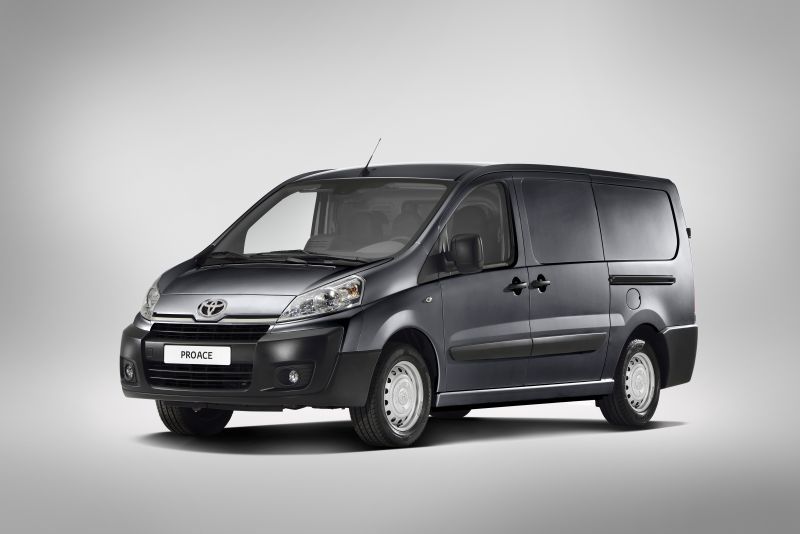
The Toyota Proace 2.0 D4-D (163 Hp) L2H2 represents Toyota’s entry into the European light commercial vehicle (LCV) market, launched in 2013. This first-generation Proace wasn’t an independently developed Toyota product, but a rebadged version of the Eurovan platform, a joint venture between PSA Peugeot Citroën and Fiat. It shared its underpinnings with the Citroën Jumpy, Peugeot Expert, and Fiat Scudo. The “L2H2” designation indicates a longer wheelbase and higher roof, creating a versatile van for cargo transport and specialized conversions. Positioned as a reliable and efficient option for European businesses, the Proace aimed to combine Toyota’s quality with the practicality of its European counterparts.
Powertrain & Engine Architecture
The Toyota Proace 2.0 D4-D (163 Hp) L2H2 is powered by a 2.0-liter D4-D (Direct Injection 4-stroke Diesel) inline-four engine, internally coded 4WZ-FHV. This engine was designed to balance power, torque, and fuel economy, critical for a commercial vehicle. It produces 163 horsepower at 3750 RPM and 250.77 lb.-ft. (340 Nm) of torque from 2000 RPM. This low-end torque is essential for strong acceleration, merging into traffic, and climbing inclines, even when loaded.
The engine utilizes a Diesel Commonrail fuel injection system for precise fuel delivery and efficient combustion. A turbocharger with an intercooler further enhances performance by increasing air intake density, resulting in greater power and throttle response. The valvetrain features a Double Overhead Camshaft (DOHC) configuration, contributing to efficient valve operation and engine refinement. Power is delivered to the front wheels through a smooth-shifting 6-speed manual transmission, optimizing fuel consumption. This setup allows for a 0-60 mph acceleration time of approximately 10 seconds and a top speed of 105.63 mph (170 km/h).
Driving Characteristics
The 2.0 D4-D (163 Hp) Automatic Proace offers a practical driving experience geared towards utility rather than outright performance. Compared to higher-output versions or manual transmissions, this configuration prioritizes ease of use and fuel efficiency. The automatic transmission, while providing convenience, does result in a slight reduction in responsiveness compared to a manual gearbox. Gear ratios are tuned for maximizing fuel economy and providing adequate pulling power at lower speeds. While not a particularly sporty van, the 163 hp engine provides sufficient power for most everyday commercial tasks, including city deliveries and highway cruising. The automatic transmission smooths out power delivery, making it a comfortable option for drivers spending long hours behind the wheel.
Equipment & Trim Levels
The Proace L2H2 typically came equipped as a work van, prioritizing functionality over luxury. Standard features included a driver’s seat and a two-person bench, often with a fold-down central section for workspace or storage. Interior materials were durable and easy to clean, designed to withstand the rigors of commercial use. The dashboard layout was functional and straightforward, with clearly labeled controls. Optional extras included air conditioning, a radio with Bluetooth connectivity, parking sensors, and upgraded seating. Higher trim levels, though less common, might have featured additional comfort and convenience features like cruise control and a touchscreen infotainment system. The focus remained on providing a practical and reliable work environment.
Chassis & Braking
The Proace L2H2 features a chassis engineered to handle varying loads. The front suspension utilizes a double wishbone setup for precise steering and ride comfort. The rear suspension employs a semi-independent, coil spring system optimized for load-carrying capability and stability. Braking is handled by ventilated discs at the front and disc brakes at the rear, complemented by an Anti-lock Braking System (ABS) for enhanced safety. The electric power steering system, a rack and pinion type, offers light and responsive handling. The vehicle rides on 215/60 R16 tires mounted on 7J x 16 wheel rims, balancing load capacity, ride comfort, and grip.
Market Reception & Comparison
Critics generally viewed the Toyota Proace 2.0 D4-D (163 Hp) L2H2 as a solid and dependable work van. Its fuel economy, achieving a combined 36.8 US mpg (6.4 l/100 km), was a significant selling point. Compared to other trims in the Proace lineup, the 163 hp version offered a good balance between performance and efficiency. While the lower-powered versions were more fuel-efficient, they lacked the grunt needed for heavier loads or frequent highway driving. Compared to the higher-output engines, the 163 hp model was more affordable and offered lower running costs. Reliability was a key strength, benefiting from Toyota’s reputation for build quality. However, some reviewers noted that the automatic transmission wasn’t as responsive as the manual option, and the interior was somewhat basic compared to some competitors.
Technical Specifications
| General Information | |
| Brand | Toyota |
| Model | Proace |
| Generation | Proace (First Generation) |
| Type (Engine) | 2.0 D4-D (163 Hp) L2H2 |
| Start of Production | 2013 |
| End of Production | 2016 |
| Powertrain Architecture | Internal Combustion engine |
| Body type | Minivan |
| Seats | 3 |
| Doors | 5 |
| Performance Specifications | |
| Fuel Consumption (economy) – urban | 7.6 l/100 km (30.9 US mpg) |
| Fuel Consumption (economy) – extra urban | 5.8 l/100 km (40.6 US mpg) |
| Fuel Consumption (economy) – combined | 6.4 l/100 km (36.8 US mpg) |
| CO2 emissions | 168 g/km |
| Fuel Type | Diesel |
| Acceleration 0 – 100 km/h | 10.5 sec |
| Acceleration 0 – 62 mph | 10.5 sec |
| Acceleration 0 – 60 mph (Calculated) | 10 sec |
| Maximum speed | 170 km/h (105.63 mph) |
| Emission standard | Euro 5 |
| Weight-to-power ratio | 11.3 kg/Hp (88.8 Hp/tonne) |
| Weight-to-torque ratio | 5.4 kg/Nm (185.2 Nm/tonne) |
| Engine Specifications | |
| Power | 163 Hp @ 3750 rpm |
| Power per liter | 81.6 Hp/l |
| Torque | 340 Nm @ 2000 rpm (250.77 lb.-ft. @ 2000 rpm) |
| Engine layout | Front, Transverse |
| Engine Model/Code | 4WZ-FHV |
| Engine displacement | 1997 cm3 (121.86 cu. in.) |
| Number of cylinders | 4 |
| Engine configuration | Inline |
| Cylinder Bore | 85 mm (3.35 in.) |
| Piston Stroke | 88 mm (3.46 in.) |
| Compression ratio | 16:1 |
| Fuel injection system | Diesel Commonrail |
| Engine aspiration | Turbocharger, Intercooler |
| Valvetrain | DOHC |
| Engine oil capacity | 5 l (5.28 US qt) |
| Engine systems | Particulate filter |
| Space, Volume and Weights | |
| Kerb Weight | 1836-1945 kg (4047.69 – 4287.99 lbs.) |
| Max. weight | 2973 kg (6554.34 lbs.) |
| Max load | 1028-1137 kg (2266.35 – 2506.66 lbs.) |
| Fuel tank capacity | 80 l (21.13 US gal) |
| Max. roof load | 170 kg (374.79 lbs.) |
| Permitted trailer load with brakes (12%) | 2000 kg (4409.25 lbs.) |
| Permitted trailer load without brakes | 750 kg (1653.47 lbs.) |
| Permitted towbar download | 80 kg (176.37 lbs.) |
| Dimensions | |
| Length | 5143 mm (202.48 in.) |
| Width | 1895 mm (74.61 in.) |
| Height | 1980 mm (77.95 in.) |
| Wheelbase | 3122 mm (122.91 in.) |
| Front track | 1570 mm (61.81 in.) |
| Rear (Back) track | 1604 mm (63.15 in.) |
| Minimum turning circle (turning diameter) | 12.6 m (41.34 ft.) |
| Drivetrain, Brakes and Suspension Specifications | |
| Drivetrain Architecture | The Internal combustion engine (ICE) drives the front wheels of the vehicle. |
| Drive wheel | Front wheel drive |
| Number of gears and type of gearbox | 6 gears, manual transmission |
| Front suspension | Double wishbone |
| Rear suspension | Semi-independent, coil spring |
| Front brakes | Ventilated discs |
| Rear brakes | Disc |
| Assisting systems | ABS (Anti-lock braking system) |
| Steering type | Steering rack and pinion |
| Power steering | Electric Steering |
| Tires size | 215/60 R16 |
| Wheel rims size | 7J x 16 |
Legacy
The first-generation Toyota Proace (2013-2016) successfully established Toyota as a contender in the European LCV market. As a rebadged product, it offered a cost-effective way for Toyota to enter a competitive segment without significant upfront investment. The 2.0 D4-D (163 Hp) engine proved to be reliable and fuel-efficient, making it a popular choice for businesses. On the used car market today, these Proaces are generally well-regarded for their durability and relatively low running costs. While they may not offer the same level of refinement or technology as newer models, they represent a practical and dependable option for those seeking a budget-friendly work van. The engine, when properly maintained, is known to be long-lasting, and parts availability remains good due to the shared platform with Peugeot, Citroën, and Fiat. The Proace’s legacy lies in its contribution to Toyota’s growing presence in the European commercial vehicle sector and its reputation as a reliable and affordable workhorse.