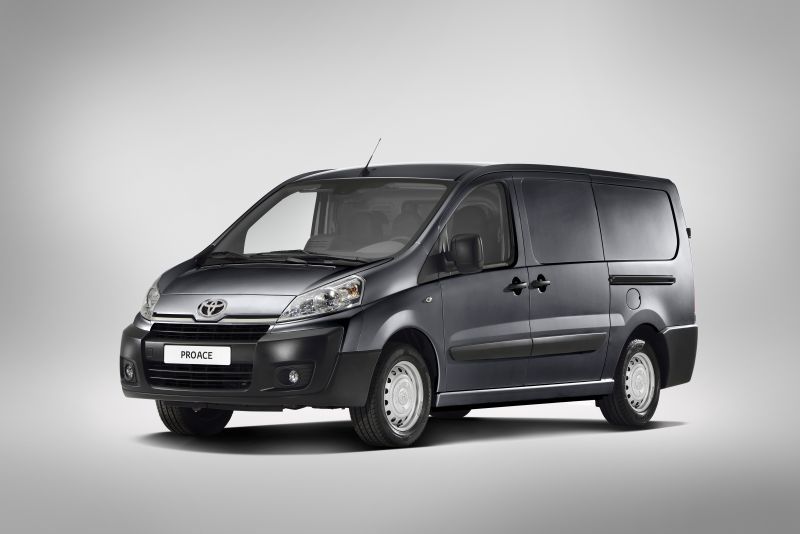
The Toyota Proace City LWB 1.5 D-4D (102 Hp) represents a compelling entry in the compact light commercial vehicle (LCV) segment, primarily serving the European and other international markets. Launched in April 2020, this specific iteration, part of the Proace City’s first generation, is a long-wheelbase minivan designed to offer a blend of practicality, efficiency, and maneuverability for businesses and private users alike. It’s a testament to Toyota’s strategic collaboration with Stellantis (formerly PSA Group), sharing its platform and core components with models like the Citroën Berlingo, Peugeot Partner, and Opel Combo. While not sold in the United States, the Proace City is a critical component of Toyota’s commercial vehicle strategy abroad, providing a robust and economical solution for urban logistics and passenger transport.
This particular model, equipped with the 1.5-liter D-4D diesel engine producing 102 horsepower, emphasizes fuel economy and low emissions, aligning with stringent European environmental standards. Its long-wheelbase configuration maximizes cargo volume, making it an ideal choice for tradespeople, delivery services, and families requiring substantial space. The Proace City LWB blends Toyota’s renowned reliability with European design and engineering, offering a practical and cost-effective solution in a highly competitive market segment.
Powertrain & Engine Architecture
At the heart of the Toyota Proace City LWB 1.5 D-4D (102 Hp) is a highly efficient and robust 1.5-liter (1499 cm³ or 91.47 cu. in.) D-4D inline four-cylinder diesel engine. This unit, codenamed YH01, is positioned transversely at the front and features a modern common rail direct fuel injection system, augmented by a turbocharger and intercooler for optimal power delivery and efficiency. With a power output of 102 horsepower (Hp) at 3500 rpm and a substantial 250 Nm (184.39 lb.-ft.) of torque available from a low 1750 rpm, the engine is well-suited for hauling loads and navigating both urban environments and open highways. The peak torque at low RPMs ensures excellent responsiveness and pulling power, a crucial attribute for a commercial vehicle.
Power is sent to the front wheels via a smooth-shifting 5-speed manual transmission, a choice that prioritizes driver engagement and cost-effectiveness. The powertrain architecture, driving the front wheels, contributes to better traction and interior packaging. The engine is also equipped with modern features such as a Start & Stop System, which conserves fuel during idle, and a particulate filter, crucial for meeting the stringent Euro 6d-ISC-FCM emission standard. The fuel injection system utilizes solenoid injectors for precise fuel metering, contributing to both performance and reduced emissions. The engine’s valvetrain employs an overhead camshaft (OHC) configuration, optimizing gas flow and engine efficiency.
Driving Characteristics
The 1.8L 90 hp Automatic configuration of the Proace City LWB offers a driving experience geared towards practicality and economy rather than outright performance. Compared to higher-output versions, the 102 hp engine delivers adequate power for typical commercial duties, but acceleration is modest, particularly when fully loaded. The 5-speed manual transmission is well-matched to the engine’s torque curve, providing usable power across a broad range of speeds. The gear ratios are optimized for fuel efficiency, with a relatively tall final drive.
While the manual transmission offers more driver control, it doesn’t significantly alter the overall performance characteristics. The focus remains on delivering a smooth and predictable driving experience, prioritizing ease of use and reduced driver fatigue. Compared to the more powerful diesel options, the 1.5 D-4D (102 Hp) variant is less suited for frequent highway driving or carrying exceptionally heavy loads. However, for urban delivery routes and lighter commercial applications, it provides a balanced and economical solution.
Equipment & Trim Levels
The Toyota Proace City LWB 1.5 D-4D (102 Hp) typically comes with a functional and practical equipment level, reflecting its commercial focus. Standard features generally include air conditioning, a basic audio system with USB connectivity, power windows, and central locking. Safety features such as ABS, Electronic Stability Control (ESC), and multiple airbags are also standard. The interior upholstery is typically durable and easy to clean, often utilizing hard-wearing cloth materials.
Optional extras available for this trim level can include a touchscreen infotainment system with navigation, rear parking sensors, a reversing camera, and cruise control. Additional cargo area protection features, such as bulkhead partitions and load floor liners, are also commonly offered. Higher trim levels may include features like automatic headlights and rain-sensing wipers. The dashboard configuration is straightforward and functional, prioritizing ease of use and visibility. The Proace City LWB is designed to be a workhorse, so luxury features are generally limited.
Chassis & Braking
The Proace City LWB employs a tried-and-tested suspension setup: an independent McPherson type at the front and a torsion beam at the rear, designed to handle varying loads while maintaining ride comfort. This configuration provides a good balance between ride quality and load-carrying capacity. Braking is managed by ventilated discs at the front and disc brakes at the rear, complemented by an Anti-lock Braking System (ABS) for enhanced safety. The electric power steering, with a rack and pinion system, provides light and precise handling, particularly beneficial in urban environments where the minimum turning circle is a respectable 11.5 meters (37.73 feet).
The vehicle rides on 215/65 R16 98H or 205/60 R16 96H tires, mounted on 6.5J x 16 wheel rims, offering a good balance of durability and ride comfort. The suspension is tuned to prioritize stability and control when carrying a load, rather than sporty handling. The rear suspension, utilizing a torsion beam, is a cost-effective and space-efficient solution for commercial vehicles. The braking system is designed to provide reliable stopping power even under heavy load conditions.
Market Reception & Comparison
Critics generally viewed the Toyota Proace City LWB 1.5 D-4D (102 Hp) as a practical and economical choice in the compact LCV segment. Its strengths lie in its fuel efficiency, generous cargo volume, and Toyota’s reputation for reliability. However, some reviewers noted that the 102 hp engine could feel underpowered when fully loaded or when driving on steep inclines. Compared to higher-output trims, the 1.5 D-4D variant offers a more affordable entry point, but at the expense of performance.
In terms of fuel economy, the Proace City LWB 1.5 D-4D typically achieves between 5.2 and 5.7 liters per 100 kilometers (45.2 to 41.3 US mpg) in real-world driving conditions, making it one of the more fuel-efficient options in its class. Reliability is a key strength, with Toyota’s commercial vehicles generally known for their durability and low maintenance costs. Compared to some of its competitors, the Proace City LWB may offer a slightly higher initial purchase price, but this is often offset by its lower running costs and strong resale value.
Technical Specifications
| Category | Specification |
| General Information | |
| Brand | Toyota |
| Model | Proace City |
| Generation | Proace City LWB |
| Engine Type | 1.5 D-4D (102 Hp) |
| Production Start | April, 2020 |
| Body Type | Minivan |
| Seats | 2-3 |
| Doors | 5 |
| Performance Specifications | |
| Combined Fuel Consumption (WLTP) | 5.2-5.7 l/100 km |
| CO2 Emissions (WLTP) | 137-150 g/km |
| Fuel Type | Diesel |
| Emission Standard | Euro 6d-ISC-FCM |
| Engine Specifications | |
| Power | 102 Hp @ 3500 rpm |
| Torque | 250 Nm @ 1750 rpm |
| Engine Layout | Front, Transverse |
| Engine Displacement | 1499 cm³ |
| Number of Cylinders | 4, Inline |
| Valves per Cylinder | 4 |
| Fuel Injection System | Diesel Commonrail |
| Engine Aspiration | Turbocharger, Intercooler |
| Valvetrain | OHC |
| Engine Oil Capacity | 4 liters |
| Space, Volume, and Weights | |
| Kerb Weight | 1355 kg |
| Max. Weight (GVWR) | 2400 kg |
| Max Load | 1045 kg |
| Trunk Space (Min-Max) | 3900 – 4300 liters |
| Fuel Tank Capacity | 50 liters |
| AdBlue Tank Capacity | 17 liters |
| Max. Roof Load | 150 kg |
| Permitted Trailer Load (with brakes) | 1350 kg |
| Permitted Trailer Load (without brakes) | 750 kg |
| Dimensions | |
| Length | 4753 mm |
| Width | 1848 mm |
| Width including mirrors | 2107 mm |
| Height | 1812-1860 mm |
| Wheelbase | 2975 mm |
| Front Track | 1553 mm |
| Rear Track | 1549-1568 mm |
| Front Overhang | 892 mm |
| Rear Overhang | 886 mm |
| Ride Height (Ground Clearance) | 160-175 mm |
| Minimum Turning Circle | 11.5 m |
| Drivetrain, Brakes, and Suspension | |
| Drivetrain Architecture | Front wheel drive |
| Gearbox | 5 gears, manual transmission |
| Front Suspension | Independent type McPherson |
| Rear Suspension | Torsion beam |
| Front Brakes | Ventilated discs |
| Rear Brakes | Disc |
| Assisting Systems | ABS (Anti-lock braking system) |
| Steering Type | Steering rack and pinion |
| Power Steering | Electric Steering |
| Tire Size | 215/65 R16 98H; 205/60 R16 96H |
| Wheel Rims Size | 6.5J x 16 |
Legacy
The Toyota Proace City LWB, including the 1.5 D-4D (102 Hp) variant, has established itself as a reliable and economical workhorse in the European LCV market. Its long-term reliability is expected to be high, consistent with Toyota’s reputation for building durable vehicles. The 1.5-liter diesel engine, while not the most powerful option, is known for its robustness and relatively low maintenance requirements. In the used car market, these models are likely to hold their value well, particularly those with a full service history and low mileage.
The Proace City LWB’s success demonstrates the effectiveness of Toyota’s collaboration with Stellantis, allowing the company to offer a competitive and well-engineered product in a segment where it previously had limited presence. As emission regulations continue to tighten, the Proace City LWB’s fuel efficiency and low emissions will become increasingly important selling points, ensuring its continued relevance in the years to come. The vehicle’s practical design and robust construction make it a valuable asset for businesses and individuals alike, solidifying its legacy as a versatile and dependable light commercial vehicle.