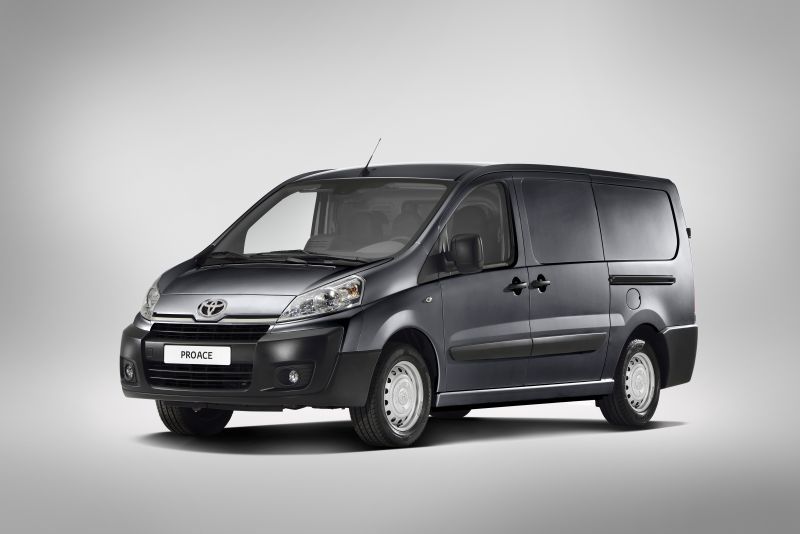
The Toyota Proace City LWB 1.5 D-4D (130 Hp) represents Toyota’s entry into the European and select Asian compact light commercial vehicle (LCV) segment. Launched in April 2020, this model is part of the first generation of the Proace City, a collaborative effort between Toyota and the former PSA Group (now Stellantis). This partnership allowed Toyota to quickly offer a practical and efficient vehicle for businesses and individuals needing a spacious solution for urban and regional use. While not sold in the United States, the Proace City LWB is a key player in its target markets, offering a compact alternative to larger cargo vans and passenger minivans. The Long Wheelbase (LWB) variant maximizes cargo volume and versatility, making it suitable for a wide range of professional applications.
Powertrain & Engine Architecture
The Toyota Proace City LWB 1.5 D-4D (130 Hp) is powered by a 1.5-liter turbocharged diesel engine, designated YH01. This inline four-cylinder engine utilizes a common rail direct injection system and an overhead camshaft (OHC) valvetrain with four valves per cylinder, optimizing fuel atomization and combustion. It produces 130 horsepower at 3750 revolutions per minute (rpm) and 221.27 lb-ft of torque, available from a low 1750 rpm. This substantial low-end torque is crucial for hauling loads and navigating urban environments without frequent gear changes.
The engine is mounted transversely at the front of the vehicle, driving the front wheels through a 6-speed manual transmission. This configuration contributes to the vehicle’s handling and efficient power delivery. The engine incorporates a turbocharger and intercooler to enhance performance. It also features a Start & Stop system and a particulate filter to meet stringent Euro 6d-ISC-FCM emission standards. The engine oil capacity is 4.23 US quarts (4 liters).
Driving Characteristics
The 1.5 D-4D (130 Hp) powertrain in the Proace City LWB provides a balance between performance and fuel efficiency. While not designed for rapid acceleration, the 130 hp engine and 221.27 lb-ft of torque offer adequate power for typical commercial use. The 6-speed manual transmission allows drivers to keep the engine in its optimal torque band, maximizing efficiency and minimizing gear changes. Compared to higher-output versions (if available in other Proace City configurations), this variant prioritizes fuel economy and lower running costs over outright performance. The weight-to-power ratio of 11 kg/Hp (approximately 90.5 Hp per tonne) provides a responsive feel, while the weight-to-torque ratio of 4.8 kg/Nm (208.9 Nm per tonne) underscores its pulling capabilities.
The front-wheel-drive layout provides predictable handling, and the electric power steering offers ease of maneuverability in urban settings. The suspension is tuned to provide a comfortable ride even when carrying a substantial load, though it may exhibit some body roll during spirited cornering. Overall, the driving experience is geared towards practicality and efficiency rather than sporty dynamics.
Equipment & Trim Levels
The Toyota Proace City LWB 1.5 D-4D (130 Hp) is typically offered with a functional and durable interior. Standard features generally include a driver’s airbag, ABS, and a basic audio system. The cabin typically features a 2-3 seat configuration, offering flexibility for carrying passengers and cargo. The dashboard layout is straightforward and designed for ease of use. Upholstery is typically hard-wearing fabric.
Optional extras often include air conditioning, a touchscreen infotainment system with smartphone integration (Apple CarPlay and Android Auto), rear parking sensors, cruise control, and a load area partition. Higher trim levels may offer additional comfort and convenience features, such as upgraded upholstery, automatic headlights, and rain-sensing wipers. The focus remains on providing a practical and functional workspace for commercial users.
Chassis & Braking
The Proace City LWB utilizes an independent McPherson strut suspension at the front and a robust torsion beam suspension at the rear. This setup is designed to provide a comfortable ride while effectively managing heavy loads. Ventilated disc brakes are fitted to the front wheels, while disc brakes are used at the rear, providing adequate stopping power. An Anti-lock Braking System (ABS) is standard, enhancing safety during emergency braking situations.
The electric power steering system, with a steering rack and pinion, ensures ease of maneuverability, particularly in congested urban environments. The minimum turning circle is 37.73 feet (11.5 meters). The vehicle rides on 16-inch wheels, typically fitted with tires sized 215/65 R16 or 205/60 R16, offering a balance of grip and ride comfort. The vehicle’s kerb weight is approximately 3165.84 lbs (1436 kg), and it has a maximum permissible weight of 5291.09 lbs (2400 kg).
Market Reception & Comparison
The Toyota Proace City LWB 1.5 D-4D (130 Hp) has been well-received in its target markets for its combination of practicality, efficiency, and reliability. Critics have praised its spacious cargo area, comfortable ride, and competitive fuel economy. Compared to other trims in the Proace City lineup (if available), this 130 hp diesel variant offers a good balance between performance and running costs, making it a popular choice for businesses prioritizing efficiency.
It competes with vehicles like the Ford Transit Connect, Renault Kangoo, and Volkswagen Caddy. The Proace City LWB often stands out due to Toyota’s reputation for reliability and its strong dealer network. Fuel economy is a key strength, with combined (NEDC) figures ranging from 51.1 to 53.5 US miles per gallon (4.4-4.6 l/100 km). While some competitors may offer more powerful engine options, the 1.5 D-4D provides sufficient power for most commercial applications, and its lower running costs make it an attractive option for businesses focused on the bottom line.
Technical Specifications
| General Information | Brand: Toyota |
| Model: Proace City LWB | |
| Type (Engine): 1.5 D-4D (130 Hp) | |
| Start of Production: April, 2020 | |
| Powertrain Architecture: Internal Combustion Engine | |
| Body Type: Minivan | |
| Seats: 2-3 | |
| Doors: 5 | |
| Performance Specifications | Fuel Consumption (Urban, NEDC): 46.1 US mpg (5.1 l/100 km) |
| Fuel Consumption (Extra Urban, NEDC): 54.7 – 58.8 US mpg (4-4.3 l/100 km) | |
| Fuel Consumption (Combined, NEDC): 51.1 – 53.5 US mpg (4.4-4.6 l/100 km) | |
| CO2 Emissions (NEDC): 117-121 g/km | |
| Fuel Type: Diesel | |
| Emission Standard: Euro 6d-ISC-FCM | |
| Weight-to-Power Ratio: 11 kg/Hp (90.5 Hp/tonne) | |
| Weight-to-Torque Ratio: 4.8 kg/Nm (208.9 Nm/tonne) | |
| Engine Specifications | Power: 130 Hp @ 3750 rpm |
| Power per liter: 86.7 Hp/l | |
| Torque: 221.27 lb-ft (300 Nm) @ 1750 rpm | |
| Engine Layout: Front, Transverse | |
| Engine Model/Code: YH01 | |
| Engine Displacement: 1.5 liters (1499 cm3, 91.47 cu. in.) | |
| Number of Cylinders: 4 | |
| Engine Configuration: Inline | |
| Number of Valves per Cylinder: 4 | |
| Fuel Injection System: Diesel Commonrail | |
| Engine Aspiration: Turbocharger, Intercooler | |
| Valvetrain: OHC | |
| Engine Oil Capacity: 4.23 US qt (4 l) | |
| Space, Volume, and Weights | Kerb Weight: 3165.84 lbs (1436 kg) |
| Max. Weight: 5291.09 lbs (2400 kg) | |
| Max Load: 2125.26 lbs (964 kg) | |
| Trunk (Boot) Space – Minimum: 137.73 cu. ft. (3900 l) | |
| Trunk (Boot) Space – Maximum: 151.85 cu. ft. (4300 l) | |
| Fuel Tank Capacity: 13.21 US gal (50 l) | |
| AdBlue Tank: 4.49 US gal (17 l) | |
| Max. Roof Load: 330.69 lbs (150 kg) | |
| Permitted Trailer Load with Brakes (12%): 3306.93 lbs (1500 kg) | |
| Permitted Trailer Load without Brakes: 1653.47 lbs (750 kg) | |
| Dimensions | Length: 187.13 in. (4753 mm) |
| Width: 72.76 in. (1848 mm) | |
| Wheelbase: 117.13 in. (2975 mm) |
Legacy
The Toyota Proace City LWB 1.5 D-4D (130 Hp) has established itself as a reliable and efficient option in the compact LCV market. Its long-term reliability is expected to be high, consistent with Toyota’s reputation. On the used car market, these vehicles are likely to hold their value well due to their durability and low running costs. The collaborative approach with Stellantis has allowed Toyota to quickly gain a foothold in this segment, and the Proace City LWB is poised to remain a competitive offering for years to come. Its success demonstrates the viability of strategic partnerships in the automotive industry, enabling manufacturers to expand their product portfolios and address diverse market needs efficiently.