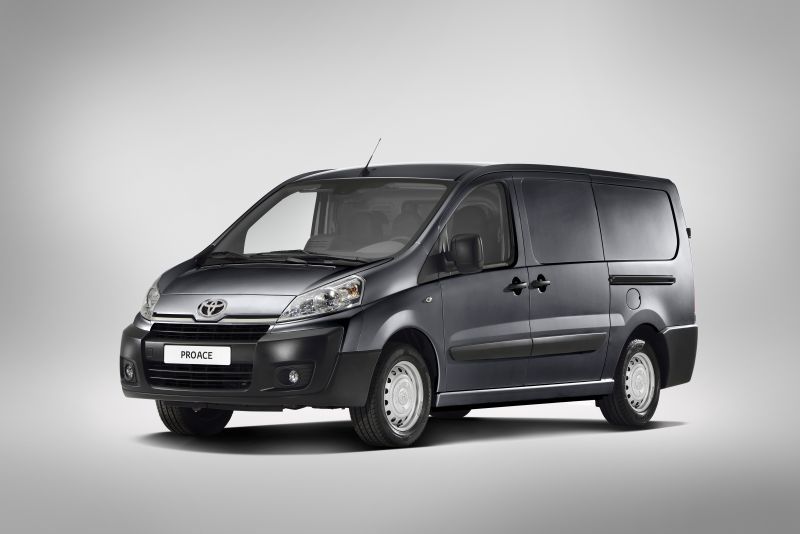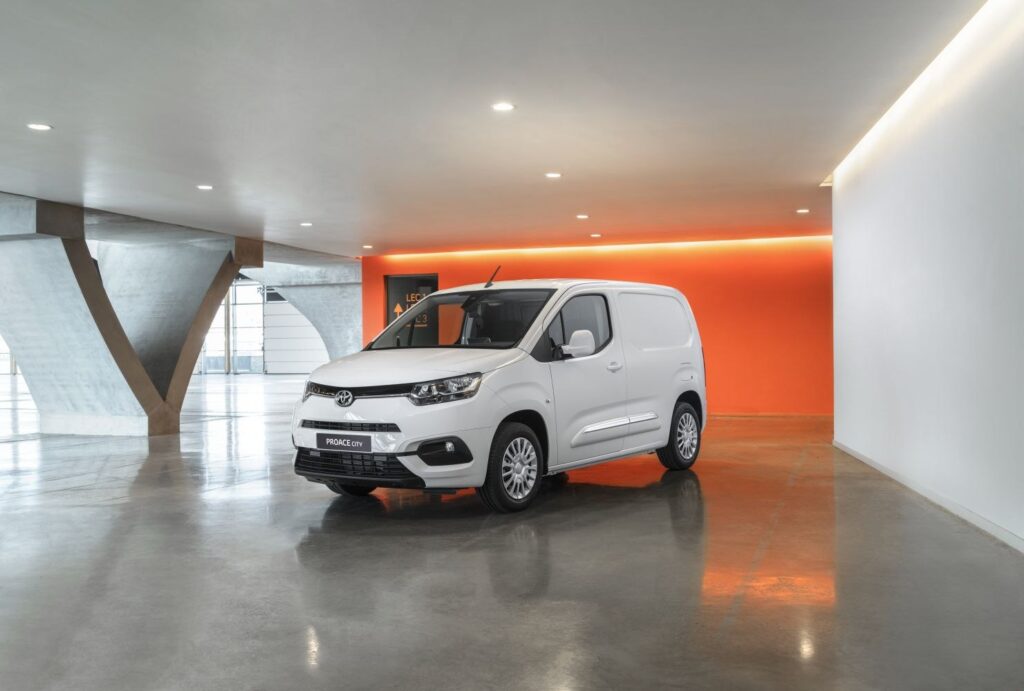
The Toyota Proace City SWB 1.2 Turbo (110 Hp) represents Toyota’s strategic entry into the highly competitive compact light commercial vehicle (LCV) and multi-purpose vehicle (MPV) segment, primarily targeting European and select Asian markets. Launched in April 2020, this vehicle is a testament to modern automotive collaboration, being part of a platform-sharing agreement with what is now Stellantis (formerly PSA Group). As such, it shares its underpinnings with popular models like the Citroën Berlingo, Peugeot Rifter/Partner, and Opel/Vauxhall Combo Life. This specific variant, the Short Wheelbase (SWB) with a 1.2-liter turbocharged gasoline engine producing 110 horsepower, is designed to offer a compelling blend of practicality, efficiency, and maneuverability for urban and suburban environments. While not offered in the United States, the Proace City fulfills a crucial role for Toyota in diversifying its commercial vehicle lineup and appealing to businesses and families seeking a compact, high-capacity solution.
Powertrain & Engine Architecture
Under the hood, the Toyota Proace City SWB 1.2 Turbo (110 Hp) features a modern and efficient powertrain designed for economy and respectable performance. The heart of this variant is a 1.2-liter (1199 cm3 or 73.17 cu. in.) inline three-cylinder gasoline engine, designated as the HN05 model. This compact powerplant benefits from a turbocharger and intercooler, enhancing its output and ensuring a broad torque band, which is crucial for a vehicle often tasked with carrying significant loads.
The engine delivers a peak power of 110 horsepower (HP) at 5500 revolutions per minute (rpm), translating to a power-per-liter ratio of 91.7 HP/liter. More critically for a utility vehicle, it produces a robust 151.2 lb-ft (205 Nm) of torque, available from a low 1750 rpm. This early availability of torque ensures responsive acceleration and confident pulling power, even when the vehicle is laden. Power is sent to the front wheels through a precise 6-speed manual transmission, offering drivers direct control and contributing to the vehicle’s overall efficiency. The drivetrain architecture is straightforward: the internal combustion engine is mounted transversely at the front, driving the front wheels.
The HN05 engine utilizes direct fuel injection, optimizing combustion efficiency and reducing emissions. The valvetrain employs an Overhead Camshaft (OHC) configuration, a common design for three-cylinder engines, balancing simplicity with adequate performance. The turbocharger is a key component, providing a boost in power and torque without significantly increasing engine displacement. The intercooler further enhances performance by cooling the compressed air from the turbocharger, increasing its density and improving combustion.
Driving Characteristics
The Proace City SWB 1.2 Turbo (110 Hp) offers a driving experience geared towards practicality and efficiency rather than outright performance. The 110 hp engine, while adequate for most urban and suburban driving scenarios, is not designed for rapid acceleration or high-speed cruising. The 6-speed manual transmission allows drivers to maintain optimal engine speed for fuel efficiency and power delivery. The early availability of 151.2 lb-ft of torque at 1750 rpm is a significant advantage, providing responsive acceleration from a standstill and making it easier to navigate city traffic or climb moderate inclines with a load.
Compared to higher-output versions of the Proace City, such as those equipped with diesel engines, the 1.2-liter gasoline variant offers a smoother and quieter driving experience, but with less overall power and torque. The manual transmission provides more driver engagement than an automatic, but requires more effort in stop-and-go traffic. The gear ratios are tuned for fuel economy, with a relatively tall final drive. This results in good highway cruising efficiency but may require more frequent downshifts when carrying a heavy load or tackling steep hills.
Equipment & Trim Levels
The Toyota Proace City SWB 1.2 Turbo (110 Hp) typically serves as an entry-level or mid-range trim within the Proace City lineup, depending on the specific market. Standard equipment generally includes features such as air conditioning, a basic audio system with Bluetooth connectivity, power windows, and central locking. Safety features are also prioritized, with standard inclusion of ABS (Anti-lock Braking System), Electronic Stability Control (ESC), and multiple airbags.
Interior upholstery is typically durable and practical, often utilizing hard-wearing cloth materials. The dashboard configuration is functional and designed for ease of use, with clearly labeled controls and a straightforward instrument cluster. Optional extras available for this trim often include features such as a touchscreen infotainment system with navigation, rear parking sensors, a reversing camera, cruise control, and upgraded interior trim materials. Commercial versions often feature a more basic interior, prioritizing durability and ease of cleaning over comfort and aesthetics.
Chassis & Braking
The Proace City SWB utilizes a robust chassis and suspension system designed to balance ride comfort with load-carrying capability. The front suspension features an independent McPherson strut setup, providing good handling and stability. The rear suspension employs a torsion beam, a cost-effective and space-efficient solution that offers adequate ride quality for most applications. The torsion beam is tuned to handle the expected payload of the vehicle without compromising ride comfort.
Braking is handled by ventilated discs at the front and disc brakes at the rear, providing adequate stopping power for the vehicle’s weight class. The Anti-lock Braking System (ABS) is standard, enhancing safety by preventing wheel lockup during emergency braking. Steering is electric power-assisted, providing light and precise control, reducing driver fatigue, and improving maneuverability in tight spaces. The vehicle’s tires are typically sized 195/65 R15, 215/65 R16, or 205/60 R16, depending on the trim level and market, offering a balance of grip, comfort, and fuel efficiency.
Market Reception & Comparison
The Toyota Proace City SWB 1.2 Turbo (110 Hp) has generally received positive reviews from automotive critics, who praise its practicality, fuel efficiency, and comfortable ride. Its compact size and maneuverability make it well-suited for urban environments, while its spacious interior and ample cargo capacity make it a versatile choice for businesses and families. However, some critics have noted that the 1.2-liter engine can feel underpowered when carrying a heavy load or driving on steep inclines.
Compared to other trims in the Proace City lineup, the 1.2-liter gasoline variant offers a more affordable entry point, but with less performance and fuel efficiency than the diesel options. The diesel engines provide significantly more torque, making them better suited for heavy-duty applications. However, the gasoline engine offers a smoother and quieter driving experience, and may be preferable for drivers who primarily use the vehicle for light-duty tasks. In terms of reliability, the Proace City benefits from Toyota’s reputation for building durable and dependable vehicles. The 1.2-liter gasoline engine is generally considered to be a reliable unit, with relatively low maintenance costs.
Technical Specifications
| Category | Specification |
| Brand | Toyota |
| Model | Proace City |
| Generation | Proace City SWB |
| Type (Engine) | 1.2 Turbo (110 Hp) |
| Start of Production | April, 2020 |
| Powertrain Architecture | Internal Combustion engine |
| Body Type | Minivan |
| Seats | 2-3 |
| Doors | 4 |
| Performance Specs | |
| Fuel Consumption (Urban, NEDC) | 37.9 – 37.3 US mpg (6.2-6.3 l/100 km) |
| Fuel Consumption (Extra Urban, NEDC) | 49 – 47 US mpg (4.8-5.0 l/100 km) |
| Fuel Consumption (Combined, NEDC) | 44.4 – 42.8 US mpg (5.3-5.5 l/100 km) |
| CO2 Emissions (NEDC) | 121-125 g/km |
| Fuel Type | Petrol (Gasoline) |
| Emission Standard | Euro 6d-ISC-FCM |
| Weight-to-Power Ratio | 11 kg/Hp, 91 Hp/tonne |
| Weight-to-Torque Ratio | 5.9 kg/Nm, 169.6 Nm/tonne |
| Engine Specs | |
| Power | 110 Hp @ 5500 rpm |
| Power per Liter | 91.7 Hp/l |
| Torque | 151.2 lb-ft (205 Nm) @ 1750 rpm |
| Engine Layout | Front, Transverse |
| Engine Model/Code | HN05 |
| Engine Displacement | 1.2 liters (1199 cm3 / 73.17 cu. in.) |
| Number of Cylinders | 3 |
| Engine Configuration | Inline |
| Number of Valves per Cylinder | 4 |
| Fuel Injection System | Direct injection |
| Engine Aspiration | Turbocharger, Intercooler |
| Valvetrain | OHC |
| Engine Oil Capacity | 3.7 US qt (3.5 l) |
| Engine Systems | Start & Stop System, Particulate filter |
| Space, Volume and Weights | |
| Curb Weight | 2665.39 – 2744.76 lbs (1209-1245 kg) |
| Max. Weight (Gross Vehicle Weight) | 4321.06 lbs (1960 kg) |
| Max Load (Payload) | 1576.31 – 1655.67 lbs (715-751 kg) |
| Trunk Space (Minimum) | 116.54 cu. ft. (3300 l) |
| Trunk Space (Maximum) | 134.2 cu. ft. (3800 l) |
| Max. Roof Load | 330.69 lbs (150 kg) |
| Permitted Trailer Load with Brakes (12%) | 2645.55 lbs (1200 kg) |
| Permitted Trailer Load without Brakes | 1521.19 lbs (690 kg) |
| Permitted Towbar Download | 163.14 lbs (74 kg) |
| Dimensions | |
| Length | 173.35 in (4403 mm) |
| Width | 72.76 in (1848 mm) |
| Width with Mirrors Folded | 75.63 in (1921 mm) |
| Width Including Mirrors | 82.95 in (2107 mm) |
| Height | 70.71 – 73.23 in (1796-1860 mm) |
| Wheelbase | 109.65 in (2785 mm) |
| Front Track | 60.94 – 61.54 in (1548-1563 mm) |
| Rear Track | 61.73 – 62.09 in (1568-1577 mm) |
| Front Overhang | 35.12 in (892 mm) |
| Rear Overhang | 28.58 in (726 mm) |
| Ride Height (Ground Clearance) | 5.71 – 7.17 in (145-182 mm) |
| Minimum Turning Circle (Turning Diameter) | 35.43 ft (10.8 m) |
| Drivetrain, Brakes and Suspension Specs | |
| Drivetrain Architecture | Front wheel drive, Internal Combustion engine |
| Drive Wheel | Front wheel drive |
| Number of Gears and Type of Gearbox | 6 gears, manual transmission |
| Front Suspension | Independent type McPherson |
| Rear Suspension | Torsion |
| Front Brakes | Ventilated discs |
| Rear Brakes | Disc |
| Assisting Systems | ABS (Anti-lock braking system) |
| Steering Type | Steering rack and pinion |
| Power Steering | Electric Steering |
| Tires Size | 195/65 R15 91H; 215/65 R16 98H; 205/60 R16 96H |
| Wheel Rims Size | 6.5J x 15; 6.5J x 16 |
Legacy
The Toyota Proace City, including the SWB 1.2 Turbo (110 Hp) variant, represents a significant step for Toyota in the compact commercial vehicle segment. Its long-term reliability is expected to be high, benefiting from Toyota’s reputation for building durable vehicles and the relatively simple design of the 1.2-liter gasoline engine. The HN05 engine has proven to be a reliable unit in other Stellantis vehicles, suggesting a good track record for longevity.
In the used car market, the Proace City SWB 1.2 Turbo (110 Hp) is likely to hold its value well, particularly among businesses and individuals seeking a practical and economical vehicle. Its fuel efficiency, spacious interior, and Toyota’s brand reputation will contribute to its desirability. While the diesel variants may offer more performance, the gasoline version provides a quieter and smoother driving experience, appealing to a different segment of buyers. As with any vehicle, regular maintenance and adherence to recommended service intervals will be crucial for ensuring its long-term reliability and maximizing its lifespan.