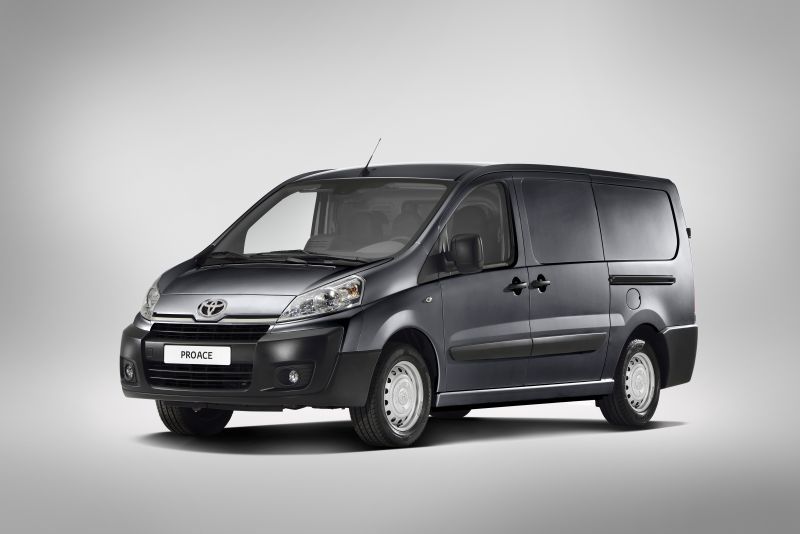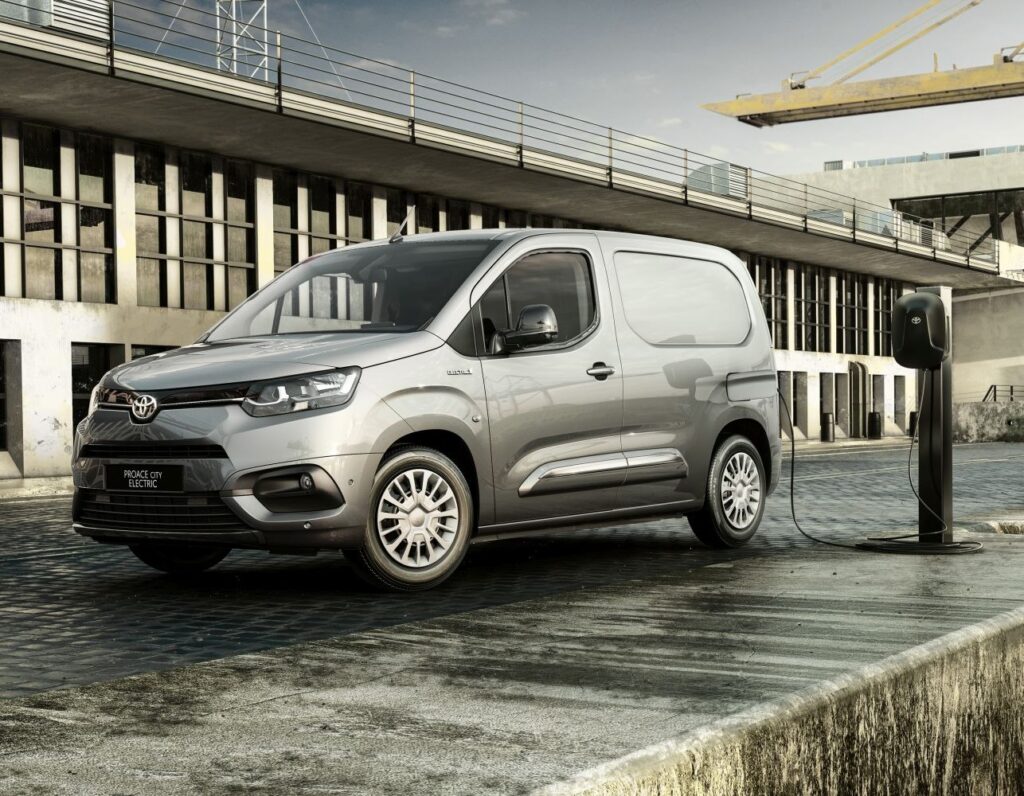
The Toyota Proace City SWB 50 kWh (136 Hp) Electric, introduced in April 2022, represents Toyota’s commitment to expanding its electrified commercial vehicle lineup, particularly in the European market. As part of a collaborative effort with Stellantis (formerly PSA Group), the Proace City is a rebadged version of a highly successful platform that underpins several compact vans and people carriers, including the Peugeot Partner/Rifter, Citroën Berlingo, and Opel/Vauxhall Combo. This specific short-wheelbase (SWB) electric variant is designed to offer a compelling blend of zero-emission capability, practical utility, and maneuverability for urban environments and regional logistics. Positioned in the burgeoning light commercial vehicle (LCV) and compact minivan segments, the Proace City Electric serves as a versatile solution for businesses and, in some configurations, private users seeking an efficient and environmentally conscious mode of transport. Its battery-electric vehicle (BEV) architecture underscores a modern approach to commercial mobility, emphasizing lower running costs and reduced environmental impact, factors increasingly critical in European cities with growing low-emission zones.
Powertrain & Engine Architecture
At the heart of the Toyota Proace City SWB 50 kWh (136 Hp) Electric lies a sophisticated battery-electric powertrain, engineered for efficiency and robust performance in its intended operational scope. The vehicle is propelled by a single electric motor, strategically positioned on the front axle and mounted transversely, driving the front wheels. This synchronous electric motor generates a respectable 136 horsepower (Hp) and a substantial 191.77 lb.-ft. (260 Nm) of instantaneous torque. The motor’s model/code is ZK01, signifying its integration within the Stellantis electric vehicle architecture.
The immediate availability of peak torque is a significant advantage for an LCV, providing brisk acceleration from a standstill, which is particularly beneficial for navigating urban traffic and carrying heavy loads. Power delivery is managed through a single-speed automatic transmission, characteristic of most electric vehicles, ensuring a smooth and seamless driving experience without the need for gear changes. This single-speed transmission simplifies operation and maximizes efficiency by eliminating the power losses associated with traditional multi-gear automatic transmissions.
Powering the electric motor is a 50 kWh gross capacity Lithium-ion (Li-Ion) battery pack, intelligently located below the floor. This placement not only optimizes the vehicle’s center of gravity for improved handling and stability but also maximizes interior cargo space, a crucial consideration for a commercial van. The battery technology is robust and designed for longevity, providing an all-electric range (WLTP) of 172.74 miles (278 km). This range makes the Proace City Electric a viable option for a wide array of daily business operations without range anxiety for most users. The battery management system (BMS) plays a critical role in optimizing battery performance, ensuring longevity, and preventing overcharging or discharging.
Energy consumption figures further demonstrate its efficiency, with an average (WLTP) consumption ranging from 32.03 to 32.83 kWh per 100 miles (19.9-20.4 kWh/100 km), translating to an impressive 105 to 103 MPGe (Miles Per Gallon equivalent). This efficiency, combined with the inherent cost advantages of electricity over gasoline, offers significant operational savings for businesses.
Driving Characteristics
The 136 hp electric powertrain in the Proace City SWB delivers a driving experience geared towards practicality and ease of use rather than outright performance. Acceleration is brisk from a standstill due to the instant torque of the electric motor, making it well-suited for city driving and frequent stops. While it won’t offer the same rapid acceleration as higher-powered electric vans, it provides sufficient power for merging onto highways and maintaining speed. The single-speed automatic transmission contributes to a smooth and seamless driving experience, eliminating gear changes and providing linear power delivery.
Compared to potential gasoline or diesel variants (not offered in this electric configuration), the Proace City Electric offers a quieter and more refined driving experience. The absence of an internal combustion engine eliminates engine noise and vibrations, creating a more comfortable cabin environment. The regenerative braking system allows for one-pedal driving in many situations, further enhancing convenience and efficiency. The weight distribution, with the battery pack located low in the chassis, contributes to improved handling and stability, particularly when carrying a load. However, the added weight of the battery pack does slightly impact overall agility compared to lighter, gasoline-powered counterparts.
Equipment & Trim Levels
The Toyota Proace City SWB 50 kWh (136 Hp) Electric typically comes with a functional and well-equipped interior, prioritizing practicality and durability. Standard features generally include air conditioning, a touchscreen infotainment system with Bluetooth connectivity, a driver’s airbag, and basic safety systems like ABS and ESP (Electronic Stability Program). Higher trim levels may add features such as a rearview camera, parking sensors, cruise control, and upgraded upholstery. The interior is designed to withstand the rigors of commercial use, with durable materials and easy-to-clean surfaces.
The cargo area is a key focus, offering a versatile space for transporting goods. Standard features include multiple tie-down points, interior lighting, and a protective bulkhead separating the cargo area from the cabin. Optional extras may include a load floor liner, additional tie-down points, and a ladder rack for the roof. The Proace City Electric is available in various configurations, including panel van and crew van versions, catering to different business needs.
Chassis & Braking
The Proace City SWB utilizes a robust chassis designed to handle the demands of commercial use. The front suspension features an independent McPherson strut setup, providing a comfortable ride and good handling characteristics. The rear suspension employs a torsion beam axle, which is simple, durable, and cost-effective. This suspension configuration strikes a balance between ride comfort and load-carrying capacity.
Braking performance is provided by ventilated discs at the front and disc brakes at the rear, complemented by an Anti-lock Braking System (ABS) and Electronic Brakeforce Distribution (EBD) for enhanced safety. The electric power steering system offers light and responsive handling, making it easy to maneuver in tight spaces. The vehicle is typically equipped with 195/65 R15 or 215/65 R16 tires, providing a good balance of grip, durability, and ride comfort.
Market Reception & Comparison
The Toyota Proace City SWB 50 kWh (136 Hp) Electric has been generally well-received by critics and industry experts, particularly for its practicality, efficiency, and zero-emission capability. Its competitive pricing, combined with Toyota’s reputation for reliability, has made it an attractive option for businesses looking to electrify their fleets. Compared to its siblings from Stellantis (Peugeot, Citroën, Opel/Vauxhall), the Proace City Electric benefits from Toyota’s strong brand image and extensive dealer network in many European markets.
In terms of fuel economy (or rather, energy consumption), the Proace City Electric significantly outperforms gasoline or diesel-powered vans, offering substantial cost savings over the vehicle’s lifespan. Its reliability is expected to be on par with other Toyota commercial vehicles, known for their durability and low maintenance costs. However, the initial purchase price is higher than comparable gasoline or diesel vans, although this is often offset by government incentives and lower running costs.
Technical Specifications
| Category | Specification |
| Brand | Toyota |
| Model | Proace City SWB |
| Generation | Proace City SWB |
| Type (Engine) | 50 kWh (136 Hp) Electric |
| Start of Production | April, 2022 |
| Powertrain Architecture | BEV (Electric Vehicle) |
| Body Type | Minivan |
| Seats | 2-3 |
| Doors | 4 |
| Fuel Type | Electricity |
| Maximum Speed | 83.89 mph (135 km/h) |
| Weight-to-Power Ratio | 11.1 kg/Hp (89.8 Hp/tonne) |
| Weight-to-Torque Ratio | 5.8 kg/Nm (171.6 Nm/tonne) |
| Gross Battery Capacity | 50 kWh |
| Battery Technology | Lithium-ion (Li-Ion) |
| Battery Location | Below the floor |
| All-Electric Range (WLTP) | 172.74 mi (278 km) |
| Average Energy Consumption (WLTP) | 32.03 – 32.83 kWh/100 mi (19.9-20.4 kWh/100 km) |
| MPGe | 105 – 103 MPGe |
| Electric Motor Power | 136 Hp |
| Electric Motor Torque | 191.77 lb.-ft. (260 Nm) |
| Electric Motor Model/Code | ZK01 |
| Electric Motor Location | Front axle, Transverse |
| Electric Motor Type | Synchronous |
| System Power | 136 Hp |
| System Torque | 191.77 lb.-ft. (260 Nm) |
| Kerb Weight | 3340 lbs (1515 kg) |
| Max. Weight | 5269.05 lbs (2390 kg) |
| Max Load | 1929.04 lbs (875 kg) |
| Trunk (boot) Space – Minimum | 116.54 cu. ft. (3300 l) |
| Trunk (boot) Space – Maximum | 134.2 cu. ft. (3800 l) |
| Max. Roof Load | 330.69 lbs (150 kg) |
| Permitted Trailer Load with Brakes (12%) | 1653.47 lbs (750 kg) |
| Permitted Towbar Download | 110.23 lbs (50 kg) |
| Length | 173.35 in (4403 mm) |
| Width | 72.76 in (1848 mm) |
| Width with Mirrors Folded | 75.63 in (1921 mm) |
| Width Including Mirrors | 82.95 in (2107 mm) |
| Height | 70.71 – 73.23 in (1796-1860 mm) |
| Wheelbase | 109.65 in (2785 mm) |
Legacy
The Toyota Proace City SWB 50 kWh (136 Hp) Electric is poised to become a significant vehicle in the transition towards sustainable commercial transport. Its long-term reliability is expected to be high, benefiting from Toyota’s engineering expertise and the robust design of the Stellantis platform. The electric powertrain, with its relatively simple construction, is likely to require less maintenance than traditional internal combustion engines.
In the used car market, the Proace City Electric is expected to hold its value well, particularly as demand for electric vans continues to grow. Its practicality, efficiency, and zero-emission capability will make it an attractive option for businesses and individuals alike. The vehicle’s legacy will be defined by its contribution to reducing carbon emissions in urban areas and promoting a more sustainable future for commercial transport. As battery technology continues to improve and charging infrastructure expands, the Proace City Electric and similar electric vans will play an increasingly important role in shaping the future of logistics and urban mobility.