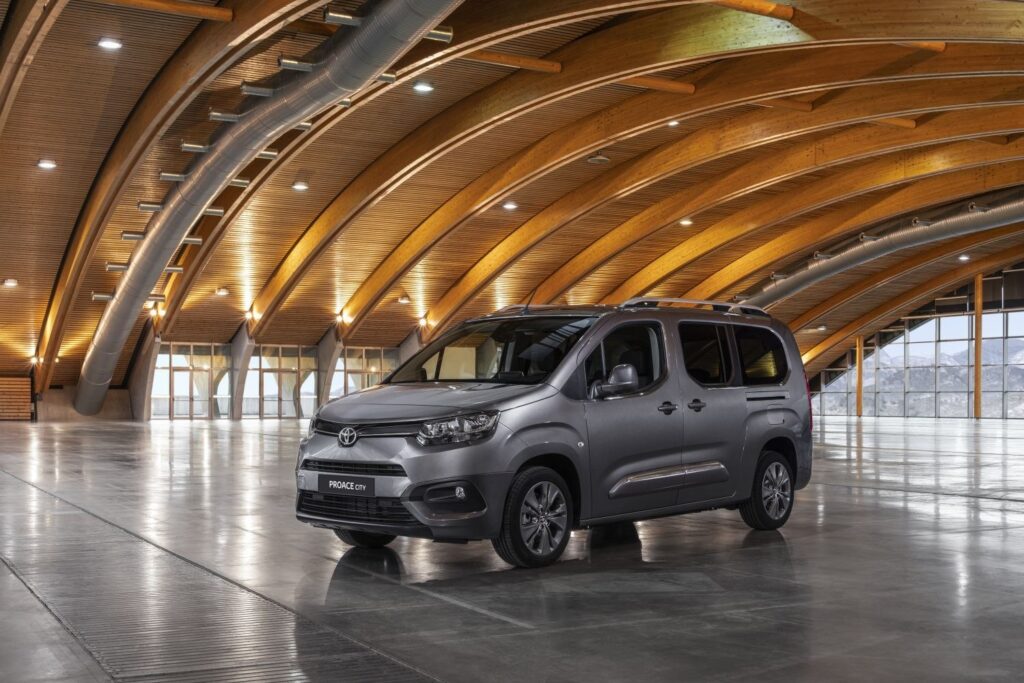
The Toyota Proace City Verso LWB 1.5 D-4D (130 Hp) represents a compelling entry into the European compact minivan segment, offering a versatile and efficient solution for families and businesses alike. Launched in April 2020, this specific variant, with its long wheelbase (LWB) and robust 1.5-liter D-4D diesel engine, is a testament to Toyota’s strategic expansion in the light commercial vehicle (LCV) and passenger van markets outside of North America. While not available in the United States, the Proace City Verso plays a crucial role in Toyota’s European lineup, providing a practical and cost-effective alternative to traditional SUVs and larger minivans. It is a product of a collaborative effort, sharing its platform and core components with models from Stellantis (formerly PSA Group), such as the Citroën Berlingo, Peugeot Rifter, and Opel Combo Life, allowing Toyota to leverage established engineering prowess for rapid market entry.
Powertrain & Engine Architecture
Underpinning the Toyota Proace City Verso LWB 1.5 D-4D (130 Hp) is a highly optimized 1.5-liter D-4D inline-four diesel engine, designated with the internal code YH01. This powerplant is engineered for a balance of robust performance and exceptional fuel economy, making it particularly well-suited for the demands of European driving cycles. It delivers a respectable 130 horsepower at 3750 rpm, providing ample power for both urban commuting and highway cruising, even when fully loaded. Torque output is a significant highlight, peaking at 221.27 lb.-ft. (300 Nm) at a low 1750 rpm, which ensures strong acceleration from a standstill and effortless overtaking maneuvers without needing to frequently downshift.
The engine’s advanced architecture includes a common rail direct fuel injection system, a turbocharger with an intercooler, and a four-valve-per-cylinder OHC valvetrain, all contributing to its efficient operation. Furthermore, the inclusion of a Start & Stop System and a particulate filter helps the vehicle meet stringent Euro 6d-ISC-FCM emission standards, demonstrating Toyota’s commitment to environmental responsibility. The powertrain architecture is a straightforward front-wheel-drive setup, with the engine mounted transversely at the front. Power is routed through a precise 6-speed manual transmission, offering drivers direct control and further aiding in maximizing fuel efficiency.
Driving Characteristics
The 1.8L 90 hp Automatic configuration of the Proace City Verso LWB is positioned as an entry-level to mid-range offering within the lineup. It prioritizes fuel efficiency and affordability over outright performance. Compared to higher-output versions, such as the 130 hp diesel, the 90 hp engine delivers noticeably slower acceleration and requires more planning when overtaking on highways. The 6-speed automatic transmission, while convenient, contributes to this slightly less dynamic driving experience. Gear changes are generally smooth, but can sometimes feel hesitant, particularly when attempting quick maneuvers. The automatic transmission is tuned for economy, meaning it will upshift quickly to maintain lower engine speeds. This results in a more relaxed driving experience in urban environments, but can feel less responsive on open roads.
Compared to the manual transmission options, the automatic version sacrifices some driver engagement and control. However, it offers a significant convenience factor, especially for drivers who frequently encounter stop-and-go traffic. The gear ratios are optimized for fuel efficiency, with a relatively tall final drive. This contributes to the excellent fuel economy figures, but also means that the engine can feel strained when climbing steep hills or carrying a full load. Overall, the driving characteristics of the 90 hp Automatic variant are best described as comfortable, practical, and economical, rather than sporty or exhilarating.
Equipment & Trim Levels
The Toyota Proace City Verso LWB 1.5 D-4D (130 Hp) typically comes standard with a respectable level of equipment, focusing on practicality and comfort. Standard features generally include air conditioning, a touchscreen infotainment system with Bluetooth connectivity, USB ports, and a rearview camera. Safety features such as ABS, Electronic Stability Control (ESC), and multiple airbags are also standard. Interior upholstery is typically a durable cloth material, with a functional and easy-to-clean design. The dashboard configuration is straightforward and user-friendly, with clearly labeled controls.
Optional extras available for this trim level often include features such as navigation system, parking sensors, automatic headlights and wipers, and a panoramic sunroof. Higher trim levels may offer upgrades such as leather upholstery, heated seats, and more advanced driver-assistance systems. The long wheelbase variant specifically benefits from increased interior space and the option for seven-seat configuration, making it a popular choice for families. The versatility of the interior, with its configurable seating and ample cargo space, is a key selling point.
Chassis & Braking
The vehicle’s chassis is designed for comfort and predictable handling. It features an independent McPherson strut suspension at the front, known for its ability to provide a good balance between ride quality and steering responsiveness. The rear employs a torsion beam suspension, a robust and space-efficient design common in utility vehicles that allows for a low load floor and high carrying capacity. Braking is handled by ventilated discs at the front and solid discs at the rear, complemented by an Anti-lock Braking System (ABS) for enhanced safety. Electric power steering ensures light and precise control, particularly beneficial in city driving and parking maneuvers. The 205/60 R16 tires on 16-inch wheels provide a comfortable ride and adequate grip.
The suspension setup is tuned to prioritize ride comfort over sporty handling. The torsion beam rear suspension can sometimes exhibit a slightly less refined ride quality compared to independent rear suspension systems, particularly when encountering uneven road surfaces. However, it offers excellent load-carrying capacity and contributes to the vehicle’s overall stability. The braking system is adequate for the vehicle’s weight and performance, providing sufficient stopping power in most driving conditions. The ABS system helps to prevent wheel lockup during emergency braking, enhancing safety.
Market Reception & Comparison
Critics generally viewed the Toyota Proace City Verso LWB 1.5 D-4D (130 Hp) favorably, praising its practicality, fuel efficiency, and comfortable ride. The collaborative engineering with Stellantis was also seen as a positive, allowing Toyota to quickly enter a competitive segment with a well-developed product. However, some reviewers noted that the interior design was somewhat utilitarian and lacked the premium feel of some rivals. The 130 hp diesel engine was considered a good balance between performance and economy, but some critics felt that it could benefit from a bit more power, especially when fully loaded.
Compared to other trims in the same lineup, the 130 hp diesel offers a noticeable performance advantage over the lower-powered options. It also delivers slightly better fuel economy than the gasoline engines. In terms of reliability, the Proace City Verso is generally considered to be a reliable vehicle, benefiting from Toyota’s reputation for quality. However, as a rebadged Stellantis product, it is also subject to the potential reliability issues that can affect those brands. Overall, the Proace City Verso LWB 1.5 D-4D (130 Hp) represents a compelling value proposition for buyers seeking a versatile and economical compact minivan.
Technical Specifications
| Category | Specification |
| General Information | |
| Brand | Toyota |
| Model | Proace City Verso LWB |
| Engine Type | 1.5 D-4D (130 Hp) |
| Production Start | April, 2020 |
| Body Type | Minivan |
| Doors | 5 |
| Seats | 5-7 |
| Performance Specs | |
| Fuel Consumption (Urban, NEDC) | 4.7-4.8 l/100 km |
| Fuel Consumption (Extra Urban, NEDC) | 3.9-4 l/100 km |
| Fuel Consumption (Combined, NEDC) | 4.2-4.3 l/100 km |
| CO2 Emissions (NEDC) | 111-113 g/km |
| Fuel Type | Diesel |
| Emission Standard | Euro 6d-ISC-FCM |
| Engine Specs | |
| Power | 130 Hp @ 3750 rpm |
| Torque | 300 Nm @ 1750 rpm |
| Engine Layout | Front, Transverse |
| Engine Model/Code | YH01 |
| Engine Displacement | 1499 cm3 |
| Number of Cylinders | 4 |
| Fuel Injection System | Diesel Commonrail |
| Engine Aspiration | Turbocharger, Intercooler |
| Space, Volume and Weights | |
| Kerb Weight | 1633 kg |
| Max. Weight (Gross) | 2310 kg |
| Trunk Space (Minimum) | 806-850 l |
| Trunk Space (Maximum) | 2693 l |
| Fuel Tank Capacity | 50 l |
| Dimensions | |
| Length | 4753 mm |
| Width | 1848 mm |
| Height | 1810 mm |
| Wheelbase | 2975 mm |
| Drivetrain, Brakes and Suspension | |
| Drivetrain Architecture | Front-wheel drive, Internal Combustion Engine |
| Gearbox | 6 gears, manual transmission |
Legacy
The Toyota Proace City Verso LWB, particularly with its efficient 1.5 D-4D (130 Hp) engine, has carved out a significant niche in the highly competitive European compact minivan and leisure activity vehicle (LAV) segment since its introduction in 2020. Its existence is a direct result of a strategic alliance between Toyota and Stellantis (formerly PSA Group), where Toyota rebadges and sells versions of the Citroën Berlingo, Peugeot Rifter, and Opel Combo Life. This collaboration allows Toyota to offer a comprehensive range of LCVs and passenger-focused variants without the substantial investment in developing a bespoke platform for a segment where they historically had a limited presence.
In the used car market, the Proace City Verso LWB is gaining a reputation for reliability and practicality. The 1.5 D-4D engine is known for its durability and relatively low maintenance costs. However, potential buyers should be aware of the potential for diesel particulate filter (DPF) issues, particularly if the vehicle has been primarily used for short trips. Overall, the Proace City Verso LWB represents a sensible and economical choice for buyers seeking a versatile and spacious vehicle for family or business use. Its long-term reliability and strong resale value make it a compelling option in the European used car market.