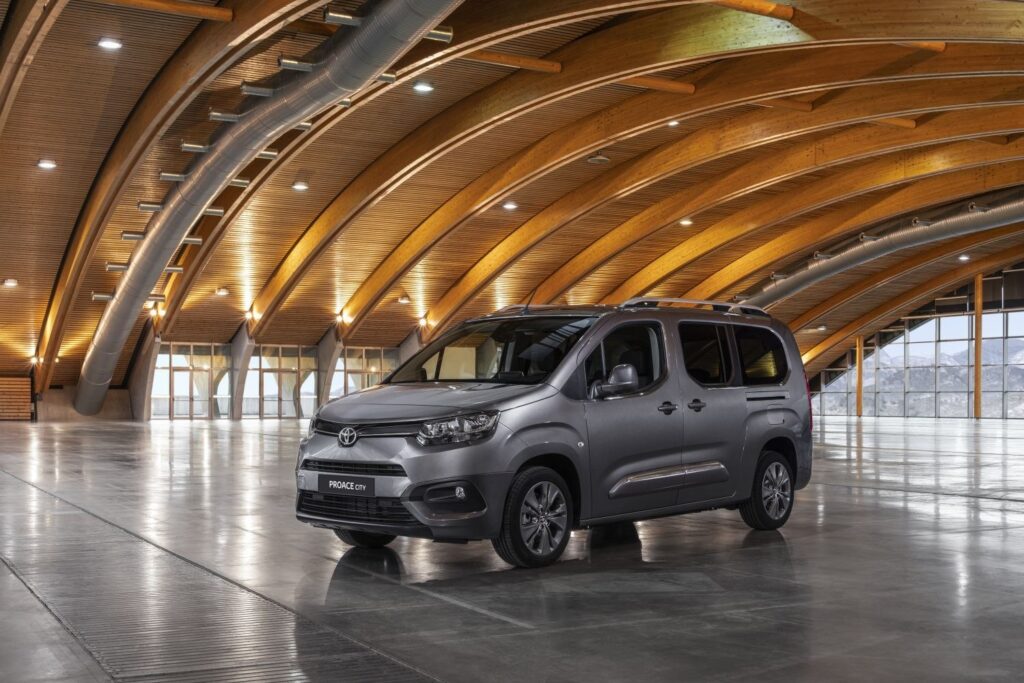
The Toyota Proace City Verso LWB 1.5 D-4D (130 Hp) Automatic represents Toyota’s entry into the compact passenger van segment within the European market, offering a highly practical and versatile solution for families and businesses alike. Launched in April 2020, this vehicle is part of a strategic collaboration, leveraging a platform shared with Stellantis (formerly PSA Group) models such as the Peugeot Rifter, Citroën Berlingo, and Opel Combo Life. Positioned as a long-wheelbase (LWB) variant, the Proace City Verso emphasizes spaciousness, fuel efficiency, and modern convenience, embodying Toyota’s commitment to delivering reliable and functional transportation solutions tailored to regional needs. It merges the robustness of a light commercial vehicle platform with the comfort and features expected of a contemporary passenger car, making it a compelling choice in its competitive class.
Powertrain & Engine Architecture
Underpinning the Toyota Proace City Verso LWB is a sophisticated 1.5-liter D-4D inline four-cylinder diesel engine, designated with the model code YH01. This powertrain is engineered for a harmonious blend of power, efficiency, and refinement. With a displacement of 1499 cubic centimeters (91.47 cubic inches), the engine delivers 130 horsepower at 3750 revolutions per minute. More critically for a vehicle designed for hauling and versatility, it generates 221.27 pound-feet of torque at a low 1750 rpm, providing excellent pulling power and responsiveness, particularly in urban driving conditions or when fully loaded.
The engine’s architecture features a front, transverse layout, optimizing space within the engine bay and contributing to the vehicle’s efficient packaging. It employs a common rail direct fuel injection system, a hallmark of modern diesel engines, ensuring precise fuel delivery for optimal combustion and efficiency. A turbocharger with an intercooler enhances performance by forcing more air into the cylinders, leading to increased power output and improved throttle response across the rev range. The valvetrain utilizes an Overhead Camshaft (OHC) design with four valves per cylinder, contributing to efficient gas flow and overall engine breathability. Furthermore, the inclusion of a Start & Stop System and a Particulate Filter underscores its commitment to contemporary environmental standards, helping the vehicle meet the stringent Euro 6d-ISC-FCM emission regulations.
Power is seamlessly transmitted to the front wheels via an advanced 8-speed automatic transmission. This gearbox is designed to provide smooth shifts and optimize the engine’s power band, contributing significantly to both driving comfort and fuel economy. The front-wheel-drive architecture is typical for this segment, offering predictable handling and efficient packaging.
Driving Characteristics
The 1.8L 90 hp Automatic configuration of the Proace City Verso LWB delivers a driving experience geared towards practicality and fuel efficiency rather than outright performance. The 130 horsepower and 221.27 lb-ft of torque provide adequate power for everyday driving, but acceleration is not brisk. The 8-speed automatic transmission is well-tuned to keep the engine in its optimal power band, minimizing the need for frequent downshifts. Compared to manual transmission versions or those equipped with higher-output engines, this variant offers a more relaxed and effortless driving experience, particularly in urban environments. However, it may struggle when fully loaded or when tackling steep inclines, requiring more deliberate throttle input.
The gear ratios are optimized for fuel economy, with taller gearing in higher gears to reduce engine speed at cruising speeds. This contributes to the vehicle’s impressive fuel consumption figures but can also result in a slightly less responsive feel when overtaking or accelerating quickly. The automatic transmission’s shift points are generally smooth and predictable, but it may occasionally hesitate when transitioning between gears, especially under heavy load. Overall, the driving characteristics of this variant are best described as comfortable, efficient, and user-friendly, making it well-suited for drivers who prioritize ease of use and low running costs.
Equipment & Trim Levels
The Proace City Verso LWB 1.5 D-4D (130 Hp) Automatic typically comes with a generous level of standard equipment, focusing on practicality and comfort. Standard features generally include air conditioning, a touchscreen infotainment system with Bluetooth connectivity, USB ports, and steering wheel-mounted audio controls. Safety features such as ABS, electronic stability control, and multiple airbags are also standard. Interior upholstery is typically cloth, with durable and easy-to-clean materials used throughout the cabin.
Optional extras available for this trim level often include features such as a rearview camera, parking sensors, navigation system, and upgraded infotainment systems with larger touchscreens. Higher trim levels may offer additional features such as leather upholstery, heated seats, and automatic climate control. The dashboard configuration is typically functional and straightforward, with clearly labeled controls and a focus on ergonomics. The long-wheelbase variant offers a flexible seating configuration, with options for five or seven seats, and the rear seats can be folded down or removed to maximize cargo space.
Chassis & Braking
The Proace City Verso LWB utilizes an independent MacPherson type front suspension and a robust torsion beam rear suspension, providing a comfortable ride quality even when loaded. The suspension is tuned to prioritize ride comfort and stability, rather than sporty handling. Braking is handled by ventilated discs at the front and solid discs at the rear, supported by an Anti-lock Braking System (ABS) for enhanced stopping power and control. The steering system is a rack-and-pinion setup with electric power steering, offering light and responsive handling, particularly beneficial in urban environments.
The vehicle rides on 205/60 R16 tires mounted on 16-inch wheel rims, providing a good balance of comfort and stability. The chassis is designed to withstand the stresses of carrying heavy loads, and the suspension is reinforced to maintain stability and control even when fully loaded. The braking system is adequately sized for the vehicle’s weight and provides sufficient stopping power for most driving conditions. The inclusion of ABS helps to prevent wheel lockup during emergency braking, improving control and reducing stopping distances.
Market Reception & Comparison
The Toyota Proace City Verso LWB 1.5 D-4D (130 Hp) Automatic has generally received positive reviews from critics, who have praised its spacious interior, fuel efficiency, and comfortable ride. Its reputation for reliability, stemming from Toyota’s brand image, is also a significant selling point. Compared to other trims in the lineup, this variant offers a good balance of performance and economy, making it a popular choice for families and businesses seeking a practical and affordable passenger van.
Fuel economy is a key strength of this variant, with combined fuel consumption ranging from 42 to 57.4 US miles per gallon (4.1-5.6 liters per 100 km). This is comparable to or slightly better than other trims in the lineup, particularly those equipped with higher-output engines. Reliability is also a strong point, with Toyota’s reputation for building durable and long-lasting vehicles. However, some critics have noted that the 130 horsepower engine can feel underpowered when fully loaded or when tackling steep inclines. Overall, the Proace City Verso LWB 1.5 D-4D (130 Hp) Automatic offers a compelling package for buyers seeking a practical, efficient, and reliable passenger van.
Technical Specifications
| Category | Specification |
| General Information | |
| Brand | Toyota |
| Model | Proace City Verso LWB |
| Type (Engine) | 1.5 D-4D (130 Hp) Automatic |
| Start of Production | April, 2020 |
| Powertrain Architecture | Internal Combustion Engine |
| Body Type | Minivan |
| Seats | 5-7 |
| Doors | 5 |
| Performance Specs | |
| Fuel Consumption (Urban, NEDC) | 36.8 – 54.7 US mpg (4.3-6.4 l/100 km) |
| Fuel Consumption (Extra Urban, NEDC) | 46.1 – 57.4 US mpg (4.1-5.1 l/100 km) |
| Fuel Consumption (Combined, NEDC) | 42 – 57.4 US mpg (4.1-5.6 l/100 km) |
| CO2 Emissions (NEDC) | 107-127 g/km |
| Fuel Type | Diesel |
| Emission Standard | Euro 6d-ISC-FCM |
| Weight-to-Power Ratio | 11.3 kg/Hp, 88.7 Hp/tonne |
| Weight-to-Torque Ratio | 4.9 kg/Nm, 204.8 Nm/tonne |
| Engine Specs | |
| Power | 130 Hp @ 3750 rpm |
| Power per Liter | 86.7 Hp/l |
| Torque | 221.27 lb.-ft. @ 1750 rpm (300 Nm) |
| Engine Layout | Front, Transverse |
| Engine Model/Code | YH01 |
| Engine Displacement | 91.47 cu. in. (1499 cm3) |
| Number of Cylinders | 4 Inline |
| Number of Valves per Cylinder | 4 |
| Fuel Injection System | Diesel Commonrail |
| Engine Aspiration | Turbocharger, Intercooler |
| Valvetrain | OHC |
| Engine Oil Capacity | 4.23 US qt (4 l) |
| Engine Systems | Start & Stop System, Particulate filter |
| Space, Volume and Weights | |
| Kerb Weight | 3229.77 lbs. (1465 kg) |
| Max. Weight (Gross) | 5136.77 lbs. (2330 kg) |
| Max Load | 1907 lbs. (865 kg) |
| Trunk (Boot) Space – Minimum | 28.46 – 30.02 cu. ft. (806-850 l) |
| Trunk (Boot) Space – Maximum | 95.1 cu. ft. (2693 l) |
| Fuel Tank Capacity | 13.21 US gal (50 l) |
| AdBlue Tank Capacity | 4.49 US gal (17 l) |
| Max. Roof Load | 330.69 lbs. (150 kg) |
| Permitted Trailer Load with Brakes (12%) | 2910.1 lbs. (1320 kg) |
| Permitted Trailer Load without Brakes | 1653.47 lbs. (750 kg) |
| Permitted Towbar Download | 163.14 lbs. (74 kg) |
| Dimensions | |
| Length | 187.13 in. (4753 mm) |
| Width | 72.76 in. (1848 mm) |
| Height | 71.26 in. (1810 mm) |
| Wheelbase | 117.13 in. (2975 mm) |
| Front Track | 61.14 in. (1553 mm) |
| Rear (Back) Track | 61.69 in. (1567 mm) |
| Drivetrain, Brakes and Suspension Specs | |
| Drivetrain Architecture | The Internal combustion engine (ICE) drives the front wheels of the vehicle. |
| Drive Wheel | Front Wheel Drive |
| Number of Gears and Type of Gearbox | 8 gears, automatic transmission |
| Front Suspension | Independent type MacPherson |
| Rear Suspension | Torsion |
| Front Brakes | Ventilated discs |
| Rear Brakes | Disc |
| Assisting Systems | ABS (Anti-lock braking system) |
| Steering Type | Steering rack and pinion |
| Power Steering | Electric Steering |
| Tires Size | 205/60 R16 92H |
| Wheel Rims Size | 16 inches |
Legacy
The Toyota Proace City Verso LWB 1.5 D-4D (130 Hp) Automatic holds a significant position in the European automotive landscape. Its legacy is deeply intertwined with Toyota’s strategic partnership with Stellantis (formerly PSA Group), which allowed Toyota to efficiently enter the compact van and passenger MPV segment. For Toyota, the Proace City Verso fills a crucial niche, offering a highly practical and cost-effective alternative to larger vehicles. The 1.5 D-4D diesel engine, combined with the 8-speed automatic transmission, positions it as a strong contender for those seeking an efficient and capable powertrain.
In the used car market, these models are generally well-regarded for their reliability and low running costs. The diesel engine, while subject to increasing scrutiny regarding emissions, is known for its durability and fuel efficiency. Regular maintenance, including timely servicing of the diesel particulate filter (DPF), is crucial for ensuring long-term reliability. The automatic transmission is also generally reliable, but it’s important to check for smooth shifting and any signs of wear or damage. Overall, the Proace City Verso LWB 1.5 D-4D (130 Hp) Automatic represents a sensible and practical choice for buyers seeking a versatile and affordable passenger van.