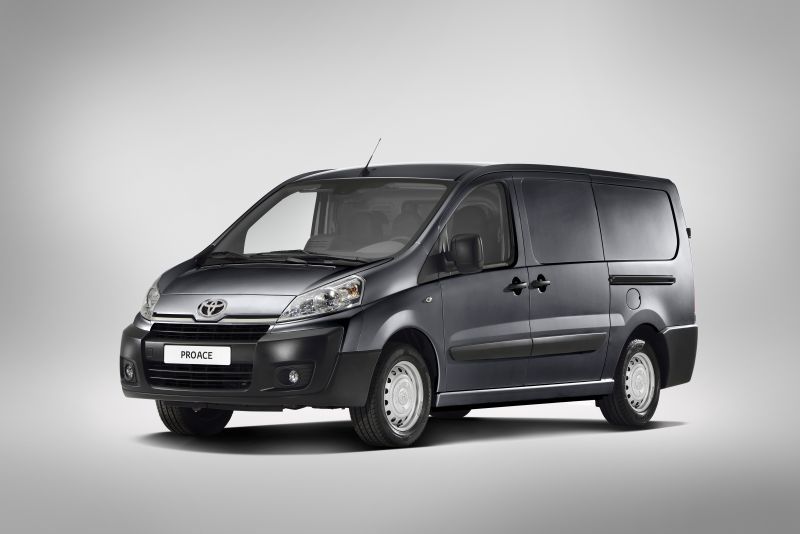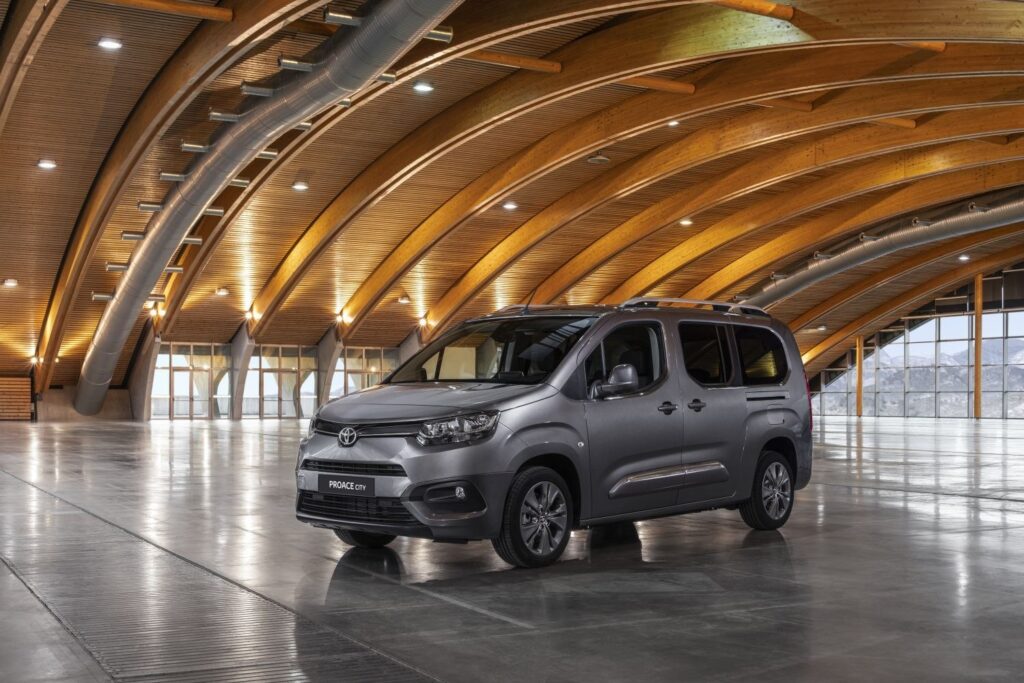
The Toyota Proace City Verso LWB 50 kWh (136 Hp) Electric represents a significant entry into the European electric minivan segment, launching in April 2022. As part of Toyota’s expanding electrified vehicle lineup, this model is a long-wheelbase (LWB) variant of the Proace City Verso, which is itself a rebadged and re-engineered product stemming from a collaboration with Stellantis (formerly PSA Group). This partnership allows Toyota to offer a competitive and versatile electric family and light commercial vehicle solution in markets where such models are highly valued, particularly across Europe and other international regions where it is sold. It is not offered in the United States market.
Designed primarily for urban families and small businesses requiring substantial cargo and passenger flexibility combined with zero-emission mobility, the Proace City Verso Electric offers a practical blend of space, efficiency, and modern technology. Its BEV (Battery Electric Vehicle) powertrain underscores Toyota’s commitment to electrification, providing an environmentally conscious alternative to traditional internal combustion engine minivans. With its extended wheelbase, the Verso LWB variant maximizes interior volume, catering to demands for more passenger seating or increased cargo capacity.
The Electrified Toyota Proace City Verso LWB
Powertrain & Engine Architecture
Powering the Toyota Proace City Verso LWB 50 kWh (136 Hp) Electric is a robust and efficient all-electric powertrain architecture. The vehicle features a single synchronous electric motor, designated model ZK01, strategically positioned on the front axle in a transverse orientation. This motor delivers a peak output of 136 horsepower (Hp) and a substantial 191.77 pound-feet (lb.-ft.) of instant torque. The characteristic of electric motors to provide maximum torque from a standstill translates into brisk acceleration and strong pulling power, which is particularly beneficial for a utility-focused vehicle like a minivan, especially when fully loaded.
Power is channeled exclusively to the front wheels through a single-speed automatic transmission, a common and efficient setup for electric vehicles that simplifies the driving experience. This drivetrain architecture, combined with the electric motor’s characteristics, ensures smooth, quiet, and responsive performance. The Proace City Verso Electric achieves an electronically limited top speed of 83.89 miles per hour (135 km/h), which is more than adequate for its intended use in urban and suburban environments, as well as highway cruising.
The vehicle’s energy storage comes from a 50 kilowatt-hour (kWh) gross capacity lithium-ion (Li-Ion) battery pack, intelligently integrated below the floor. This placement not only optimizes interior space but also contributes to a lower center of gravity, enhancing stability and handling. According to the WLTP (Worldwide Harmonized Light Vehicles Test Procedure) standard, the Proace City Verso Electric offers an all-electric range of approximately 176.47 miles (284 km). Energy consumption is rated between 31.22 and 33.96 kWh per 100 miles (19.4-21.1 kWh/100 km), translating to an impressive efficiency equivalent of 99-108 MPGe (Miles Per Gallon equivalent). These figures highlight the vehicle’s capability for daily commuting and regional travel with the benefit of zero tailpipe emissions.
Driving Characteristics
The 136 hp electric motor provides adequate, though not exceptional, performance for the Proace City Verso LWB. Acceleration is brisk from a standstill due to the instant torque delivery inherent in electric motors, making it suitable for city driving and merging onto highways. However, when fully loaded with passengers and cargo, the vehicle’s performance is noticeably diminished. Compared to potential internal combustion engine variants (which are not offered with this LWB configuration), the electric version prioritizes efficiency and smoothness over outright speed. The single-speed transmission contributes to a seamless driving experience, lacking the gear changes associated with traditional automatic transmissions. The power delivery is linear and predictable, making it easy to modulate and control. The vehicle’s weight, due to the battery pack, is higher than comparable gasoline-powered minivans, which impacts handling and braking feel.
Equipment & Trim Levels
The Toyota Proace City Verso LWB 50 kWh (136 Hp) Electric typically comes well-equipped, reflecting its position as a modern family vehicle. Standard features generally include air conditioning, a touchscreen infotainment system with smartphone integration (Apple CarPlay and Android Auto), a rearview camera, and various safety systems such as automatic emergency braking, lane departure warning, and traffic sign recognition. Interior upholstery is typically cloth, with options for upgraded materials available on higher trim levels. Dashboard configuration is functional and modern, prioritizing usability. Optional extras often include navigation, parking sensors, a panoramic sunroof, and advanced driver-assistance systems like adaptive cruise control. Specific trim levels and available options vary depending on the market.
Chassis & Braking
From a chassis and suspension perspective, the Proace City Verso LWB is equipped with an independent McPherson-type front suspension and a robust torsion beam rear suspension. This setup provides a good balance of ride comfort and handling stability, crucial for a vehicle that often carries varying loads. Braking is handled by ventilated discs at the front and solid discs at the rear, complemented by an Anti-lock Braking System (ABS) for enhanced safety. The electric power steering system, with a rack and pinion setup, offers light and precise control, making urban maneuvers and parking effortless. The vehicle rides on 205/60 R16 tires mounted on 16-inch wheel rims, providing a comfortable ride and adequate grip.
Market Reception & Comparison
The Toyota Proace City Verso LWB 50 kWh (136 Hp) Electric has been generally well-received by critics, particularly for its practicality, spaciousness, and zero-emission capabilities. Its fuel economy (measured in MPGe) is significantly better than comparable gasoline-powered minivans, resulting in lower running costs. However, its range is somewhat limited compared to some competitors with larger battery packs. Reliability is expected to be good, benefiting from Toyota’s reputation for build quality, although the long-term durability of the electric powertrain components remains to be fully assessed. Compared to other trims in the Proace City Verso lineup (which are primarily internal combustion engine variants not available in the LWB configuration), the electric version offers a quieter and smoother driving experience, but at a higher initial purchase price. The electric model targets environmentally conscious buyers and those who primarily drive in urban areas where the benefits of zero-emission driving are most pronounced.
Technical Specifications
| Category | Specification |
| Brand | Toyota |
| Model | Proace City |
| Generation | Proace City Verso LWB |
| Type (Engine) | 50 kWh (136 Hp) Electric |
| Start of Production | April, 2022 |
| Powertrain Architecture | BEV (Electric Vehicle) |
| Body Type | Minivan |
| Seats | 5-7 |
| Doors | 5 |
| Fuel Type | Electricity |
| Maximum Speed | 83.89 mph (135 km/h) |
| Weight-to-Power Ratio | 13.4 kg/Hp, 74.7 Hp/tonne |
| Weight-to-Torque Ratio | 7 kg/Nm, 142.9 Nm/tonne |
| Gross Battery Capacity | 50 kWh |
| Battery Technology | Lithium-ion (Li-Ion) |
| Battery Location | Below the floor |
| All-electric range (WLTP) | 176.47 miles (284 km) |
| Average Energy Consumption (WLTP) | 31.22 – 33.96 kWh/100 mi (19.4-21.1 kWh/100 km) / 108 – 99 MPGe |
| Electric Motor Power | 136 Hp |
| Electric Motor Torque | 191.77 lb.-ft. (260 Nm) |
| Electric Motor Model/Code | ZK01 |
| Electric Motor Location | Front axle, Transverse |
| Electric Motor Type | Synchronous |
| System Power | 136 Hp |
| System Torque | 191.77 lb.-ft. (260 Nm) |
| Kerb Weight | 4012.41 lbs. (1820 kg) |
| Max. Weight | 5379.28 lbs. (2440 kg) |
| Max Load | 1366.87 lbs. (620 kg) |
| Trunk (boot) Space – Minimum | 28.46 cu. ft. (806 l) |
| Trunk (boot) Space – Maximum | 95.1 cu. ft. (2693 l) |
| Max. Roof Load | 330.69 lbs. (150 kg) |
| Length | 187.13 in. (4753 mm) |
| Width | 72.76 in. (1848 mm) |
| Height | 71.26 in. (1810 mm) |
| Wheelbase | 117.13 in. (2975 mm) |
| Front Track | 61.14 in. (1553 mm) |
| Rear (Back) Track | 61.69 in. (1567 mm) |
| Drivetrain Architecture | One electric motor drives the front wheels. |
| Drive Wheel | Front wheel drive |
| Number of Gears and Type of Gearbox | 1 gear, automatic transmission |
| Front Suspension | Independent type McPherson |
| Rear Suspension | Torsion |
| Front Brakes | Ventilated discs |
| Rear Brakes | Disc |
| Assisting Systems | ABS (Anti-lock braking system) |
| Steering Type | Steering rack and pinion |
| Power Steering | Electric Steering |
| Tires Size | 205/60 R16 92H |
| Wheel Rims Size | 16 |
Legacy
The Toyota Proace City Verso LWB 50 kWh (136 Hp) Electric contributes to the ongoing shift towards electrification in the automotive industry, demonstrating that even highly practical and utilitarian vehicle segments can successfully transition to electric powertrains. Its market impact is observed in its ability to provide a zero-emission option for buyers who might otherwise opt for diesel or gasoline-powered minivans, thereby aiding in the reduction of overall carbon footprint in urban areas. As charging infrastructure continues to expand and battery technology evolves, the appeal and market penetration of vehicles like the Toyota Proace City Verso LWB 50 kWh (136 Hp) Electric are expected to grow, solidifying its place as a practical and forward-thinking mobility solution for the future. Long-term reliability remains to be seen, but Toyota’s reputation and the relatively simple nature of electric powertrains suggest a good outlook. On the used car market, these vehicles are expected to hold their value reasonably well, particularly as demand for electric vehicles continues to increase.