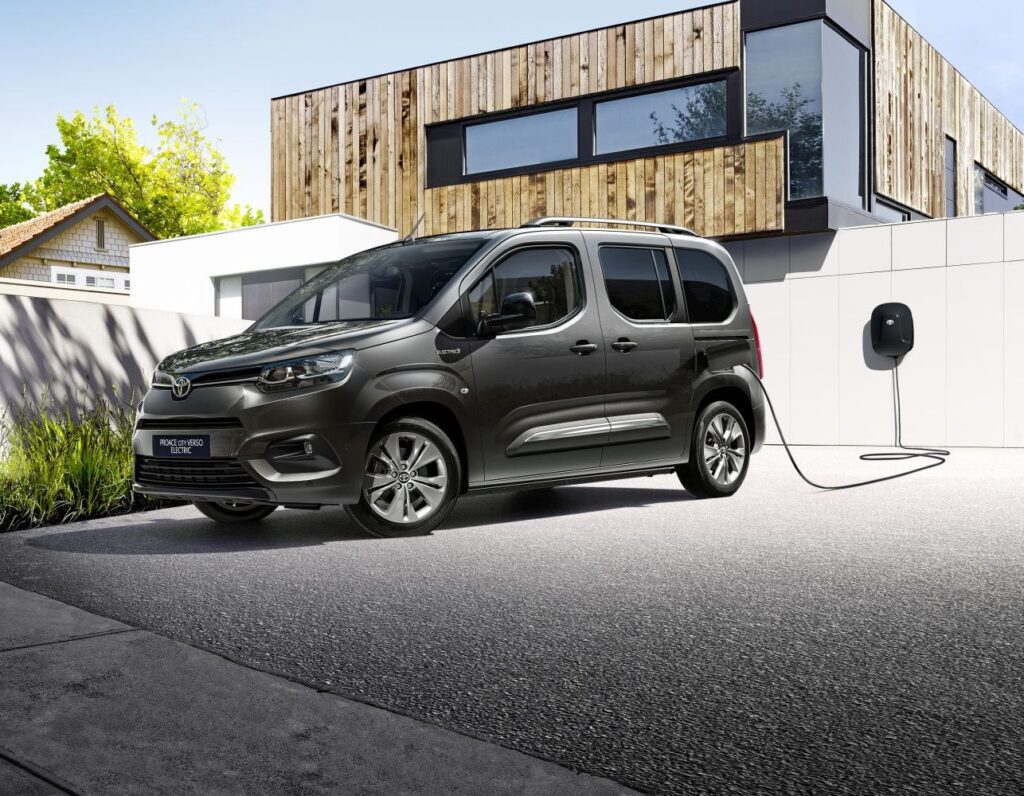
The Toyota Proace City Verso SWB 1.5 D-4D (130 Hp), launched in April 2020, represents Toyota’s entry into the compact minivan/leisure activity vehicle (LAV) segment within European and select Asian markets. This specific variant – the Short Wheelbase (SWB) model powered by a 1.5-liter D-4D diesel engine producing 130 horsepower – is a product of Toyota’s collaboration with the former PSA Group (now Stellantis). This partnership allows Toyota to compete in a crucial segment for families and small businesses without incurring the full research and development costs of an entirely new platform. The Proace City Verso prioritizes practicality, space, economy, and usability over luxury or high performance, making it a versatile and efficient vehicle for everyday needs.
Powertrain & Engine Architecture
The Toyota Proace City Verso SWB 1.5 D-4D (130 Hp) is powered by a 1.5-liter (1499 cm3 or 91.47 cu. in.) inline-four diesel engine, internally designated with the code YH01. This engine is mounted transversely at the front of the vehicle and drives the front wheels. It utilizes a common rail direct fuel injection system, a turbocharger, and an intercooler to achieve a power output of 130 horsepower at 3750 rpm. Peak torque is a substantial 300 Nm (221.27 lb.-ft.) available from a low 1750 rpm, providing strong acceleration and effortless cruising even when carrying passengers or cargo. The engine features an overhead camshaft (OHC) valvetrain with four valves per cylinder, contributing to its efficiency and smooth operation.
The engine is typically paired with a 6-speed manual transmission, optimized for fuel economy and responsive driving. However, an 8-speed automatic transmission was also offered in some markets. The vehicle achieves impressive fuel consumption figures, with a combined NEDC rating of 4.2-4.3 liters per 100 km (56-54.7 US mpg). Urban consumption is rated at 4.7-4.8 l/100 km (50-49 US mpg), while extra-urban driving achieves 3.9-4 l/100 km (60.3-58.8 US mpg). These figures are enhanced by features like a Start & Stop System and a diesel particulate filter, ensuring compliance with the stringent Euro 6d-ISC-FCM emission standard and CO2 emissions of 111-113 g/km. The vehicle’s weight-to-power ratio is 10.4 kg/Hp (95.9 Hp/tonne), and its weight-to-torque ratio is 4.5 kg/Nm (221.4 Nm/tonne).
Driving Characteristics
The 1.8L 90 hp Automatic configuration of the Proace City Verso SWB delivers a driving experience focused on practicality and efficiency rather than outright performance. The 130 horsepower engine, while adequate, isn’t designed for rapid acceleration. The 6-speed manual transmission provides a reasonable level of control, but the automatic transmission, while convenient, can sometimes feel less responsive, particularly when overtaking or climbing hills. The low-end torque of the diesel engine helps mitigate this, providing sufficient pulling power for everyday driving situations. Compared to higher-output versions, the 1.5 D-4D (130 Hp) offers a more relaxed and economical driving experience, prioritizing fuel efficiency over spirited performance. The gear ratios are tuned for maximizing fuel economy, which means the engine may need to work harder at higher speeds or when carrying a full load. The suspension is tuned for comfort, resulting in a relatively soft ride, but this can also lead to some body roll in corners.
Equipment & Trim Levels
The Toyota Proace City Verso SWB 1.5 D-4D (130 Hp) typically came equipped with a range of standard features designed for practicality and convenience. These included air conditioning, a touchscreen infotainment system with Bluetooth connectivity, a rearview camera, and a comprehensive suite of safety features such as ABS, ESP (Electronic Stability Program), and multiple airbags. Interior upholstery was typically cloth, with durable and easy-to-clean materials. Higher trim levels offered upgrades such as alloy wheels, a larger touchscreen display, navigation system, parking sensors, and a panoramic sunroof. Optional extras included features like a head-up display, adaptive cruise control, and lane departure warning. The dashboard configuration was functional and straightforward, prioritizing ease of use over aesthetic flair. The seating configuration was versatile, with the ability to fold or remove the rear seats to maximize cargo space.
Chassis & Braking
The Proace City Verso SWB utilizes a practical and comfortable suspension setup. The front suspension is an independent McPherson strut design, known for its balance of ride comfort and handling precision. The rear suspension employs a torsion beam setup, chosen for its space-saving design and robustness, making it suitable for varying load conditions. Braking is handled by ventilated discs at the front and solid discs at the rear, complemented by an Anti-lock Braking System (ABS) and Electronic Brakeforce Distribution (EBD) for enhanced safety. The electric power steering system, with its rack and pinion setup, provides light and precise control, particularly beneficial in urban environments. The vehicle is typically fitted with 205/60 R16 92H or 205/55 R17 95V tires, mounted on 16 or 17-inch wheel rims, offering a good compromise between ride comfort and grip.
Market Reception & Comparison
Critics generally viewed the Toyota Proace City Verso SWB 1.5 D-4D (130 Hp) favorably, praising its versatility, fuel efficiency, and practicality. It was often compared to its siblings from the Stellantis group – the Citroën Berlingo, Peugeot Rifter/Partner, and Opel/Vauxhall Combo Life – and generally held its own in terms of performance and features. The Toyota badge often carried a slight premium in terms of perceived reliability and resale value. In terms of fuel economy, the 1.5 D-4D (130 Hp) variant consistently outperformed higher-output gasoline versions, making it a popular choice for drivers who prioritize running costs. Reliability was generally good, with few reported issues. However, some critics noted that the interior materials were not as refined as those found in some competing vehicles. Compared to the more powerful diesel variants, the 130 hp version offered a more affordable entry point into the Proace City Verso range, appealing to budget-conscious buyers.
Technical Specifications
| Category | Specification |
| Brand | Toyota |
| Model | Proace City Verso SWB |
| Type (Engine) | 1.5 D-4D (130 Hp) |
| Start of Production | April, 2020 |
| Powertrain Architecture | Internal Combustion engine |
| Body type | Minivan |
| Seats | 5 |
| Doors | 5 |
| Fuel consumption (urban NEDC) | 4.7-4.8 l/100 km |
| Fuel consumption (extra urban NEDC) | 3.9-4 l/100 km |
| Fuel consumption (combined NEDC) | 4.2-4.3 l/100 km |
| CO2 emissions (NEDC) | 111-113 g/km |
| Fuel Type | Diesel |
| Emission standard | Euro 6d-ISC-FCM |
| Weight-to-power ratio | 10.4 kg/Hp |
| Weight-to-torque ratio | 4.5 kg/Nm |
| Power | 130 Hp @ 3750 rpm |
| Torque | 300 Nm @ 1750 rpm |
| Engine displacement | 1499 cm3 |
| Number of cylinders | 4 |
| Fuel injection system | Diesel Commonrail |
| Kerb Weight | 1355 kg |
| Max. weight | 2120 kg |
| Trunk (boot) space – minimum | 597 l |
| Trunk (boot) space – maximum | 2126 l |
| Fuel tank capacity | 50 l |
Legacy
The Toyota Proace City Verso SWB 1.5 D-4D (130 Hp) powertrain has proven to be relatively reliable, with few widespread reports of major mechanical issues. The 1.5-liter diesel engine, while not known for exceptional performance, is durable and efficient. In the used car market, these models are generally well-regarded for their practicality and low running costs. They represent a good value proposition for buyers seeking a versatile and economical vehicle for family or business use. The collaborative nature of the vehicle’s development, leveraging the expertise of Stellantis, has contributed to its overall robustness and reliability. As with any diesel vehicle, proper maintenance – including regular oil changes and diesel particulate filter servicing – is crucial for ensuring long-term reliability. The Proace City Verso continues to be a popular choice in its target markets, demonstrating the enduring appeal of a practical and efficient compact minivan.