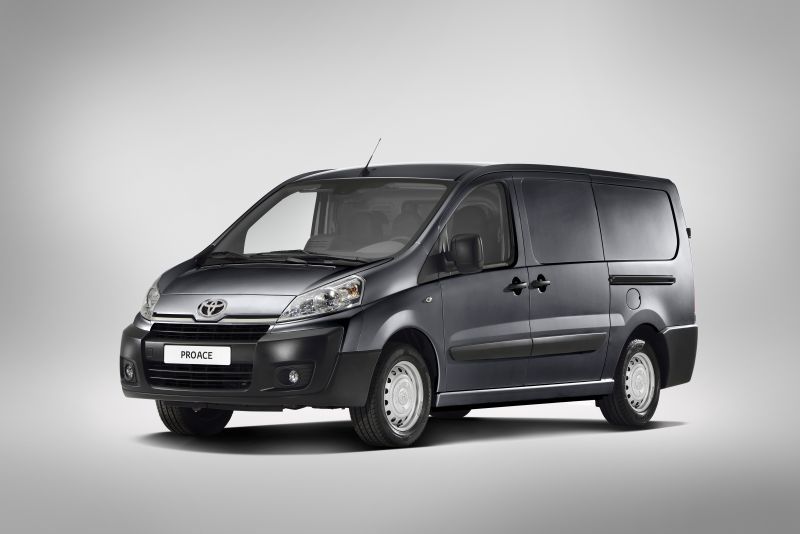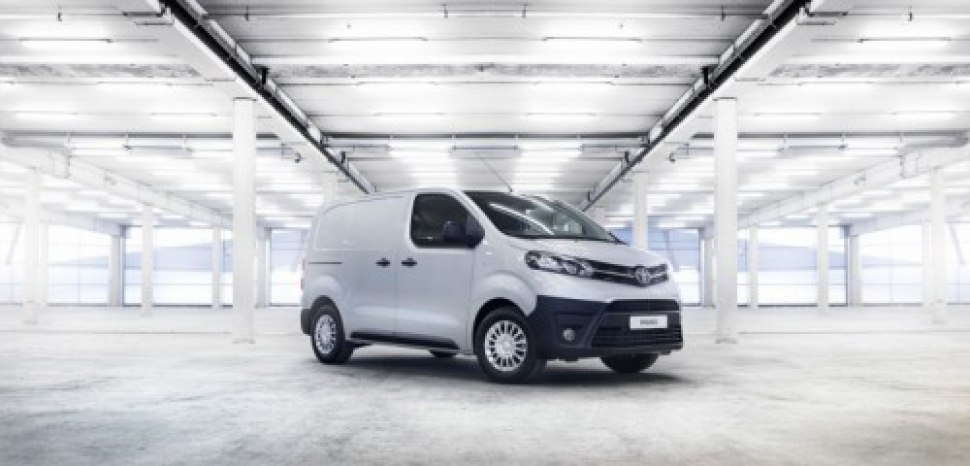
The Toyota Proace Compact II 2.0 D-4D (150 Hp) represents a crucial offering in the competitive European light commercial vehicle (LCV) segment. Introduced in September 2016 and produced until October 2021, this second-generation Proace, specifically in its “Compact” variant, was a testament to Toyota’s strategic partnership with PSA Group (now Stellantis). While not directly sold in the United States, the Proace Compact played a vital role in expanding Toyota’s footprint in Europe’s bustling commercial vehicle market, offering businesses a highly versatile, efficient, and reliable solution for urban deliveries and various trade applications. This particular iteration, powered by a robust 2.0-liter D-4D diesel engine delivering 150 horsepower, was engineered to provide an optimal balance of power, economy, and practicality within a maneuverable, city-friendly package.
Variant Positioning and Market Role
Designed as a modern minivan or compact panel van, depending on its configuration, the Proace Compact II targeted small to medium-sized enterprises requiring a vehicle that could navigate tight city streets with ease while still offering substantial cargo capacity. This 150 horsepower diesel variant occupied a mid-range position within the Proace Compact II lineup. Below it sat lower-powered diesel options, typically around 90-120 horsepower, geared towards maximizing fuel economy and minimizing initial purchase price. Above it were higher-output diesel engines, often exceeding 175 horsepower, aimed at customers needing maximum towing capacity and performance. The 2.0 D-4D (150 Hp) struck a balance, providing sufficient power for most commercial tasks without sacrificing fuel efficiency or affordability.
Powertrain & Engine Architecture
At the heart of the Toyota Proace Compact II 2.0 D-4D (150 Hp) lies a sophisticated 2.0-liter (1997 cm³, 121.86 cu. in.) inline-four diesel engine, designated with the model code 4WZ-FTV. This powerplant is a hallmark of modern diesel engineering, featuring a common rail fuel injection system, a turbocharger, and an intercooler. The common rail system delivers fuel at extremely high pressure, optimizing combustion efficiency and reducing emissions. The turbocharger forces more air into the engine, increasing power output, while the intercooler cools the compressed air, further enhancing performance. The engine utilizes four valves per cylinder, contributing to improved breathing and overall efficiency.
The engine produces 150 horsepower (112 kW) at 3,750 rpm, translating to 75.1 horsepower per liter. More critically for its intended use, it generates a substantial 272.9 lb.-ft. (370 Nm) of torque, available at a low 2000 rpm. This low-end torque is crucial for a commercial vehicle, providing excellent pulling power for heavy loads and ensuring responsive acceleration even when fully laden. Power is managed by a precise 6-speed manual transmission, offering drivers full control over the engine’s output and contributing to the vehicle’s impressive fuel economy. The transmission features a conventional gear layout, optimized for both urban driving and highway cruising.
Driving Characteristics
The 2.0 D-4D (150 Hp) powertrain delivers a practical and usable driving experience. While not a performance-oriented setup, the 150 horsepower and 272.9 lb-ft of torque provide ample power for typical commercial applications. Acceleration is brisk enough for merging into traffic and maintaining highway speeds, even when carrying a moderate load. The low-end torque is particularly noticeable, allowing for effortless pulling away from a standstill and confident overtaking maneuvers. Compared to the lower-powered versions of the Proace Compact, the 150 hp variant offers a significant improvement in responsiveness and overall drivability. Compared to higher-output versions, the 150 hp engine prioritizes fuel efficiency over outright performance, making it a cost-effective choice for businesses focused on minimizing operating expenses. The 6-speed manual transmission allows for precise gear selection, maximizing efficiency and control.
Equipment & Trim Levels
The Toyota Proace Compact II 2.0 D-4D (150 Hp) was typically offered in a range of trim levels, catering to different business needs and budgets. Standard equipment generally included air conditioning, a driver’s airbag, ABS brakes, electric front windows, and a basic audio system with USB connectivity. Higher trim levels added features such as a touchscreen infotainment system with navigation, rear parking sensors, cruise control, and upgraded interior upholstery. Optional extras included a passenger airbag, a rearview camera, and various cargo area configurations, including shelving and load securing systems. The interior was designed with practicality in mind, featuring durable materials and a functional layout. The dashboard was typically constructed from hard-wearing plastics, and the seats were designed for comfort during long working days.
Chassis & Braking
The Proace Compact II utilizes a front-wheel-drive chassis, providing a balance of efficiency and handling. The front suspension features independent McPherson struts, offering a comfortable ride and stable handling. The rear suspension employs a robust twist beam setup, which is space-efficient and capable of handling substantial loads. Braking is handled by disc brakes on all four wheels, providing ample stopping power. The Anti-lock Braking System (ABS) prevents wheel lockup during hard braking, enhancing safety and control. The vehicle’s steering is electrically assisted, providing light and precise control, particularly useful for maneuvering in tight urban environments. Stabilizer bars are fitted to both the front and rear axles to reduce body roll during cornering, improving stability and handling.
Market Reception & Comparison
Critics generally praised the Toyota Proace Compact II 2.0 D-4D (150 Hp) for its practicality, fuel efficiency, and reliability. The engine was considered a good compromise between power and economy, making it suitable for a wide range of commercial applications. The vehicle’s compact dimensions were also highly appreciated, allowing it to navigate congested city streets with ease. Compared to its rivals, the Proace Compact II often stood out for its Toyota’s reputation for durability and low ownership costs. Fuel economy figures were competitive, typically ranging from 41.3 to 43.6 US miles per gallon, depending on driving conditions. Reliability was generally excellent, with few reported issues. However, some critics noted that the interior was somewhat basic compared to some of its competitors, and the ride quality could be firm when the vehicle was fully loaded.
Technical Specifications
| Category | Specification |
| Brand | Toyota |
| Model | Proace |
| Generation | Proace Compact II |
| Type (Engine) | 2.0 D-4D (150 Hp) |
| Production Start | September, 2016 |
| Production End | October, 2021 |
| Powertrain Architecture | Internal Combustion engine |
| Body Type | Minivan |
| Seats | 3 |
| Doors | 4 |
| Fuel Consumption (Urban) | 36.2 – 38.6 US mpg (6.1-6.5 l/100 km) |
| Fuel Consumption (Extra Urban) | 44.4 – 47 US mpg (5.0-5.3 l/100 km) |
| Fuel Consumption (Combined) | 41.3 – 43.6 US mpg (5.4-5.7 l/100 km) |
| CO2 Emissions | 142-151 g/km |
| Fuel Type | Diesel |
| Emission Standard | Euro 6 |
| Power | 150 Hp |
| Torque | 272.9 lb.-ft. (370 Nm) @ 2000 rpm |
| Engine Model/Code | 4WZ-FTV |
| Engine Displacement | 121.86 cu. in. (1997 cm³) |
Legacy
The Toyota Proace Compact II 2.0 D-4D (150 Hp) has proven to be a reliable and durable workhorse in the European commercial vehicle market. The 4WZ-FTV engine is known for its longevity and relatively low maintenance costs. On the used car market, these vehicles continue to hold their value well, reflecting their reputation for reliability. While older examples may require routine maintenance such as timing belt replacement and injector cleaning, the engine is generally considered robust and capable of high mileage. The Proace Compact II remains a popular choice for small businesses and tradespeople seeking a practical, efficient, and dependable commercial vehicle.