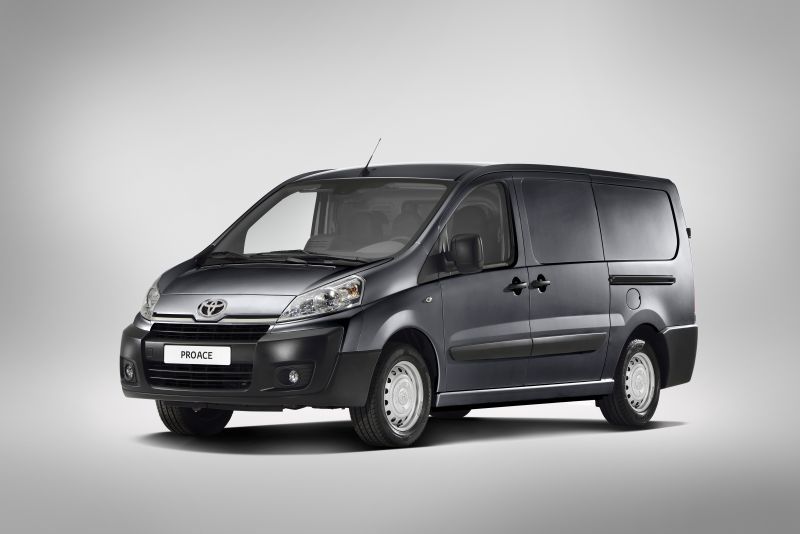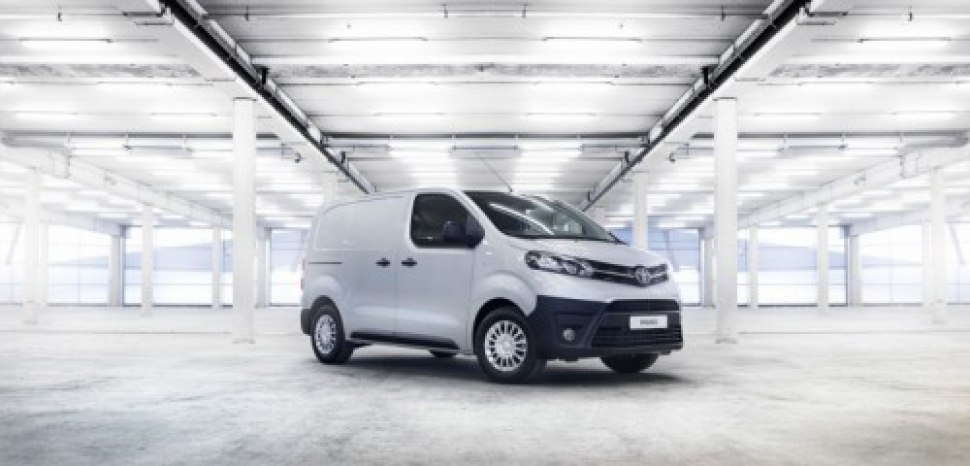
The Toyota Proace Compact II 2.0 D-4D (177 Hp) Automatic, produced from September 2016 to October 2021, represents a crucial offering in the European light commercial vehicle (LCV) and multi-purpose vehicle (MPV) segments. As part of the second generation of the Proace, this particular variant, with its “Compact” designation, was engineered to provide an optimal balance of maneuverability, cargo capacity, and passenger comfort within urban environments. Developed through a joint venture between Toyota and PSA Group (now Stellantis), the Proace shares its platform and many components with its French siblings, the Citroën Jumpy/Dispatch and Peugeot Expert/Traveller. Unlike many Toyota models readily available in the United States, the Proace is specifically tailored for the European market, where demand for versatile, efficient, and compact vans is substantial. This model, equipped with a potent 2.0-liter D-4D diesel engine and an advanced automatic transmission, positioned itself as a sophisticated option for businesses requiring reliable transport and for families seeking a practical, spacious vehicle without the bulk of larger vans.
Powertrain & Engine Architecture
At the heart of the Toyota Proace Compact II 2.0 D-4D (177 Hp) Automatic lies a robust and efficient 2.0-liter (1997 cm³, 121.86 cu. in.) inline-four diesel engine, designated with the model code 4WZ-FHV. This powerplant, featuring a common rail fuel injection system, is augmented by a turbocharger and an intercooler, enabling it to deliver an impressive 177 horsepower (Hp) and a substantial 295.02 lb.-ft. (400 Nm) of torque, peaking at a accessible 2000 rpm. With a power output of 88.6 Hp per liter, this engine demonstrated a remarkable blend of responsiveness and fuel efficiency, a critical factor for European operators facing stringent emission regulations and high fuel costs.
The engine’s design incorporates four valves per cylinder, optimizing airflow for combustion and contributing to its strong performance and relatively clean operation. The common rail direct injection system utilizes piezo injectors for precise fuel delivery, maximizing combustion efficiency and minimizing emissions. The turbocharger is a variable geometry turbo (VGT), allowing for optimized boost pressure across a wider range of engine speeds. Mated to an advanced 8-speed automatic transmission, the powertrain architecture ensures smooth power delivery to the front wheels, enhancing both driving comfort and fuel economy. This automatic gearbox was a significant upgrade, offering precise shifts and intelligent gear selection to keep the engine within its optimal operating range, whether navigating busy city streets or cruising on the highway. The inclusion of a diesel particulate filter (DPF) was standard, helping the vehicle meet the strict Euro 6 emission standard, underscoring Toyota’s commitment to environmental responsibility in its European offerings.
Driving Characteristics
The 177 hp 2.0 D-4D engine paired with the 8-speed automatic transmission delivers a noticeably more refined driving experience compared to lower-powered Proace Compact II variants. While not a performance vehicle, the combination provides ample power for everyday driving, including fully loaded cargo scenarios or highway cruising. The automatic transmission is programmed for fuel efficiency, with relatively early upshifts in normal driving mode. However, a manual shift mode allows the driver to hold gears for longer, providing more control when climbing hills or overtaking. Compared to the manual transmission versions, the automatic offers smoother acceleration and reduced driver fatigue, particularly in stop-and-go traffic. The 8-speed configuration provides closer gear ratios than a traditional 6-speed automatic, contributing to improved fuel economy and more responsive acceleration. The torque curve is relatively flat, meaning that a significant amount of torque is available across a wide range of engine speeds, making it easy to maintain momentum without frequent downshifts. The front-wheel-drive configuration contributes to a lower overall weight, further enhancing fuel efficiency and handling.
Equipment & Trim Levels
The Toyota Proace Compact II 2.0 D-4D (177 Hp) Automatic was typically offered in a range of trim levels, catering to both commercial and passenger vehicle needs. Standard equipment generally included air conditioning, power windows, central locking, and a basic audio system with USB connectivity. Higher trim levels added features such as a touchscreen infotainment system with navigation, Bluetooth connectivity, rear parking sensors, cruise control, and automatic headlights and wipers. Interior upholstery varied depending on the trim level, ranging from durable cloth to more premium materials. The dashboard configuration was functional and driver-focused, with clearly labeled controls and a digital instrument cluster. Optional extras included a panoramic sunroof, leather upholstery, advanced driver-assistance systems (ADAS) like lane departure warning and automatic emergency braking, and a more sophisticated infotainment system with Apple CarPlay and Android Auto compatibility. The vehicle was often available in configurations with varying seating arrangements, including options for a three-seat configuration with a large cargo area or a more passenger-focused layout with multiple rows of seats.
Chassis & Braking
The Proace Compact II utilizes a front-wheel-drive platform with an independent McPherson strut suspension at the front and a twist-beam rear suspension. This setup provides a good balance of ride comfort and handling, suitable for both urban and highway driving. The steering system is an electric power-assisted rack and pinion system, offering light and precise steering feel. Braking duties are handled by disc brakes on all four wheels, complemented by an Anti-lock Braking System (ABS) and Electronic Brakeforce Distribution (EBD). The braking system is generally considered adequate for the vehicle’s weight and performance, providing confident stopping power in most conditions. The vehicle’s relatively low weight, compared to larger vans, contributes to its agile handling and reduced braking distances. Stabilizer bars are fitted to both the front and rear axles to reduce body roll during cornering, enhancing stability and control. Tire sizes typically range from 215/65 R16 to 225/55 R17, providing a good balance of grip and ride comfort.
Market Reception & Comparison
Critics generally praised the Toyota Proace Compact II 2.0 D-4D (177 Hp) Automatic for its refined driving experience, fuel efficiency, and practicality. The 177 hp engine was considered a good compromise between performance and economy, providing ample power for most tasks without sacrificing fuel consumption. The 8-speed automatic transmission was also well-received, offering smooth and responsive shifts. Compared to the lower-powered 1.6 BlueHDi engine offered in some Proace variants, the 2.0 D-4D provided a noticeable improvement in performance, particularly when carrying a full load or driving on hilly terrain. In terms of fuel economy, the 2.0 D-4D Automatic was competitive with other diesel-powered vans in its class, achieving around 37-39 mpg on the combined cycle. Reliability was also a strong point, with Toyota’s reputation for building durable and dependable vehicles. Compared to some competitors, the Proace Compact II offered a more comfortable and refined driving experience, making it a popular choice for drivers who spend long hours behind the wheel. However, some critics noted that the interior design was somewhat utilitarian and lacked the premium feel of some competitors.
Technical Specifications
| Category | Specification |
| Brand | Toyota |
| Model | Proace Compact II |
| Type (Engine) | 2.0 D-4D (177 Hp) Automatic |
| Production Start | September, 2016 |
| Production End | October, 2021 |
| Powertrain Architecture | Internal Combustion Engine |
| Body Type | Minivan |
| Seats | 3 |
| Doors | 4 |
| Performance Specs | |
| Fuel Consumption (Urban) | 7.3-7.6 l/100 km (30.9-32.2 US mpg) |
| Fuel Consumption (Extra Urban) | 5.3-5.6 l/100 km (42-44.4 US mpg) |
| Fuel Consumption (Combined) | 6.0-6.3 l/100 km (37.3-39.2 US mpg) |
| CO2 Emissions | 159-166 g/km |
| Fuel Type | Diesel |
| Emission Standard | Euro 6 |
| Engine Specs | |
| Power | 177 Hp |
| Power per liter | 88.6 Hp/l |
| Torque | 400 Nm (295.02 lb.-ft.) @ 2000 rpm |
| Engine Model/Code | 4WZ-FHV |
| Engine Displacement | 1997 cm³ (121.86 cu. in.) |
| Number of Cylinders | 4 |
| Engine Configuration | Inline |
| Valves per Cylinder | 4 |
| Fuel Injection System | Diesel Commonrail |
| Engine Aspiration | Turbocharger, Intercooler |
| Engine Oil Capacity | 6 liters (6.34 US qt) |
| Engine Systems | Particulate filter |
| Space, Volume & Weights | |
| Trunk Space (Minimum) | 1633-1978 liters (57.67-69.85 cu. ft.) |
| Trunk Space (Maximum) | 3397 liters (119.96 cu. ft.) |
| Fuel Tank Capacity | 69 liters (18.23 US gal) |
| Max. Roof Load | 140-170 kg (308.65-374.79 lbs.) |
| Permitted Trailer Load (with brakes 12%) | 2000 kg (4409.25 lbs.) |
| Permitted Trailer Load (without brakes) | 750 kg (1653.47 lbs.) |
| Permitted Towbar Download | 72 kg (158.73 lbs.) |
| Dimensions | |
| Length | 4609 mm (181.46 in.) |
| Width | 1920 mm (75.59 in.) |
| Height | 1905 mm (75 in.) |
| Wheelbase | 2925 mm (115.16 in.) |
| Front Track | 1627 mm (64.06 in.) |
| Rear Track | 1600 mm (62.99 in.) |
| Drivetrain, Brakes & Suspension Specs | |
| Drivetrain Architecture | Front-wheel drive; Internal combustion engine drives front wheels. |
| Drive Wheel | Front-wheel drive |
| Number of Gears & Gearbox Type | 8 gears, automatic transmission |
| Front Suspension | Independent type McPherson |
| Rear Suspension | Wishbone |
| Front Brakes | Disc |
| Rear Brakes | Disc |
| Assisting Systems | ABS (Anti-lock Braking System) |
| Steering Type | Steering rack and pinion |
| Power Steering | Electric Steering |
| Tire Size | 215/65 R16; 225/55 R17 |
| Wheel Rims Size | 16; 17 |
Legacy
The Toyota Proace Compact II 2.0 D-4D (177 Hp) Automatic has proven to be a reliable and durable powertrain combination. The 4WZ-FHV engine, while not without its potential maintenance needs (such as DPF regeneration and occasional injector cleaning), is generally considered a robust unit capable of high mileage with proper servicing. The 8-speed automatic transmission has also demonstrated good longevity, with fewer reported issues compared to some earlier automatic transmissions. In the used car market, these Proace Compact II variants hold their value relatively well, particularly those with a full service history and low mileage. They remain a popular choice for businesses and families seeking a practical, efficient, and dependable van. The continued demand for this model is a testament to its well-rounded design and Toyota’s reputation for building quality vehicles. The Proace Compact II, and specifically this 2.0 D-4D Automatic variant, represents a successful example of collaborative engineering, delivering a compelling product that has made a lasting impact on the European LCV market.