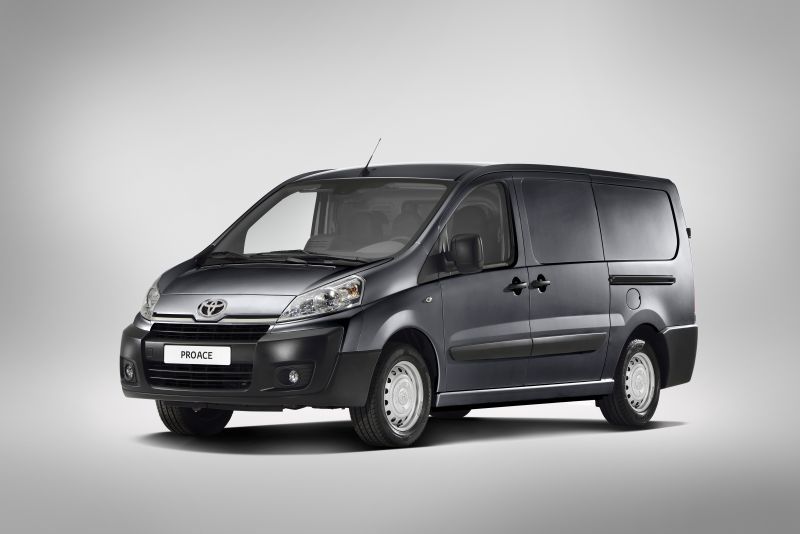
The Toyota Proace Double Cabine 2.0 D4-D (128 Hp) L2H1 represents Toyota’s strategic entry into the highly competitive European light commercial vehicle (LCV) market during its production run from 2013 to 2016. Unlike many of Toyota’s globally developed models, the Proace was a result of a collaboration with PSA Peugeot Citroën, essentially a rebadged version of the Citroën Jumpy/Peugeot Expert. This approach allowed Toyota to offer a robust and versatile commercial van without the extensive development costs, leveraging an established platform. The Double Cabine variant specifically targets businesses and individuals requiring a dual-purpose vehicle, capable of comfortably transporting both passengers and significant cargo. The L2H1 designation denotes a longer wheelbase (L2) and a standard roof height (H1), optimizing it for a balance of maneuverability and load capacity. While not sold in the United States, the Proace played a crucial role in expanding Toyota’s commercial vehicle footprint across Europe, providing a reliable and efficient option for a diverse range of professional applications, from tradespeople to delivery services.
Powertrain & Engine Architecture
Under the hood, the Toyota Proace Double Cabine 2.0 D4-D (128 Hp) L2H1 is powered by a 2.0-liter (1997 cubic inches) inline four-cylinder D4-D diesel engine, designated with the model code 4WZ-FTV. This powerplant is a testament to the era’s focus on diesel efficiency and torque delivery, especially pertinent for a commercial vehicle. It generates a respectable 128 horsepower at 4000 rpm and a robust 236.02 lb.-ft. of torque at a low 2000 rpm. The engine features a common rail fuel injection system, a turbocharger, and an intercooler, ensuring optimal power output and fuel atomization for efficient combustion.
A DOHC (Double Overhead Camshaft) valvetrain further enhances engine breathing and performance. The 4WZ-FTV engine utilizes a piezoelectric fuel injection system, known for its precise control and efficient fuel delivery. This system allows for multiple injection events per combustion cycle, optimizing combustion efficiency and reducing emissions. The turbocharger is a variable geometry turbo (VGT), which adjusts the turbine vanes to optimize boost pressure across a wider range of engine speeds, improving both low-end torque and high-end power. The intercooler cools the compressed air from the turbocharger, increasing its density and further enhancing engine performance.
Paired with a 6-speed manual transmission, the front-wheel-drive architecture is standard for this class of van, offering predictable handling and maximizing interior space. The transmission itself is a conventional manual gearbox, designed for durability and ease of maintenance. It features a relatively long first gear for easy starts with heavy loads and well-spaced gear ratios for efficient cruising at highway speeds.
Driving Characteristics
The Toyota Proace Double Cabine 2.0 D4-D (128 Hp) L2H1, with its 128 horsepower and 236 lb-ft of torque, delivers adequate performance for its intended purpose. Acceleration from 0 to 60 mph takes approximately 12.4 seconds, and it can reach a top speed of 105.63 mph (170 km/h). While not particularly sporty, the engine provides sufficient power for everyday driving, including carrying a full load of passengers and cargo. The low-end torque is particularly noticeable, making it easy to pull away from a standstill and navigate hilly terrain.
Compared to higher-output versions of the Proace, such as those equipped with more powerful diesel engines, the 128 hp variant feels less responsive. However, it offers a more relaxed driving experience, with less need for frequent gear changes. The 6-speed manual transmission is well-suited to the engine’s characteristics, providing a good balance of performance and fuel economy. The front-wheel-drive configuration contributes to predictable handling, but it can exhibit some torque steer under hard acceleration. Overall, the driving experience is focused on practicality and efficiency rather than outright performance.
Equipment & Trim Levels
The Toyota Proace Double Cabine 2.0 D4-D (128 Hp) L2H1 typically came with a fairly basic level of equipment, reflecting its commercial vehicle status. Standard features generally included ABS (Anti-lock Braking System), electric power steering, a driver’s airbag, and a basic audio system with radio and CD player. The Double Cabine configuration itself was a key feature, offering seating for up to six occupants. The interior was typically finished with durable, easy-to-clean materials, prioritizing practicality over luxury.
Optional extras available for this trim included air conditioning, rear parking sensors, a navigation system, and upgraded audio systems. Some models also offered features like cruise control and a trip computer. The interior upholstery was typically cloth, with a focus on durability and resistance to wear and tear. The dashboard layout was functional and straightforward, with clearly labeled controls and a focus on ergonomics. The Double Cabine variant offered a flexible seating arrangement, with the rear seats often capable of folding or being removed to maximize cargo space.
Chassis & Braking
The Toyota Proace Double Cabine 2.0 D4-D (128 Hp) L2H1 utilizes a robust chassis designed to handle the demands of commercial use. The front suspension features a double wishbone setup, providing a comfortable ride and good handling characteristics. The rear suspension is a semi-independent, coil spring arrangement, which offers a good balance of ride comfort and load-carrying capacity.
The braking system consists of ventilated disc brakes at the front and disc brakes at the rear, providing adequate stopping power for a vehicle of its weight. ABS (Anti-lock Braking System) is standard, enhancing safety by preventing wheel lockup during hard braking. The steering system utilizes a rack and pinion setup with electric power steering, providing ease of operation, particularly at low speeds during parking or maneuvering. The vehicle rides on 215/60 R16 tires mounted on 7J x 16 wheel rims, a common size offering a good balance of load-carrying capacity and comfort. The suspension and braking systems are tuned to provide a stable and predictable driving experience, even when the vehicle is fully loaded.
Market Reception & Comparison
The Toyota Proace Double Cabine 2.0 D4-D (128 Hp) L2H1 received generally positive reviews from critics, who praised its reliability, fuel economy, and practicality. While it wasn’t the most exciting van to drive, it offered a solid and dependable platform for commercial use. Its fuel economy, rated at an impressive 33.1 US mpg (combined), was a significant selling point for businesses looking to reduce operating costs.
Compared to other trims in the Proace lineup, the 128 hp variant offered a more affordable entry point, making it attractive to smaller businesses and individuals. However, it lacked the performance of the higher-output diesel engines. Compared to competitors like the Ford Transit Custom and Volkswagen Transporter, the Proace offered a comparable level of practicality and reliability, but it often lagged behind in terms of driving dynamics and interior refinement. The Proace’s strength lay in its Toyota brand reputation for durability and its competitive pricing.
Technical Specifications
| Category | Specification |
| General Information | |
| Brand | Toyota |
| Model | Proace Double Cabine |
| Type (Engine) | 2.0 D4-D (128 Hp) L2H1 |
| Production Start | 2013 |
| Production End | 2016 |
| Powertrain Architecture | Internal Combustion engine |
| Body Type | Minivan |
| Seats | 3-6 |
| Doors | 5 |
| Performance Specs | |
| Fuel Consumption (Urban) | 8.2 l/100 km (28.7 US mpg) |
| Fuel Consumption (Extra Urban) | 6.3 l/100 km (37.3 US mpg) |
| Fuel Consumption (Combined) | 7.1 l/100 km (33.1 US mpg) |
| CO2 Emissions | 183 g/km |
| Fuel Type | Diesel |
| Acceleration 0-60 mph | 12.4 sec |
| Maximum Speed | 170 km/h (105.63 mph) |
| Emission Standard | Euro 5 |
| Weight-to-Power Ratio | 14.7 kg/Hp |
| Engine Specs | |
| Power | 128 Hp @ 4000 rpm |
| Torque | 320 Nm @ 2000 rpm (236.02 lb.-ft. @ 2000 rpm) |
| Engine Layout | Front, Transverse |
| Engine Model/Code | 4WZ-FTV |
| Engine Displacement | 1997 cm3 (121.86 cu. in. / 2.0 Liters) |
| Number of Cylinders | 4 |
| Engine Configuration | Inline |
| Fuel Injection System | Diesel Commonrail |
| Engine Aspiration | Turbocharger, Intercooler |
| Valvetrain | DOHC |
| Space, Volume and Weights | |
| Kerb Weight | 1876-1971 kg (4135.87 – 4345.31 lbs.) |
| Max. Weight (GVWR) | 2880 kg (6349.31 lbs.) |
| Max Load | 909-1004 kg (2004 – 2213.44 lbs.) |
| Fuel Tank Capacity | 80 l (21.13 US gal) |
| Dimensions | |
| Length | 5143 mm (202.48 in.) |
| Width | 1895 mm (74.61 in.) |
| Height | 1980 mm (77.95 in.) |
| Wheelbase | 3122 mm (122.91 in.) |
| Drivetrain, Brakes and Suspension | |
| Drivetrain Architecture | Front-wheel drive, Internal Combustion Engine |
| Front Suspension | Double wishbone |
| Rear Suspension | Semi-independent, coil spring |
| Front Brakes | Ventilated discs |
| Rear Brakes | Disc |
Legacy
The Toyota Proace Double Cabine 2.0 D4-D (128 Hp) L2H1, while a relatively short-lived model, established a foothold for Toyota in the European commercial vehicle market. The 4WZ-FTV engine, while not known for being particularly groundbreaking, proved to be a reliable and durable powerplant, capable of withstanding the rigors of commercial use. The powertrain, when properly maintained, generally exhibits good longevity, with many examples still in service today.
In the used car market, these Proaces are often sought after by businesses and individuals looking for an affordable and dependable work vehicle. Their relatively simple mechanicals and readily available parts make them relatively easy and inexpensive to maintain. However, potential buyers should be aware of the typical wear and tear associated with commercial vehicles, such as clutch wear, suspension component fatigue, and potential issues with the turbocharger. Overall, the Proace Double Cabine 2.0 D4-D (128 Hp) L2H1 remains a viable option for those seeking a practical and reliable commercial van.