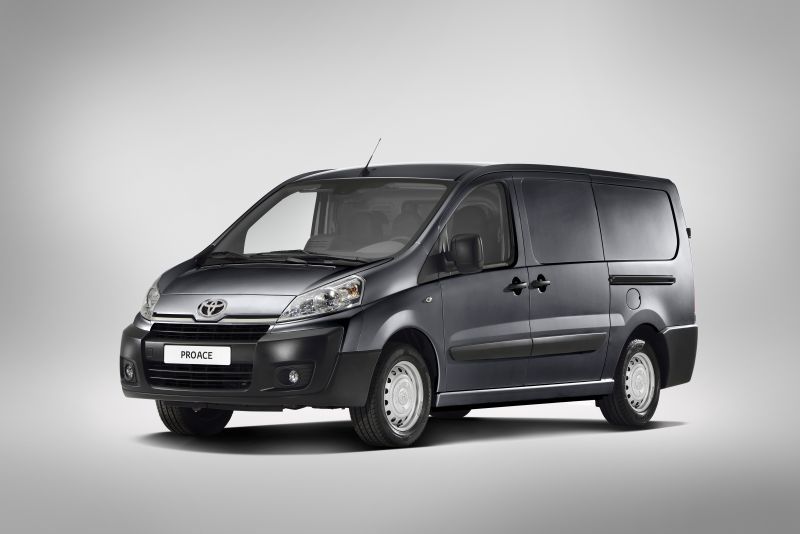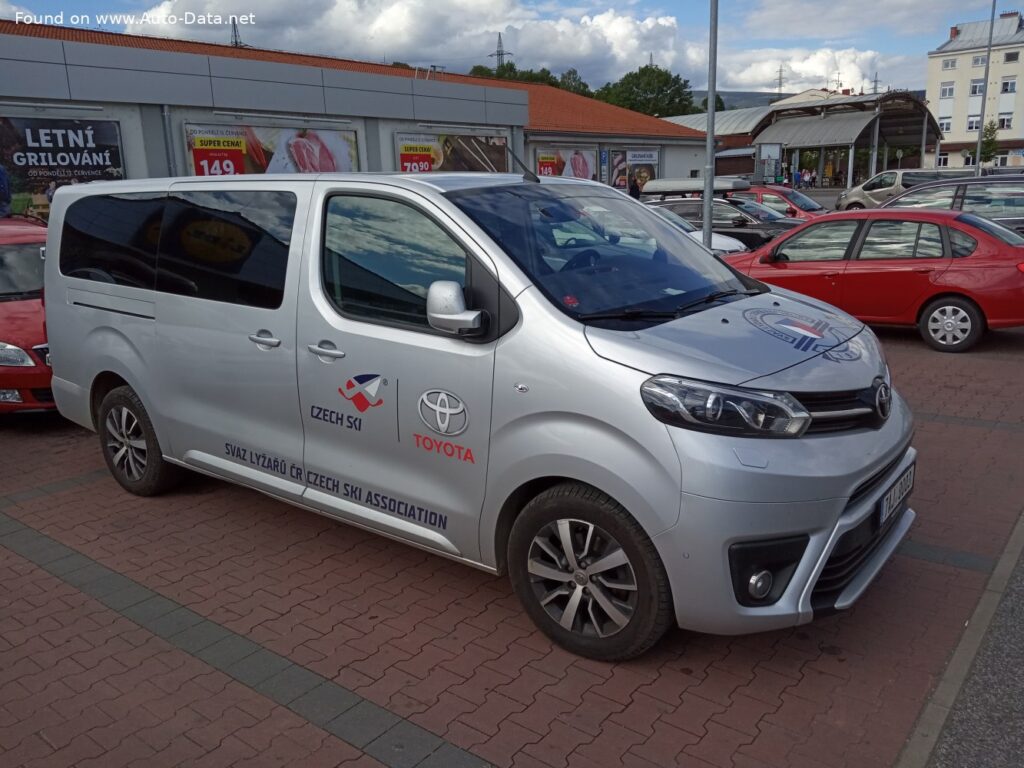
The Toyota Proace Verso II LWB 2.0 D-4D (150 Hp) represents Toyota’s entry into the European large minivan and people mover segment. Launched in September 2016 as part of the second generation of the Proace Verso line, this vehicle was a product of a collaboration between Toyota and the PSA Group (now Stellantis). It offered a versatile and practical solution for large families and commercial shuttle services, blending Toyota’s reputation for reliability with a platform shared with models like the Citroën Spacetourer and Peugeot Traveller. The Long Wheelbase (LWB) variant maximized interior space, making it a contender in markets where multi-purpose vehicles are essential. Produced until October 2021, the Proace Verso II LWB carved out a niche by offering a compelling package of efficiency, space, and functionality tailored for the European automotive landscape.
Powertrain & Engine Architecture
Under the hood, the Toyota Proace Verso II LWB 2.0 D-4D (150 Hp) was powered by a 2.0-liter (1997 cm³) D-4D inline four-cylinder diesel engine, codenamed 4WZ-FTV. This powerplant was engineered for efficiency and robust performance, a critical requirement for a vehicle designed to carry numerous passengers or substantial cargo. Equipped with a turbocharger and intercooler, the engine delivered 150 horsepower, translating to 75.1 horsepower per liter.
More significantly for a vehicle of this type, the engine produced a substantial 370 Nm (272.9 lb.-ft.) of torque, peaking at a low 2000 rpm. This ample low-end torque was crucial for effortless acceleration, confident merging onto highways, and handling heavy loads, including its impressive permitted trailer load of 2300 kg (5070.63 lbs.) with brakes. The diesel common rail fuel injection system, combined with a particulate filter, ensured compliance with stringent Euro 6 emission standards. The 4WZ-FTV engine utilizes a direct injection system, injecting fuel directly into the combustion chamber at extremely high pressure. This improves combustion efficiency and reduces emissions. The engine also features a variable geometry turbocharger (VGT) which optimizes boost pressure across the engine’s operating range, enhancing both low-end torque and high-end power. The valvetrain consists of four valves per cylinder (DOHC – Double Overhead Camshaft), further contributing to efficient airflow and improved engine performance.
Power was transmitted to the front wheels via a smooth-shifting 6-speed manual transmission, a common and preferred setup in the European market for its driver engagement and efficiency. The vehicle’s powertrain architecture, with the internal combustion engine driving the front wheels, provided predictable handling and optimized packaging for interior space. Fuel economy was a strong suit for the 2.0 D-4D engine. In a combined cycle, it achieved 5.4-5.7 liters per 100 kilometers, which translates to an impressive 43.6 – 41.3 US mpg. Even in urban settings, it managed 6.1-6.5 l/100 km (38.6 – 36.2 US mpg), showcasing its suitability for both long-haul journeys and city commutes. With a 69-liter (18.23 US gal) fuel tank, the Proace Verso offered a substantial range between fill-ups, further enhancing its appeal for commercial operators and touring families.
Driving Characteristics
The 150 hp 2.0 D-4D engine in the Proace Verso II LWB provided adequate, though not exhilarating, performance. The focus was clearly on usability and efficiency rather than outright speed. The substantial 370 Nm of torque available from 2000 rpm meant that the vehicle felt responsive in everyday driving situations, such as overtaking and climbing hills, even when fully loaded. However, compared to higher-output versions of the Proace Verso (which were available with more powerful diesel engines), the 150 hp variant felt noticeably slower, particularly at higher speeds. The 6-speed manual transmission was well-matched to the engine’s characteristics, offering smooth gear changes and allowing the driver to keep the engine in its optimal torque band. The gear ratios were geared towards maximizing fuel economy and providing effortless cruising rather than sporty acceleration. Compared to automatic transmission options available on other Proace Verso models, the manual transmission offered a more engaging driving experience and slightly better fuel efficiency. The front-wheel-drive configuration provided predictable handling, but it lacked the all-wheel-drive capability offered on some competing models, which could be a disadvantage in slippery conditions.
Equipment & Trim Levels
The Toyota Proace Verso II LWB 2.0 D-4D (150 Hp) typically came with a respectable level of standard equipment, focusing on practicality and comfort. Standard features generally included air conditioning, electric front windows, a basic audio system with USB connectivity, and a driver’s airbag. Higher trim levels offered additional features such as rear air conditioning, cruise control, a touchscreen infotainment system with navigation, parking sensors, and automatic headlights and wipers. Interior upholstery was typically cloth, with options for upgraded materials on higher trims. The dashboard configuration was functional and straightforward, prioritizing ease of use. Optional extras included a panoramic sunroof, leather upholstery, and a more advanced safety package with features like lane departure warning and automatic emergency braking. The modular seating configuration was a key feature, allowing owners to customize the interior layout to suit their needs. The LWB variant offered increased cargo space compared to the standard wheelbase version, making it particularly appealing to those who needed to transport large items or a significant number of passengers.
Chassis & Braking
The vehicle’s chassis featured an independent McPherson type front suspension and a wishbone rear suspension, designed to provide a comfortable ride quality despite its commercial underpinnings. Braking performance was handled by disc brakes on both the front and rear axles, complemented by an Anti-lock Braking System (ABS) for enhanced safety and control during emergency stops. Steering was managed by a rack and pinion system with electric power steering, offering light and precise control, particularly beneficial in urban environments and for parking maneuvers. Standard tire sizes ranged from 215/65 R16 to 225/55 R17, mounted on 16 or 17-inch wheel rims, providing a good balance of grip and ride comfort. The rear suspension was tuned to prioritize ride comfort and load-carrying capacity, rather than sporty handling. Stabilizer bars were fitted to both the front and rear axles to reduce body roll during cornering. The braking system was designed to handle the vehicle’s weight and payload capacity effectively, providing reliable stopping power even when fully loaded.
Market Reception & Comparison
Critics generally viewed the Toyota Proace Verso II LWB 2.0 D-4D (150 Hp) as a practical and reliable people mover, but not necessarily the most exciting option in its class. The 150 hp engine was considered adequate for most tasks, but some reviewers noted that it could feel strained when fully loaded or driving uphill. Fuel economy was consistently praised, with the 2.0 D-4D engine achieving impressive figures in real-world testing. Reliability was also a strong point, with Toyota’s reputation for building durable vehicles contributing to positive reviews. Compared to other trims in the Proace Verso lineup, the 150 hp variant represented an entry-level option, offering a more affordable price point but sacrificing some performance. Compared to competitors like the Volkswagen Multivan and Mercedes-Benz V-Class, the Proace Verso offered a more value-oriented package, with a focus on practicality and efficiency rather than luxury and refinement. The Citroën Spacetourer and Peugeot Traveller, being mechanically identical, offered a similar driving experience and level of equipment.
Technical Specifications
| Category | Specification |
| General Information | |
| Brand | Toyota |
| Model | Proace Verso |
| Generation | Proace Verso II LWB |
| Type (Engine) | 2.0 D-4D (150 Hp) |
| Start of Production | September, 2016 |
| End of Production | October, 2021 |
| Powertrain Architecture | Internal Combustion engine |
| Body Type | Minivan |
| Seats | 8-9 |
| Doors | 5 |
| Performance Specs | |
| Fuel Consumption (Urban) | 6.1-6.5 l/100 km (38.6 – 36.2 US mpg) |
| Fuel Consumption (Extra Urban) | 5.0-5.3 l/100 km (47 – 44.4 US mpg) |
| Fuel Consumption (Combined) | 5.4-5.7 l/100 km (43.6 – 41.3 US mpg) |
| CO2 Emissions | 142-151 g/km |
| Fuel Type | Diesel |
| Emission Standard | Euro 6 |
| Engine Specs | |
| Power | 150 Hp |
| Power per liter | 75.1 Hp/l |
| Torque | 370 Nm @ 2000 rpm (272.9 lb.-ft. @ 2000 rpm) |
| Engine Model/Code | 4WZ-FTV |
| Engine Displacement | 1997 cm³ (121.86 cu. in.) |
| Number of Cylinders | 4 |
| Engine Configuration | Inline |
| Number of Valves per Cylinder | 4 |
| Fuel Injection System | Diesel Commonrail |
| Engine Aspiration | Turbocharger, Intercooler |
| Engine Oil Capacity | 6 l (6.34 US qt) |
| Engine Systems | Particulate filter |
| Space, Volume and Weights | |
| Trunk (boot) space – minimum | 1237 l (43.68 cu. ft.) |
| Trunk (boot) space – maximum | 4554 l (160.82 cu. ft.) |
| Fuel Tank Capacity | 69 l (18.23 US gal) |
| Max. Roof Load | 140-170 kg (308.65 – 374.79 lbs.) |
| Permitted Trailer Load with Brakes (12%) | 2300 kg (5070.63 lbs.) |
| Permitted Trailer Load without Brakes | 750 kg (1653.47 lbs.) |
| Permitted Towbar Download | 92 kg (202.83 lbs.) |
| Dimensions | |
| Length | 5309 mm (209.02 in.) |
| Width | 1920 mm (75.59 in.) |
| Height | 1890 mm (74.41 in.) |
| Wheelbase | 3275 mm (128.94 in.) |
| Front Track | 1627 mm (64.06 in.) |
| Rear (Back) Track | 1600 mm (62.99 in.) |
| Drivetrain, Brakes and Suspension Specs | |
| Drivetrain Architecture | The Internal combustion engine (ICE) drives the front wheels of the vehicle. |
| Drive Wheel | Front wheel drive |
| Number of Gears and Type of Gearbox | 6 gears, manual transmission |
| Front Suspension | Independent type McPherson |
| Rear Suspension | Wishbone |
| Front Brakes | Disc |
| Rear Brakes | Disc |
| Assisting Systems | ABS (Anti-lock braking system) |
| Steering Type | Steering rack and pinion |
| Power Steering | Electric Steering |
| Tires Size | 215/65 R16; 225/55 R17 |
| Wheel Rims Size | 16; 17 |
Legacy
The Toyota Proace Verso II LWB 2.0 D-4D (150 Hp), along with its siblings in the Proace Verso range, played a crucial role for Toyota in the European market. As a rebadged version of the PSA Group’s large MPV/van platform, it allowed Toyota to offer a competitive product in a segment where it previously lacked a strong presence. This strategic partnership enabled Toyota to leverage existing, proven technology and design, saving significant development costs while expanding its product portfolio. The Proace Verso was essentially a twin to the Citroën Spacetourer, Peugeot Traveller, and later, the Opel/Vauxhall Zafira Life, sharing the same robust platform, powertrains, and much of its interior architecture.
In Europe, the Proace Verso competed in a segment dominated by established players such as the Volkswagen Multivan/Transporter, Mercedes-Benz V-Class, and Ford Transit Custom Tourneo. Its reputation for reliability, backed by Toyota’s strong brand image, helped it stand out. While it didn’t necessarily redefine the segment, it provided a highly practical, efficient, and well-equipped alternative, particularly for those prioritizing low running costs and a hassle-free ownership experience. The 2.0 D-4D engine, in particular, was praised for its balance of power and exceptional fuel economy, qualities highly valued by both private users and commercial fleets. The LWB variant’s emphasis on maximum interior volume and flexible seating made it a popular choice for large families, hotel shuttles, and executive transport services. Its ability to comfortably seat 8 or 9 passengers while still offering substantial luggage space made it incredibly versatile. The Euro 6 compliant diesel engine also ensured its longevity in cities with increasingly strict emission regulations.
Ultimately, the Proace Verso II LWB 2.0 D-4D (150 Hp) cemented Toyota’s position as a serious contender in the European light commercial vehicle and people mover segments. Its legacy is one of smart collaboration, offering a reliable and practical solution that met the specific needs of its target market, proving that sometimes, the best way to compete is through effective partnerships. It laid the groundwork for future generations, continuing Toyota’s commitment to offering a comprehensive range of vehicles across all key market segments in Europe.