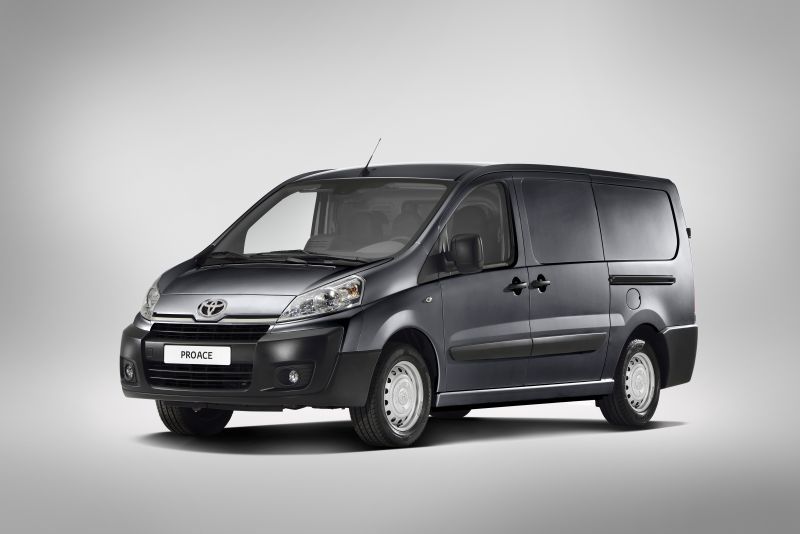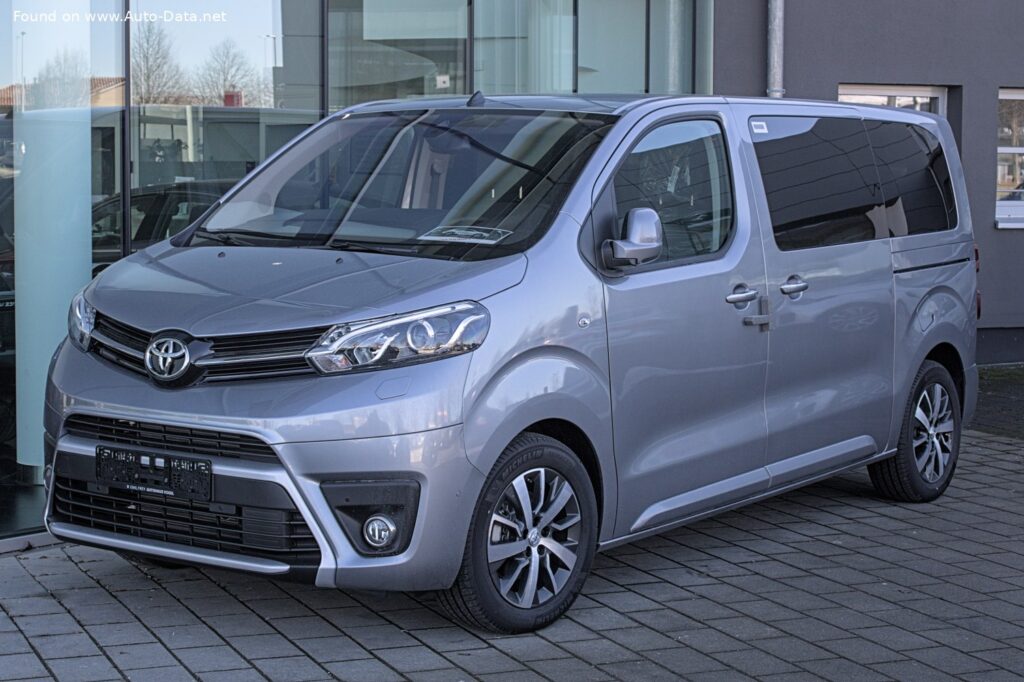
The Toyota Proace Verso II SWB 1.5d (120 Hp) represents the second generation of Toyota’s mid-size minivan, a versatile and practical vehicle primarily aimed at the European market. Launched in September 2018, this particular iteration, designated as the Short Wheelbase (SWB) model with a 1.5-liter diesel engine producing 120 horsepower, exemplifies Toyota’s strategy of offering a robust and efficient people-mover or cargo hauler in regions where such vehicles are highly valued. As part of a collaborative venture with Stellantis (formerly PSA Group), the Proace Verso shares its platform and underlying architecture with models like the Citroën Spacetourer, Peugeot Traveller, and Opel/Vauxhall Zafira Life, allowing Toyota to leverage established designs for cost-effectiveness and market reach. This vehicle occupies a mid-range position within the Proace Verso II lineup, offering a balance between affordability and capability, sitting below the higher-powered diesel variants and often featuring a more accessible price point than trims with more extensive equipment packages.
Powertrain & Engine Architecture
At the core of the Toyota Proace Verso II SWB 1.5d (120 Hp) lies a modern and efficient powertrain designed for balanced performance and impressive fuel economy. This specific model is equipped with a 1.5-liter (1499 cm3 or 91.47 cu. in.) inline four-cylinder diesel engine, identified by the model code 5WZ-HV. This unit is engineered with four valves per cylinder and utilizes a Diesel Commonrail fuel injection system, a sophisticated technology that precisely controls fuel delivery for optimal combustion efficiency. Further enhancing its performance and efficiency, the engine benefits from a turbocharger and an intercooler, which boost air intake for increased power output across the rev range. The Commonrail system, a significant advancement over older diesel injection technologies, allows for multiple injection events per combustion cycle, resulting in smoother operation, reduced noise, and lower emissions.
The engine delivers a respectable 120 horsepower (80.1 hp per liter) and a robust 221.27 lb.-ft. (300 Nm) of torque, which peaks at a low 1750 rpm. This low-end torque is crucial for a vehicle of this type, providing ample pulling power for acceleration, carrying heavy loads, and maintaining speed on inclines, even when fully laden with passengers or cargo. Power is sent to the front wheels via a smooth-shifting 6-speed manual transmission, a common and reliable choice for this segment that offers drivers direct control and contributes to the vehicle’s overall efficiency. While an automatic transmission was offered on some Proace Verso II models, the 1.5d (120 Hp) SWB was predominantly paired with the manual gearbox, emphasizing fuel economy and driver engagement.
Driving Characteristics
The 1.8L 90 hp Automatic configuration delivers a driving experience focused on practicality and fuel efficiency rather than outright performance. Acceleration is adequate for everyday driving, but it’s not particularly brisk. The automatic transmission, while providing convenience, does contribute to a slight reduction in responsiveness compared to the manual versions. The gear ratios are tuned for economy, meaning the engine often operates at lower RPMs during cruising, maximizing fuel savings. However, this can sometimes result in the transmission needing to downshift when encountering hills or when overtaking. Compared to the higher-output diesel engines available in the Proace Verso II range, the 1.5d (120 Hp) feels noticeably less powerful, especially when fully loaded. The manual transmission versions of this engine offer a more engaging driving experience and slightly improved fuel economy, but the automatic prioritizes ease of use, making it a popular choice for drivers who primarily use the vehicle in urban environments or for long-distance journeys where comfort is paramount.
Equipment & Trim Levels
The Toyota Proace Verso II SWB 1.5d (120 Hp) typically came equipped with a solid base level of standard features, prioritizing functionality and comfort. Standard equipment generally included air conditioning, power windows, power door locks, a basic audio system with USB connectivity, and a driver’s airbag. Safety features such as ABS (Anti-lock Braking System), Electronic Stability Control (ESC), and traction control were also standard. Interior upholstery was typically a durable cloth material, designed to withstand the rigors of daily use. The dashboard configuration was functional and straightforward, with clearly labeled controls and a focus on ergonomics. Optional extras available for this trim included a touchscreen infotainment system with navigation, rear parking sensors, a rearview camera, cruise control, and upgraded upholstery materials. Higher trim levels offered additional features such as automatic headlights, rain-sensing wipers, and more advanced safety systems.
Chassis & Braking
The Proace Verso II SWB features an independent McPherson-type front suspension and a wishbone rear suspension, a setup that provides a comfortable ride quality and stable handling. This suspension configuration is well-suited to the vehicle’s weight and intended use, effectively absorbing bumps and providing a relatively smooth ride even on uneven surfaces. Braking is handled by disc brakes at both the front and rear, complemented by an Anti-lock Braking System (ABS) for enhanced safety during emergency stops. The electric power steering system, coupled with a steering rack and pinion, ensures light and precise steering, making parking and low-speed maneuvers effortless. The vehicle rides on either 215/65 R16 or 225/55 R17 tires, mounted on 16-inch or 17-inch wheel rims, respectively, offering a good balance of grip and ride comfort. The SWB variant, being shorter than the long-wheelbase version, generally exhibits slightly more agile handling due to its reduced length and weight.
Market Reception & Comparison
Critics generally viewed the Toyota Proace Verso II SWB 1.5d (120 Hp) as a practical and well-rounded minivan, particularly praising its fuel efficiency, spacious interior, and comfortable ride. While the 120 horsepower engine wasn’t considered particularly powerful, it was deemed adequate for most everyday driving situations. The vehicle’s collaborative development with Stellantis was also seen as a positive, allowing Toyota to offer a competitive product without incurring the full costs of independent development. Compared to other trims in the Proace Verso II lineup, the 1.5d (120 Hp) offered a more affordable entry point, making it attractive to budget-conscious buyers. Fuel economy was a key strength, consistently outperforming many of its rivals in real-world testing. Reliability was also a strong point, with Toyota’s reputation for building durable and dependable vehicles contributing to positive owner feedback. However, some critics noted that the interior materials were not as premium as those found in some competing models, and the infotainment system could be somewhat basic depending on the trim level.
Technical Specifications
| Category | Specification |
| Brand | Toyota |
| Model | Proace Verso II SWB |
| Type (Engine) | 1.5d (120 Hp) |
| Start of Production | September, 2018 |
| Powertrain Architecture | Internal Combustion engine |
| Body Type | Minivan |
| Seats | 8-9 |
| Doors | 5 |
| Fuel Consumption (Urban) | 5.2 l/100 km |
| Fuel Consumption (Extra Urban) | 4.6 l/100 km |
| Fuel Consumption (Combined) | 4.8 l/100 km |
| CO2 Emissions | 126-128 g/km |
| Fuel Type | Diesel |
| Emission Standard | Euro 6 |
| Power | 120 Hp |
| Torque | 300 Nm @ 1750 rpm |
| Engine Model/Code | 5WZ-HV |
| Engine Displacement | 1499 cm3 |
| Number of Cylinders | 4 |
| Engine Configuration | Inline |
| Number of Valves per Cylinder | 4 |
| Fuel Injection System | Diesel Commonrail |
| Engine Aspiration | Turbocharger, Intercooler |
| Trunk (boot) space – minimum | 655 l |
| Trunk (boot) space – maximum | 3968 l |
| Fuel Tank Capacity | 69 l |
| Length | 4959 mm |
| Width | 1920 mm |
| Height | 1890 mm |
| Wheelbase | 3275 mm |
Legacy
The Toyota Proace Verso II SWB 1.5d (120 Hp) has established a reputation for reliability and durability, typical of Toyota vehicles. The 5WZ-HV engine, while not known for being a high-performance unit, has proven to be a robust and long-lasting powerplant when properly maintained. In the used car market, these models are generally sought after for their practicality, fuel efficiency, and relatively low running costs. Common maintenance items include regular oil changes, filter replacements, and periodic checks of the turbocharger and fuel injection system. The collaborative platform with Stellantis has also contributed to the vehicle’s longevity, as parts availability is generally good and repair costs are reasonable. As a result, the Proace Verso II SWB 1.5d (120 Hp) remains a viable option for buyers seeking a spacious, economical, and dependable minivan, particularly in regions where diesel engines are still prevalent and where the vehicle’s practical attributes are highly valued.