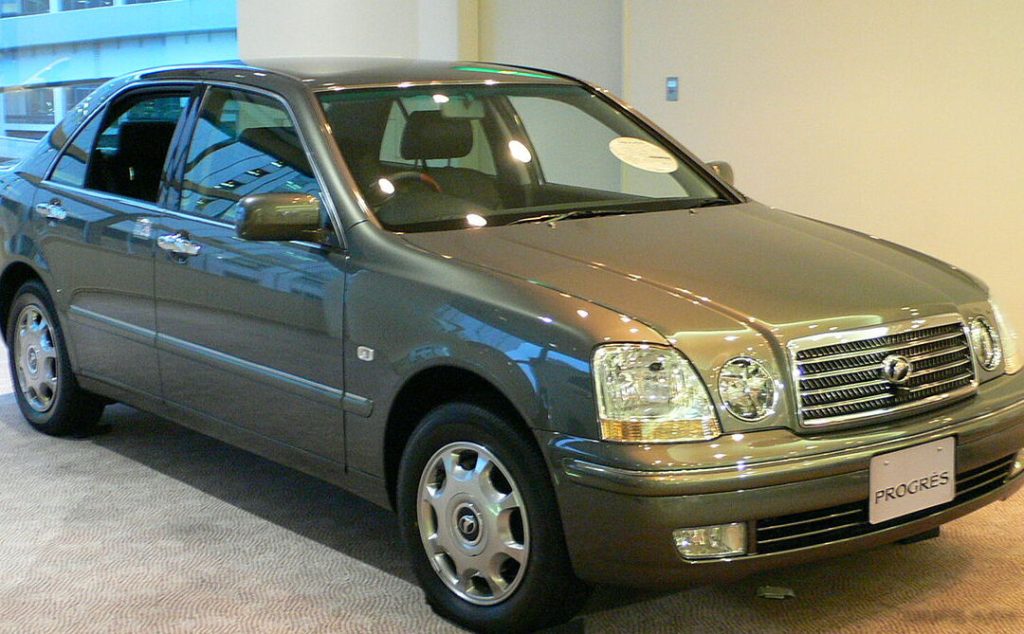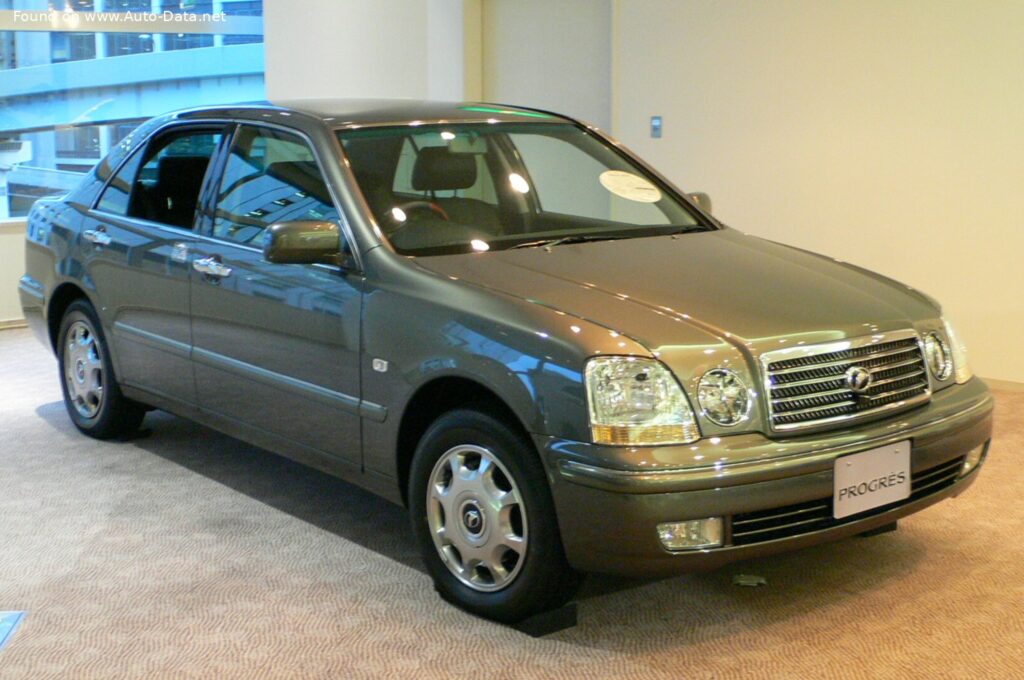
The Toyota Progres 3.0 i 24V represents a compelling example of Toyota’s dedication to crafting sophisticated luxury sedans specifically for the Japanese Domestic Market (JDM). Introduced in 1998, the Progres – a blend of “progress” and the French “progrès” – was designed as a compact, premium executive car, offering a balance of traditional Japanese luxury, advanced technology, and exceptional refinement. Never officially sold in the United States, the Progres showcased Toyota’s engineering capabilities and commitment to comfort, targeting affluent buyers who preferred understated elegance and a serene driving experience. It built upon earlier Toyota luxury efforts and shared some components with Lexus models, yet established its own identity through a focus on interior comfort and a smooth, quiet ride.
Toyota Progres 3.0 i 24V: A Detailed Overview
The Progres occupied a unique position in the Japanese automotive landscape. It was positioned below the flagship Toyota Crown and Celsior (the Lexus LS in export markets) but above mainstream models like the Camry. This strategic placement allowed Toyota to cater to a specific segment of buyers who desired a luxury experience in a more manageable size and at a relatively accessible price point. The Progres was a testament to Toyota’s ability to tailor vehicles to the specific needs and preferences of the Japanese market, where factors like vehicle dimensions and fuel efficiency are particularly important.
Engine & Performance
Powering the Toyota Progres 3.0 i 24V is Toyota’s highly regarded 2JZ-GE 3.0-liter inline-six engine. This naturally aspirated, 24-valve DOHC (Double Overhead Camshaft) engine was celebrated for its smooth operation, inherent reliability, and linear power delivery. Producing 215 horsepower at 5800 rpm and 216.84 lb.-ft. of torque at 3800 rpm, the engine provided ample performance for the Progres. The multi-port fuel injection system ensured precise fuel delivery, contributing to both responsiveness and efficiency.
The engine’s front-longitudinal layout, coupled with a rear-wheel-drive configuration, reinforced the Progres’s luxury sedan aspirations, delivering a balanced feel and a traditional driving dynamic. A smooth-shifting 4-speed automatic transmission managed power delivery, prioritizing comfort and seamless transitions. While not designed for outright speed, the Progres 3.0 i 24V achieved a maximum velocity of 111.85 mph. Its weight-to-power ratio of 7.1 kg/Hp (or 141.4 Hp/tonne) indicated a solid, refined performance profile. Fuel economy was reasonable for a 3.0-liter engine, estimated at 16.8 US mpg in city driving and 26.1 US mpg on the highway. This combination of a potent, refined engine and a well-matched transmission created a driving experience characterized by quiet competence and effortless progress.
Design & Features
The design of the Toyota Progres was deliberately conservative and elegant, appealing to its target demographic. As a four-door, five-seat sedan, its exterior styling was clean and understated, avoiding ostentatious chrome or aggressive lines in favor of a timeless, dignified appearance. Measuring 177.56 inches in length, 66.93 inches in width, and 56.5 inches in height, the Progres was categorized as a compact luxury sedan, offering maneuverability in Japan’s urban environments while maintaining a substantial presence. The 109.45-inch wheelbase contributed to a stable ride and a surprisingly spacious cabin.
The interior of the Progres prioritized comfort and convenience. Typical features for vehicles in this segment from Toyota included automatic climate control, premium audio systems, power-adjustable seats, and refined wood or metallic trim. The trunk offered 14.83 cu. ft. of space for daily use or weekend trips. Safety was also a key consideration, with standard Anti-lock Braking System (ABS) to prevent wheel lock-up during braking. The suspension, featuring double wishbones at both the front and rear, was tuned for a compliant and comfortable ride, effectively absorbing road imperfections. Hydraulic rack and pinion steering provided direct feedback and ease of maneuverability, while 195/65 R15 tires balanced grip and ride quality.
Technical Specifications: Toyota Progres 3.0 i 24V (215 Hp)
| Category | Specification |
| General Information | |
| Brand | Toyota |
| Model | Progres |
| Generation | Progres |
| Type (Engine) | 3.0 i 24V (215 Hp) |
| Start of Production | 1998 year |
| End of Production | 2007 year |
| Powertrain Architecture | Internal Combustion engine |
| Body type | Sedan |
| Seats | 5 |
| Doors | 4 |
| Performance Specs | |
| Fuel Consumption (Urban) | 16.8 US mpg (14 l/100 km) |
| Fuel Consumption (Extra Urban) | 26.1 US mpg (9 l/100 km) |
| Fuel Type | Petrol (Gasoline) |
| Maximum Speed | 111.85 mph (180 km/h) |
| Weight-to-Power Ratio | 7.1 kg/Hp, 141.4 Hp/tonne |
| Weight-to-Torque Ratio | 5.2 kg/Nm, 193.4 Nm/tonne |
| Engine Specs | |
| Power | 215 Hp @ 5800 rpm |
| Power per Liter | 71.7 Hp/l |
| Torque | 216.84 lb.-ft. @ 3800 rpm (294 Nm) |
| Engine Layout | Front, Longitudinal |
| Engine Displacement | 3.0 liters (2997 cm3, 182.89 cu. in.) |
| Number of Cylinders | 6 |
| Engine Configuration | Inline |
| Cylinder Bore | 3.39 in. (86 mm) |
| Piston Stroke | 3.39 in. (86 mm) |
| Compression Ratio | 10.5:1 |
| Number of Valves per Cylinder | 4 |
| Fuel Injection System | Multi-port manifold injection |
| Engine Aspiration | Naturally aspirated engine |
| Valvetrain | DOHC |
| Space, Volume and Weights | |
| Kerb Weight | 3351.03 lbs (1520 kg) |
| Max. Weight | 3957.3 lbs (1795 kg) |
| Max Load | 606.27 lbs (275 kg) |
| Trunk (Boot) Space – Minimum | 14.83 cu. ft. (420 l) |
| Fuel Tank Capacity | 18.49 US gal (70 l) |
| Dimensions | |
| Length | 177.56 in. (4510 mm) |
| Width | 66.93 in. (1700 mm) |
| Height | 56.5 in. (1435 mm) |
| Wheelbase | 109.45 in. (2780 mm) |
| Front Track | 58.07 in. (1475 mm) |
| Rear (Back) Track | 57.48 in. (1460 mm) |
| Drivetrain, Brakes and Suspension Specs | |
| Drivetrain Architecture | The Internal combustion engine (ICE) drives the rear wheels of the vehicle. |
| Drive Wheel | Rear wheel drive |
| Number of Gears and Type of Gearbox | 4 gears, automatic transmission |
| Front Suspension | Double wishbone |
| Rear Suspension | Double wishbone |
| Front Brakes | Ventilated discs |
| Rear Brakes | Disc |
| Assisting Systems | ABS (Anti-lock braking system) |
| Steering Type | Steering rack and pinion |
| Power Steering | Hydraulic Steering |
| Tires Size | 195/65 R15 |
Legacy & Market Impact
The Toyota Progres established a distinct niche within the Japanese luxury car market between 1998 and 2007. It was strategically positioned by Toyota, below the Crown and Celsior but above the Camry, appealing to buyers who valued discretion, reliability, and sophisticated engineering. Its competition included the Nissan Cima and Honda Inspire/Saber. The Progres’s emphasis on interior quality, a plush ride, and a smooth powertrain resonated with a specific demographic in Japan. Today, the Progres is a sought-after used vehicle for enthusiasts who appreciate its enduring quality and the robust 2JZ engine. Its legacy is one of quiet competence and a testament to Toyota’s understanding of the Japanese luxury segment, demonstrating that true luxury doesn’t always require ostentation. For automotive enthusiasts, the Progres exemplifies a tailored market approach, where regional preferences shape design and engineering, resulting in a unique and memorable vehicle.