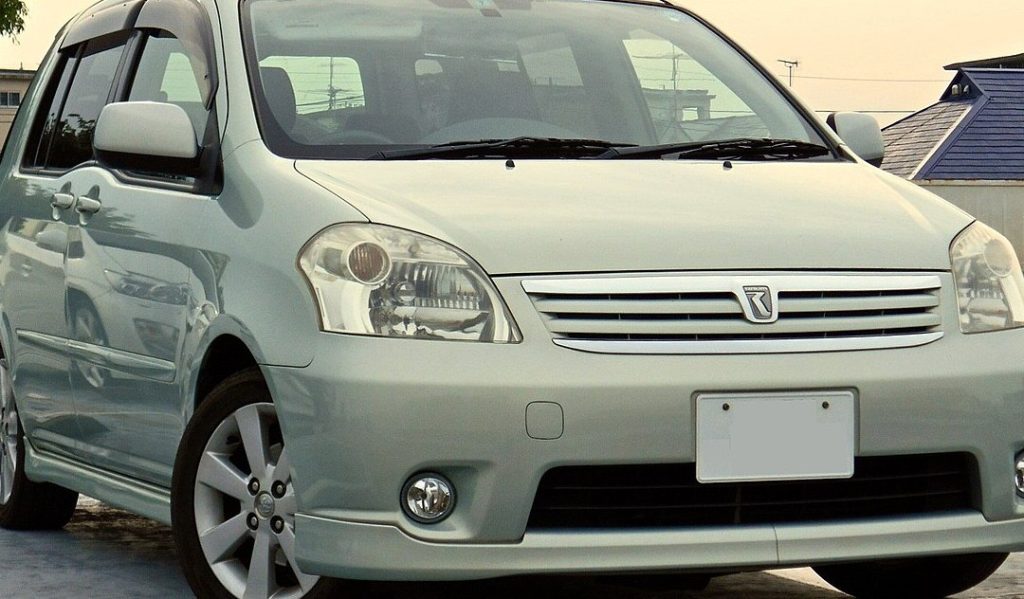
The Toyota Raum, specifically the Toyota Raum 1.5 i (109 Hp) produced between 2003 and 2011, represents Toyota’s strategic entry into the compact minivan segment primarily for the Japanese domestic market (JDM). Known for its clever packaging and emphasis on practicality, the Raum (German for “space”) lived up to its name by offering a surprisingly generous interior within a remarkably compact footprint. This second-generation model continued the legacy of its predecessor, evolving its design and enhancing its features to better serve urban families and individuals seeking versatility and ease of use in crowded cityscapes.
Evolution and Market Positioning of the Toyota Raum
The second-generation Toyota Raum, launched in 2003, built upon the foundation of its predecessor by refining its styling, improving its powertrain options, and integrating more advanced features for its time. It competed in a fiercely contested segment in Japan, alongside vehicles such as the Honda Freed and the Nissan Cube, all vying for consumers who prioritized interior space, fuel efficiency, and maneuverability. Toyota’s reputation for reliability and quality played a significant role in the Raum’s sustained popularity throughout its production run until 2011.
This iteration of the Raum maintained its characteristic tall-boy design, which was instrumental in creating an airy and spacious cabin. The focus was not on outright performance or luxury, but rather on delivering a highly pragmatic and dependable vehicle that could seamlessly integrate into the daily lives of its owners. Its thoughtful engineering, including a relatively sophisticated all-wheel-drive option for enhanced traction, underscored its commitment to versatility in various driving conditions encountered in Japan.
Engine & Performance: The Toyota Raum 1.5 i (109 Hp)
At the heart of the Toyota Raum 1.5 i (109 Hp) lies Toyota’s well-regarded 1NZ-FE engine. This 1.5-liter (1497 cm3 or 91.35 cu. in.) inline four-cylinder powerplant is a testament to Toyota’s mastery in creating efficient and durable small engines. Featuring a DOHC (Double Overhead Camshaft) valvetrain and multi-port manifold injection, the engine is naturally aspirated, delivering a balanced blend of power and fuel economy suitable for its intended urban and suburban environment.
The 1NZ-FE engine generates a respectable 109 horsepower at 6000 rpm, providing adequate thrust for city driving and highway cruising. Torque output stands at 104 lb.-ft. (141 Nm) at 4200 rpm, ensuring responsive acceleration from a standstill and sufficient power for overtaking maneuvers. This power is managed by a smooth-shifting 4-speed automatic transmission, which prioritizes ease of driving and efficiency.
A notable feature for a vehicle of this size and market segment is the inclusion of an all-wheel-drive (4×4) powertrain architecture. While many compact minivans are front-wheel drive, the Raum’s 4×4 system offered enhanced traction and stability, particularly beneficial in regions with challenging weather conditions such as snow or rain. This advanced drivetrain contributed to the vehicle’s versatility and appeal.
In terms of performance metrics, the Raum achieves a top speed of 105.63 mph (170 km/h), which is more than sufficient for typical driving scenarios. Fuel economy, a crucial factor for JDM buyers, was competitive for its class. The urban fuel consumption is rated at approximately 21.4 US mpg (11 l/100 km), while extra-urban driving could yield around 33.6 US mpg (7 l/100 km). These figures highlight the vehicle’s efficiency, making it an economical choice for daily operation.
Design & Features
The design of the Toyota Raum is a masterclass in maximizing interior volume within a compact exterior. Measuring 159.25 inches in length, 66.54 inches in width, and 60.83 inches in height, the Raum is highly maneuverable. Its relatively short wheelbase of 98.43 inches further contributes to its agility in tight spaces, making parking and navigating congested urban areas a breeze.
As a 5-door, 5-seat minivan, the Raum prioritizes ease of access and passenger comfort. Sliding rear doors, common on JDM minivans of this era, greatly enhance accessibility in confined parking spots and make loading/unloading passengers and cargo significantly easier. The interior is designed for practicality, with durable materials and a logical layout of controls. The tall roofline ensures ample headroom for all occupants, and the versatile seating arrangements allow for various configurations to balance passenger and cargo needs.
Safety features for the 2003-2011 Raum included an Anti-lock Braking System (ABS), providing crucial assistance during emergency braking situations. The vehicle’s suspension system, featuring a wishbone setup at the front and coil springs at the rear, provided a comfortable and stable ride. Braking duties were handled by ventilated discs at the front and reliable drum brakes at the rear. The hydraulic power steering system, utilizing a rack and pinion setup, offered light and responsive steering, further aiding its urban usability. The car rode on 175/65 R14 tires, a common size for compact vehicles, offering a good balance of comfort and grip.
Technical Specifications
| Feature | Value |
| Brand | Toyota |
| Model | Raum |
| Generation | Raum |
| Type (Engine) | 1.5 i (109 Hp) |
| Start of Production | 2003 year |
| End of Production | 2011 year |
| Powertrain Architecture | Internal Combustion engine |
| Body type | Minivan |
| Seats | 5 |
| Doors | 5 |
| Fuel consumption (economy) – urban | 11 l/100 km (21.4 US mpg) |
| Fuel consumption (economy) – extra urban | 7 l/100 km (33.6 US mpg) |
| Fuel Type | Petrol (Gasoline) |
| Maximum speed | 170 km/h (105.63 mph) |
| Weight-to-power ratio | 10.9 kg/Hp (91.6 Hp/tonne) |
| Weight-to-torque ratio | 8.4 kg/Nm (118.5 Nm/tonne) |
| Power | 109 Hp @ 6000 rpm |
| Power per liter | 72.8 Hp/l |
| Torque | 141 Nm @ 4200 rpm (104 lb.-ft. @ 4200 rpm) |
| Engine layout | Front, Transverse |
| Engine Model/Code | 1NZ-FE |
| Engine displacement | 1497 cm3 (1.5 l / 91.35 cu. in.) |
| Number of cylinders | 4 |
| Engine configuration | Inline |
| Cylinder Bore | 75 mm (2.95 in.) |
| Piston Stroke | 84.7 mm (3.33 in.) |
| Compression ratio | 10.5:1 |
| Number of valves per cylinder | 4 |
| Fuel injection system | Multi-port manifold injection |
| Engine aspiration | Naturally aspirated engine |
| Valvetrain | DOHC |
| Engine oil capacity | 3.7 l (3.91 US qt) |
| Engine oil specification | Not specified |
| Coolant | 4.3 l (4.54 US qt) |
| Kerb Weight | 1190 kg (2623.5 lbs.) |
| Fuel tank capacity | 45 l (11.89 US gal) |
| Length | 4045 mm (159.25 in.) |
| Width | 1690 mm (66.54 in.) |
| Height | 1545 mm (60.83 in.) |
| Wheelbase | 2500 mm (98.43 in.) |
| Front track | 1450 mm (57.09 in.) |
| Rear (Back) track | 1420 mm (55.91 in.) |
| Drive wheel | All wheel drive (4×4) |
| Number of gears and type of gearbox | 4 gears, automatic transmission |
| Front suspension | Wishbone |
| Rear suspension | Coil spring |
| Front brakes | Ventilated discs |
| Rear brakes | Drum |
| Assisting systems | ABS (Anti-lock braking system) |
| Steering type | Steering rack and pinion |
| Power steering | Hydraulic Steering |
| Tires size | 175/65 R14 |
Legacy and Market Impact of the Toyota Raum
The Toyota Raum, particularly the 2003-2011 generation with its 1.5 i (109 Hp) engine, carved out a significant niche in the Japanese automotive market. Its reputation was built on Toyota’s core strengths: unwavering reliability, excellent build quality, and a strong emphasis on practicality and fuel efficiency. For Japanese consumers, the Raum offered a compelling package that addressed the unique demands of urban living, where space is at a premium and maneuverability is key. Its compact dimensions, combined with a surprisingly spacious and versatile interior, made it an ideal choice for small families, elderly drivers, and those who frequently navigated congested city streets.
Competitors in its segment included other compact minivans and tall-boy wagons such as the Honda Freed, Toyota Sienta, and to some extent, the Nissan Cube. The Raum distinguished itself with its robust all-wheel-drive option, providing an advantage in regions experiencing heavy rainfall or snow, a feature not always standard in its class. This enhanced traction and stability contributed to its appeal as a safe and dependable family vehicle.
The historical significance of the Toyota Raum lies in its representation of Toyota’s broader strategy to cater to diverse global markets with specialized vehicles. While never officially imported to the United States, the Raum showcases the ingenuity applied to JDM models, reflecting a deep understanding of local consumer preferences and environmental constraints. It demonstrated how a vehicle could be both highly functional and economical without sacrificing comfort or essential features. The Raum’s consistent sales performance throughout its production lifecycle is a testament to its successful execution of this design philosophy.
Today, the Toyota Raum remains a respected used vehicle in Japan and is sometimes seen in other right-hand-drive markets through grey imports. Its enduring legacy is that of a practical, no-nonsense minivan that delivered exactly what it promised: maximum space, efficiency, and reliability in a compact, easy-to-manage package, embodying Toyota’s commitment to thoughtful engineering for everyday utility.