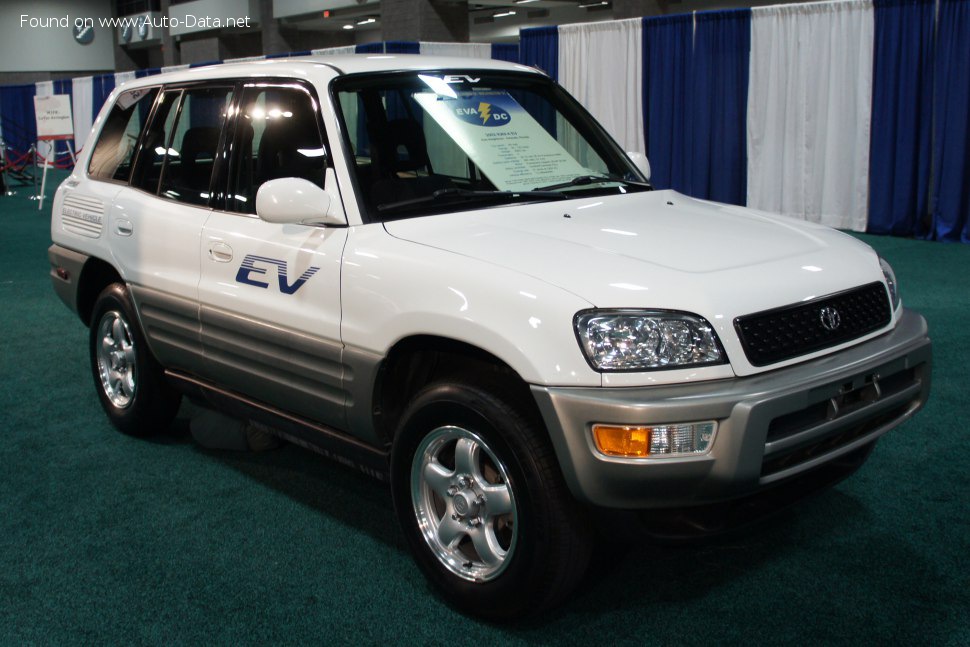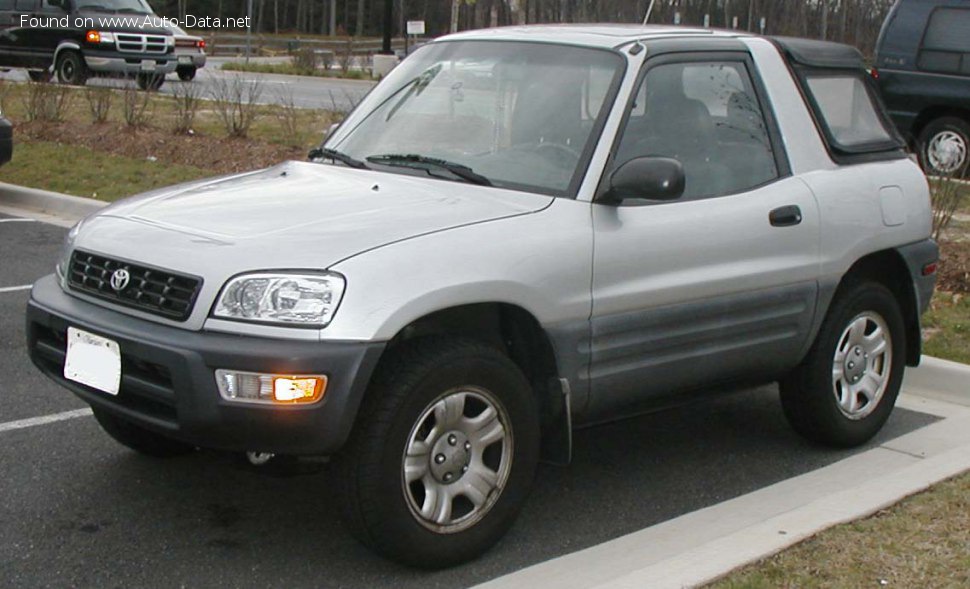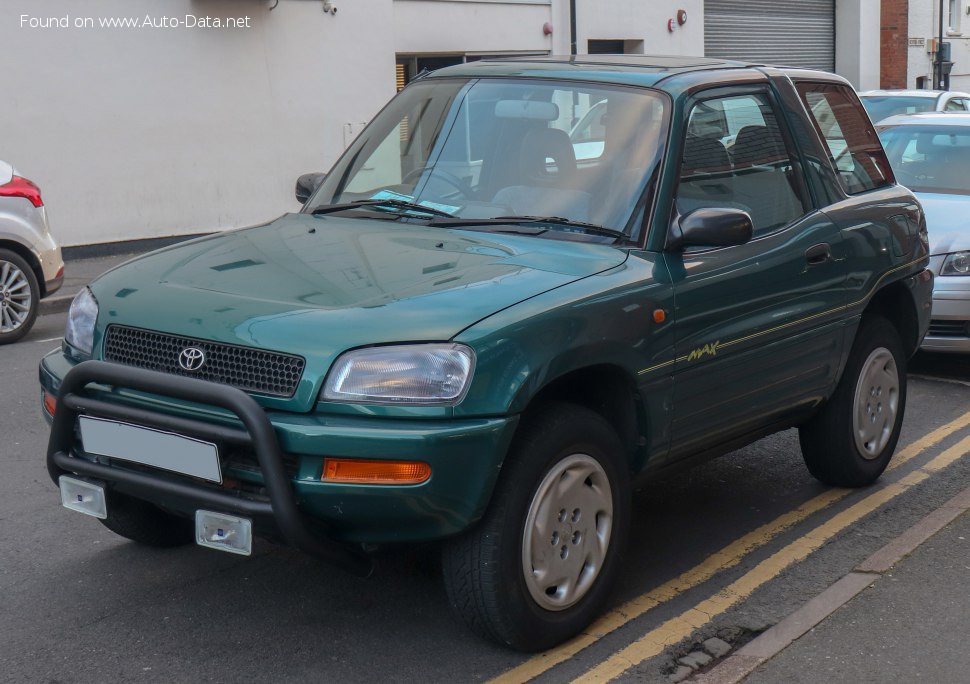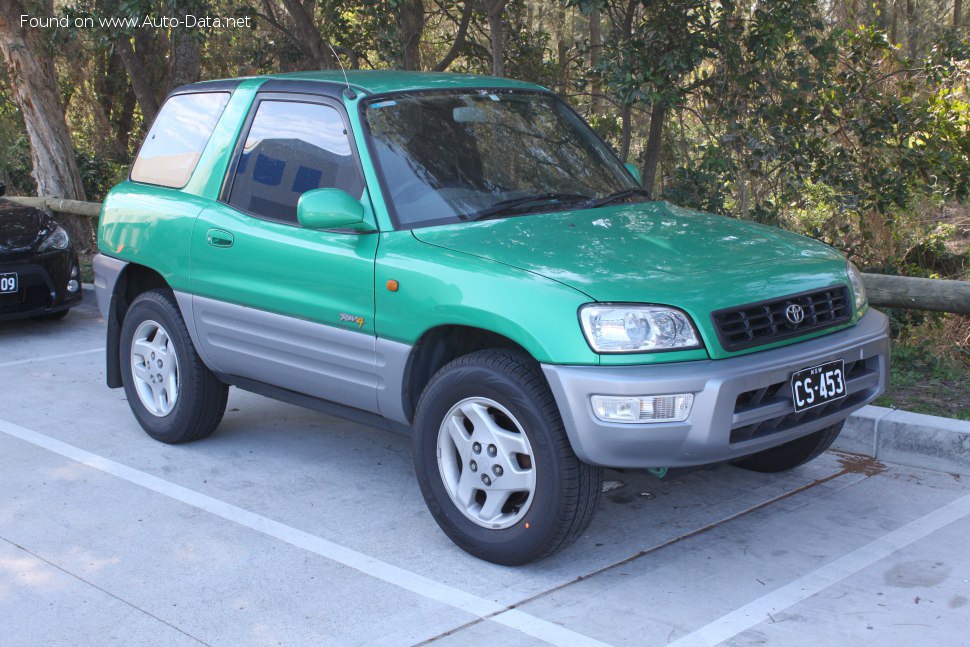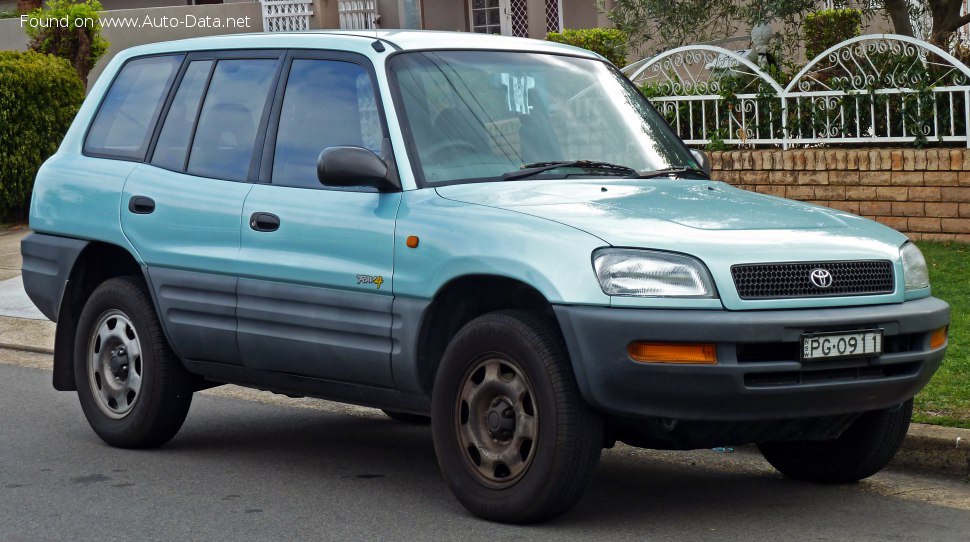
The Toyota RAV4, an acronym for “Recreational Activity Vehicle: 4-wheel drive,” debuted in 1994, fundamentally reshaping the automotive landscape by pioneering the compact SUV segment. The first generation, internally designated XA10, represented a bold departure from traditional body-on-frame SUVs, instead opting for a unibody construction derived from passenger car platforms. This innovative approach blended the practicality and elevated driving position of an SUV with the comfort, handling, and fuel efficiency of a smaller car. The specific variant under examination, the Toyota RAV4 I (XA10) 5-door 2.0i 16V (129 Hp) 4WD, was a popular configuration from its introduction in 1995 until the end of its production run in 2000, offering a compelling blend of versatility, reliability, and all-weather capability to a rapidly expanding global market.
Positioned as a lifestyle vehicle, the RAV4 XA10 targeted urban dwellers and active individuals who desired the utility of an SUV without the associated bulk or fuel penalty. It quickly gained traction in markets worldwide, including North America, Europe, and Asia, where its unique blend of attributes resonated with consumers looking for something beyond sedans and traditional SUVs. The 5-door model, in particular, offered enhanced practicality and passenger comfort compared to its 3-door sibling, making it a more suitable family vehicle or adventure companion.
Engine & Performance of the Toyota RAV4 I (XA10)
At the heart of the Toyota RAV4 I (XA10) 5-door 2.0i 16V (129 Hp) 4WD was Toyota’s venerable 3S-FE engine. This naturally aspirated, inline four-cylinder gasoline (petrol) engine was a proven workhorse in Toyota’s lineup, known for its robust construction and reliability. With a displacement of 1998 cubic centimeters (approximately 2.0 liters or 121.93 cubic inches), the 3S-FE produced a respectable 129 horsepower at 5600 revolutions per minute (rpm). Its power-per-liter rating of 64.6 horsepower per liter was competitive for its era.
Torque output stood at 175 Newton meters (129.07 lb.-ft.) delivered at 4600 rpm, providing adequate pulling power for daily driving and light off-road excursions. The engine featured a DOHC (Double Overhead Camshaft) valvetrain with four valves per cylinder, ensuring efficient airflow and combustion. Fuel delivery was managed by a multi-port manifold injection system, contributing to consistent performance and relatively clean emissions for the time. A compression ratio of 9.8:1 further optimized combustion efficiency.
Power was sent to all four wheels via a permanent all-wheel-drive (4WD) system, paired exclusively with a 5-speed manual transmission in this configuration. This drivetrain combination offered a direct and engaging driving experience, allowing the driver full control over gear selection. The 4WD system provided enhanced traction and stability, particularly beneficial in adverse weather conditions or on unpaved roads, aligning with the “Recreational Activity Vehicle” ethos.
Despite its SUV stature, the RAV4 5-door delivered car-like performance. It could achieve a maximum speed of 169 km/h (approximately 105.01 mph). Fuel economy, a key selling point for a compact SUV, was quite impressive. The urban cycle yielded approximately 8.6 liters per 100 kilometers (27.4 US mpg), while extra-urban driving could see figures as low as 5.9 liters per 100 kilometers (39.9 US mpg). These figures positioned the RAV4 as an economical choice compared to larger, less refined SUVs of the period.
Design & Features of the Toyota RAV4 I (XA10)
The design of the first-generation Toyota RAV4 I (XA10) was characterized by its cheerful, rounded, and compact aesthetic, a stark contrast to the boxy, utilitarian SUVs that dominated the market. The 5-door body style offered a harmonious balance between a compact footprint and practical interior space. Measuring 162.01 inches (4115 mm) in length, 66.73 inches (1695 mm) in width, and 65.35 inches (1660 mm) in height, the RAV4 was nimble enough for city driving yet provided a commanding view of the road thanks to its 8.07 inches (205 mm) of ground clearance. Its relatively short wheelbase of 94.88 inches (2410 mm) contributed to a tight turning circle of 35.43 feet (10.8 m), making it highly maneuverable.
The exterior featured a distinctive spare tire mounted on the rear tailgate, a common SUV trait that freed up cargo space and added to its adventurous appeal. Large windows and a relatively low beltline ensured good visibility. The 5-door configuration accommodated five occupants comfortably, with easy access to the rear seats.
Inside, the RAV4’s cabin was functional and ergonomic, designed with durability and ease of use in mind. While not luxurious, the materials were hard-wearing, capable of standing up to the demands of an active lifestyle. Practical features included a minimum trunk (boot) space of 14.37 cubic feet (407 liters), which could expand to a generous 22.81 cubic feet (646 liters) with the rear seats folded, offering ample room for luggage, sports equipment, or groceries.
From a chassis perspective, the RAV4 was ahead of its time for an SUV. It utilized an independent McPherson strut suspension at the front and a sophisticated double wishbone setup at the rear. This car-like suspension architecture significantly improved ride comfort and handling dynamics compared to the live-axle designs prevalent in many traditional SUVs. Braking was handled by ventilated discs at the front and drum brakes at the rear, providing reliable stopping power. Hydraulic power steering, combined with a rack and pinion system, offered light and responsive control. The vehicle rode on 215/70 R16 tires mounted on 6.0J x 16-inch wheel rims, providing a good balance of grip and ride compliance.
Technical Specifications: Toyota RAV4 I (XA10) 5-door 2.0i 16V (129 Hp) 4WD
| Category | Specification |
| General Information | |
| Brand | Toyota |
| Model | RAV4 |
| Generation | RAV4 I (XA10) 5-door |
| Type (Engine) | 2.0i 16V (129 Hp) 4WD |
| Start of Production | 1995 |
| End of Production | 2000 |
| Powertrain Architecture | Internal Combustion engine |
| Body type | SUV |
| Seats | 5 |
| Doors | 5 |
| Performance Specs | |
| Fuel Consumption (Urban) | 8.6 l/100 km (27.4 US mpg | 32.8 UK mpg) |
| Fuel Consumption (Extra Urban) | 5.9 l/100 km (39.9 US mpg | 47.9 UK mpg) |
| Fuel Type | Petrol (Gasoline) |
| Maximum Speed | 169 km/h (105.01 mph) |
| Weight-to-Power Ratio | 9.5 kg/Hp (105.7 Hp/tonne) |
| Weight-to-Torque Ratio | 7 kg/Nm (143.4 Nm/tonne) |
| Engine Specs | |
| Power | 129 Hp @ 5600 rpm |
| Power per liter | 64.6 Hp/l |
| Torque | 175 Nm @ 4600 rpm (129.07 lb.-ft. @ 4600 rpm) |
| Engine Layout | Front, Transverse |
| Engine Model/Code | 3S-FE |
| Engine Displacement | 1998 cm3 (121.93 cu. in.) |
| Number of Cylinders | 4 |
| Engine Configuration | Inline |
| Cylinder Bore | 86 mm (3.39 in.) |
| Piston Stroke | 86 mm (3.39 in.) |
| Compression Ratio | 9.8:1 |
| Number of Valves per Cylinder | 4 |
| Fuel Injection System | Multi-port manifold injection |
| Engine Aspiration | Naturally aspirated engine |
| Valvetrain | DOHC |
| Engine Oil Capacity | 4.1 l (4.33 US qt | 3.61 UK qt) |
| Coolant Capacity | 8 l (8.45 US qt | 7.04 UK qt) |
| Space, Volume and Weights | |
| Kerb Weight | 1220 kg (2689.64 lbs.) |
| Max. Weight | 1710 kg (3769.9 lbs.) |
| Max Load | 490 kg (1080.27 lbs.) |
| Trunk (Boot) Space – Minimum | 407 l (14.37 cu. ft.) |
| Trunk (Boot) Space – Maximum | 646 l (22.81 cu. ft.) |
| Fuel Tank Capacity | 58 l (15.32 US gal | 12.76 UK gal) |
| Dimensions | |
| Length | 4115 mm (162.01 in.) |
| Width | 1695 mm (66.73 in.) |
| Height | 1660 mm (65.35 in.) |
| Wheelbase | 2410 mm (94.88 in.) |
| Front Track | 1460 mm (57.48 in.) |
| Rear (Back) Track | 1465 mm (57.68 in.) |
| Ride Height (Ground Clearance) | 205 mm (8.07 in.) |
| Minimum Turning Circle (Diameter) | 10.8 m (35.43 ft.) |
| Approach Angle | 37° |
| Departure Angle | 30° |
| Drivetrain, Brakes and Suspension Specs | |
| Drive Wheel | All wheel drive (4×4) |
| Number of Gears and Type of Gearbox | 5 gears, manual transmission |
| Front Suspension | Independent type McPherson |
| Rear Suspension | Double wishbone |
| Front Brakes | Ventilated discs |
| Rear Brakes | Drum |
| Steering Type | Steering rack and pinion |
| Power Steering | Hydraulic Steering |
| Tires Size | 215/70 R16 |
| Wheel Rims Size | 6.0J x 16 |
Legacy and Market Impact
The first-generation Toyota RAV4 I (XA10), particularly the 5-door 2.0i 16V (129 Hp) 4WD variant, holds a significant place in automotive history as a pioneer and a trendsetter. Its introduction marked a pivotal moment, ushering in the era of the “crossover SUV” or “compact SUV.” Before the RAV4, SUVs were largely truck-based, rugged, and often inefficient vehicles primarily designed for utility and off-road capability. The RAV4 shattered this paradigm by demonstrating that an SUV could be car-based, comfortable, fuel-efficient, and fun to drive, making it appealing to a much broader demographic.
Its immediate success spurred numerous competitors to enter the burgeoning compact SUV segment. Honda quickly followed with the CR-V, and Subaru introduced the Forester, both adopting similar unibody, car-like approaches. These vehicles, alongside the RAV4, defined a new class of family-friendly, all-weather vehicles that offered a higher driving position and greater cargo flexibility than traditional sedans or wagons, without the compromises of larger SUVs.
In North America, the RAV4 was particularly impactful, offering a fresh alternative to minivans and larger SUVs. Its reputation for Toyota’s legendary reliability and low running costs further solidified its market position. The combination of a durable 3S-FE engine, a capable permanent 4WD system, and a practical 5-door body made it a popular choice for young families, outdoor enthusiasts, and urban commuters alike.
Globally, the RAV4’s influence was equally profound. It proved that a global automaker could successfully identify and cultivate a new market niche, leading to a proliferation of compact crossovers that continues to dominate sales charts today. The XA10 generation laid the groundwork for the RAV4 to become one of the best-selling vehicles worldwide, evolving through subsequent generations to meet changing consumer demands while retaining its core identity as a versatile and dependable compact SUV. Its innovative design, coupled with Toyota’s engineering prowess, ensured the RAV4 I (XA10) left an indelible mark on the automotive industry, forever changing how consumers perceived and utilized SUVs.