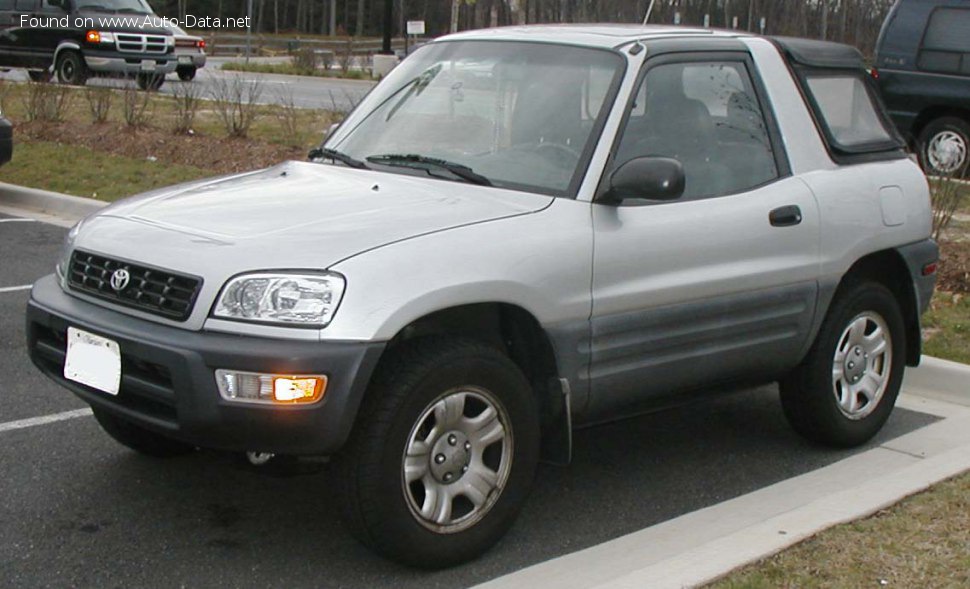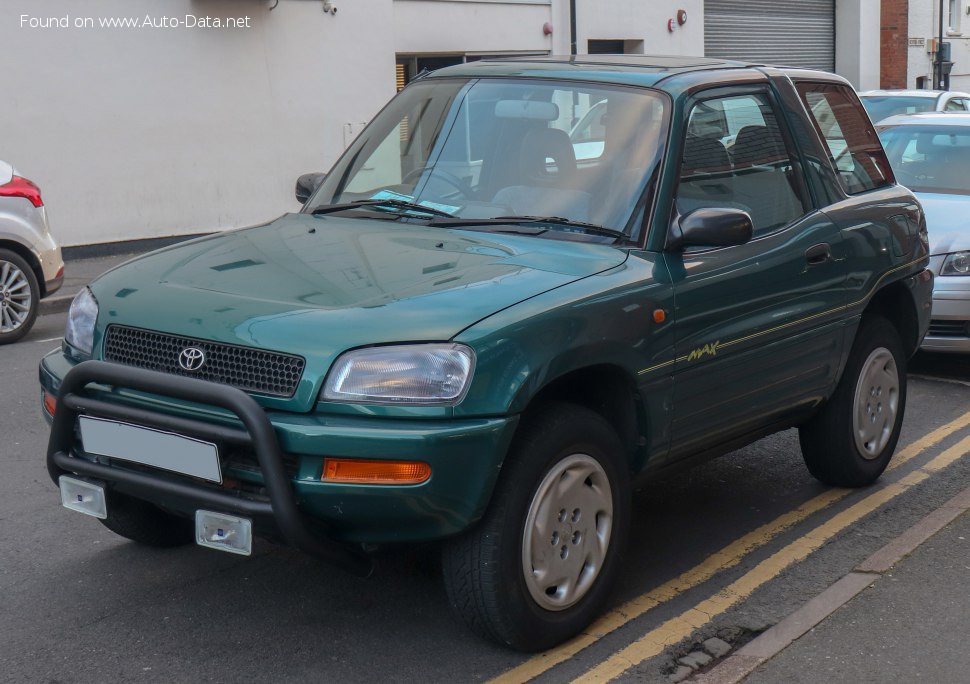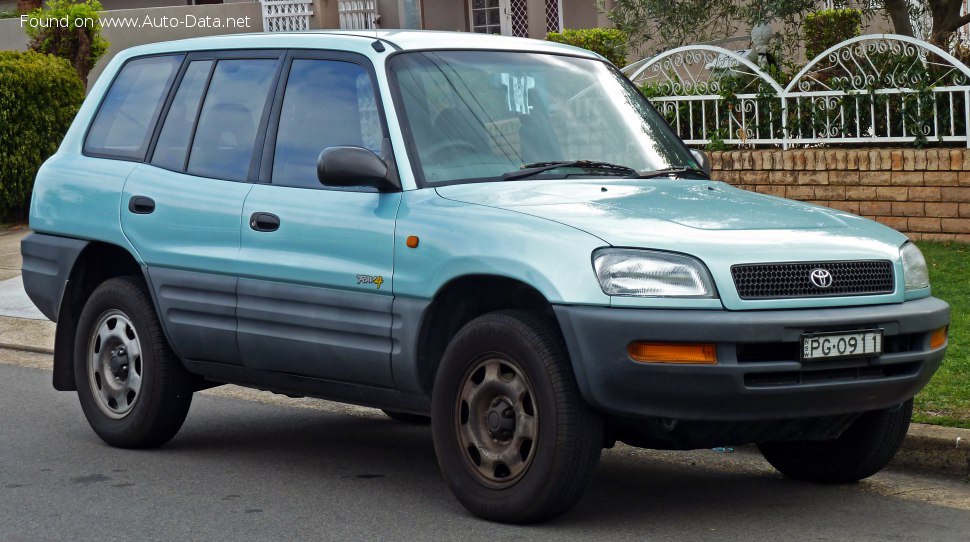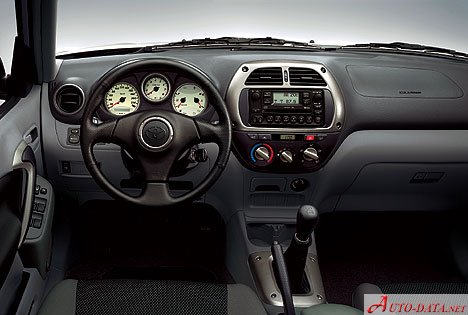
The Toyota RAV4 II (XA20) 3-door 2.0i 16V (150 Hp) 4WD represents the second generation of Toyota’s groundbreaking Recreational Activity Vehicle: 4-wheel drive, a model that played a pivotal role in establishing the compact crossover SUV segment. Launched in 2000 and produced in this specific 3-door variant until 2003, the XA20 generation built upon the success of its predecessor by offering enhanced refinement, improved performance, and a more sophisticated design while retaining its core appeal as a versatile and capable vehicle for urban adventures and light off-road excursions. The 3-door configuration, in particular, catered to a younger, more lifestyle-oriented demographic seeking a sporty, compact, and highly maneuverable SUV that stood out from the larger, more traditional utility vehicles of the era. While the RAV4 was a global phenomenon, the 3-door variant found particular resonance in markets where compact size and nimble handling were highly valued, such as Europe and parts of Asia, though it also had a presence in North America.
Engine & Performance of the Toyota RAV4 II (XA20)
Under the hood, the Toyota RAV4 II (XA20) 3-door 2.0i 16V (150 Hp) 4WD was powered by Toyota’s reliable 1AZ-FE engine, a 2.0-liter (1998 cm³ or 121.93 cu. in.) inline four-cylinder unit. This naturally aspirated engine featured a Double Overhead Camshaft (DOHC) valvetrain with 16 valves (four per cylinder) and a multi-port fuel injection system, optimized for a balance of power, efficiency, and smooth operation. It delivered a respectable 150 horsepower at 6000 rpm, providing ample thrust for highway cruising and city driving. Torque output stood at 192 Newton meters, or 141.61 lb.-ft., available at 4000 rpm, ensuring responsive acceleration and decent pulling power for its class.
Mated to a precise 5-speed manual transmission, this powertrain channeled its output to a full-time all-wheel-drive system, enhancing traction and stability across various road conditions, from slippery urban streets to unpaved trails. Performance figures were competitive for the time, with the Toyota RAV4 II (XA20) 3-door accelerating from 0 to 60 mph in a brisk 10.1 seconds and reaching a top speed of approximately 114.95 mph (185 km/h). Fuel economy was a strong suit for a compact SUV with all-wheel drive, achieving a combined rating of around 27 US mpg (8.7 l/100 km). Urban driving yielded about 20.8 US mpg (11.3 l/100 km), while extra-urban conditions saw efficiency climb to an impressive 32.7 US mpg (7.2 l/100 km). This blend of eager performance and sensible fuel consumption made the RAV4 an attractive option for a wide range of buyers.
Design & Features
The design of the Toyota RAV4 II (XA20) 3-door was a significant evolution from the first generation, adopting a more mature, yet still playful, aesthetic. The 3-door SUV body style, with its compact dimensions (ranging from 151.57 to 152.17 inches in length, 68.31 to 70.28 inches in width, and 66.73 to 66.93 inches in height), offered a distinctively sporty and agile appearance. Its short wheelbase of 89.76 inches contributed to an impressive minimum turning circle of 32.81 feet, making it exceptionally maneuverable in tight urban environments. Despite its compact exterior, the RAV4 II 3-door comfortably accommodated five occupants, though rear access required some flexibility.
The interior, while compact, was designed with practicality in mind. Cargo capacity ranged from a minimum of 5.3 cubic feet (150 liters) with all seats in place, expanding significantly to 27.05 cubic feet (766 liters) when the rear seats were folded, offering surprising versatility for luggage, sports equipment, or groceries. The vehicle’s chassis featured an independent McPherson strut front suspension and a double wishbone rear suspension, providing a comfortable ride quality and capable handling dynamics, whether on pavement or light off-road terrain. Braking was handled by ventilated discs at the front and solid discs at the rear, augmented by an Anti-lock Braking System (ABS) for enhanced safety. Hydraulic power steering, utilizing a rack and pinion system, offered direct feedback and ease of control. The RAV4 II (XA20) 3-door typically rode on 215/70 R16 or 235/60 R16 tires mounted on 6.5J x 16-inch wheel rims, complementing its robust stance. Its aerodynamic profile was indicated by a drag coefficient (Cd) of 0.35, contributing to both fuel efficiency and reduced wind noise.
Technical Specifications
| Category | Specification |
| Brand | Toyota |
| Model | RAV4 |
| Generation | RAV4 II (XA20) 3-door |
| Type (Engine) | 2.0i 16V (150 Hp) 4WD |
| Start of production | 2000 year |
| End of production | 2003 year |
| Powertrain Architecture | Internal Combustion engine |
| Body type | SUV |
| Seats | 5 |
| Doors | 3 |
| Fuel consumption (economy) – urban | 11.3 l/100 km (20.8 US mpg) |
| Fuel consumption (economy) – extra urban | 7.2 l/100 km (32.7 US mpg) |
| Fuel consumption (economy) – combined | 8.7 l/100 km (27 US mpg) |
| Fuel Type | Petrol (Gasoline) |
| Acceleration 0 – 60 mph | 10.1 sec |
| Maximum speed | 185 km/h (114.95 mph) |
| Weight-to-power ratio | 8.1 kg/Hp, 123 Hp/tonne |
| Weight-to-torque ratio | 6.4 kg/Nm, 157.4 Nm/tonne |
| Power | 150 Hp @ 6000 rpm |
| Power per liter | 75.1 Hp/l |
| Torque | 192 Nm (141.61 lb.-ft.) @ 4000 rpm |
| Engine layout | Front, Transverse |
| Engine Model/Code | 1AZ-FE |
| Engine displacement | 1998 cm³ (2.0 l / 121.93 cu. in.) |
| Number of cylinders | 4 |
| Engine configuration | Inline |
| Cylinder Bore | 86 mm (3.39 in.) |
| Piston Stroke | 86 mm (3.39 in.) |
| Compression ratio | 9.8:1 |
| Number of valves per cylinder | 4 |
| Fuel injection system | Multi-port manifold injection |
| Engine aspiration | Naturally aspirated engine |
| Valvetrain | DOHC |
| Engine oil capacity | 4.2 l (4.44 US qt) |
| Coolant | 6.3 l (6.66 US qt) |
| Kerb Weight | 1220-1330 kg (2689.64 – 2932.15 lbs.) |
| Max. weight | 1690 kg (3725.81 lbs.) |
| Max load | 360-470 kg (793.66 – 1036.17 lbs.) |
| Trunk (boot) space – minimum | 150 l (5.3 cu. ft.) |
| Trunk (boot) space – maximum | 766 l (27.05 cu. ft.) |
| Fuel tank capacity | 57 l (15.06 US gal) |
| Length | 3850-3865 mm (151.57 – 152.17 in.) |
| Width | 1735-1785 mm (68.31 – 70.28 in.) |
| Height | 1695-1700 mm (66.73 – 66.93 in.) |
| Wheelbase | 2280 mm (89.76 in.) |
| Front track | 1505-1525 mm (59.25 – 60.04 in.) |
| Rear (Back) track | 1495-1520 mm (58.86 – 59.84 in.) |
| Drag coefficient (Cd) | 0.35 |
| Minimum turning circle (turning diameter) | 10.0 m (32.81 ft.) |
| Drive wheel | All wheel drive (4×4) |
| Number of gears and type of gearbox | 5 gears, manual transmission |
| Front suspension | Independent type McPherson |
| Rear suspension | Double wishbone |
| Front brakes | Ventilated discs |
| Rear brakes | Disc |
| Assisting systems | ABS (Anti-lock braking system) |
| Steering type | Steering rack and pinion |
| Power steering | Hydraulic Steering |
| Tires size | 215/70 R16; 235/60 R16 |
| Wheel rims size | 6.5J x 16 |
Legacy and Market Impact
The Toyota RAV4 II (XA20) 3-door, particularly the 2.0i 16V (150 Hp) 4WD variant, holds a significant place in the history of the compact SUV market. It continued Toyota’s legacy of reliability and practicality, building on the revolutionary concept introduced by the first-generation RAV4. While the 5-door version was the volume seller and became the primary choice for families, the 3-door model carved out a niche for itself as a fun, sporty, and distinctly youthful alternative. It appealed to individuals and couples who desired the elevated driving position and rugged aesthetics of an SUV, coupled with the maneuverability and parking ease of a smaller vehicle.
In its primary markets, which included Europe, Japan, and Australia, the 3-door RAV4 competed against rivals such as the Honda CR-V (though the CR-V primarily focused on a 5-door format), the Suzuki Grand Vitara, and the Land Rover Freelander. The RAV4 distinguished itself with Toyota’s legendary build quality, strong resale values, and a reputation for being trouble-free. Its all-wheel-drive system, combined with independent suspension, offered a comfortable ride on pavement and surprising capability on light off-road trails, making it a true “recreational activity vehicle.”
Although Toyota eventually phased out the 3-door RAV4 globally after the XA20 generation, in favor of focusing on the more family-oriented and practical 5-door models, its impact was undeniable. The Toyota RAV4 II (XA20) 3-door helped solidify the idea that an SUV didn’t have to be a large, truck-based behemoth. It proved that a compact, car-like chassis could offer the best of both worlds: passenger car comfort and handling, combined with SUV versatility and all-weather capability. Its success paved the way for the proliferation of compact crossovers that dominate the automotive landscape today, leaving a legacy as a well-engineered, influential, and much-loved vehicle that truly understood the evolving needs of the modern driver.