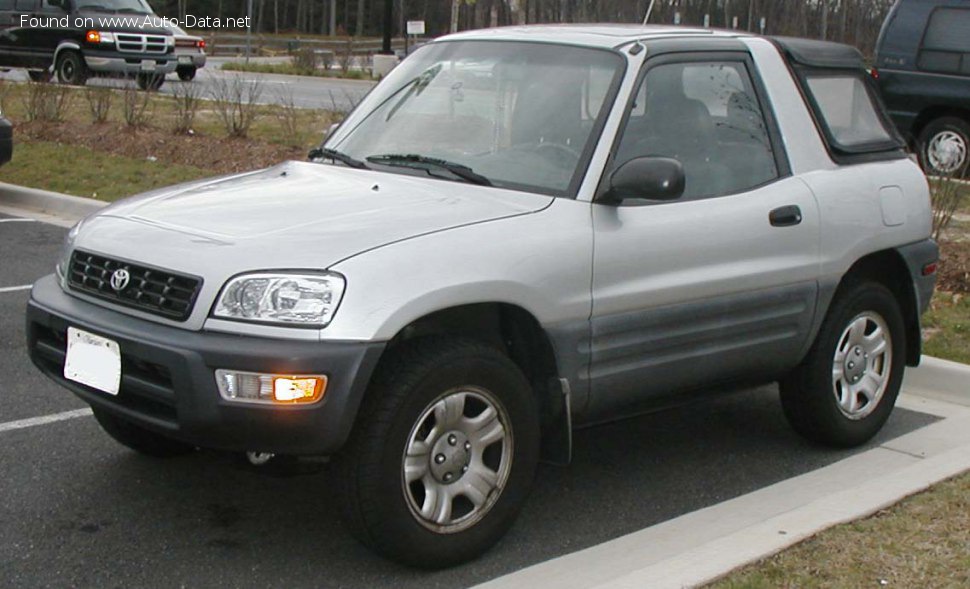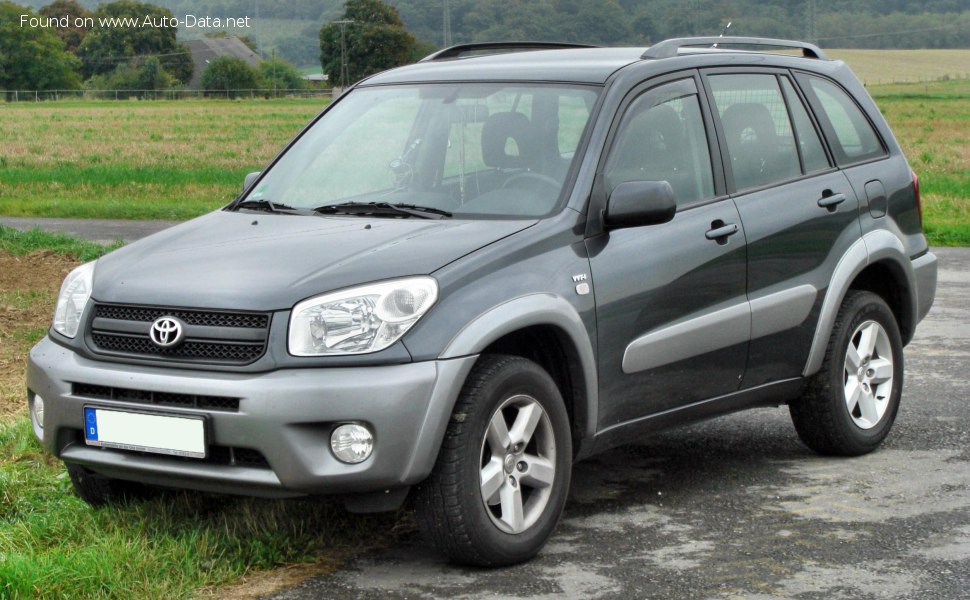
The Toyota RAV4 II (XA20, facelift 2003) represents a significant refinement of a vehicle that essentially created the modern compact SUV segment. The RAV4, an acronym for “Recreational Activity Vehicle: 4-wheel drive,” first appeared in 1994 and quickly gained popularity. By the time the second generation, the XA20 series, arrived in 2000, it had become a global sales leader. This facelifted version, produced from 2003 to 2005, enhanced an already successful formula with updated styling, improved powertrains, and refined features. The 5-door 2.4i model, equipped with a 161-horsepower engine and an automatic transmission, was a particularly popular choice in the United States, offering a blend of practicality, reliability, and comfortable performance.
Toyota RAV4 II (XA20, facelift 2003): A Refined Pioneer
The XA20 series built upon the strengths of its predecessor, retaining the unibody construction that distinguished it from larger, truck-based SUVs. This design choice provided a car-like ride and handling while still offering the higher ground clearance and commanding driving position expected of an SUV. The 2003 facelift focused on subtle but effective improvements to the exterior styling and powertrain options, aiming to maintain the RAV4’s competitive edge in a rapidly growing segment. Its role in the US market was crucial, appealing to families and individuals seeking a dependable daily driver capable of handling diverse conditions, from city commutes to light off-road adventures, with respectable fuel economy.
Engine & Performance: The 2AZ-FE Powerplant
The heart of the Toyota RAV4 II (XA20, facelift 2003) 2.4i model is Toyota’s 2AZ-FE engine. This naturally aspirated, 2.4-liter (2362 cm3 or 144.14 cubic inches) inline four-cylinder engine is known for its robustness and smooth operation. It features a DOHC (Double Overhead Camshaft) valvetrain with four valves per cylinder and multi-port fuel injection, producing 161 horsepower at 6000 rpm. This represented a significant increase over earlier 2.0-liter engine options, providing more confident acceleration and improved highway performance, a key consideration for the American market.
Torque output is rated at 224 Nm (165.21 lb-ft) at 4000 rpm, delivering responsive performance in everyday driving. The engine is mounted front-transversely, contributing to efficient packaging and maximizing interior space. Power is delivered through a four-speed automatic transmission, a common configuration for compact SUVs of the era. While not the most technologically advanced transmission by modern standards, it was known for its smooth shifts and reliability, complementing the engine’s character.
This specific variant utilizes a front-wheel-drive (FWD) architecture. While all-wheel drive was available on many RAV4 models, the FWD configuration contributes to slightly better fuel efficiency and a lower curb weight of 2963.01 lbs (1344 kg). The vehicle’s weight-to-power ratio is a respectable 8.3 kg/Hp (119.8 Hp/tonne), providing a lively driving experience for a compact SUV. Fuel economy is competitive, with an urban rating of 24 US mpg (9.8 l/100 km) and an extra-urban rating of 28 US mpg (8.4 l/100 km) when using gasoline. The 14.79 US gallon (56 l) fuel tank provides a reasonable driving range.
Design & Features: Practicality and Versatility
The Toyota RAV4 II (XA20, facelift 2003) 5-door maintains the distinct compact SUV silhouette, characterized by a relatively short wheelbase (98.03 inches or 2490 mm) and minimal overhangs, contributing to its nimble handling. The facelift introduced subtle cosmetic enhancements, including revised front and rear bumpers, updated grille designs, and new headlight and taillight clusters, giving it a fresher, more modern appearance. The overall design is clean and functional, prioritizing broad appeal over aggressive styling.
As a 5-door SUV, it comfortably seats five passengers, with easy access. The interior is designed for practicality, featuring durable materials and an ergonomic layout. Cargo space is a significant advantage, offering a minimum of 23.94 cubic feet (678 l), expanding to an impressive 67.42 cubic feet (1909 l) with the rear seats folded. This versatility makes it ideal for hauling luggage, groceries, or sports equipment. The vehicle’s dimensions – ranging from 165.55 to 167.52 inches in length, 68.31 to 70.28 inches in width, and 65.75 to 66.14 inches in height – make it easy to maneuver in urban environments and park.
The RAV4 features an independent front suspension with McPherson struts, coil springs, and an anti-roll bar, paired with a double wishbone and trailing arm rear suspension. This setup provides a comfortable ride and stable handling. Braking is handled by ventilated discs at the front and disc brakes at the rear, enhanced by an Anti-lock Braking System (ABS), a crucial safety feature for the time. The hydraulic rack and pinion steering provides good feedback, and the 6.3-inch ground clearance, combined with approach and departure angles of 27° and 28° respectively, offers reasonable off-road capability for light terrain or rough roads. Standard tires are 215/70 R16 mounted on 6.5J x 16 wheels.
Technical Specifications
| Category | Specification |
| General Information | |
| Brand | Toyota |
| Model | RAV4 |
| Generation | RAV4 II (XA20, facelift 2003) 5-door |
| Type (Engine) | 2.4i (161 Hp) Automatic |
| Start of production | 2003 |
| End of production | 2005 |
| Powertrain Architecture | Internal Combustion engine |
| Body type | SUV |
| Seats | 5 |
| Doors | 5 |
| Performance Specs | |
| Fuel consumption (economy) – urban | 9.8 l/100 km / 24 US mpg |
| Fuel consumption (economy) – extra urban | 8.4 l/100 km / 28 US mpg |
| Fuel Type | Petrol (Gasoline) |
| Weight-to-power ratio | 8.3 kg/Hp / 119.8 Hp/tonne |
| Engine Specs | |
| Power | 161 Hp @ 6000 rpm |
| Power per liter | 68.2 Hp/l |
| Torque | 224 Nm @ 4000 rpm / 165.21 lb.-ft. @ 4000 rpm |
| Engine layout | Front, Transverse |
| Engine Model/Code | 2AZ-FE |
| Engine displacement | 2362 cm3 / 144.14 cu. in. (2.4 L) |
| Number of cylinders | 4 |
| Engine configuration | Inline |
| Space, Volume and Weights | |
| Kerb Weight | 1344 kg / 2963.01 lbs |
| Trunk (boot) space – minimum | 678 l / 23.94 cu. ft |
| Trunk (boot) space – maximum | 1909 l / 67.42 cu. ft |
| Fuel tank capacity | 56 l / 14.79 US gal |
| Dimensions | |
| Length | 4205-4255 mm / 165.55 – 167.52 in |
| Width | 1735-1785 mm / 68.31 – 70.28 in |
| Height | 1670-1680 mm / 65.75 – 66.14 in |
The Toyota RAV4 II (XA20, facelift 2003) played a vital role in establishing the RAV4 as a dominant force in the compact SUV segment. At a time when consumers were shifting towards SUVs, the RAV4 offered a compelling combination of practicality, reliability, and fuel efficiency. Its compact size made it suitable for urban driving, while its elevated position and cargo capacity appealed to those seeking more versatility. The XA20 generation, and particularly the 2003 facelift, solidified the RAV4’s reputation as a dependable and well-rounded vehicle, influencing the design and engineering of countless competitors and cementing its place as an automotive icon.