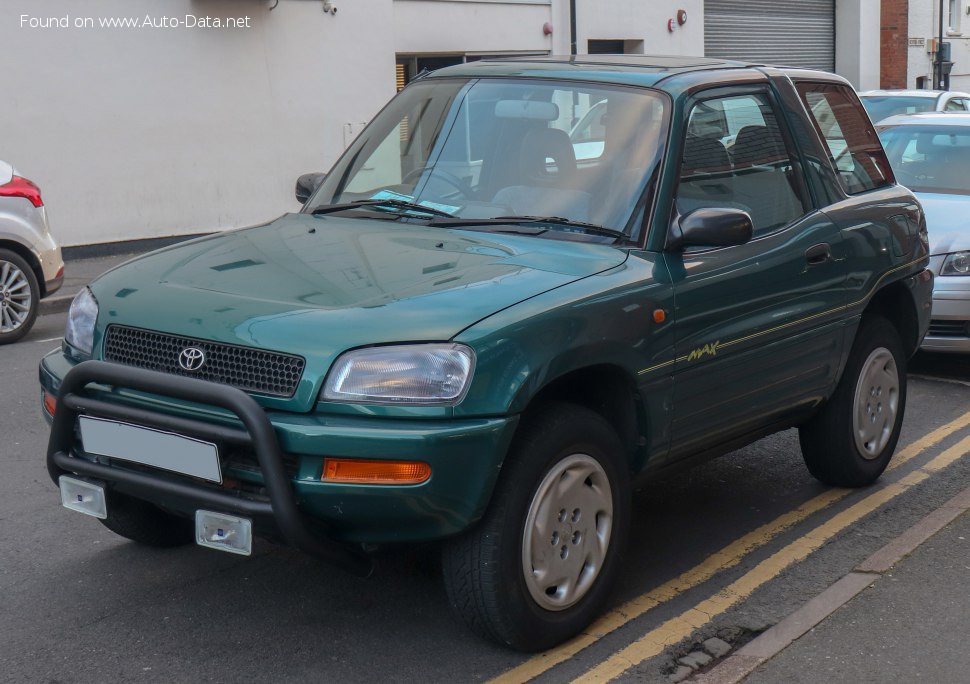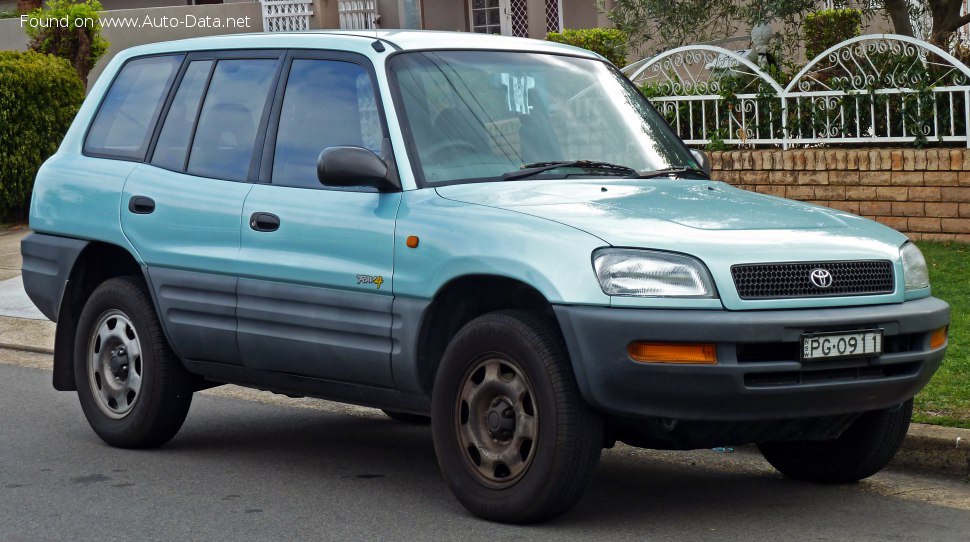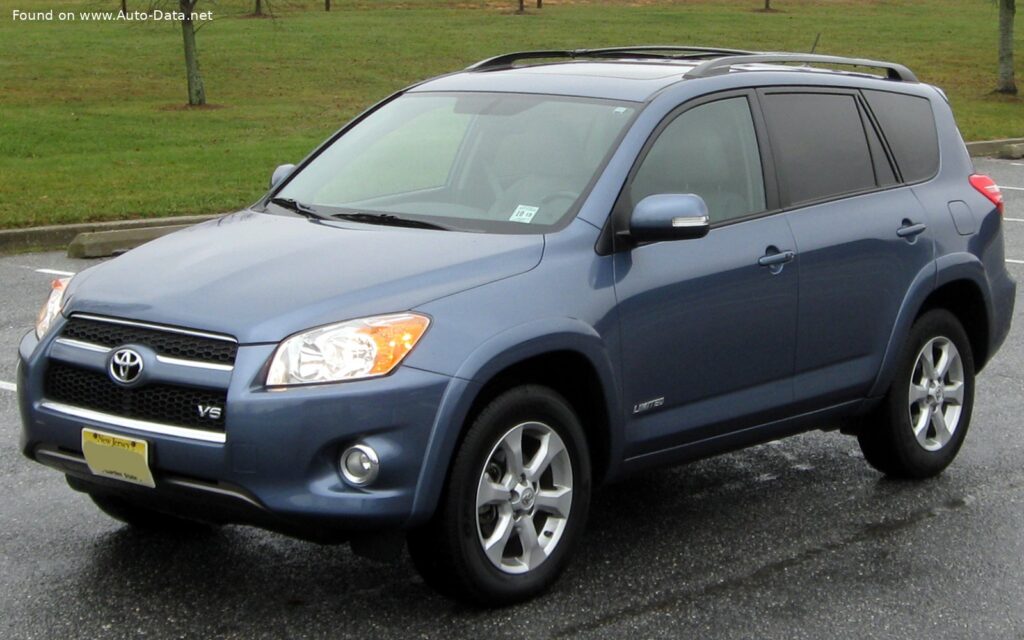
The Toyota RAV4, an acronym for “Recreational Activity Vehicle: 4-wheel drive,” has long been a foundational model in the compact SUV segment, pioneering the crossover concept in the mid-1990s. The third generation, internally designated XA30, represented a significant evolution for the model, moving away from its more rugged, truck-like predecessors towards a more refined, car-based platform. Introduced in 2005, the XA30 received a notable facelift in 2008, which refreshed its aesthetics and introduced updated powertrains, including the robust 2.5-liter VVT-i engine. This particular variant, the Toyota RAV4 III (XA30, facelift 2008) Long 2.5 VVT-i (179 Hp) ECT, stood as a popular and practical choice in the North American market, offering a compelling blend of efficiency, reliability, and versatility in a five-passenger, five-door SUV configuration.
Positioned squarely in the competitive compact SUV market, the 2008 facelift of the RAV4 aimed to solidify its leadership by enhancing its appeal with updated styling, improved interior features, and a more potent yet economical engine option. While the “Long” designation often referred to a longer wheelbase variant with optional third-row seating in some global markets, for the North American market, the XA30 generation typically offered a single wheelbase, with the “Long” in this context referring to the standard 5-door body style as opposed to the shorter 3-door variant available elsewhere. This made the 2.5 VVT-i model a quintessential family vehicle, adept at handling both urban commutes and light recreational activities with ease.
Engine & Performance of the Toyota RAV4 III (XA30, facelift 2008)
At the heart of this specific Toyota RAV4 III (XA30, facelift 2008) Long 2.5 VVT-i (179 Hp) ECT model was the highly regarded 2AR-FE engine. This 2.5-liter (2494 cm³ or 152.19 cu. in.) inline four-cylinder powerplant was a significant upgrade, delivering a respectable 179 horsepower at 6000 rpm. Its power output of 71.8 horsepower per liter demonstrated a good balance of performance for its class. Torque figures were equally impressive for a naturally aspirated engine of its size, producing 171.85 lb.-ft. (233 Nm) at 4000 rpm, which provided ample grunt for daily driving and highway passing maneuvers.
Key to the engine’s efficiency and responsiveness was Toyota’s Variable Valve Timing with intelligence (VVT-i) system. This technology continuously adjusts the timing of the intake and exhaust valves, optimizing engine performance across the rev range, improving fuel economy, and reducing emissions. The engine’s DOHC (Double Overhead Camshaft) valvetrain with 4 valves per cylinder further contributed to its smooth operation and efficient breathing. Power was transmitted to the front wheels via a 4-speed Electronically Controlled Transmission (ECT). While a 4-speed automatic might seem modest by today’s standards, it was a proven and reliable unit for the era, known for its smooth shifts and durability. This drivetrain architecture, primarily front-wheel drive, underscored the RAV4’s focus on on-road comfort and efficiency, though an all-wheel-drive option was available for other variants.
Fuel efficiency for the 2.5 VVT-i was competitive for its time. The vehicle achieved an estimated 22.2 US mpg in urban driving conditions and an even more impressive 28 US mpg on the highway. These figures highlighted the engine’s careful calibration for a balance of power and economy, making it an attractive option for budget-conscious buyers. The naturally aspirated engine, combined with a multi-port manifold injection system and a 10.4:1 compression ratio, ensured reliable performance and ease of maintenance.
Design & Features
The 2008 facelift brought subtle yet effective enhancements to the XA30 generation’s design. The exterior of the Toyota RAV4 III (XA30, facelift 2008) Long 2.5 VVT-i (179 Hp) ECT featured a refreshed front fascia, including an updated grille, redesigned front bumper, and new headlamp clusters, giving it a more contemporary and assertive look. The body type remained a practical 5-door SUV, designed to offer a commanding view of the road and easy ingress/egress. Its dimensions—181.89 inches in length, 71.5 to 72.99 inches in width, and 66.3 to 68.7 inches in height—provided a compact footprint that was easy to maneuver in city traffic while still offering substantial interior space. The 104.72-inch wheelbase contributed to a stable and comfortable ride.
Inside, the RAV4 prioritized functionality and comfort. The cabin was designed to accommodate five occupants with ample headroom and legroom. Materials were durable and well-fitted, reflecting Toyota’s reputation for quality. Key interior features for the era included available automatic climate control, a multi-information display, and an optional navigation system. The rear seats could be folded flat, significantly expanding the cargo capacity from a minimum of 12.29 cu. ft. (348 liters) to an expansive 73 cu. ft. (2067 liters), making it incredibly versatile for hauling groceries, luggage, or sporting equipment. This flexibility was a major selling point for families and active individuals.
Safety was a paramount concern for Toyota, and the RAV4 came equipped with a comprehensive suite of features. Standard safety equipment included Anti-lock Braking System (ABS), a full complement of airbags (front, side, and curtain airbags), and crumple zones designed to absorb impact energy. The vehicle’s independent MacPherson strut front suspension with coil springs and an anti-roll bar, paired with a double wishbone rear suspension, provided a comfortable ride quality and predictable handling. Ventilated disc brakes up front (274-300 mm) and solid disc brakes at the rear (284 mm) ensured confident stopping power. The steering system utilized a rack and pinion setup, offering responsive and direct feedback to the driver. With a ground clearance of 7.48 inches (190 mm), the RAV4 was capable of handling light off-road trails or challenging snowy conditions, further enhancing its recreational appeal.
Technical Specifications
| Category | Specification |
| General Information | |
| Brand | Toyota |
| Model | RAV4 |
| Generation | RAV4 III (XA30, facelift 2008) Long |
| Type (Engine) | 2.5 VVT-i (179 Hp) ECT |
| Production Start | 2008 year |
| Production End | 2012 year |
| Powertrain Architecture | Internal Combustion engine |
| Body type | SUV |
| Seats | 5 |
| Doors | 5 |
| Performance Specs | |
| Fuel consumption (economy) – urban | 22.2 US mpg (10.6 l/100 km) |
| Fuel consumption (economy) – extra urban | 28 US mpg (8.4 l/100 km) |
| Fuel Type | Petrol (Gasoline) |
| Weight-to-power ratio | 8.5 kg/Hp (117.5 Hp/tonne) |
| Weight-to-torque ratio | 6.5 kg/Nm (152.9 Nm/tonne) |
| Engine Specs | |
| Power | 179 Hp @ 6000 rpm |
| Power per liter | 71.8 Hp/l |
| Torque | 171.85 lb.-ft. (233 Nm) @ 4000 rpm |
| Engine layout | Front, Transverse |
| Engine Model/Code | 2AR-FE |
| Engine displacement | 2494 cm³ (152.19 cu. in.) |
| Number of cylinders | 4 |
| Engine configuration | Inline |
| Cylinder Bore | 3.54 in. (90 mm) |
| Piston Stroke | 3.86 in. (98 mm) |
| Compression ratio | 10.4:1 |
| Number of valves per cylinder | 4 |
| Fuel injection system | Multi-port manifold injection |
| Engine aspiration | Naturally aspirated engine |
| Valvetrain | DOHC, VVT-i |
| Engine oil capacity | 4.65 US qt (4.4 l) |
| Coolant | 7.19 US qt (6.8 l) |
| Space, Volume and Weights | |
| Kerb Weight | 3359.84 – 3434.8 lbs. (1524-1558 kg) |
| Max. weight | 4728.92 lbs. (2145 kg) |
| Max load | 1294.11 – 1369.07 lbs. (587-621 kg) |
| Trunk (boot) space – minimum | 12.29 cu. ft. (348 l) |
| Trunk (boot) space – maximum | 73 cu. ft. (2067 l) |
| Fuel tank capacity | 15.85 US gal (60 l) |
| Permitted trailer load without brakes | 1499.14 lbs. (680 kg) |
| Dimensions | |
| Length | 181.89 in. (4620 mm) |
| Width | 71.5 – 72.99 in. (1816-1854 mm) |
| Height | 66.3 – 68.7 in. (1684-1745 mm) |
| Wheelbase | 104.72 in. (2660 mm) |
| Front track | 61.42 in. (1560 mm) |
| Rear (Back) track | 61.42 in. (1560 mm) |
| Ride height (ground clearance) | 7.48 in. (190 mm) |
| Minimum turning circle (turning diameter) | 34.78 – 36.75 ft. (10.6-11.2 m) |
| Approach angle | 29° |
| Departure angle | 25° |
| Drivetrain, Brakes and Suspension Specs | |
| Drivetrain Architecture | The Internal combustion engine (ICE) drives the front wheels of the vehicle. |
| Drive wheel | Front wheel drive |
| Number of gears and type of gearbox | 4 gears, automatic transmission ECT |
| Front suspension | Independent, type McPherson with coil spring and anti-roll bar |
| Rear suspension | Double wishbone |
| Front brakes | Ventilated discs, 274-300 mm |
| Rear brakes | Disc, 284 mm |
| Assisting systems | ABS (Anti-lock braking system) |
| Steering type | Steering rack and pinion |
| Tires size | 215/70 R16; 225/65 R17 |
| Wheel rims size | 6.5J x 16; 7J x 17 |
The Toyota RAV4 III (XA30), particularly after its 2008 facelift and with the introduction of the 2.5-liter engine, significantly reinforced the model’s standing in the burgeoning compact SUV segment. It continued Toyota’s legacy of delivering vehicles that prioritized reliability, practicality, and excellent resale value. In the North American market, the RAV4 consistently ranked among the top sellers, appealing to a broad demographic ranging from young families to empty-nesters seeking a versatile and dependable daily driver.
The 2.5 VVT-i engine, in particular, was praised for offering a strong balance of power and fuel economy, addressing a key consumer demand. While some competitors moved to more advanced multi-speed transmissions, Toyota’s continued reliance on the proven 4-speed ECT, though mechanically robust, began to show its age towards the end of the XA30 generation’s run. Nonetheless, the overall package of the RAV4 remained highly competitive. Its primary rivals in the market included the Honda CR-V, known for its refined driving dynamics and interior packaging; the Ford Escape, which offered a more traditional SUV feel; the Nissan Rogue, emphasizing style and value; and the Subaru Forester, with its standard all-wheel drive and rugged appeal. The RAV4 held its own against these formidable competitors by offering a compelling blend of Toyota’s renowned quality, a spacious and adaptable interior, and a comfortable ride.
The XA30 generation, including the facelifted 2008 model, played a crucial role in the evolution of the compact SUV, demonstrating that a vehicle could offer SUV-like utility without sacrificing car-like comfort and efficiency. Its success paved the way for the development of even more sophisticated and feature-rich crossovers in subsequent years. The Toyota RAV4 III (XA30, facelift 2008) Long 2.5 VVT-i (179 Hp) ECT remains a testament to Toyota’s engineering philosophy: building practical, long-lasting vehicles that meet the real-world needs of consumers. Its enduring popularity in the used car market speaks volumes about its initial quality and continued reliability, securing its place as an iconic and impactful vehicle in automotive history.