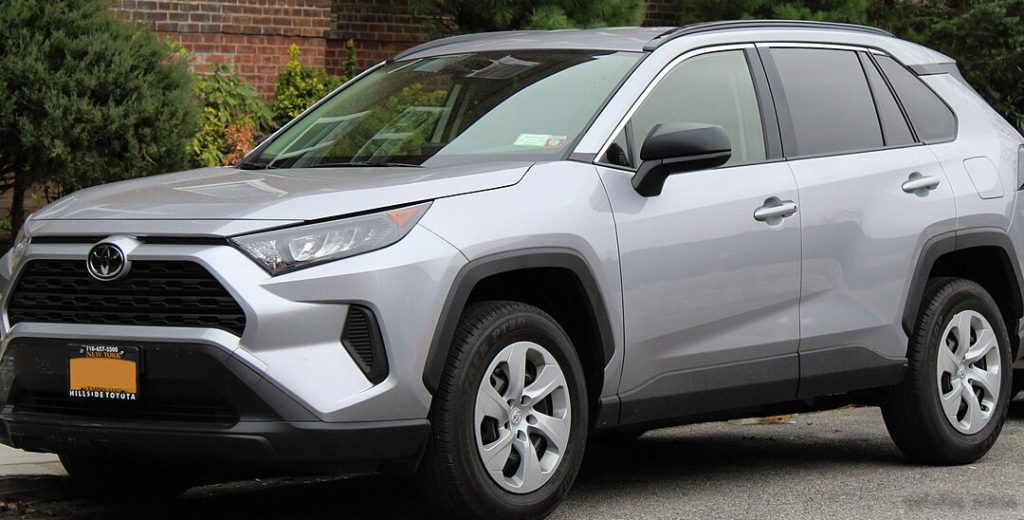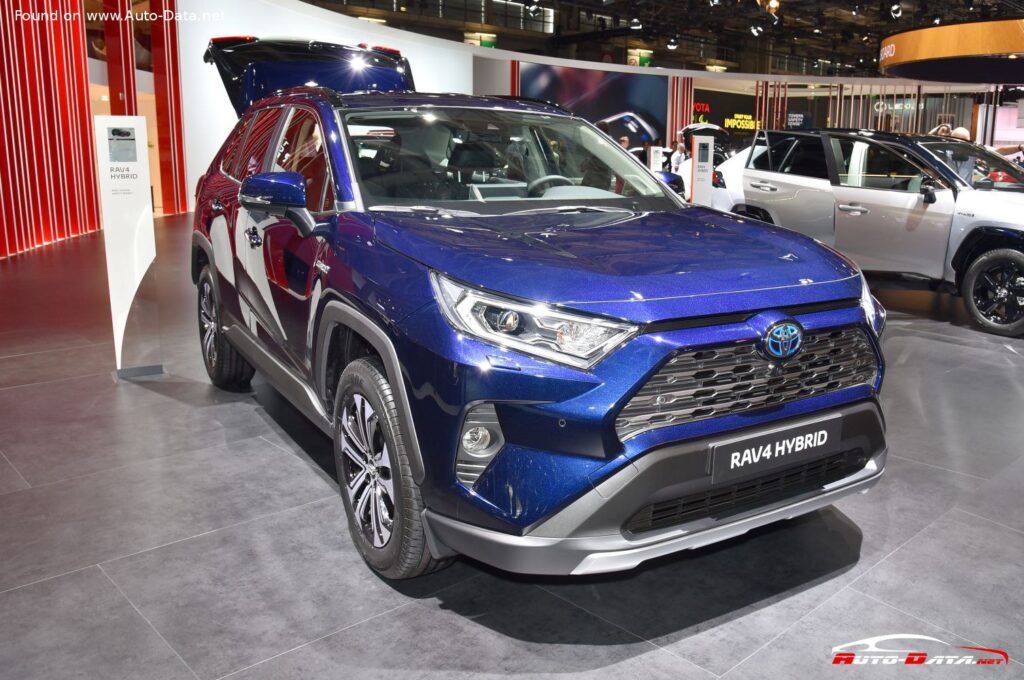
The fifth-generation Toyota RAV4, designated as the RAV4 V, marked a significant evolution for Toyota’s pioneering compact SUV. Introduced in January 2019 and produced through September 2021 for this specific powertrain variant, the Toyota RAV4 V 2.0 (175 Hp) AWD CVT continued the model’s legacy as a global best-seller. Built upon Toyota’s New Global Architecture (TNGA-K) platform, this iteration brought a more assertive design, enhanced driving dynamics, and a strong emphasis on efficiency and technology. While the North American market often received larger displacement engines or hybrid powertrains, this 2.0-liter, naturally aspirated, all-wheel-drive variant with a Continuously Variable Transmission (CVT) played a crucial role in various international markets, including Europe, Asia, and Australia, offering a compelling balance of performance, fuel economy, and Toyota’s renowned reliability in the highly competitive compact SUV segment.
Engine & Performance: The Heart of the Toyota RAV4 V 2.0 (175 Hp) AWD CVT
Powering this particular RAV4 V is Toyota’s M20A-FKS engine, a sophisticated 2.0-liter (1987 cm³ or 121.25 cu. in.) naturally aspirated inline four-cylinder unit. This powerplant is part of Toyota’s “Dynamic Force Engine” family, characterized by its high thermal efficiency and advanced technologies. It features a DOHC (Double Overhead Camshaft) valvetrain with four valves per cylinder, ensuring optimal airflow. Fuel delivery is handled by a combination of direct injection and multi-port manifold injection, a system designed to maximize efficiency and power output across the rev range while minimizing emissions. With a high compression ratio of 13:1, the engine is tuned for efficiency without sacrificing responsiveness.
The M20A-FKS engine generates a respectable 175 horsepower at 6600 rpm, providing ample power for daily driving and highway cruising. Torque output stands at 153.41 lb.-ft., available between 4300 and 5200 rpm, ensuring a broad powerband for confident acceleration. Power is seamlessly transferred to the pavement via an automatic Continuously Variable Transmission (CVT), which is engineered to keep the engine operating at its most efficient RPM for any given driving condition. This results in smooth, linear acceleration without the perceptible gear shifts of a conventional automatic.
The RAV4 V 2.0 (175 Hp) AWD CVT is equipped with an All-Wheel Drive (AWD) system, providing enhanced traction and stability, particularly in adverse weather conditions or on unpaved roads. This system intelligently distributes power between the front and rear wheels, adapting to driving demands. In terms of performance, the vehicle can accelerate from 0 to 60 mph in a calculated 10.5 seconds, with a top speed of 118.06 mph (190 km/h).
Fuel economy is a strong suit for this powertrain, reflecting Toyota’s commitment to efficiency. The combined fuel consumption is rated at an impressive 40.6 – 39.9 US mpg (5.8-5.9 l/100 km). Urban driving yields approximately 34.6 US mpg (6.8 l/100 km), while extra-urban cruising can achieve 44.4 – 43.6 US mpg (5.3-5.4 l/100 km). These figures are commendable for an AWD SUV of its size. Furthermore, the vehicle meets the stringent Euro 6 d-TEMP emission standard, with CO2 emissions ranging from 134-136 g/km, highlighting its environmental consciousness.
Design & Features: Rugged Sophistication
The fifth-generation RAV4 ushered in a bold new design language, moving away from the softer lines of its predecessors towards a more rugged and aggressive aesthetic. As an SUV body type with five doors and seating for five occupants, the RAV4 V 2.0 (175 Hp) AWD CVT combines practicality with a distinctive road presence. Its dimensions—181.1 inches in length, 73.03 inches in width, and 66.34 inches in height—contribute to a commanding stance without being overly cumbersome for urban environments. A generous wheelbase of 105.91 inches (2690 mm) ensures a spacious cabin and stable ride.
The TNGA-K platform not only allowed for this bolder styling but also provided significant engineering benefits. It lowered the vehicle’s center of gravity and increased body rigidity, leading to improved handling dynamics and ride comfort. The suspension system features an independent McPherson strut setup at the front with coil springs and an anti-roll bar, offering precise steering response and absorbing road imperfections effectively. At the rear, a sophisticated double-wishbone suspension system further enhances stability and passenger comfort, particularly important for an SUV designed for varying road conditions.
Practicality is a cornerstone of the RAV4’s design. The trunk space is highly versatile, offering a minimum of 20.48 cubic feet (580 liters) with all seats in place, expanding to a cavernous 59.68 cubic feet (1690 liters) when the rear seats are folded down. This ample cargo capacity makes it suitable for everything from daily errands to weekend adventures. The vehicle also boasts a respectable ground clearance of 7.68 inches (195 mm), an approach angle of 17.5°, and a departure angle of 20°, underlining its capability to handle light off-road excursions.
Safety features are paramount in modern Toyota vehicles. While not exhaustively detailed in the provided data, the RAV4 V, as a contemporary model, would come equipped with a comprehensive suite of active and passive safety systems. Key active safety technologies include ABS (Anti-lock Braking System) as standard, complemented by robust braking performance from 328 mm ventilated discs at the front and 317 mm solid discs at the rear. The electric power steering system provides light and responsive handling, making maneuvers easy in tight spaces, indicated by a minimum turning circle of 38.71 feet (11.8 meters). The vehicle’s drag coefficient (Cd) of 0.32 further contributes to its aerodynamic efficiency and reduced wind noise at higher speeds.
Technical Specifications
| Category | Specification |
| General Information | |
| Brand | Toyota |
| Model | RAV4 |
| Generation | RAV4 V |
| Type (Engine) | 2.0 (175 Hp) AWD CVT |
| Start of Production | January, 2019 |
| End of Production | September, 2021 |
| Powertrain Architecture | Internal Combustion engine |
| Body type | SUV |
| Seats | 5 |
| Doors | 5 |
| Performance Specs | |
| Fuel Consumption (Urban) | 6.8 l/100 km (34.6 US mpg) |
| Fuel Consumption (Extra Urban) | 5.3-5.4 l/100 km (44.4 – 43.6 US mpg) |
| Fuel Consumption (Combined) | 5.8-5.9 l/100 km (40.6 – 39.9 US mpg) |
| CO2 Emissions | 134-136 g/km |
| Fuel Type | Petrol (Gasoline) |
| Acceleration 0 – 60 mph | 10.5 sec |
| Acceleration 0 – 100 km/h | 11 sec |
| Maximum Speed | 118.06 mph (190 km/h) |
| Emission Standard | Euro 6 d-TEMP |
| Weight-to-Power Ratio | 8.9 kg/Hp, 112.2 Hp/tonne |
| Weight-to-Torque Ratio | 7.5 kg/Nm, 133.3 Nm/tonne |
| Engine Specs | |
| Power | 175 Hp @ 6600 rpm |
| Power per liter | 88.1 Hp/l |
| Torque | 153.41 lb.-ft. @ 4300-5200 rpm (208 Nm) |
| Engine Layout | Front, Transverse |
| Engine Model/Code | M20A-FKS |
| Engine Displacement | 2.0 liters (1987 cm³ / 121.25 cu. in.) |
| Number of Cylinders | 4 |
| Engine Configuration | Inline |
| Cylinder Bore | 3.17 in. (80.5 mm) |
| Piston Stroke | 3.84 in. (97.6 mm) |
| Compression Ratio | 13:1 |
| Number of Valves per Cylinder | 4 |
| Fuel Injection System | Direct injection and Multi-port manifold injection |
| Engine Aspiration | Naturally aspirated engine |
| Valvetrain | DOHC |
| Engine Oil Capacity | 4.54 US qt (4.3 l) |
| Coolant Capacity | 7.29 US qt (6.9 l) |
| Engine Systems | Particulate filter |
| Space, Volume and Weights | |
| Kerb Weight | 3439.21 – 3681.72 lbs. (1560-1670 kg) |
| Max. Weight (GVWR) | 4750.96 lbs. (2155 kg) |
| Max Load | 1069.24 – 1311.75 lbs. (485-595 kg) |
| Trunk (Boot) Space – Minimum | 20.48 cu. ft. (580 l) |
| Trunk (Boot) Space – Maximum | 59.68 cu. ft. (1690 l) |
| Fuel Tank Capacity | 14.53 US gal (55 l) |
| Permitted Trailer Load with Brakes (12%) | 3306.93 lbs. (1500 kg) |
| Permitted Trailer Load without Brakes | 1653.47 lbs. (750 kg) |
| Dimensions | |
| Length | 181.1 in. (4600 mm) |
| Width | 73.03 in. (1855 mm) |
| Height | 66.34 in. (1685 mm) |
| Wheelbase | 105.91 in. (2690 mm) |
| Front Track | 63.39 in. (1610 mm) |
| Rear Track | 64.57 in. (1640 mm) |
| Front Overhang | 36.42 in. (925 mm) |
| Rear Overhang | 38.78 in. (985 mm) |
| Ride Height (Ground Clearance) | 7.68 in. (195 mm) |
| Drag Coefficient (Cd) | 0.32 |
| Minimum Turning Circle (Turning Diameter) | 38.71 ft. (11.8 m) |
| Approach Angle | 17.5° |
| Departure Angle | 20° |
| Drivetrain, Brakes and Suspension Specs | |
| Drive Wheel | All-Wheel Drive (4×4) |
| Number of Gears and Type of Gearbox | Automatic transmission CVT |
| Front Suspension | Independent, type McPherson with coil spring and anti-roll bar |
| Rear Suspension | Double wishbone |
| Front Brakes | Ventilated discs, 328 mm |
| Rear Brakes | Disc, 317 mm |
| Assisting Systems | ABS (Anti-lock braking system) |
| Steering Type | Steering rack and pinion |
| Power Steering | Electric Steering |
Legacy and Market Impact
The Toyota RAV4’s legacy as a pioneer in the compact crossover segment is undeniable. Since its inception, it has consistently adapted to evolving consumer demands, growing in size and sophistication. The fifth generation, and specifically the Toyota RAV4 V 2.0 (175 Hp) AWD CVT, upheld this tradition by offering a well-rounded package that appealed to a broad international audience. Its production run from 2019 to 2021 for this configuration solidified its position as a modern, efficient, and reliable choice.
In markets where this 2.0-liter naturally aspirated engine was primarily offered, it carved out a strong niche. It was often viewed as a cost-effective and highly reliable option compared to larger engine variants or more complex hybrid systems, making it particularly popular in regions prioritizing initial purchase price, long-term running costs, and proven mechanical simplicity. Its efficiency, combined with Toyota’s stellar reputation for durability and low maintenance, made it an attractive proposition for families and individuals seeking a dependable daily driver capable of handling diverse conditions.
The RAV4 V competed fiercely with other established players in the compact SUV segment, such as the Honda CR-V, Nissan Rogue, Subaru Forester, Hyundai Tucson, Kia Sportage, and Mazda CX-5. What set the RAV4 apart was its blend of rugged styling, practical interior, and a powertrain known for its longevity. The TNGA platform also gave it an edge, providing a more engaging driving experience than previous generations without sacrificing comfort.
The market impact of the RAV4 V, even in this specific 2.0-liter configuration, was substantial. It contributed significantly to Toyota’s global sales figures, reinforcing the brand’s dominance in the SUV category. Its success underscored the continued consumer demand for versatile, fuel-efficient, and safe vehicles that can seamlessly transition between urban commuting and weekend adventures. The RAV4 V 2.0 (175 Hp) AWD CVT represents a carefully engineered solution for markets demanding a balance of performance, economy, and the inherent practicality of a modern compact SUV, cementing its place as an important chapter in the RAV4’s storied history.