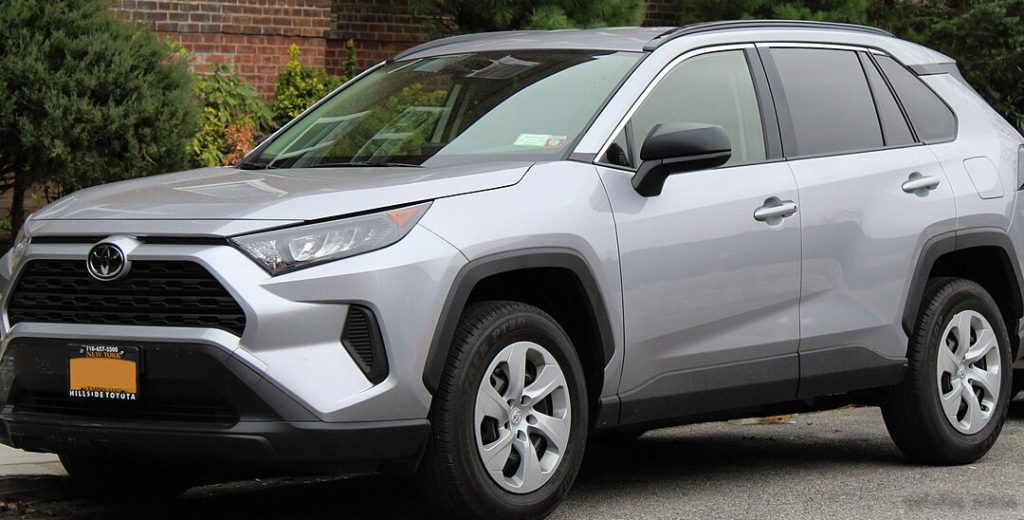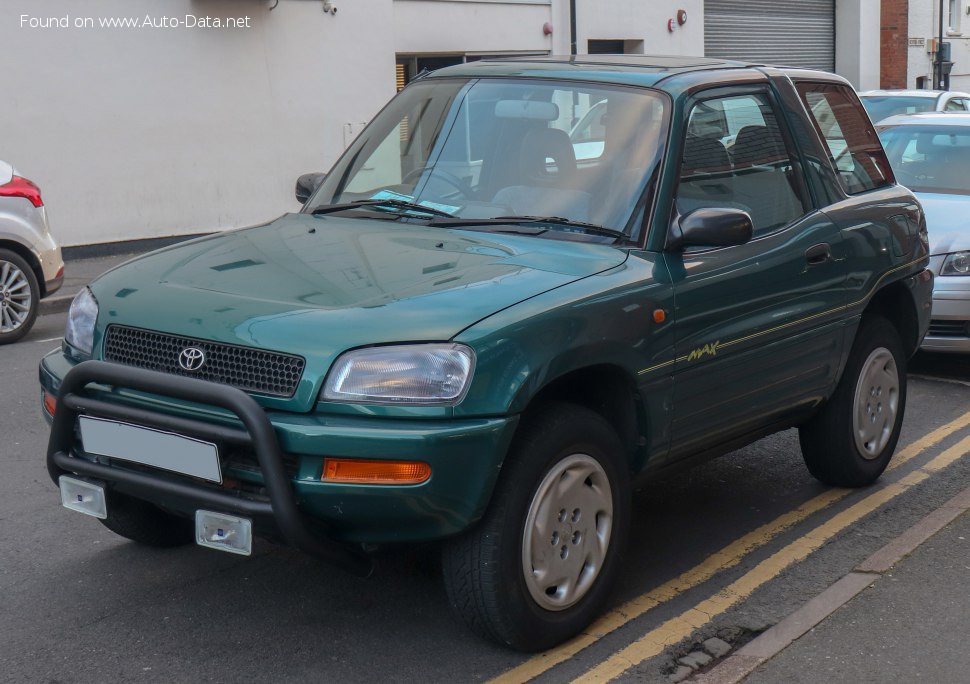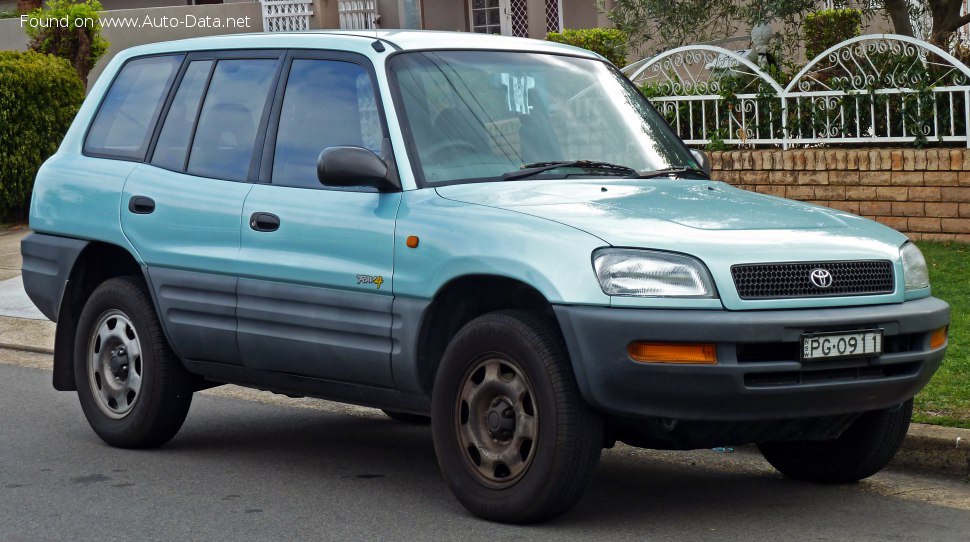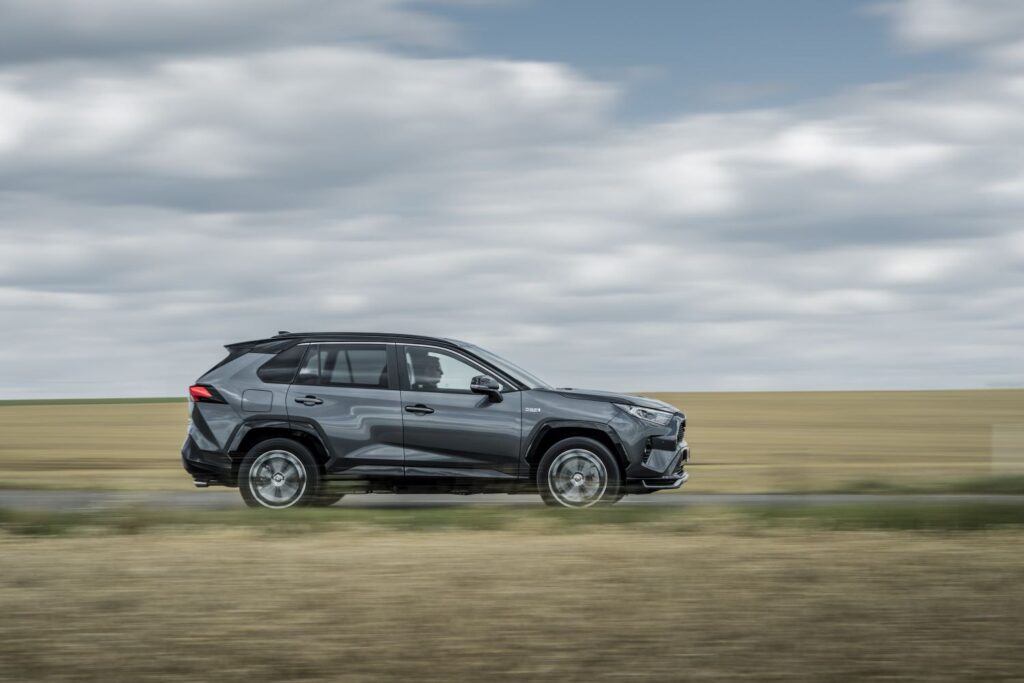
The Toyota RAV4 V 2.5 D-4S (306 Hp) Plug-in Hybrid AWD-i e-CVT, produced from September 2020 to September 2021, represents a significant step in Toyota’s electrification strategy. This model, primarily aimed at the European and Asian markets, combines a gasoline engine with a plug-in hybrid system to deliver both efficiency and performance. The RAV4, a nameplate first introduced in 1994, has consistently been a popular choice in the compact SUV segment, known for its reliability and practicality. The “V” designation typically denotes a higher trim level with enhanced features and technology. This particular iteration focuses on maximizing fuel economy and minimizing emissions while still providing the versatility expected of an SUV.
Toyota RAV4 V 2.5 D-4S: A Detailed Overview
The RAV4 V 2.5 D-4S Plug-in Hybrid AWD-i e-CVT is designed to appeal to buyers seeking a practical and environmentally conscious vehicle. It distinguishes itself through its plug-in hybrid powertrain, allowing for a substantial all-electric range, reducing reliance on the gasoline engine for shorter journeys. The AWD-i (All-Wheel Drive intelligent) system provides enhanced traction and stability in various driving conditions. The e-CVT (electronically controlled Continuously Variable Transmission) contributes to smooth acceleration and optimized fuel efficiency. This model is a key component of Toyota’s broader commitment to offering a diverse range of electrified vehicles.
Engine & Performance
At the heart of the RAV4 V 2.5 D-4S lies a 2.5-liter, inline-four cylinder gasoline engine, designated A25A-FXS. This naturally aspirated engine produces 185 horsepower at 6000 rpm and 227 Nm (167.43 lb.-ft.) of torque between 3200-3700 rpm. The engine utilizes both direct injection and multi-port manifold injection for optimal combustion efficiency. However, the true performance comes from the integration of two electric motors. The first, integrated into the transmission, delivers 182 horsepower and 270 Nm (199.14 lb.-ft.) of torque. A second electric motor, located on the rear axle, adds another 54 horsepower and 121 Nm (89.25 lb.-ft.) of torque. Combined, the system generates a total output of 306 horsepower. This allows for a 0-100 km/h (0-62 mph) acceleration time of 6 seconds and a 0-60 mph time of 5.7 seconds, making it one of the quicker options in its class. The maximum speed is electronically limited to 180 km/h (111.85 mph). The powertrain architecture allows for operation in full electric mode, hybrid mode, or a combination of both, depending on driving conditions and battery charge.
Design & Features
The Toyota RAV4 V 2.5 D-4S is a five-door SUV with seating for five passengers. It boasts a modern and robust exterior design, characteristic of the RAV4 lineup. The vehicle’s dimensions are 4600 mm (181.1 in) in length, 1855 mm (73.03 in) in width, and 1690 mm (66.54 in) in height. The wheelbase measures 2690 mm (105.91 in). Key features include the plug-in hybrid charging port, allowing for convenient recharging of the 18.1 kWh lithium-ion battery pack located under the floor. This battery provides an all-electric range of 75 km (46.6 mi) according to WLTP standards. Inside, the RAV4 V offers a comfortable and well-equipped cabin with modern infotainment systems and safety features. Standard safety equipment includes ABS (Anti-lock Braking System) and a comprehensive suite of driver-assistance technologies. The trunk space is versatile, offering 490 liters (17.3 cu. ft.) with the rear seats up and expanding to 1604 liters (56.64 cu. ft.) with the seats folded down.
Technical Specifications
| Brand | Toyota |
| Model | RAV4 |
| Generation | RAV4 V |
| Type (Engine) | 2.5 D-4S (306 Hp) Plug-in Hybrid AWD-i e-CVT |
| Start of production | September, 2020 |
| End of production | September, 2021 |
| Powertrain Architecture | PHEV (Plug-in Hybrid Electric Vehicle) |
| Body type | SUV |
| Seats | 5 |
| Doors | 5 |
| Combined fuel consumption (WLTP) | 1 l/100 km (235.2 US mpg, 282.5 UK mpg, 100 km/l) |
| CO2 emissions (WLTP) | 22 g/km |
| Fuel consumption (NEDC, WLTP equivalent) | 1.2 l/100 km (196 US mpg, 235.4 UK mpg, 83.3 km/l) |
| CO2 emissions (NEDC, WLTP equivalent) | 26 g/km |
| Fuel Type | Petrol / electricity |
| Acceleration 0 – 100 km/h | 6 sec |
| Acceleration 0 – 62 mph | 6 sec |
| Acceleration 0 – 60 mph | 5.7 sec |
| Maximum speed | 180 km/h (111.85 mph) |
| Emission standard | Euro 6d |
| Weight-to-power ratio | 6.2 kg/Hp, 160.2 Hp/tonne |
| Weight-to-torque ratio | 8.4 kg/Nm, 118.8 Nm/tonne |
| Gross battery capacity | 18.1 kWh |
| Battery voltage | 355.2 V |
| Battery technology | Lithium-ion (Li-Ion) |
| Battery location | Below the floor |
| All-electric range (WLTP) | 75 km (46.6 mi) |
| Average Energy consumption (NEDC, WLTP equivalent) | 16.6 kWh/100 km (26.72 kWh/100 mi, 126 MPGe, 6 km/kWh, 3.7 mi/kWh) |
| Max speed (electric) | 135 km/h (83.89 mph) |
| Electric motor power (1) | 182 Hp |
| Electric motor Torque (1) | 270 Nm (199.14 lb.-ft.) |
| Electric motor location (1) | Integrated into the transmission |
| Electric motor type (1) | Synchronous |
| Electric motor power (2) | 54 Hp |
| Electric motor Torque (2) | 121 Nm (89.25 lb.-ft.) |
| Electric motor location (2) | Rear axle, Transverse |
| Electric motor type (2) | Synchronous |
| System power | 306 Hp |
| Power | 185 Hp @ 6000 rpm |
| Torque | 227 Nm @ 3200-3700 rpm (167.43 lb.-ft. @ 3200-3700 rpm) |
| Engine layout | Front, Transverse |
| Engine Model/Code | A25A-FXS |
| Engine displacement | 2487 cm3 (151.77 cu. in.) |
| Number of cylinders | 4 |
| Engine configuration | Inline |
| Cylinder Bore | 87.5 mm (3.44 in.) |
| Piston Stroke | 103.4 mm (4.07 in.) |
| Compression ratio | 14:1 |
| Number of valves per cylinder | 4 |
| Fuel injection system | Direct injection and Multi-port manifold injection |
| Engine aspiration | Naturally aspirated engine |
| Valvetrain | DOHC, VVT-i |
| Engine oil capacity | 4.5 l (4.76 US qt | 3.96 UK qt) |
| Coolant | 6.7 l (7.08 US qt | 5.9 UK qt) |
| Kerb Weight | 1910-2000 kg (4210.83 – 4409.25 lbs.) |
| Max. weight | 2510 kg (5533.6 lbs.) |
| Max load | 510-600 kg (1124.36 – 1322.77 lbs.) |
| Trunk (boot) space – minimum | 490 l (17.3 cu. ft.) |
| Trunk (boot) space – maximum | 1604 l (56.64 cu. ft.) |
| Fuel tank capacity | 55 l (14.53 US gal | 12.1 UK gal) |
| Permitted trailer load with brakes (12%) | 1500 kg (3306.93 lbs.) |
| Permitted trailer load without brakes | 750 kg (1653.47 lbs.) |
| Permitted towbar download | 70 kg (154.32 lbs.) |
| Length | 4600 mm (181.1 in.) |
| Width | 1855 mm (73.03 in.) |
| Height | 1690 mm (66.54 in.) |
| Wheelbase | 2690 mm (105.91 in.) |
| Front track | 1595-1605 mm (62.8 – 63.19 in.) |
| Rear (Back) track | 1615-1625 mm (63.58 – 63.98 in.) |
| Front overhang | 925 mm (36.42 in.) |
| Rear overhang | 985 mm (38.78 in.) |
| Ride height (ground clearance) | 180 mm (7.09 in.) |
| Drag coefficient (Cd) | 0.32 |
| Minimum turning circle (turning diameter) | 11.8 m (38.71 ft.) |
| Front suspension | Independent type McPherson, Transverse stabilizer |
| Rear suspension | Double wishbone, Transverse stabilizer |
| Front brakes | Ventilated discs, 340 mm |
| Rear brakes | Ventilated discs, 317 mm |
| Steering type | Steering rack and pinion |
| Power steering | Electric Steering |
| Tires size | 225/60 R18; 235/55 R19 |
| Wheel rims size | 7J x 18; 7.5J x 19 |