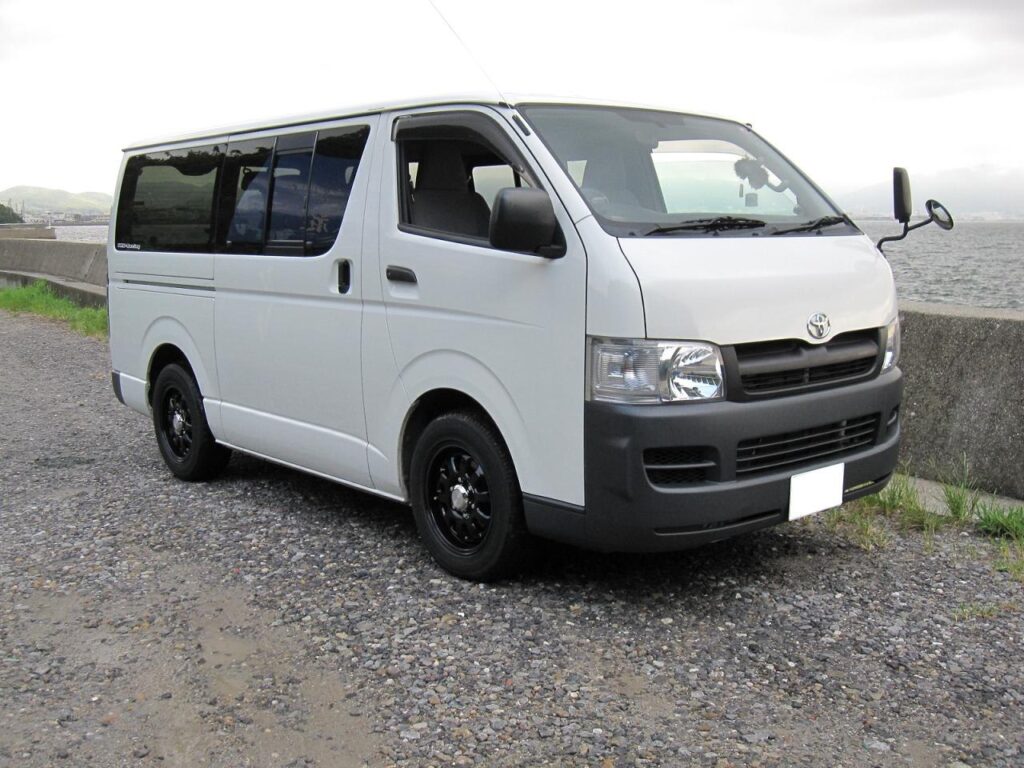
The Toyota Regius, specifically the 2.7i variant produced between 1999 and 2002, is a minivan primarily designed for the Japanese domestic market (JDM). While not officially sold in the United States, the Regius represents Toyota’s approach to providing spacious, comfortable, and practical transportation for families and businesses. It falls into the category of a large MPV (Multi-Purpose Vehicle), offering seating for up to eight passengers. The Regius competed with other Japanese vans like the Honda Odyssey and Nissan Serena, focusing on interior volume and versatility rather than outright performance. Its rear-wheel-drive configuration was relatively uncommon for minivans of the era, offering a different driving experience and potential for towing. The 2.7i designation refers to the engine displacement and indicates a gasoline-powered powertrain.
Toyota Regius 2.7i: A Detailed Overview
The Toyota Regius, particularly the 2.7i model, was engineered to meet the specific needs of the Japanese market, where maximizing space and functionality within a compact footprint is crucial. It served as a popular choice for families, taxi services, and small businesses requiring a versatile vehicle capable of carrying both passengers and cargo. The Regius distinguished itself with a focus on durability and reliability, hallmarks of Toyota engineering. While not known for sporty handling, it prioritized a comfortable ride and ease of use. The rear-wheel-drive layout, while less common in modern minivans, provided a more traditional driving feel and enhanced stability when carrying heavy loads.
Engine & Performance
The heart of the Toyota Regius 2.7i is the 3RZ-FE inline-four cylinder engine, displacing 2.7 liters (2694 cm3 or 164.4 cubic inches). This naturally aspirated engine produces 145 horsepower at 4800 rpm and 235 Newton-meters (173.33 lb.-ft.) of torque at 4000 rpm. The power-to-liter ratio is 53.8 hp/l. The engine utilizes a multi-port fuel injection system and a double overhead camshaft (DOHC) valvetrain with four valves per cylinder, contributing to its relatively efficient operation. The longitudinal engine placement, coupled with rear-wheel drive, provides a different dynamic compared to the more common front-wheel-drive minivan configuration. While acceleration isn’t a primary focus, the engine delivers adequate power for everyday driving and highway cruising. The 3RZ-FE engine is known for its robustness and longevity, a characteristic appreciated by owners in its primary market.
Design & Features
The Toyota Regius 2.7i is a four-door minivan designed to accommodate up to eight passengers. Its body style prioritizes interior space and practicality. The vehicle measures 4750 mm (187.01 inches) in length, 1695 mm (66.73 inches) in width, and 1960 mm (77.17 inches) in height, with a wheelbase of 2985 mm (117.52 inches). The front and rear tracks measure 1455 mm (57.28 inches) and 1435 mm (56.5 inches) respectively. The interior is designed for maximum flexibility, with configurable seating arrangements to accommodate varying passenger and cargo needs. Features common for vehicles of this era included comfortable seating, air conditioning, and a basic audio system. Safety features, while not as advanced as modern standards, typically included seatbelts for all passengers and potentially airbags depending on the specific trim level. The overall design aesthetic is functional and understated, reflecting the vehicle’s focus on practicality rather than luxury. The 65-liter (17.17 US gallons) fuel tank provides a reasonable driving range.
Technical Specifications
| Brand | Toyota |
| Model | Regius |
| Generation | Regius |
| Type (Engine) | 2.7 i (145 Hp) |
| Start of production | 1999 year |
| End of production | 2002 year |
| Powertrain Architecture | Internal Combustion engine |
| Body type | Minivan |
| Seats | 8 |
| Doors | 4 |
| Fuel Type | Petrol (Gasoline) |
| Power | 145 Hp @ 4800 rpm |
| Power per litre | 53.8 Hp/l |
| Torque | 235 Nm @ 4000 rpm / 173.33 lb.-ft. @ 4000 rpm |
| Engine layout | Front, Longitudinal |
| Engine Model/Code | 3RZ-FE |
| Engine displacement | 2694 cm3 / 164.4 cu. in. |
| Number of cylinders | 4 |
| Engine configuration | Inline |
| Cylinder Bore | 95 mm / 3.74 in. |
| Piston Stroke | 95 mm / 3.74 in. |
| Compression ratio | 9.5:1 |
| Number of valves per cylinder | 4 |
| Fuel injection system | Multi-port manifold injection |
| Engine aspiration | Naturally aspirated engine |
| Valvetrain | DOHC |
| Fuel tank capacity | 65 l / 17.17 US gal | 14.3 UK gal |
| Length | 4750 mm / 187.01 in. |
| Width | 1695 mm / 66.73 in. |
| Height | 1960 mm / 77.17 in. |
| Wheelbase | 2985 mm / 117.52 in. |
| Front track | 1455 mm / 57.28 in. |
| Rear (Back) track | 1435 mm / 56.5 in. |
| Drivetrain Architecture | The Internal combustion engine (ICE) drives the rear wheels of the vehicle. |
| Drive wheel | Rear wheel drive |
| Front brakes | Ventilated discs |
| Rear brakes | Disc |
| Tires size | 205/70 R15 |
In conclusion, the Toyota Regius 2.7i represents a practical and reliable minivan solution tailored for the Japanese market. Its rear-wheel-drive configuration, spacious interior, and durable engine made it a popular choice for families and businesses alike. While not widely known in the United States, the Regius exemplifies Toyota’s commitment to providing functional and dependable transportation.