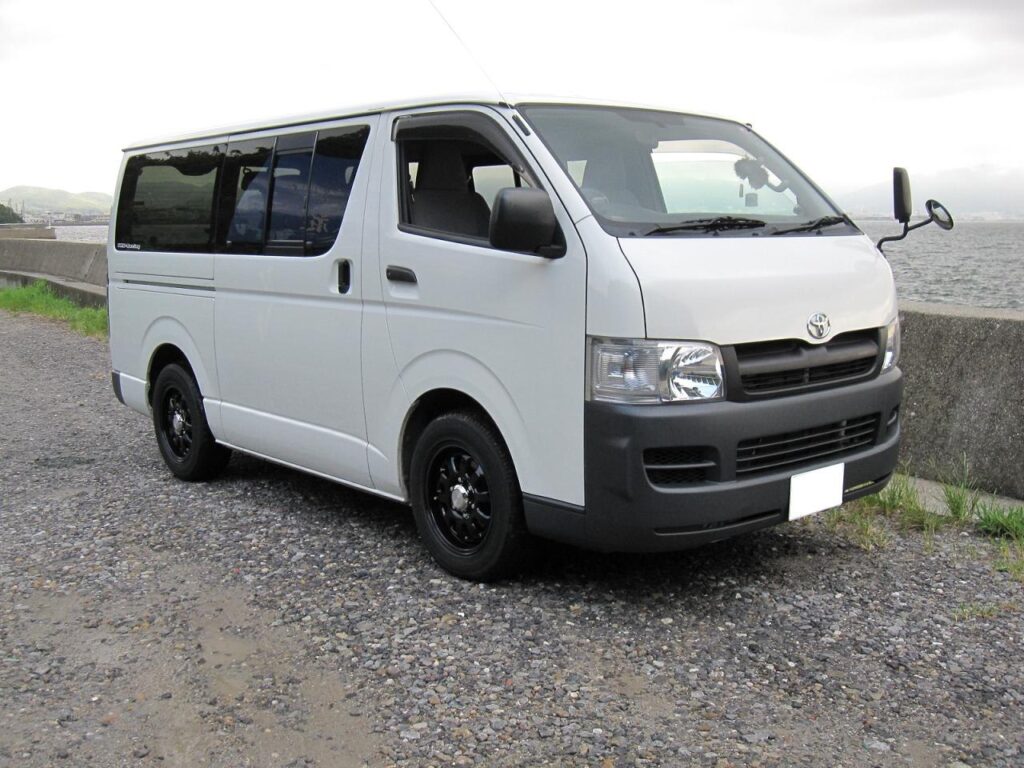
The Toyota Regius Ace (H100) 3.0 D is a commercial and passenger van that was produced by Toyota from 1999 to 2004. Primarily sold in the Japanese domestic market (JDM), the Regius Ace occupied a niche between larger, more utilitarian vans and smaller, more car-like minivans. It was designed to offer a balance of practicality, space, and relative comfort, catering to both commercial users needing a versatile cargo vehicle and families seeking a spacious people carrier. The H100 generation represented a significant update to the Regius line, offering improved features and a more modern design compared to its predecessors. While not officially sold in the United States, understanding the Regius Ace provides insight into Toyota’s diverse global product strategy and the specific demands of the Japanese van market.
Toyota Regius Ace (H100) 3.0 D: Overview and Market Position
The Regius Ace, in its H100 iteration, was a key player in Japan’s highly competitive van segment. Japanese consumers often prioritize efficient use of space and versatility, and the Regius Ace was engineered to meet these needs. It was available in a variety of configurations, including passenger vans, cargo vans, and even specialized versions for commercial applications like ambulances or mobile workshops. The 3.0 D model, powered by a diesel engine, was particularly popular for its fuel efficiency and torque, making it suitable for both urban driving and longer highway journeys. The vehicle’s design emphasized practicality over outright luxury, but Toyota did incorporate features aimed at enhancing comfort and convenience for both driver and passengers.
Engine & Performance
The heart of the Toyota Regius Ace (H100) 3.0 D is its 2.975-liter (181.55 cubic inches) inline-four cylinder diesel engine, designated the 5L. This engine produced 91 horsepower at 4000 rpm and 191 Newton-meters (140.87 lb.-ft.) of torque at 2400 rpm. While the horsepower figure might seem modest by modern standards, the diesel engine’s torque output provided ample pulling power, making the Regius Ace capable of carrying substantial loads or navigating challenging terrain. The engine employed a precombustion chamber injection system, a common technology for diesel engines of that era, designed to improve combustion efficiency and reduce emissions. The naturally aspirated configuration meant the engine relied solely on atmospheric pressure for air intake, contributing to its simplicity and reliability. The engine’s power-to-weight ratio was 62.8 horsepower per tonne, and its torque-to-weight ratio was 131.7 Nm per tonne. The longitudinal engine layout, coupled with a rear-wheel-drive configuration, further enhanced its load-carrying capabilities and provided a stable driving experience.
Design & Features
The Toyota Regius Ace (H100) is a classic example of a Japanese commercial van design from the late 1990s and early 2000s. Its boxy shape maximized interior space, prioritizing functionality over aerodynamic styling. The vehicle’s dimensions – 4430 mm (174.41 inches) in length, 1690 mm (66.54 inches) in width, and 1980 mm (77.95 inches) in height – provided a generous cabin volume. The wheelbase of 2330 mm (91.73 inches) contributed to a relatively smooth ride, despite the van’s commercial underpinnings. The interior was typically spartan but functional, with durable materials designed to withstand heavy use. Depending on the trim level and configuration, features could include power windows, air conditioning, and a basic audio system. Safety features, while not as advanced as those found in modern vehicles, typically included seatbelts and a reinforced body structure. The Regius Ace’s sliding rear doors and high roofline facilitated easy access for passengers and cargo. The kerb weight of 1450 kg (3196.7 lbs) was a key factor in its overall performance and fuel efficiency. The fuel tank capacity of 65 liters (17.17 US gallons) provided a reasonable driving range.
Technical Specifications
| Brand | Toyota |
| Model | Regius Ace |
| Generation | Regius Ace (H100) |
| Type (Engine) | 3.0 D (91 Hp) |
| Start of production | 1999 year |
| End of production | 2004 year |
| Powertrain Architecture | Internal Combustion engine |
| Body type | Minivan |
| Fuel Type | Diesel |
| Weight-to-power ratio | 15.9 kg/Hp |
| Hp/tonne | 62.8 Hp/tonne |
| Weight-to-torque ratio | 7.6 kg/Nm |
| Nm/tonne | 131.7 Nm/tonne |
| Power | 91 Hp @ 4000 rpm |
| Power per litre | 30.6 Hp/l |
| Torque | 191 Nm @ 2400 rpm |
| Torque (lb.-ft.) | 140.87 lb.-ft. @ 2400 rpm |
| Engine layout | Front, Longitudinal |
| Engine Model/Code | 5L |
| Engine displacement | 2975 cm3 |
| Engine displacement (cu. in.) | 181.55 cu. in. |
| Number of cylinders | 4 |
| Engine configuration | Inline |
| Compression ratio | 22:1 |
| Number of valves per cylinder | 2 |
| Fuel injection system | Precombustion chamber injection |
| Engine aspiration | Naturally aspirated engine |
| Valvetrain | OHC |
| Kerb Weight | 1450 kg |
| Kerb Weight (lbs.) | 3196.7 lbs |
| Fuel tank capacity | 65 l |
| Fuel tank capacity (US gal) | 17.17 US gal |
| Fuel tank capacity (UK gal) | 14.3 UK gal |
| Length | 4430 mm |
| Length (in.) | 174.41 in |
| Width | 1690 mm |
| Width (in.) | 66.54 in |
| Height | 1980 mm |
| Height (in.) | 77.95 in |
| Wheelbase | 2330 mm |
| Wheelbase (in.) | 91.73 in |
In conclusion, the Toyota Regius Ace (H100) 3.0 D was a practical and versatile van that served a vital role in the Japanese transportation landscape. While not a vehicle commonly seen outside of Japan, its robust construction, fuel-efficient diesel engine, and spacious interior made it a popular choice for both commercial and private users. It represents a significant example of Toyota’s engineering prowess and its ability to cater to the specific needs of diverse markets.