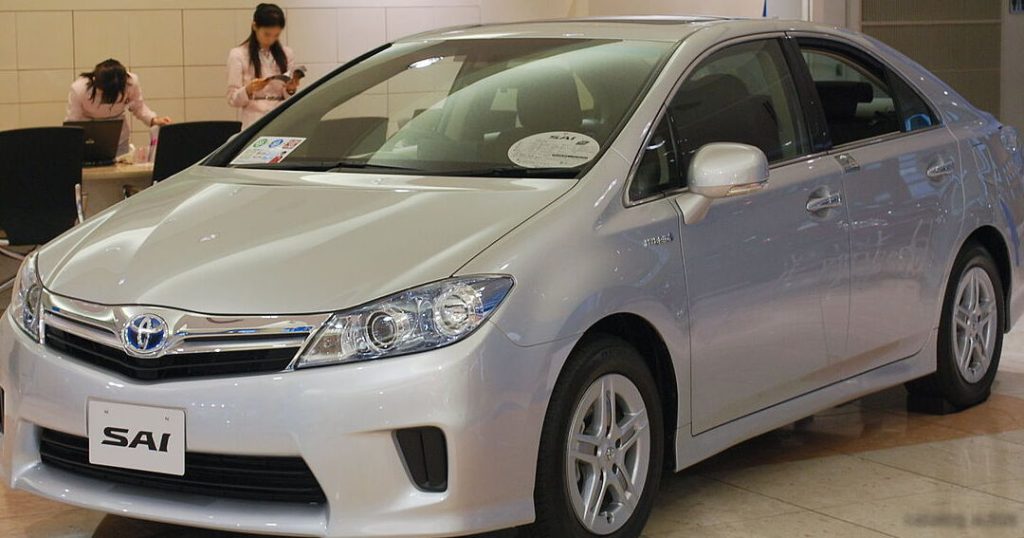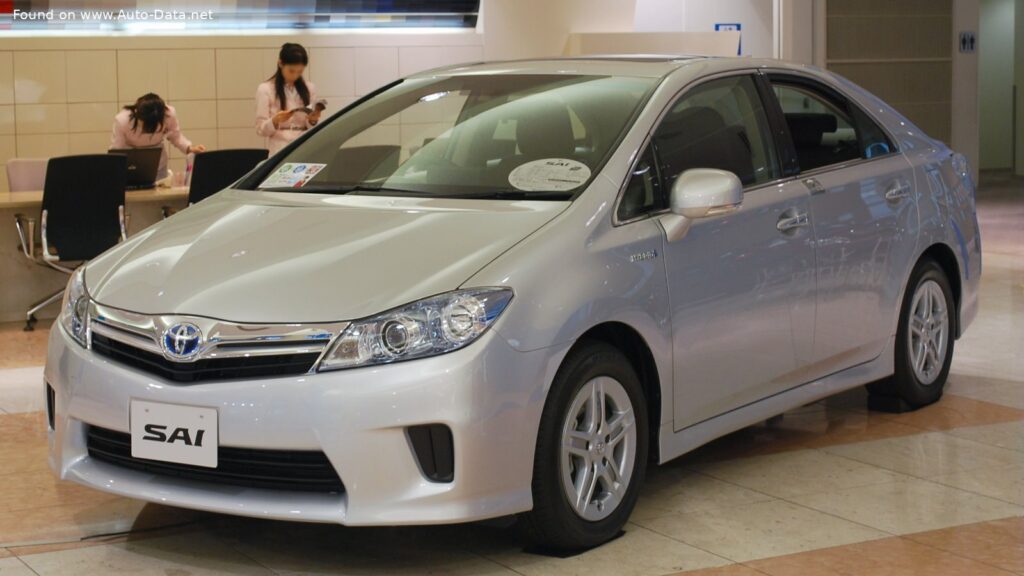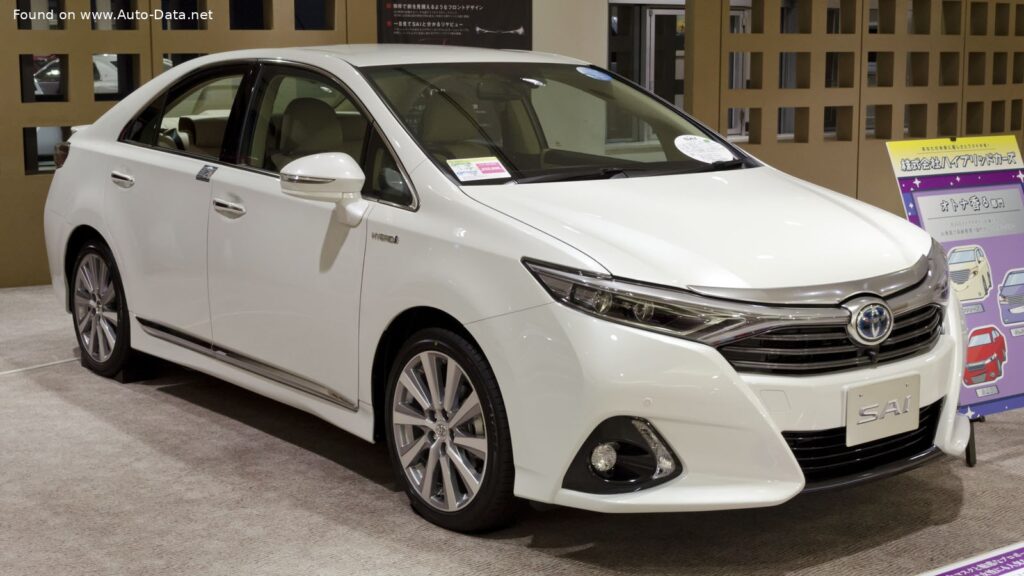
The Toyota Sai is a compact hybrid sedan that was produced by Toyota Motor Corporation primarily for the Japanese domestic market (JDM) from 2009 to 2017. Positioned as a more luxurious and technologically advanced alternative to the Toyota Prius, the Sai offered a quieter and more refined driving experience. This article details the facelifted version released in 2013, specifically the 2.4-liter hybrid model, which produced a combined system output of 190 horsepower. While never officially sold in the United States, the Sai represents Toyota’s continued innovation in hybrid technology and its commitment to fuel efficiency.
Toyota Sai (Facelift 2013): An Overview
The facelifted 2013 Toyota Sai represented a mid-cycle refresh for the model, introducing subtle styling changes and refinements to the hybrid powertrain. The Sai aimed to appeal to buyers seeking a comfortable, fuel-efficient, and technologically equipped sedan. It occupied a niche between the more utilitarian Prius and the larger, more expensive Toyota Crown. The vehicle’s design emphasized a sleek and modern aesthetic, and its interior focused on providing a premium feel with high-quality materials and advanced features for its time. The Sai’s hybrid system was a key selling point, offering significant fuel economy benefits without compromising on performance.
Engine & Performance
The 2013 Toyota Sai 2.4 Hybrid utilizes Toyota’s Hybrid Synergy Drive (HSD) system, a full hybrid electric vehicle (FHEV) architecture. The powertrain combines a 2.4-liter 2AZ-FXE inline-four cylinder gasoline engine with an electric motor. The gasoline engine produces 150 horsepower at 6000 rpm and 137.92 lb-ft of torque at 4400 rpm. The electric motor contributes an additional 143 horsepower and 199.14 lb-ft of torque. The combined system output is rated at 190 horsepower. Power is delivered to the front wheels via an electronically controlled continuously variable transmission (e-CVT). This configuration allows for seamless transitions between gasoline and electric power, optimizing fuel efficiency and providing a smooth driving experience. The weight-to-power ratio of 8.3 kg/Hp (121 Hp/tonne) and weight-to-torque ratio of 8.4 kg/Nm (119.1 Nm/tonne) contribute to responsive acceleration. The Sai achieves a combined fuel economy of 4.5 liters per 100 kilometers (52.3 US mpg, 62.8 UK mpg, or 22.2 km/l).
Design & Features
The 2013 Toyota Sai is a four-door, five-seat sedan with a length of 4695 mm (184.84 inches) and a width of 1770 mm (69.69 inches). Its exterior design is characterized by a flowing silhouette, a prominent grille, and sleek headlights. The facelifted model featured revised front and rear bumpers, updated headlights and taillights, and new alloy wheel designs. Inside, the Sai offered a comfortable and well-appointed cabin. Standard features included automatic climate control, a multi-function steering wheel, and a high-quality audio system. Higher trim levels offered features such as leather upholstery, power-adjustable seats, and a navigation system. Safety features included ABS (Anti-lock Braking System), and a comprehensive airbag system. The Sai’s interior was designed to provide a quiet and refined driving experience, with attention paid to minimizing noise and vibration. The vehicle’s suspension, consisting of independent McPherson struts in the front and a double wishbone setup in the rear, was tuned to provide a comfortable ride.
Technical Specifications
| Brand | Toyota |
| Model | Sai |
| Generation | Sai (facelift 2013) |
| Type (Engine) | 2.4 (190 Hp) Hybrid e-CVT |
| Start of production | 2013 |
| End of production | 2017 |
| Powertrain Architecture | FHEV (Full Hybrid Electric Vehicle) |
| Body type | Sedan |
| Seats | 5 |
| Doors | 4 |
| Fuel consumption (combined) | 4.5 l/100 km (52.3 US mpg, 62.8 UK mpg, 22.2 km/l) |
| Fuel Type | Petrol (Gasoline) |
| Weight-to-power ratio | 8.3 kg/Hp, 121 Hp/tonne |
| Weight-to-torque ratio | 8.4 kg/Nm, 119.1 Nm/tonne |
| Battery technology | Nickel-metal hydride (NiMH) |
| Electric motor power | 143 Hp |
| Electric motor Torque | 270 Nm (199.14 lb.-ft.) |
| Electric motor model/code | 2JM |
| Electric motor location | Integrated into the transmission |
| Electric motor type | Synchronous |
| System power | 190 Hp |
| Internal combustion engine Power | 150 Hp @ 6000 rpm |
| Internal combustion engine Torque | 187 Nm @ 4400 rpm (137.92 lb.-ft. @ 4400 rpm) |
| Engine layout | Front, Transverse |
| Engine Model/Code | 2AZ-FXE |
| Engine displacement | 2362 cm3 (144.14 cu. in.) |
| Number of cylinders | 4 |
| Engine configuration | Inline |
| Cylinder Bore | 88.5 mm (3.48 in.) |
| Piston Stroke | 96 mm (3.78 in.) |
| Compression ratio | 12.5:1 |
| Number of valves per cylinder | 4 |
| Fuel injection system | Multi-port manifold injection |
| Engine aspiration | Naturally aspirated engine |
| Valvetrain | DOHC, VVT |
| Engine oil capacity | 4.3 l (4.54 US qt | 3.78 UK qt) |
| Coolant | 7.3 l (7.71 US qt | 6.42 UK qt) |
| Kerb Weight | 1570-1590 kg (3461.26 – 3505.35 lbs.) |
| Max. weight | 1845-1865 kg (4067.53 – 4111.62 lbs.) |
| Max load | 275 kg (606.27 lbs.) |
| Fuel tank capacity | 55 l (14.53 US gal | 12.1 UK gal) |
| Length | 4695 mm (184.84 in.) |
| Width | 1770 mm (69.69 in.) |
| Height | 1485 mm (58.46 in.) |
| Wheelbase | 2700 mm (106.3 in.) |
| Front track | 1535 mm (60.43 in.) |
| Rear track | 1530 mm (60.24 in.) |
| Ride height (ground clearance) | 140 mm (5.51 in.) |
| Minimum turning circle | 10.4 m (34.12 ft.) |
| Drivetrain Architecture | Front wheel drive. FHEV. ICE and electric motor drive front wheels. |
| Drive wheel | Front wheel drive |
| Number of gears and type of gearbox | automatic transmission e-CVT |
| Front suspension | Independent, type McPherson with coil spring and anti-roll bar |
| Rear suspension | Double wishbone, Transverse stabilizer, Coil spring |
| Front brakes | Ventilated discs |
| Rear brakes | Disc |
| Assisting systems | ABS (Anti-lock braking system) |
| Steering type | Steering rack and pinion |
| Power steering | Electric Steering |
| Tires size | 205/60 R16; 215/45 R18 |
| Wheel rims size | 6.5J x 16; 7J x 18 |
The Toyota Sai, while not available in the US market, demonstrates Toyota’s commitment to hybrid technology and its ability to create refined and fuel-efficient vehicles. The 2013 facelifted model offered a compelling combination of performance, comfort, and advanced features, making it a popular choice among Japanese buyers seeking a premium hybrid sedan.