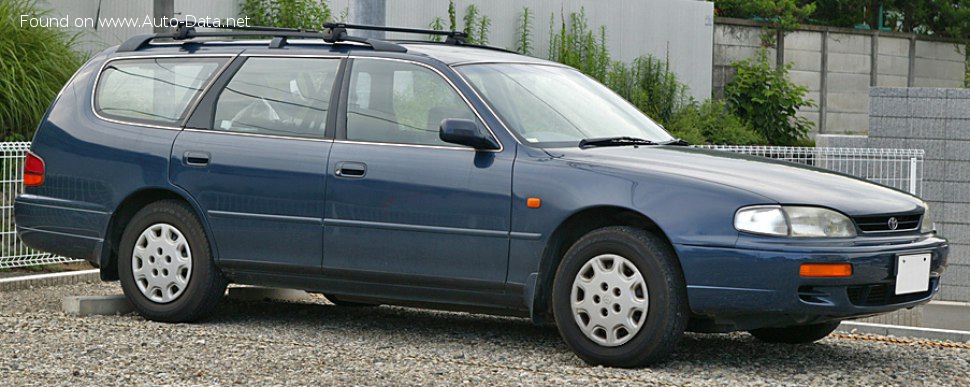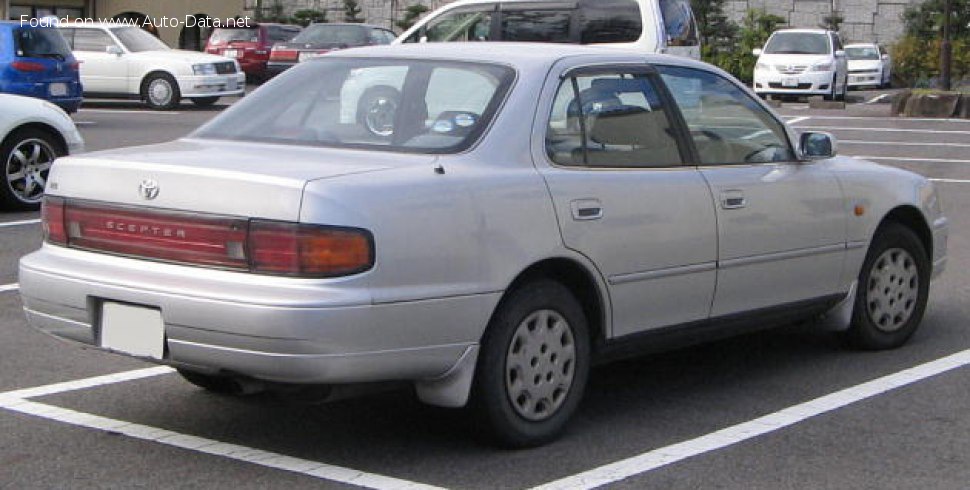
The Toyota Scepter (V10), produced between 1991 and 1996, was a mid-size sedan primarily aimed at the Japanese domestic market (JDM). It served as a more comfortable and slightly more upscale alternative to the Toyota Corolla, offering a larger interior and a more refined driving experience. While not officially sold in the United States, the Scepter represents a significant vehicle in Toyota’s lineup during the early 1990s, showcasing the company’s commitment to providing a range of options for different consumer needs. The V10 generation, specifically the 2.2 i 16V variant, offered a balance of fuel efficiency and adequate performance for its intended purpose.
Toyota Scepter (V10) 2.2 i 16V: An Overview
The Scepter occupied a niche between the compact Corolla and the larger, more luxurious Toyota Camry. It was designed to appeal to families and individuals seeking a practical and reliable sedan with a touch of added comfort. The V10 generation was characterized by its conservative, yet functional styling, typical of Japanese automotive design of the era. It featured a spacious interior for its class and a reputation for Toyota’s renowned build quality and dependability. The 2.2 i 16V engine was the primary powerplant offered, providing a reasonable level of performance for everyday driving.
Engine & Performance
The heart of the Toyota Scepter (V10) 2.2 i 16V is a 2.2-liter inline four-cylinder engine. This naturally aspirated engine produces 136 horsepower at 5,400 rpm and 196 Nm (144.56 lb.-ft.) of torque at 4,000 rpm. The engine utilizes a multi-port fuel injection system and a double overhead camshaft (DOHC) valvetrain with four valves per cylinder, contributing to its relatively efficient operation and respectable power output for its displacement. The engine’s power-to-weight ratio is 98.6 horsepower per tonne, and the torque-to-weight ratio is 142 Nm per tonne. Power delivery is smooth and linear, making it well-suited for daily commuting and highway cruising. The engine is transversely mounted at the front of the vehicle. The Scepter 2.2 i 16V was equipped with a four-speed automatic transmission, delivering power to the front wheels. Combined fuel consumption is rated at 7.9 liters per 100 kilometers (29.8 US mpg or 35.8 UK mpg).
Design & Features
The Toyota Scepter (V10) is a four-door, five-seat sedan. Its exterior design is characterized by clean lines and a relatively understated appearance. The body dimensions are 4,780 mm (188.19 inches) in length, 1,770 mm (69.69 inches) in width, and 1,410 mm (55.51 inches) in height, with a wheelbase of 2,620 mm (103.15 inches). The interior prioritizes practicality and comfort, offering ample space for passengers and luggage. Features included power steering (hydraulic), ventilated front disc brakes, and rear disc brakes. An Anti-lock Braking System (ABS) was included as a safety feature. The Scepter’s suspension utilizes a wishbone configuration for both the front and rear axles, providing a comfortable ride quality. The vehicle’s curb weight is 1,380 kg (3,042.38 lbs), with a maximum weight capacity of 1,655 kg (3,648.65 lbs) and a maximum load capacity of 275 kg (606.27 lbs). The fuel tank has a capacity of 70 liters (18.49 US gallons).
Technical Specifications
| Brand | Toyota |
| Model | Scepter |
| Generation | Scepter (V10) |
| Type (Engine) | 2.2 i 16V (136 Hp) |
| Start of production | 1991 |
| End of production | 1996 |
| Powertrain Architecture | Internal Combustion engine |
| Body type | Sedan |
| Seats | 5 |
| Doors | 4 |
| Fuel consumption (combined) | 7.9 l/100 km |
| Fuel consumption (US mpg) | 29.8 US mpg |
| Fuel consumption (UK mpg) | 35.8 UK mpg |
| Fuel Type | Petrol (Gasoline) |
| Weight-to-power ratio | 10.1 kg/Hp |
| Hp/tonne | 98.6 Hp/tonne |
| Weight-to-torque ratio | 7 kg/Nm |
| Nm/tonne | 142 Nm/tonne |
| Power | 136 Hp @ 5400 rpm |
| Power per litre | 62.8 Hp/l |
| Torque | 196 Nm @ 4000 rpm (144.56 lb.-ft. @ 4000 rpm) |
| Engine layout | Front, Transverse |
| Engine displacement | 2166 cm3 (132.18 cu. in.) |
| Number of cylinders | 4 |
| Engine configuration | Inline |
| Cylinder Bore | 87.1 mm (3.43 in.) |
| Piston Stroke | 90.9 mm (3.58 in.) |
| Compression ratio | 9.7:1 |
| Number of valves per cylinder | 4 |
| Fuel injection system | Multi-port manifold injection |
| Engine aspiration | Naturally aspirated engine |
| Valvetrain | DOHC |
| Kerb Weight | 1380 kg (3042.38 lbs) |
| Max. weight | 1655 kg (3648.65 lbs) |
| Max load | 275 kg (606.27 lbs) |
| Fuel tank capacity | 70 l (18.49 US gal | 15.4 UK gal) |
| Length | 4780 mm (188.19 in.) |
| Width | 1770 mm (69.69 in.) |
| Height | 1410 mm (55.51 in.) |
| Wheelbase | 2620 mm (103.15 in.) |
| Front track | 1545 mm (60.83 in.) |
| Rear track | 1500 mm (59.06 in.) |
| Drivetrain Architecture | ICE, Front wheel drive |
| Drive wheel | Front wheel drive |
| Number of gears | 4 |
| Gearbox type | automatic transmission |
| Front suspension | Wishbone |
| Rear suspension | Wishbone |
| Front brakes | Ventilated discs |
| Rear brakes | Disc |
| Assisting systems | ABS (Anti-lock braking system) |
| Steering type | Steering rack and pinion |
| Power steering | Hydraulic Steering |
| Tires size | 195/70 R14 H |
The Toyota Scepter (V10) 2.2 i 16V, while not a performance icon, represents a solid and reliable family sedan from a pivotal era in Toyota’s history. Its focus on practicality, comfort, and fuel efficiency made it a popular choice in its primary market, and its enduring reputation for quality continues to resonate with enthusiasts today.