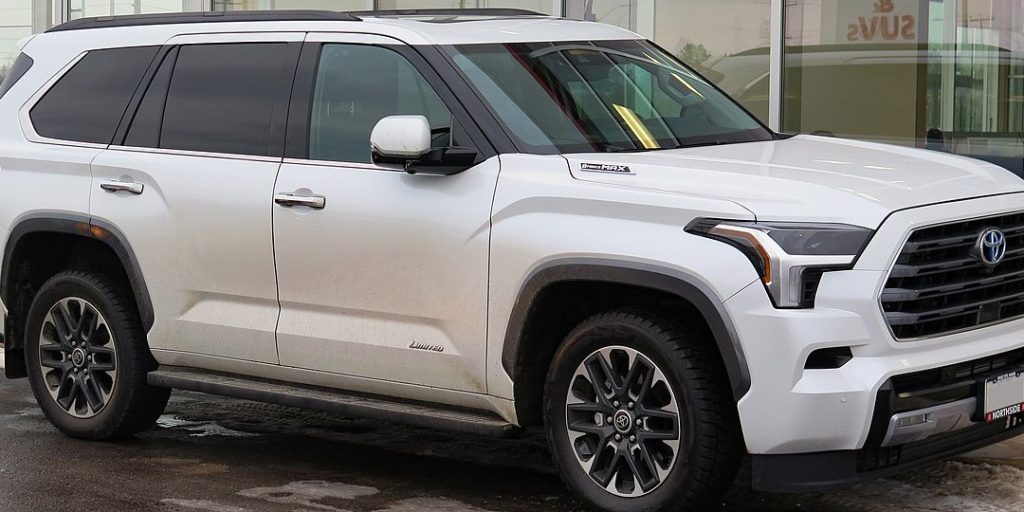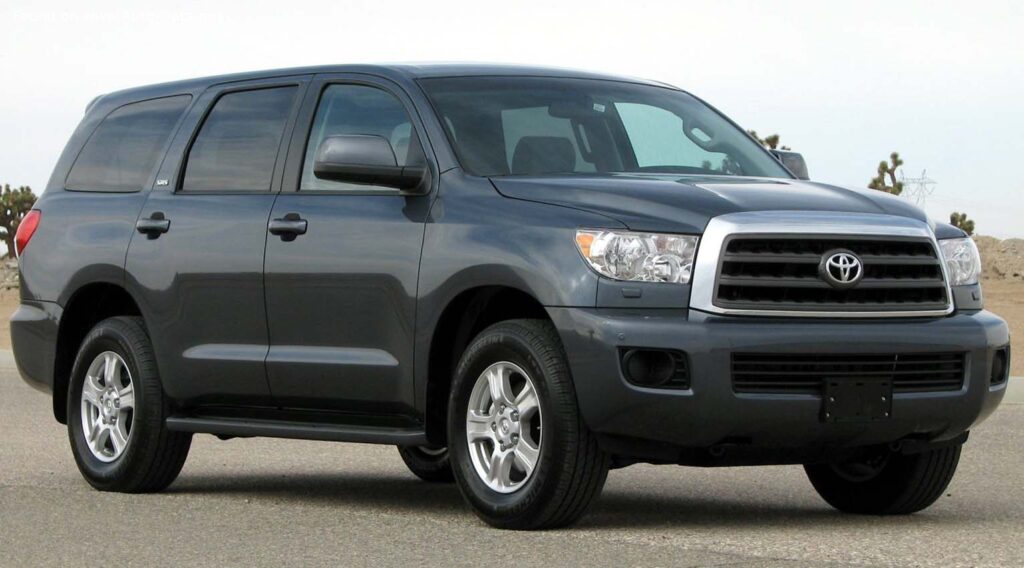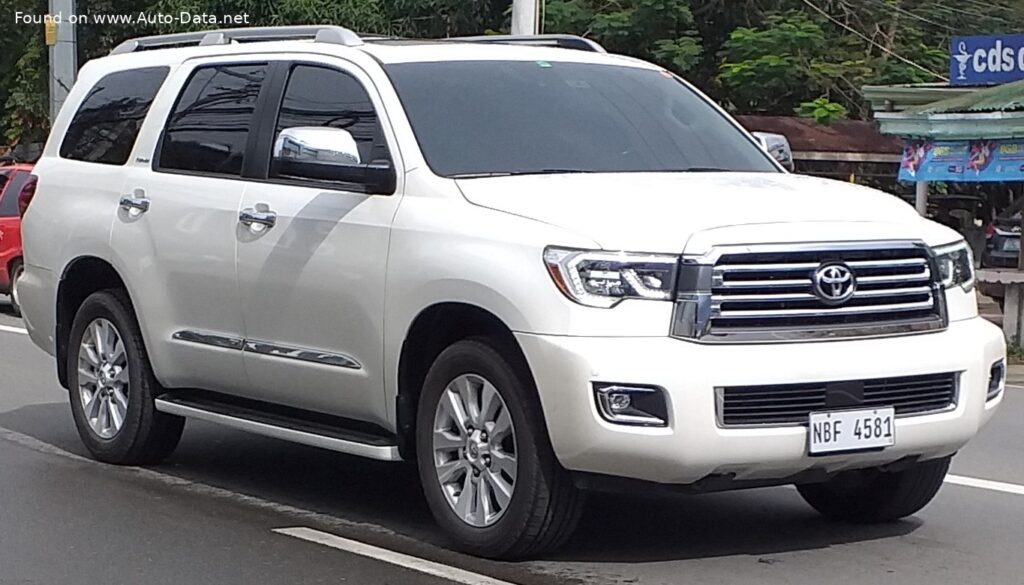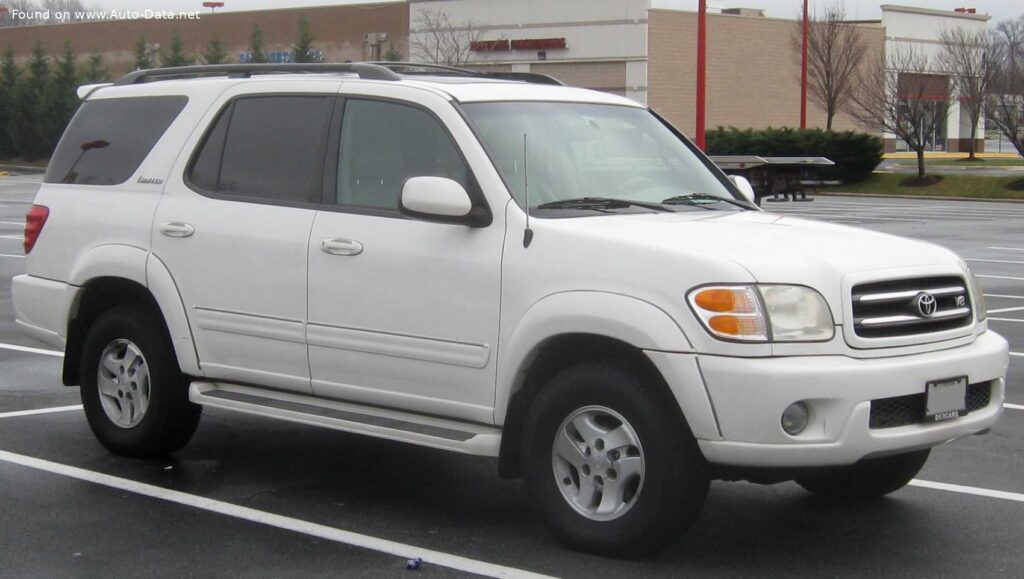
The Toyota Sequoia is a full-size SUV produced by Toyota since 2000. Introduced as a larger alternative to the Toyota 4Runner, the Sequoia was designed to compete with American full-size SUVs like the Chevrolet Tahoe, Ford Expedition, and GMC Yukon. The first generation, the Sequoia I, was produced from 2000 to 2005 and represented Toyota’s entry into the highly competitive American full-size SUV market. This vehicle was primarily sold in North America, offering a blend of Toyota reliability, truck-based durability, and family-friendly features.
Toyota Sequoia I: Overview and Market Position
The Sequoia I was built on the Toyota Tundra pickup truck platform, sharing its body-on-frame construction and many mechanical components. This approach allowed Toyota to leverage existing engineering and manufacturing resources, resulting in a robust and capable SUV. The first generation Sequoia aimed to provide a comfortable and spacious interior, strong towing capacity, and available four-wheel drive for enhanced all-weather capability. It quickly gained recognition for its reliability and build quality, becoming a popular choice for families and those needing a versatile vehicle for both daily driving and recreational activities.
Engine & Performance
The primary engine offered in the Sequoia I was the 4.7-liter 2UZ-FE V8 engine. This naturally aspirated powerplant produced 243 horsepower at 4800 rpm and 314.94 lb-ft of torque at 3400 rpm. The engine featured a double overhead camshaft (DOHC) valvetrain with four valves per cylinder, and multi-port fuel injection. Power was delivered to all four wheels through a five-speed automatic transmission. The Sequoia I’s acceleration was respectable for its size and weight, achieving 0-60 mph in approximately 12.2 seconds and a top speed of 108.74 mph. The weight-to-power ratio of 9.5 kg/Hp indicated a substantial vehicle, but the engine’s torque output provided adequate performance for towing and hauling. Fuel economy was typical for a full-size SUV of the era, with urban consumption at 10.2 US mpg and extra-urban consumption at 18.1 US mpg.
Design & Features
The Sequoia I was a traditional SUV in terms of its body-on-frame construction. It featured a five-door configuration with seating for up to five passengers. The exterior design was conservative and functional, prioritizing practicality over stylistic flair. Key features included available four-wheel drive, ventilated disc brakes on all four wheels, and an anti-lock braking system (ABS) for enhanced safety. The interior offered a spacious cabin with comfortable seating and a reasonable level of amenities for the time. Trunk space was generous, ranging from 81.22 to 128.19 cubic feet with the rear seats folded down. The suspension utilized torsion bars in the front and coil springs in the rear, providing a comfortable ride quality. Power steering, utilizing a hydraulic system, contributed to ease of maneuverability. The vehicle’s dimensions were substantial, measuring 203.94 inches in length, 77.95 inches in width, and 73.23 inches in height.
Technical Specifications
| Brand | Toyota |
| Model | Sequoia |
| Generation | Sequoia I |
| Type (Engine) | 4.7 V8 32V (243 Hp) 4WD |
| Start of production | September, 2000 |
| End of production | 2005 |
| Powertrain Architecture | Internal Combustion engine |
| Body type | SUV |
| Seats | 5 |
| Doors | 5 |
| Fuel consumption (economy) – urban | 23 l/100 km (10.2 US mpg) |
| Fuel consumption (economy) – extra urban | 13 l/100 km (18.1 US mpg) |
| Fuel Type | Petrol (Gasoline) |
| Acceleration 0 – 100 km/h | 12.8 sec |
| Acceleration 0 – 62 mph | 12.8 sec |
| Acceleration 0 – 60 mph | 12.2 sec |
| Maximum speed | 175 km/h (108.74 mph) |
| Weight-to-power ratio | 9.5 kg/Hp |
| Weight-to-torque ratio | 5.4 kg/Nm |
| Power | 243 Hp @ 4800 rpm |
| Torque | 427 Nm @ 3400 rpm (314.94 lb.-ft. @ 3400 rpm) |
| Engine layout | Front, Longitudinal |
| Engine Model/Code | 2UZ-FE |
| Engine displacement | 4664 cm3 (284.61 cu. in.) |
| Number of cylinders | 8 |
| Engine configuration | V-engine |
| Cylinder Bore | 94 mm (3.7 in.) |
| Piston Stroke | 84 mm (3.31 in.) |
| Compression ratio | 9.6:1 |
| Number of valves per cylinder | 4 |
| Fuel injection system | Multi-port manifold injection |
| Engine aspiration | Naturally aspirated engine |
| Valvetrain | DOHC |
| Engine oil capacity | 6.2 l (6.55 US qt | 5.46 UK qt) |
| Coolant | 11.7 l (12.36 US qt | 10.29 UK qt) |
| Kerb Weight | 2300 kg (5070.63 lbs.) |
| Max. weight | 2950 kg (6503.64 lbs.) |
| Max load | 650 kg (1433 lbs.) |
| Trunk (boot) space – minimum | 2300 l (81.22 cu. ft.) |
| Trunk (boot) space – maximum | 3630 l (128.19 cu. ft.) |
| Fuel tank capacity | 99 l (26.15 US gal | 21.78 UK gal) |
| Length | 5180 mm (203.94 in.) |
| Width | 1980 mm (77.95 in.) |
| Height | 1860 mm (73.23 in.) |
| Wheelbase | 3000 mm (118.11 in.) |
| Front track | 1675 mm (65.94 in.) |
| Rear (Back) track | 1680 mm (66.14 in.) |
| Drive wheel | All wheel drive (4×4) |
| Number of gears and type of gearbox | 5 gears, automatic transmission |
| Front suspension | Torsion |
| Rear suspension | Coil spring |
| Front brakes | Ventilated discs |
| Rear brakes | Ventilated discs |
| Assisting systems | ABS (Anti-lock braking system) |
| Steering type | Steering rack and pinion |
| Power steering | Hydraulic Steering |
| Tires size | 265/70 R16 |
The Toyota Sequoia I established a strong foundation for the model line, offering a reliable and capable full-size SUV option for North American buyers. While it may not have been the most technologically advanced vehicle of its time, its durability, spaciousness, and Toyota’s reputation for quality ensured its success and paved the way for subsequent generations.