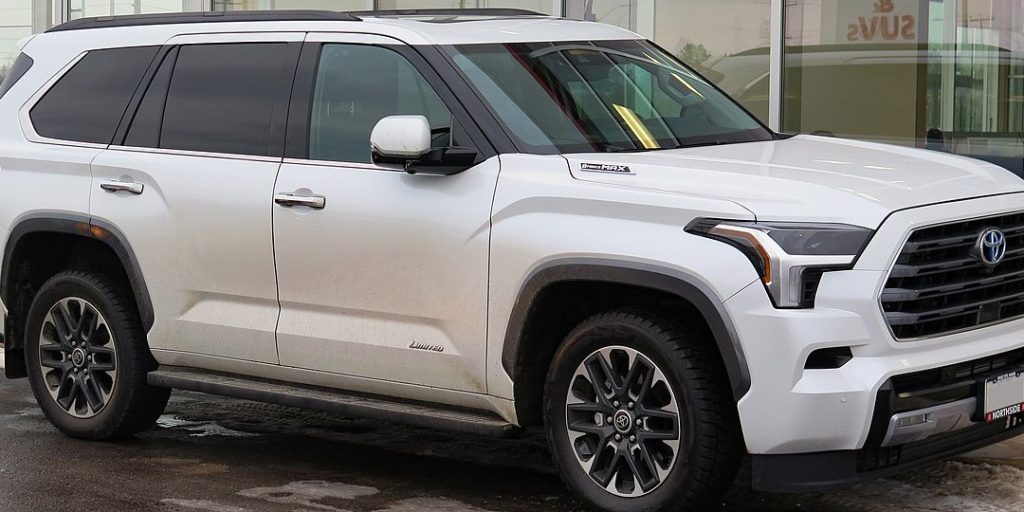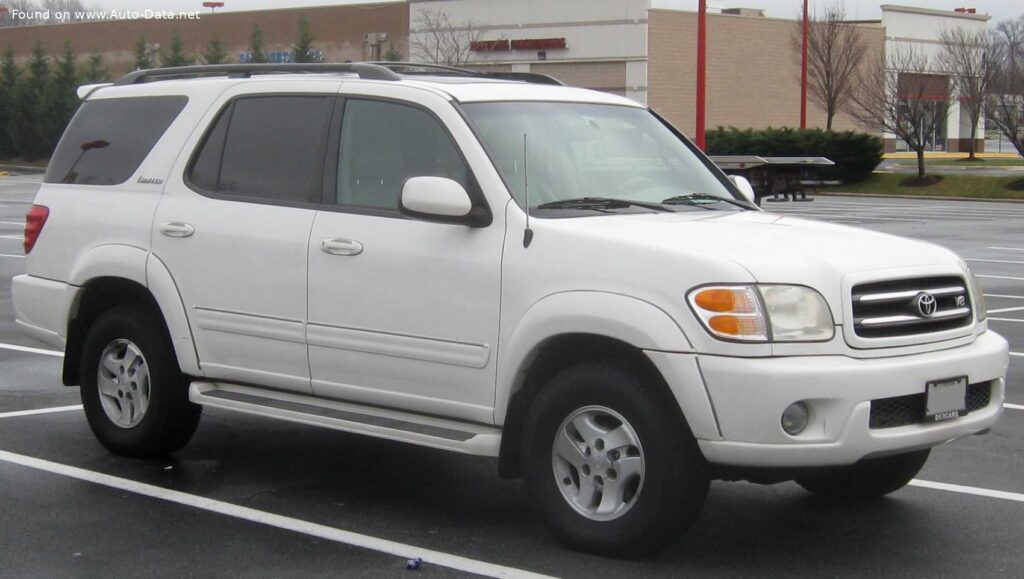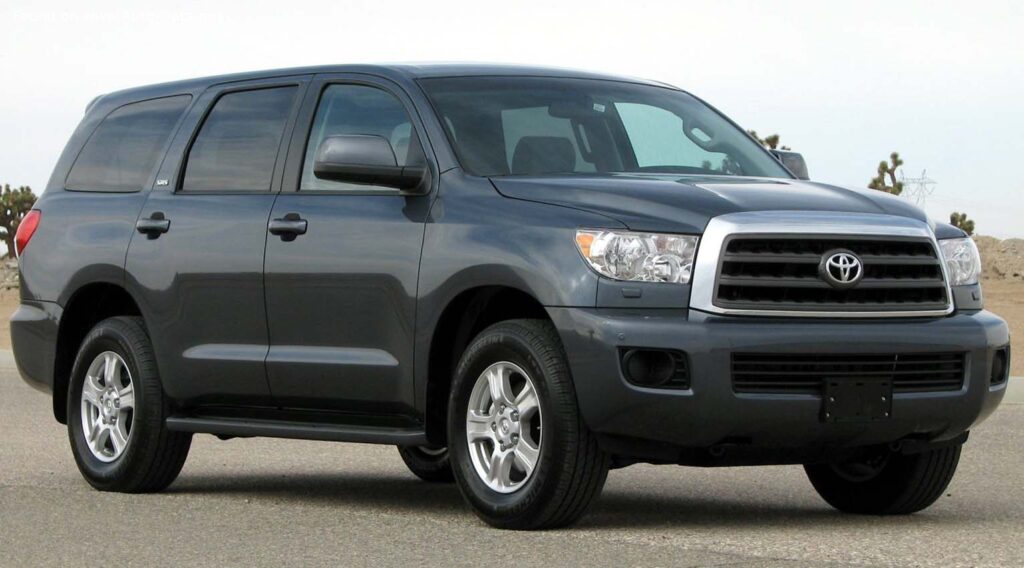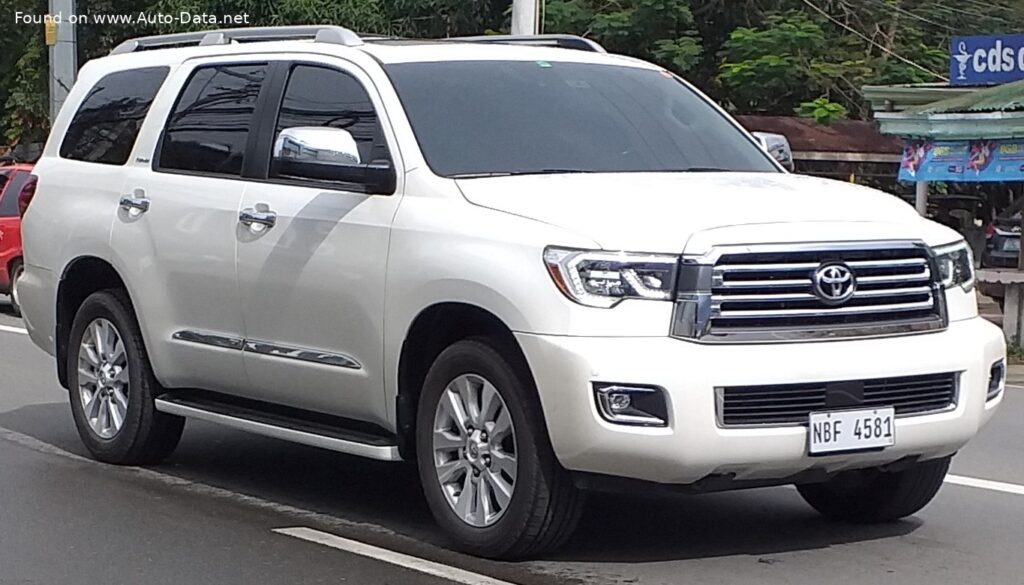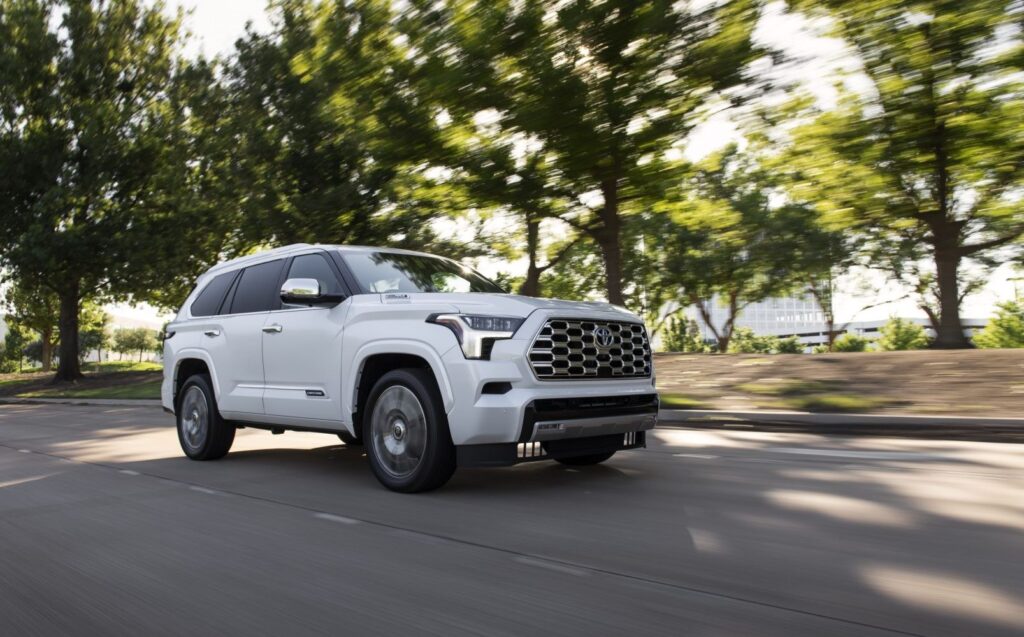
The Toyota Sequoia is a full-size SUV produced by Toyota since 2000. The third generation, known as the XK80, debuted in June 2022, marking a significant redesign and a shift towards hybrid technology. Positioned above the Toyota 4Runner and Highlander in Toyota’s SUV lineup, the Sequoia competes with domestic rivals like the Chevrolet Tahoe, Ford Expedition, and GMC Yukon. The XK80 generation represents a move towards improved fuel efficiency and enhanced capability, while maintaining the Sequoia’s reputation for reliability and spaciousness.
Toyota Sequoia III (XK80) Overview
The Sequoia III (XK80) represents a complete overhaul of the Sequoia model. Previous generations utilized V8 engines exclusively. The XK80 introduces the i-FORCE MAX hybrid powertrain as its primary offering, signaling Toyota’s commitment to electrification within its larger vehicle segment. This generation prioritizes a blend of power, efficiency, and modern technology, aiming to appeal to buyers seeking a capable and comfortable full-size SUV. The vehicle is primarily sold in North America, where demand for large SUVs remains strong.
Engine & Performance
The heart of the 2022+ Toyota Sequoia is the 3.5-liter V6 i-FORCE MAX hybrid powertrain. This engine combines a twin-turbocharged 3.5-liter V6 engine with an electric motor integrated between the engine and the 10-speed automatic transmission. The combined system output is an impressive 437 horsepower at 5,200 rpm and 790 Nm (582.67 lb.-ft.) of torque at 2,400 rpm. This configuration delivers strong acceleration and towing capacity. The electric motor contributes 49 horsepower and 250 Nm (184.39 lb.-ft.) of torque. The powertrain utilizes a 1.87 kWh Nickel-metal hydride (NiMH) battery pack operating at 288 volts. The drivetrain is rear-wheel drive (RWD) as standard, with four-wheel drive available as an option. The ECT-i (Electronically Controlled Transmission – intelligent) automatic transmission provides smooth and efficient gear changes. The weight-to-power ratio is 5.8 kg/Hp, and the weight-to-torque ratio is 3.2 kg/Nm, indicating a robust power delivery for its size.
Design & Features
The Sequoia III (XK80) features a bold and modern exterior design. It adopts a more aggressive stance compared to previous generations, with a prominent grille and distinctive headlights. The body-on-frame construction provides a solid foundation for both on-road comfort and off-road capability. The SUV is available in five-door configuration with seating for seven or eight passengers, depending on the trim level and second-row seating configuration. Inside, the Sequoia boasts a redesigned interior with a focus on premium materials and advanced technology. A large touchscreen infotainment system is standard, along with a suite of driver-assistance features, including ABS (Anti-lock braking system). Trunk space is generous, ranging from 326 to 631 liters (11.51 to 22.28 cu. ft.) with the rear seats up, and expanding to a maximum of 2461 liters (86.91 cu. ft.) with the seats folded down. The Sequoia is equipped with double wishbone front suspension and an independent multi-link rear suspension for a comfortable ride.
Technical Specifications
| Brand | Toyota |
| Model | Sequoia |
| Generation | Sequoia III (XK80) |
| Type (Engine) | 3.5 V6 i-FORCE MAX (437 Hp) Hybrid 2WD ECT-i |
| Start of production | June, 2022 |
| Powertrain Architecture | FHEV (Full Hybrid Electric Vehicle) |
| Body type | SUV |
| Seats | 7-8 |
| Doors | 5 |
| Fuel Type | Petrol (Gasoline) |
| Emission standard | LEV III |
| Weight-to-power ratio | 5.8 kg/Hp |
| Weight-to-torque ratio | 3.2 kg/Nm |
| Gross battery capacity | 1.87 kWh |
| Battery voltage | 288 V |
| Battery technology | Nickel-metal hydride (NiMH) |
| Electric motor power | 49 Hp |
| Electric motor Torque | 250 Nm / 184.39 lb.-ft. |
| Electric motor location | Between the combustion engine and the transmission |
| Power | 437 Hp @ 5200 rpm |
| Torque | 790 Nm @ 2400 rpm / 582.67 lb.-ft. @ 2400 rpm |
| Engine layout | Front, Longitudinal |
| Engine Model/Code | V35A-FTS |
| Engine displacement | 3445 cm3 / 210.23 cu. in. |
| Number of cylinders | 6 |
| Engine configuration | V-engine |
| Cylinder Bore | 85.5 mm / 3.37 in. |
| Piston Stroke | 100 mm / 3.94 in. |
| Compression ratio | 10.4:1 |
| Number of valves per cylinder | 4 |
| Fuel injection system | Direct injection and Multi-port manifold injection |
| Engine aspiration | Twin-Turbo, Intercooler |
| Valvetrain | DOHC, Dual VVT-i |
| Engine oil capacity | 7.3 l / 7.71 US qt | 6.42 UK qt |
| Coolant | 14.5 l / 15.32 US qt | 12.76 UK qt |
| Kerb Weight | 2549-2672 kg / 5619.58 – 5890.75 lbs. |
| Max. weight | 3366 kg / 7420.76 lbs. |
| Max load | 694-817 kg / 1530.01 – 1801.18 lbs. |
| Trunk (boot) space – minimum | 326-631 l / 11.51 – 22.28 cu. ft. |
| Trunk (boot) space – maximum | 2461 l / 86.91 cu. ft. |
| Fuel tank capacity | 85 l / 22.45 US gal | 18.7 UK gal |
| Permitted trailer load with brakes (12%) | 4318 kg / 9519.56 lbs. |
| Permitted towbar download | 432 kg / 952.4 lbs. |
| Length | 5286 mm / 208.11 in. |
| Width | 2022 mm / 79.61 in. |
| Height | 1885-1892 mm / 74.21 – 74.49 in. |
| Wheelbase | 3099 mm / 122.01 in. |
| Front track | 1742 mm / 68.58 in. |
| Rear (Back) track | 1737 mm / 68.39 in. |
| Front overhang | 965 mm / 37.99 in. |
| Rear overhang | 1219 mm / 47.99 in. |
| Ride height (ground clearance) | 218-221 mm / 8.58 – 8.7 in. |
| Minimum turning circle (turning diameter) | 12.3 m / 40.35 ft. |
| Approach angle | 15° |
| Departure angle | 20° |
| Drivetrain Architecture | The Internal combustion engine (ICE) and electric motor drive the rear wheels of the car with the ability to work in full electric or mixed mode. |
| Drive wheel | Rear wheel drive |
| Number of gears and type of gearbox | 10 gears, automatic transmission ECT-i |
| Front suspension | Double wishbone |
| Rear suspension | Independent multi-link suspension |
| Front brakes | Ventilated discs, 353.06 mm |
| Rear brakes | Ventilated discs, 345.44 mm |
| Assisting systems | ABS (Anti-lock braking system) |
| Steering type | Steering rack and pinion |
| Power steering | Electric Steering |
| Tires size | 265/70 R18; 265/60 R20; 265/50 R22 |
| Wheel rims size | 18; 20; 22 |