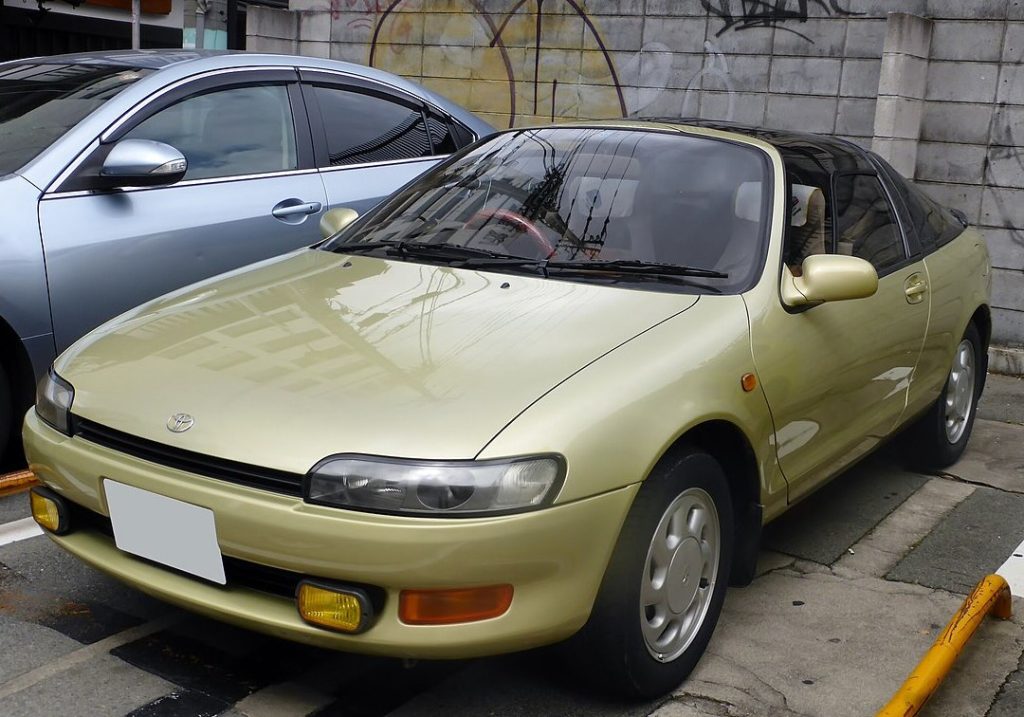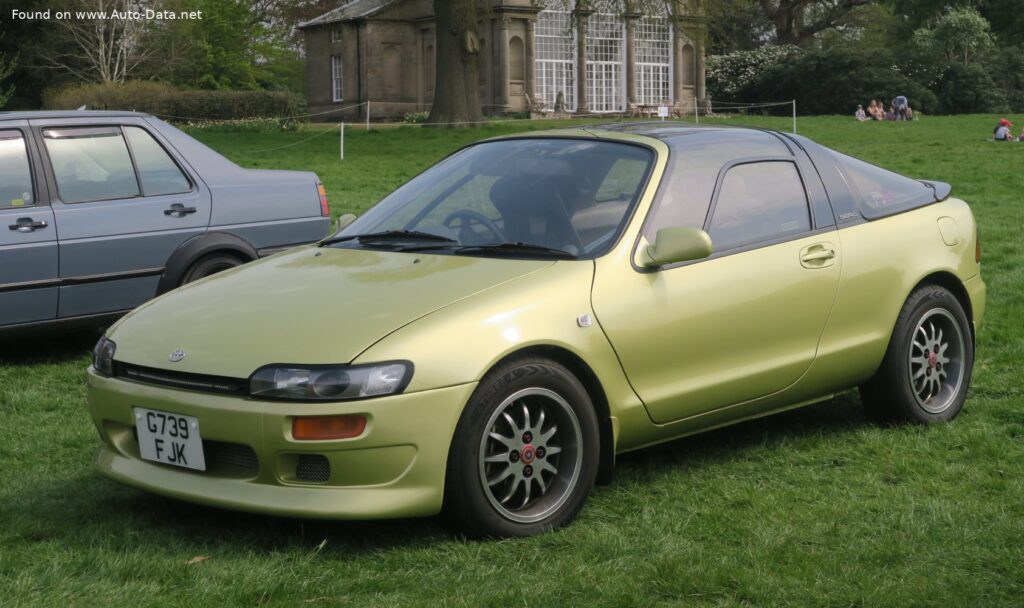
The Toyota Sera (Y10) is a small, sporty coupe produced by Toyota from 1990 to 1995. Distinctive for its butterfly doors – a feature rarely seen on production vehicles – the Sera was primarily marketed in Japan, though limited numbers were exported to Australia and Europe. It represented a unique offering in the early 1990s, blending compact dimensions with a futuristic aesthetic. The Sera wasn’t officially sold in the United States, but its innovative design and relatively affordable price point made it a popular grey market import among enthusiasts seeking something different. The vehicle occupied a niche market segment, appealing to buyers looking for a stylish and technologically interesting coupe.
Toyota Sera (Y10): A Detailed Overview
The Toyota Sera was conceived during a period of experimentation within Toyota, exploring new design languages and technologies. While not a high-volume seller, it served as a testbed for certain features and a statement of Toyota’s design capabilities. The car’s most recognizable feature, the gullwing or butterfly doors, were a significant draw, setting it apart from conventional coupes. The Sera’s design philosophy focused on maximizing interior space within a small footprint, resulting in a surprisingly roomy cabin for a vehicle of its size.
Engine & Performance
The Toyota Sera was powered by a 1.5-liter, inline four-cylinder engine designated as the 5E-FE. This naturally aspirated engine produced 110 horsepower at 6000 rpm and 143 Nm (105.47 lb-ft) of torque at 4200 rpm. While not exceptionally powerful, the engine provided adequate performance for the Sera’s lightweight chassis. The power-to-weight ratio of 8.3 kg/Hp (120.9 Hp/tonne) contributed to a reasonably spirited driving experience. Fuel economy was a strong point, with a combined consumption of 5.4 l/100 km (43.6 US mpg, 52.3 UK mpg, 18.5 km/l). The engine featured multi-port fuel injection and a double overhead camshaft (DOHC) valvetrain, contributing to its efficiency and responsiveness. Power delivery was smooth and linear, making it an easy engine to manage. The Sera utilized a front-engine, front-wheel-drive layout, coupled with a five-speed manual transmission. This configuration provided good traction and predictable handling.
Design & Features
The Toyota Sera’s most striking design element is undoubtedly its butterfly doors. These doors hinged upwards and outwards, providing a dramatic entry and exit experience. The body style is a two-door coupe, seating two passengers. The Sera’s exterior design was characterized by smooth, rounded lines and a relatively compact footprint. The car’s dimensions – 3860 mm (151.97 in) in length, 1650 mm (64.96 in) in width, and 1265 mm (49.8 in) in height – contributed to its nimble handling. Inside, the Sera offered a surprisingly spacious cabin for its size. The interior design was functional and modern for its time, with a focus on ergonomics. Safety features included ventilated disc brakes on all four wheels and an Anti-lock Braking System (ABS), which were relatively advanced for a vehicle in its class during the early 1990s. The steering system employed a rack and pinion setup with hydraulic power assistance, providing precise and responsive steering feel. The Sera rode on 175/65 R14 H tires, offering a balance of grip and ride comfort.
Technical Specifications
| Brand | Toyota |
| Model | Sera |
| Generation | Sera (Y10) |
| Type (Engine) | 1.5i 16V (110 Hp) |
| Start of production | March, 1990 |
| End of production | December, 1995 |
| Powertrain Architecture | Internal Combustion engine |
| Body type | Coupe |
| Seats | 2 |
| Doors | 2 |
| Fuel consumption (combined) | 5.4 l/100 km (43.6 US mpg, 52.3 UK mpg, 18.5 km/l) |
| Fuel Type | Petrol (Gasoline) |
| Weight-to-power ratio | 8.3 kg/Hp, 120.9 Hp/tonne |
| Weight-to-torque ratio | 6.4 kg/Nm, 157.1 Nm/tonne |
| Power | 110 Hp @ 6000 rpm |
| Power per litre | 73.5 Hp/l |
| Torque | 143 Nm @ 4200 rpm (105.47 lb.-ft. @ 4200 rpm) |
| Engine layout | Front, Transverse |
| Engine displacement | 1496 cm3 (91.29 cu. in.) |
| Number of cylinders | 4 |
| Engine configuration | Inline |
| Cylinder Bore | 75 mm (2.95 in.) |
| Piston Stroke | 84.7 mm (3.33 in.) |
| Compression ratio | 10.5:1 |
| Number of valves per cylinder | 4 |
| Fuel injection system | Multi-port manifold injection |
| Engine aspiration | Naturally aspirated engine |
| Valvetrain | DOHC |
| Kerb Weight | 910 kg (2006.21 lbs.) |
| Max. weight | 1130 kg (2491.22 lbs.) |
| Max load | 220 kg (485.02 lbs.) |
| Fuel tank capacity | 40 l (10.57 US gal | 8.8 UK gal) |
| Length | 3860 mm (151.97 in.) |
| Width | 1650 mm (64.96 in.) |
| Height | 1265 mm (49.8 in.) |
| Wheelbase | 2300 mm (90.55 in.) |
| Front track | 1405 mm (55.31 in.) |
| Rear track | 1405 mm (55.31 in.) |
| Minimum turning circle | 9.2 m (30.18 ft.) |
| Drivetrain Architecture | Front wheel drive |
| Number of gears and type of gearbox | 5 gears, manual transmission |
| Front suspension | Wishbone |
| Rear suspension | Coil spring |
| Front brakes | Ventilated discs |
| Rear brakes | Ventilated discs |
| Assisting systems | ABS (Anti-lock braking system) |
| Steering type | Steering rack and pinion |
| Power steering | Hydraulic Steering |
| Tires size | 175/65 R14 H |
The Toyota Sera, while not a mainstream success, remains a fondly remembered and sought-after vehicle among automotive enthusiasts. Its unique design, particularly the butterfly doors, and its relatively affordable price point have cemented its place as a cult classic. The Sera represents a bold and innovative period in Toyota’s history, showcasing the company’s willingness to experiment with new ideas and technologies.