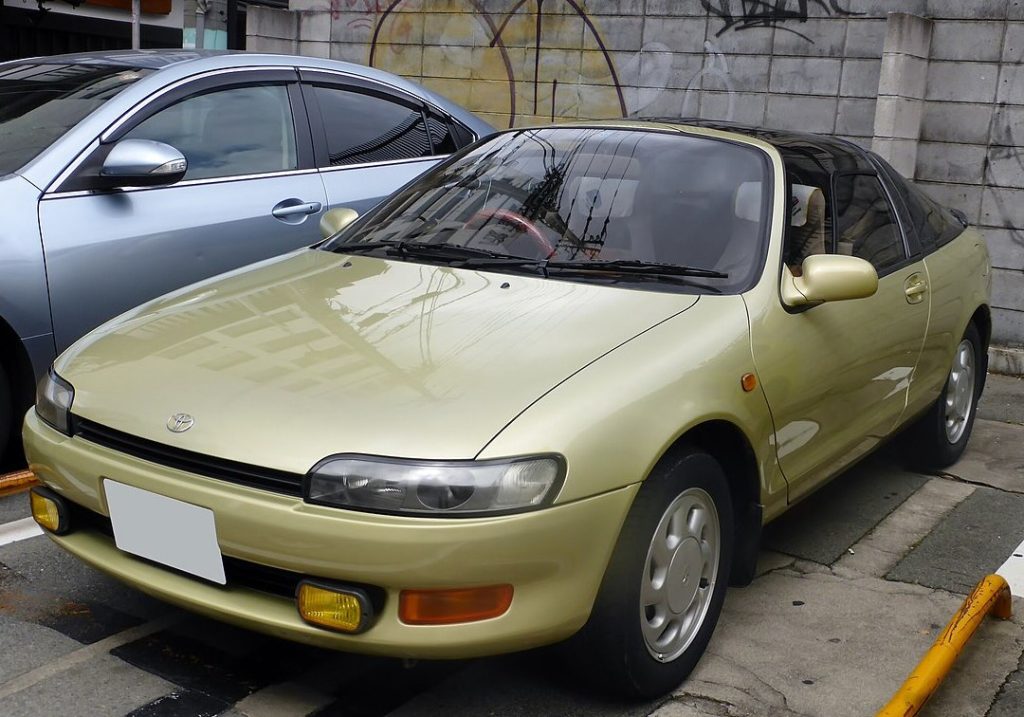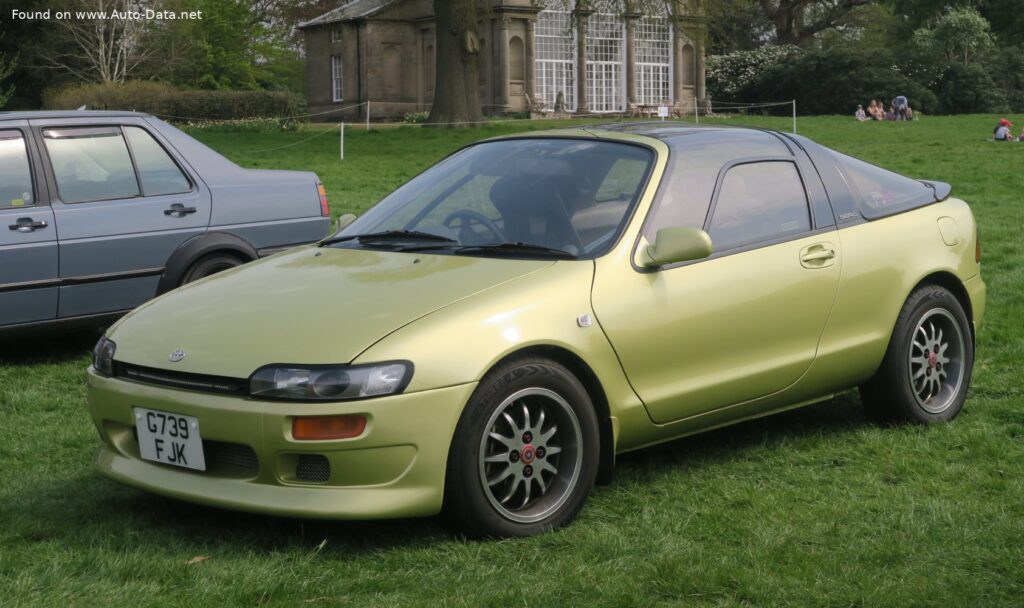
The Toyota Sera (Y10) is a small, sporty coupe produced by Toyota from 1990 to 1995. Distinctive for its butterfly doors – a feature rarely seen on production vehicles – the Sera was primarily marketed in Japan, though limited numbers were exported to Australia and the United Kingdom. It occupied a niche market segment, appealing to buyers seeking a unique and technologically advanced vehicle. The Sera represented Toyota’s experimentation with unconventional designs and engineering, offering a blend of affordability, efficiency, and head-turning aesthetics. While not a high-volume seller, the Toyota Sera has gained a dedicated following among enthusiasts for its distinctive styling and relatively simple mechanicals.
Toyota Sera (Y10): A Detailed Overview
The Toyota Sera was conceived during a period of economic prosperity in Japan, allowing for greater experimentation in automotive design. It was intended to be a stylish and affordable coupe, offering a more individualistic alternative to mainstream offerings. The most striking feature of the Sera is undoubtedly its doors. Rather than conventional hinged doors, the Sera utilizes a unique butterfly or gullwing configuration, where the doors pivot upwards and outwards from the roof. This design element, while visually dramatic, also presented engineering challenges in terms of sealing and structural rigidity. The Sera was positioned as a competitor to other small coupes like the Honda CR-X and Nissan Pulsar Coupe, but its unique doors set it apart.
Engine & Performance
The Toyota Sera is powered by a 1.5-liter inline four-cylinder engine, designated as the 5E-FE. This engine produces 110 horsepower at 6000 rpm and 143 Nm (105.47 lb-ft) of torque at 4200 rpm. While not a powerhouse, the engine provides adequate performance for the Sera’s lightweight chassis. The engine features multi-port fuel injection and a double overhead camshaft (DOHC) valvetrain, contributing to its relatively efficient operation. Power is delivered to the front wheels through a four-speed automatic transmission. The Sera’s weight-to-power ratio of 8.3 kg/Hp (120.9 Hp/tonne) and weight-to-torque ratio of 6.4 kg/Nm (157.1 Nm/tonne) contribute to a reasonably responsive driving experience. Fuel economy is rated at 5.4 l/100 km (43.6 US mpg, 52.3 UK mpg, 18.5 km/l), reflecting the engine’s focus on efficiency. The engine displacement is 1496 cm3 (91.29 cu. in.), with a bore of 75 mm (2.95 in.) and a stroke of 84.7 mm (3.33 in.). The compression ratio is 10.5:1.
Design & Features
The Toyota Sera is a two-door, two-seater coupe with a distinctive wedge-shaped profile. Beyond the butterfly doors, the Sera’s design incorporates a relatively low and wide stance, contributing to its sporty appearance. The interior is minimalist and functional, reflecting the car’s focus on affordability. The dashboard layout is straightforward, with clearly labeled controls. Safety features for the time included ventilated disc brakes on all four wheels and an Anti-lock Braking System (ABS). The Sera’s suspension utilizes a wishbone setup at the front and coil springs at the rear, providing a comfortable ride. The car’s dimensions are as follows: length 3860 mm (151.97 in.), width 1650 mm (64.96 in.), height 1265 mm (49.8 in.), and wheelbase 2300 mm (90.55 in.). The front and rear track are both 1405 mm (55.31 in.). The minimum turning circle is 9.2 m (30.18 ft.). The Sera rides on 175/65 R14 H tires mounted on 14-inch wheel rims.
Technical Specifications
| Brand | Toyota |
| Model | Sera |
| Generation | Sera (Y10) |
| Type (Engine) | 1.5i 16V (110 Hp) Automatic |
| Start of production | March, 1990 |
| End of production | December, 1995 |
| Powertrain Architecture | Internal Combustion engine |
| Body type | Coupe |
| Seats | 2 |
| Doors | 2 |
| Fuel consumption (combined) | 5.4 l/100 km |
| Fuel consumption (US mpg) | 43.6 US mpg |
| Fuel consumption (UK mpg) | 52.3 UK mpg |
| Fuel consumption (km/l) | 18.5 km/l |
| Fuel Type | Petrol (Gasoline) |
| Weight-to-power ratio | 8.3 kg/Hp |
| Weight-to-torque ratio | 6.4 kg/Nm |
| Power | 110 Hp @ 6000 rpm |
| Power per litre | 73.5 Hp/l |
| Torque | 143 Nm @ 4200 rpm (105.47 lb.-ft. @ 4200 rpm) |
| Engine layout | Front, Transverse |
| Engine displacement | 1496 cm3 (91.29 cu. in.) |
| Number of cylinders | 4 |
| Engine configuration | Inline |
| Cylinder Bore | 75 mm (2.95 in.) |
| Piston Stroke | 84.7 mm (3.33 in.) |
| Compression ratio | 10.5:1 |
| Number of valves per cylinder | 4 |
| Fuel injection system | Multi-port manifold injection |
| Engine aspiration | Naturally aspirated engine |
| Valvetrain | DOHC |
| Kerb Weight | 910 kg (2006.21 lbs.) |
| Max. weight | 1130 kg (2491.22 lbs.) |
| Max load | 220 kg (485.02 lbs.) |
| Fuel tank capacity | 40 l (10.57 US gal | 8.8 UK gal) |
| Length | 3860 mm (151.97 in.) |
| Width | 1650 mm (64.96 in.) |
| Height | 1265 mm (49.8 in.) |
| Wheelbase | 2300 mm (90.55 in.) |
| Front track | 1405 mm (55.31 in.) |
| Rear track | 1405 mm (55.31 in.) |
| Minimum turning circle | 9.2 m (30.18 ft.) |
| Drivetrain Architecture | Front wheel drive, Internal Combustion engine (ICE) |
| Drive wheel | Front wheel drive |
| Number of gears | 4 |
| Type of gearbox | automatic transmission |
| Front suspension | Wishbone |
| Rear suspension | Coil spring |
| Front brakes | Ventilated discs |
| Rear brakes | Ventilated discs |
| Assisting systems | ABS (Anti-lock braking system) |
| Steering type | Steering rack and pinion |
| Power steering | Hydraulic Steering |
| Tires size | 175/65 R14 H |
| Wheel rims size | 14 |
The Toyota Sera, while a relatively obscure model, remains a fascinating example of Japanese automotive innovation. Its unique butterfly doors and stylish design continue to attract attention and admiration from car enthusiasts worldwide. Despite its limited production run, the Sera has secured its place as a distinctive and memorable vehicle in automotive history.