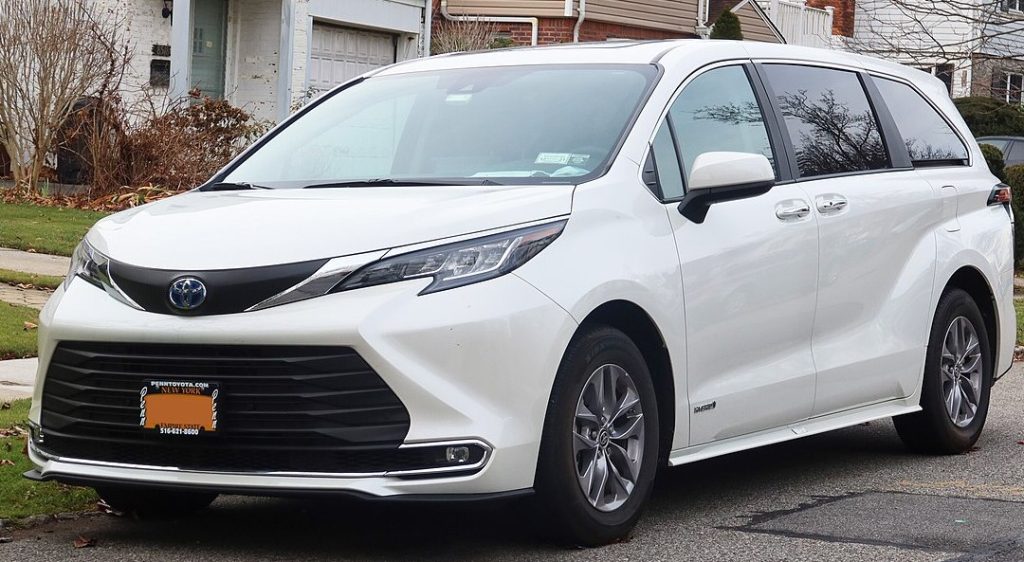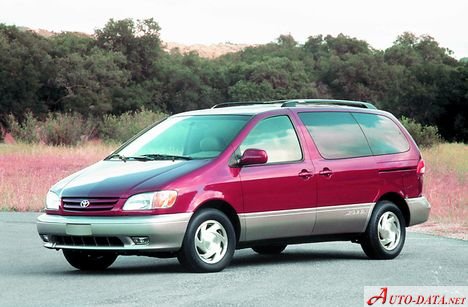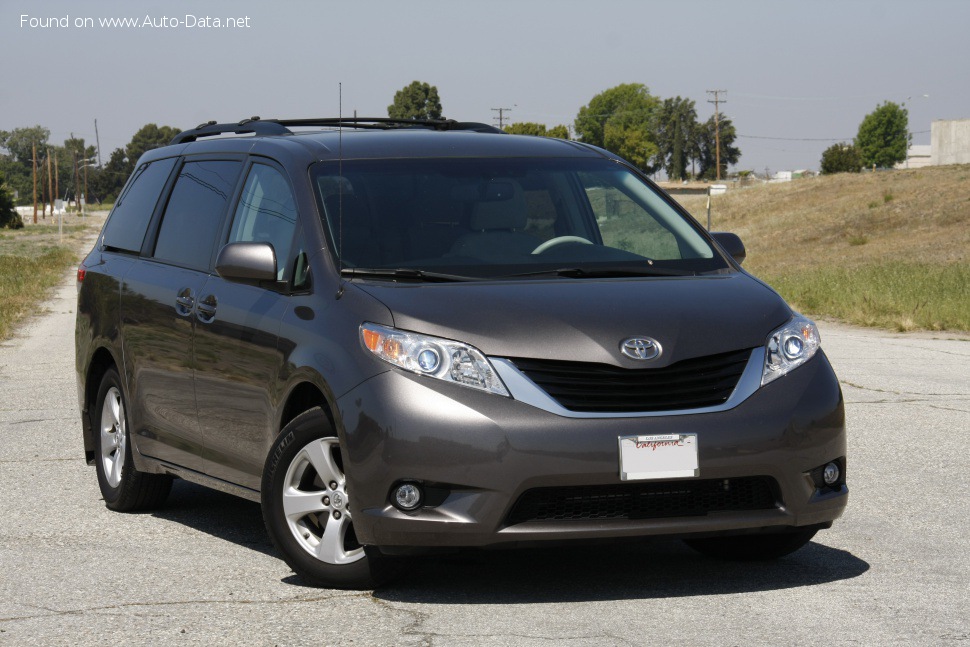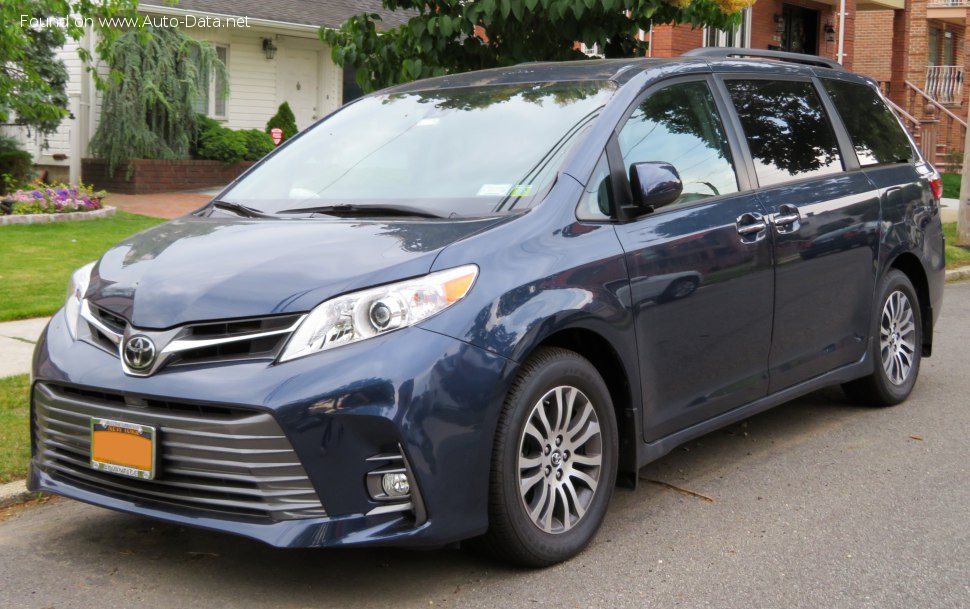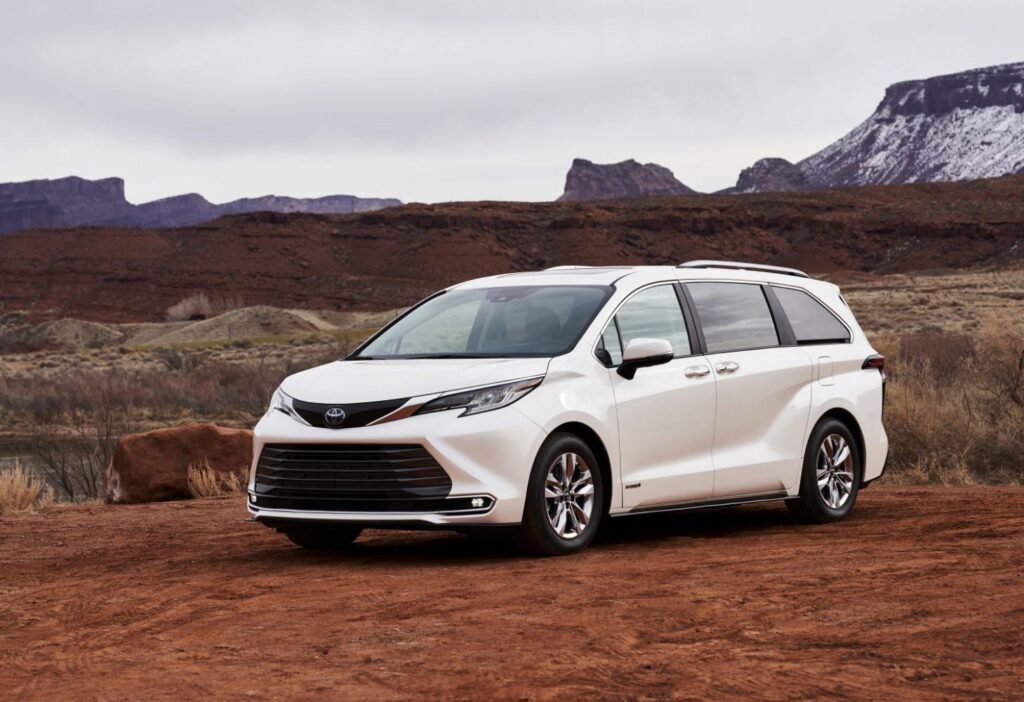
The Toyota Sienna IV, launched in 2020, represents the fourth generation of Toyota’s popular minivan. Sold exclusively in North America, the Sienna has become a mainstay for families seeking spaciousness, reliability, and, increasingly, fuel efficiency. The fourth generation marked a significant shift for the Sienna, abandoning traditional gasoline-only powertrains in favor of a standard hybrid system. This move solidified the Sienna’s position as a leader in the minivan segment, particularly appealing to environmentally conscious buyers. The 2.5-liter Hybrid model, producing a combined 245 horsepower, is the primary configuration offered.
Toyota Sienna IV 2.5 Hybrid: A Detailed Overview
The Sienna IV is built on the TNGA-K platform, a modular architecture shared with other Toyota models. This platform contributes to improved rigidity, handling, and overall refinement. The decision to offer only a hybrid powertrain across the entire Sienna lineup was a strategic one, aligning with Toyota’s broader commitment to electrification and responding to growing consumer demand for fuel-efficient vehicles. The minivan competes directly with the Chrysler Pacifica and Honda Odyssey, offering a compelling alternative with its standard hybrid technology and reputation for dependability.
Engine & Performance
At the heart of the Toyota Sienna IV 2.5 Hybrid lies a 2.5-liter inline-four cylinder gasoline engine (A25A-FXS) paired with an electric motor. The gasoline engine produces 189 horsepower at 6000 rpm and 176.28 lb-ft of torque at 4400 rpm. However, the system’s total output is a combined 245 horsepower. The electric motor contributes a substantial 180 horsepower and 199.14 lb-ft of torque. Power is delivered through an electronically controlled continuously variable transmission (e-CVT), which seamlessly blends the output of the gasoline engine and electric motor. This configuration results in smooth acceleration and efficient operation. The Sienna achieves a combined fuel economy of 36.2 US mpg (6.5 l/100km), making it one of the most fuel-efficient minivans available. The weight-to-power ratio is 8.5 kg/Hp, and the weight-to-torque ratio is 8.7 kg/Nm, indicating a respectable power-to-weight balance.
Design & Features
The Sienna IV maintains the traditional minivan silhouette, prioritizing interior space and practicality. It’s available in both seven and eight-seat configurations, offering versatile seating arrangements to accommodate various passenger and cargo needs. The exterior design features a more sculpted and modern aesthetic compared to previous generations, with a bolder front grille and distinctive LED headlights. Inside, the Sienna boasts a spacious and well-appointed cabin with high-quality materials. Key features include a touchscreen infotainment system with Apple CarPlay and Android Auto compatibility, Toyota Safety Sense 2.0 (a suite of advanced driver-assistance systems), and available features like a rear-seat entertainment system and a premium audio system. The Sienna’s focus on safety is evident in its standard inclusion of features like pre-collision system with pedestrian detection, lane departure alert with steering assist, and full-speed range dynamic radar cruise control. Trunk space is generous, ranging from 33.51 cubic feet with all seats in use to 101 cubic feet with the rear seats folded down.
Technical Specifications
| Brand | Toyota |
| Model | Sienna |
| Generation | Sienna IV |
| Type (Engine) | 2.5 (245 Hp) Hybrid e-CVT |
| Start of production | 2020 |
| Powertrain Architecture | FHEV (Full Hybrid Electric Vehicle) |
| Body type | Minivan |
| Seats | 7-8 |
| Doors | 5 |
| Fuel consumption (urban) | 6.5 l/100 km (36.2 US mpg) |
| Fuel consumption (extra urban) | 6.5 l/100 km (36.2 US mpg) |
| Fuel consumption (combined) | 6.5 l/100 km (36.2 US mpg) |
| Fuel Type | Petrol (Gasoline) |
| Emission standard | SULEV |
| Weight-to-power ratio | 8.5 kg/Hp |
| Weight-to-torque ratio | 8.7 kg/Nm |
| Battery voltage | 288 V |
| Battery technology | Nickel-metal hydride (NiMH) |
| Battery location | Under the front seats |
| Electric motor power | 180 Hp |
| Electric motor Torque | 270 Nm (199.14 lb.-ft.) |
| Electric motor location | Integrated into the transmission |
| Electric motor type | Synchronous |
| System power | 245 Hp |
| Power | 189 Hp @ 6000 rpm |
| Torque | 239 Nm @ 4400 rpm (176.28 lb.-ft. @ 4400 rpm) |
| Engine layout | Front, Transverse |
| Engine Model/Code | A25A-FXS |
| Engine displacement | 2487 cm3 (151.77 cu. in.) |
| Number of cylinders | 4 |
| Engine configuration | Inline |
| Cylinder Bore | 87.38 mm (3.44 in.) |
| Piston Stroke | 103.38 mm (4.07 in.) |
| Compression ratio | 14:1 |
| Number of valves per cylinder | 4 |
| Fuel injection system | Direct injection and Multi-port manifold injection |
| Engine aspiration | Naturally aspirated engine |
| Valvetrain | DOHC, VVT-i, VVT-iE |
| Engine oil capacity | 4.5 l (4.76 US qt | 3.96 UK qt) |
| Coolant | 10.8 l (11.41 US qt | 9.5 UK qt) |
| Kerb Weight | 2091-2143 kg (4609.87 – 4724.51 lbs.) |
| Trunk (boot) space – minimum | 949 l (33.51 cu. ft.) |
| Trunk (boot) space – maximum | 2860 l (101 cu. ft.) |
| Fuel tank capacity | 68 l (17.96 US gal | 14.96 UK gal) |
| Permitted trailer load with brakes (12%) | 1588 kg (3500.94 lbs.) |
| Length | 5169 mm (203.5 in.) |
| Width | 1994 mm (78.5 in.) |
| Height | 1740-1770 mm (68.5 – 69.69 in.) |
| Wheelbase | 3061 mm (120.51 in.) |
| Front track | 1720 mm (67.72 in.) |
| Rear (Back) track | 1740 mm (68.5 in.) |
| Ride height (ground clearance) | 160 mm (6.3 in.) |
| Drag coefficient (Cd) | 0.28 |
| Minimum turning circle (turning diameter) | 11.7-11.9 m (38.39 – 39.04 ft.) |
| Drivetrain Architecture | Front wheel drive. FHEV. |
| Drive wheel | Front wheel drive |
| Number of gears and type of gearbox | automatic transmission e-CVT |
| Front suspension | Independent type McPherson, Transverse stabilizer |
| Rear suspension | Independent multi-link suspension, Transverse stabilizer |
| Front brakes | Ventilated discs, 327.66 mm |
| Rear brakes | Ventilated discs, 317.5 mm |
| Assisting systems | ABS (Anti-lock braking system) |
| Steering type | Steering rack and pinion |
| Power steering | Electric Steering |
| Tires size | 235/65 R17; 235/60 R18; 235/50 R20 |
| Wheel rims size | 7J x 17; 7.5J x 18; 7.5J x 20 |
The Toyota Sienna IV 2.5 Hybrid continues to be a popular choice for families, offering a compelling combination of space, efficiency, and reliability. Its standard hybrid powertrain sets it apart from competitors and positions it as a forward-thinking option in the minivan segment.