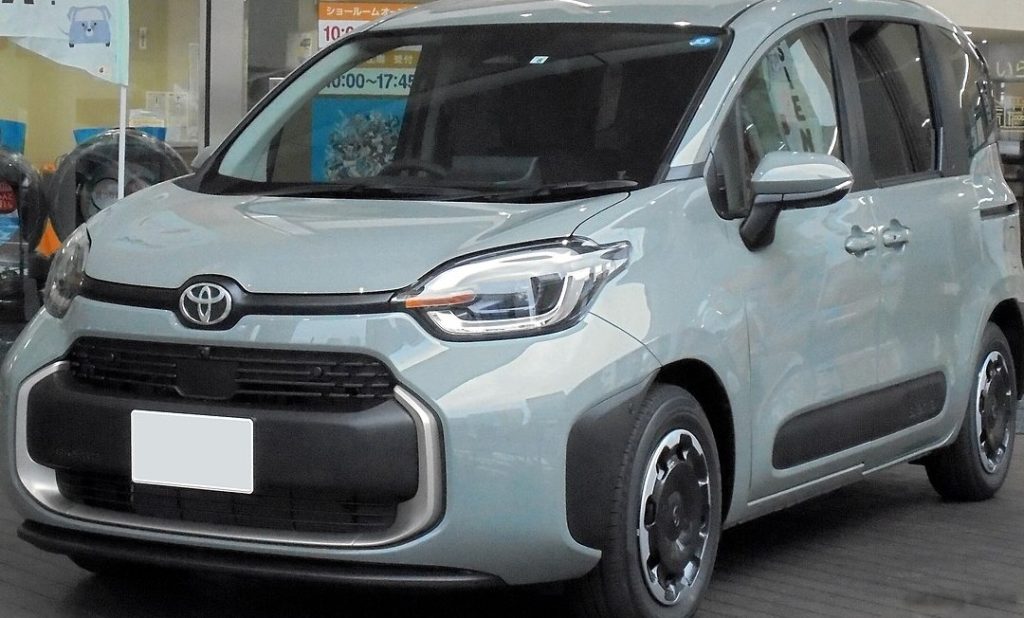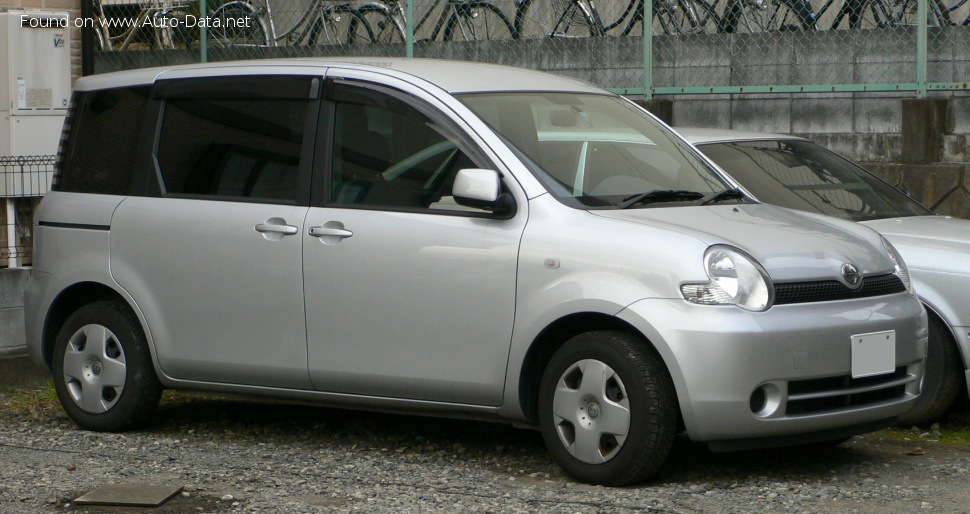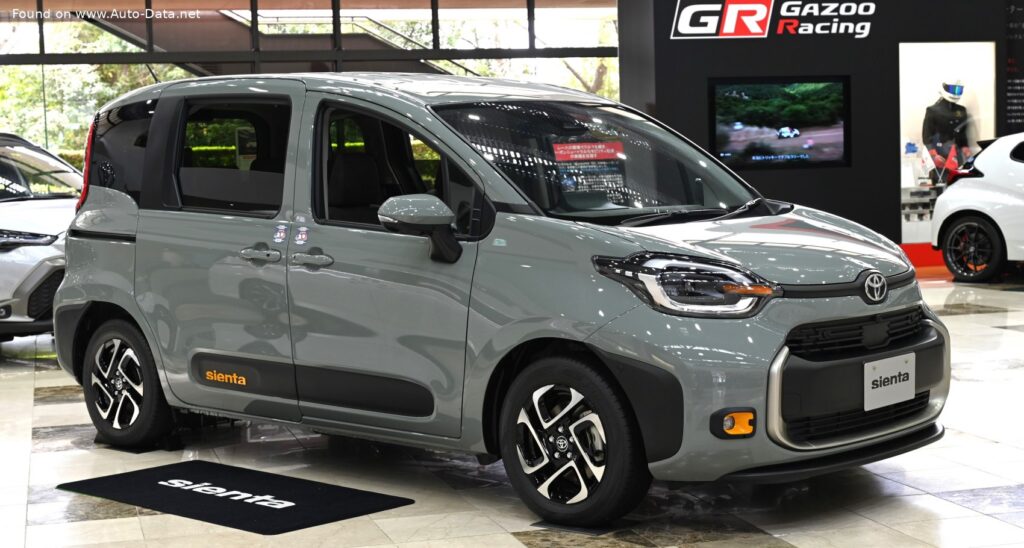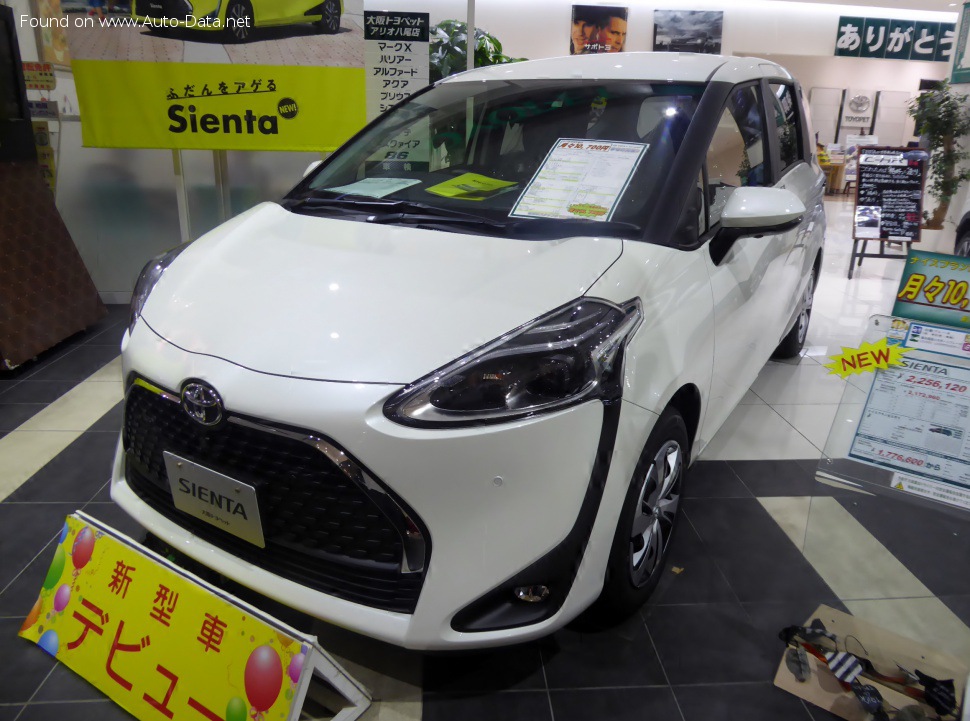
The Toyota Sienta II, particularly the facelifted version introduced in 2018, is a compact minivan primarily designed for the Asian market, especially Indonesia and Japan. While not officially sold in the United States, the Sienta occupies a unique niche as a small, versatile people-carrier offering seating for up to seven passengers in a relatively small footprint. The 2018 facelift brought styling updates and refinements to the second generation, which debuted in 2015. This iteration of the Sienta focuses on practicality, fuel efficiency, and ease of use, catering to families and individuals needing a flexible and economical vehicle. The 1.5-liter engine variant, producing 109 horsepower, is a common configuration, paired with a continuously variable transmission (CVT) for smooth and efficient operation.
Toyota Sienta II (Facelift 2018) 1.5: An Overview
The Sienta II facelift represents Toyota’s commitment to providing functional and affordable transportation solutions. It distinguishes itself from larger minivans by prioritizing maneuverability and fuel economy, making it well-suited for congested urban environments. The vehicle’s sliding rear doors are a key feature, simplifying access in tight parking spaces. The Sienta’s design emphasizes a spacious interior despite its compact exterior dimensions, achieved through clever packaging and a relatively high roofline. The 2018 refresh included changes to the front fascia, interior trim, and available features, enhancing its appeal to a broader customer base.
Engine & Performance
The 2018 Toyota Sienta 1.5 is powered by the 2NR-FKE, a 1.496-liter inline four-cylinder gasoline engine. This naturally aspirated engine produces 109 horsepower at 6000 rpm and delivers 72.9 horsepower per liter. While not a performance-oriented vehicle, the engine provides adequate power for everyday driving conditions. The engine’s key strength lies in its fuel efficiency, a crucial factor for consumers in its target markets. Power is transmitted to the front wheels via a Super CVT-i (Continuously Variable Transmission with intelligence) automatic transmission. This transmission type is known for its smooth operation and ability to keep the engine operating in its most efficient range. The weight-to-power ratio of 12.1 kg/Hp and 82.6 Hp/tonne reflects the vehicle’s focus on efficiency rather than outright acceleration. The inclusion of a particulate filter demonstrates Toyota’s efforts to meet increasingly stringent emissions standards.
Design & Features
The Toyota Sienta II is a five-door minivan characterized by its boxy, yet modern, design. The sliding rear doors are a defining feature, providing easy access to the second and third-row seats, particularly in confined spaces. The interior is designed to maximize space and versatility. The Sienta typically offers seating for five to seven passengers, depending on the configuration. The 2018 facelift brought subtle styling changes to the exterior, including a revised front grille and bumper. Inside, the dashboard and trim materials were updated to enhance the overall aesthetic. Safety features, while varying by market, generally include ABS (Anti-lock Braking System) as standard equipment. The Sienta’s focus is on practicality and functionality, offering a comfortable and convenient transportation solution for families and individuals. The vehicle’s relatively small size and tight turning circle (10.4 meters) make it easy to maneuver in urban environments.
Technical Specifications
| Brand | Toyota |
| Model | Sienta |
| Generation | Sienta II (facelift 2018) |
| Type (Engine) | 1.5 (109 Hp) CVT-i |
| Start of production | September, 2018 |
| End of production | September, 2023 |
| Powertrain Architecture | Internal Combustion engine |
| Body type | Minivan |
| Seats | 5-7 |
| Doors | 5 |
| Fuel Type | Petrol (Gasoline) |
| Weight-to-power ratio | 12.1 kg/Hp |
| Power | 109 Hp @ 6000 rpm |
| Power per litre | 72.9 Hp/l |
| Engine layout | Front, Transverse |
| Engine Model/Code | 2NR-FKE |
| Engine displacement | 1496 cm3 / 91.29 cu. in. |
| Number of cylinders | 4 |
| Engine configuration | Inline |
| Cylinder Bore | 75 mm / 2.95 in. |
| Piston Stroke | 84.7 mm / 3.33 in. |
| Fuel injection system | Multi-port manifold injection |
| Engine aspiration | Naturally aspirated engine |
| Engine oil capacity | 3.6 l / 3.8 US qt | 3.17 UK qt |
| Coolant | 4.9 l / 5.18 US qt | 4.31 UK qt |
| Kerb Weight | 1320 kg / 2910.1 lbs |
| Max. weight | 1705 kg / 3758.88 lbs |
| Max load | 385 kg / 848.78 lbs |
| Fuel tank capacity | 42 l / 11.1 US gal | 9.24 UK gal |
| Length | 4260 mm / 167.72 in |
| Width | 1695 mm / 66.73 in |
| Height | 1695 mm / 66.73 in |
| Wheelbase | 2750 mm / 108.27 in |
| Front track | 1480 mm / 58.27 in |
| Rear (Back) track | 1480 mm / 58.27 in |
| Ride height (ground clearance) | 145 mm / 5.71 in |
| Minimum turning circle (turning diameter) | 10.4 m / 34.12 ft |
| Drivetrain Architecture | The Internal combustion engine (ICE) drives the front wheels of the vehicle. |
| Drive wheel | Front wheel drive |
| Number of gears and type of gearbox | automatic transmission Super CVT-i |
| Front suspension | Independent type McPherson |
| Rear suspension | Torsion |
| Front brakes | Ventilated discs |
| Rear brakes | Disc |
| Assisting systems | ABS (Anti-lock braking system) |
| Steering type | Steering rack and pinion |
The Toyota Sienta II (facelift 2018) 1.5 CVT-i remains a popular choice in its target markets due to its blend of practicality, fuel efficiency, and affordability. While not available in the US market, it represents a significant offering in the compact minivan segment, particularly for families seeking a versatile and economical vehicle.