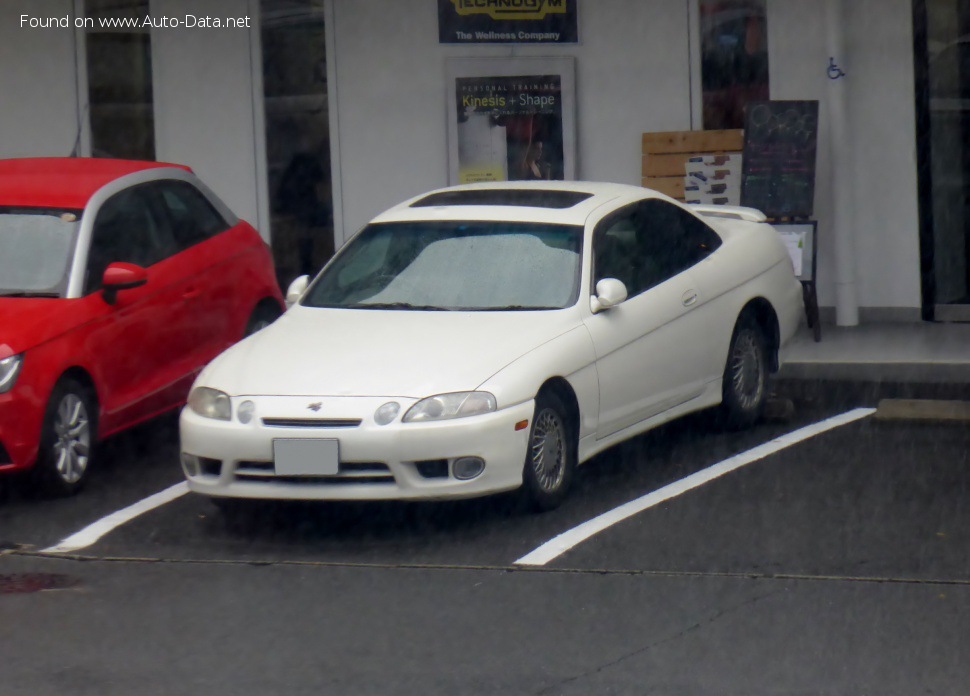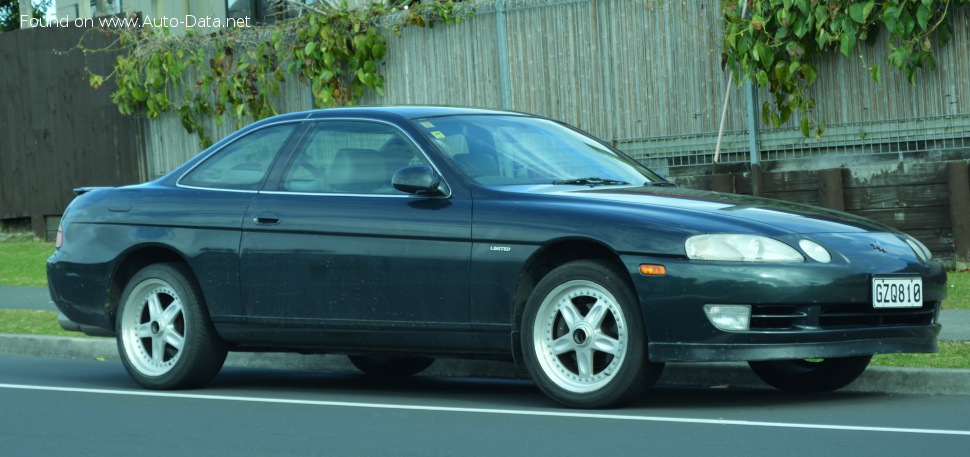
The Toyota Soarer III 2.5 Twin-turbo 24V GT (280 Hp), produced between 1991 and 1995, represents a pinnacle of Japanese engineering and luxury grand touring from the early 1990s. This third-generation Soarer, internally designated as the Z30 series, was primarily developed for the Japanese Domestic Market (JDM) and served as Toyota’s flagship luxury coupe. While largely known to American audiences as the Lexus SC300/SC400, the Soarer III offered distinct powertrain options and a slightly different market positioning within Japan. It embodied a blend of opulent comfort, sophisticated styling, and robust performance, characteristic of an era when Japanese manufacturers were pushing the boundaries of automotive technology and luxury. Its sleek, aerodynamic profile and advanced mechanicals positioned it as a formidable competitor in the burgeoning luxury coupe segment, offering a compelling alternative to European rivals.
Engine and Performance: The Heart of the Toyota Soarer III
At the core of the Toyota Soarer III 2.5 Twin-turbo 24V GT (280 Hp) lies a powerplant that became legendary among enthusiasts: the 1JZ-GTE engine. This 2.5-liter (2492 cm3 or 152.07 cu. in.) inline-six engine features a sophisticated DOHC (Double Overhead Camshaft) valvetrain with 24 valves, four per cylinder, ensuring optimal airflow and combustion efficiency. What truly sets this engine apart is its twin-turbocharger setup, which delivers an impressive 280 horsepower at 6200 rpm, a figure that famously adhered to Japan’s “gentleman’s agreement” on maximum domestic output at the time. The engine’s robust torque output of 378 Nm (278.8 lb.-ft.) peaks at a remarkably low 2400 rpm, providing a broad and accessible powerband that makes for both exhilarating acceleration and relaxed cruising.
The powertrain architecture is built around a front, longitudinal engine layout, driving the rear wheels, a classic setup for a performance-oriented grand tourer. Power is channeled through a precise 5-speed manual transmission, offering an engaging driving experience that allowed the driver full control over the twin-turbocharged engine’s considerable output. This combination contributed to a weight-to-power ratio of 5.6 kg/Hp (179.5 Hp/tonne) and a weight-to-torque ratio of 4.1 kg/Nm (242.3 Nm/tonne), indicating a highly responsive and capable vehicle for its segment. The engine’s multi-port manifold injection system ensures precise fuel delivery, while a compression ratio of 9:1 balances performance with reliability. For a car of its era and performance capabilities, the Soarer III 2.5 Twin-turbo 24V GT offered a combined fuel economy of approximately 8.6 liters per 100 kilometers, or 27.4 US miles per gallon, a respectable figure for a powerful luxury coupe running on gasoline.
Design and Features: A Blend of Luxury and Innovation
The design of the Toyota Soarer III is a testament to early 1990s automotive aesthetics, characterized by its sleek, flowing lines and pillarless hardtop coupe profile. Measuring 4860 mm (191.34 inches) in length, 1790 mm (70.47 inches) in width, and 1350 mm (53.15 inches) in height, the Soarer III commanded a significant road presence. Its long wheelbase of 2690 mm (105.91 inches) not only contributed to its elegant proportions but also provided a stable and comfortable ride, ideal for long-distance touring. The vehicle was designed as a 2-door coupe, offering seating for four occupants, emphasizing a personal luxury experience rather than outright practicality.
Underneath its stylish exterior, the Soarer III incorporated advanced features for its time to enhance both performance and safety. The suspension system featured a double wishbone setup at the front, renowned for its ability to maintain optimal tire contact with the road, providing superior handling and ride comfort. The rear utilized a coil spring suspension, further contributing to its refined ride quality. Stopping power was handled by ventilated disc brakes on both the front and rear axles, ensuring consistent and effective deceleration, a critical feature for a car capable of such performance. An Anti-lock Braking System (ABS) was standard, enhancing safety by preventing wheel lock-up during hard braking. Steering was managed by a hydraulic rack and pinion system, offering direct and communicative feedback to the driver. The car rode on 16-inch wheel rims, shod with 225/55 R16 tires, a size that provided a good balance of grip and ride comfort for a luxury grand tourer. With a kerb weight of 1560 kg (3439.21 lbs) and a maximum permissible weight of 1835 kg (4045.48 lbs), the Soarer III was a substantial vehicle, built with robust construction that contributed to its reputation for durability and refinement.
Technical Specifications: Toyota Soarer III 2.5 Twin-turbo 24V GT (280 Hp)
| Brand | Toyota |
| Model | Soarer |
| Generation | Soarer III |
| Type (Engine) | 2.5 Twin-turbo 24V GT (280 Hp) |
| Start of production | 1991 year |
| End of production | 1995 year |
| Powertrain Architecture | Internal Combustion engine |
| Body type | Coupe |
| Seats | 4 |
| Doors | 2 |
| Fuel consumption (economy) – combined | 8.6 l/100 km (27.4 US mpg / 32.8 UK mpg / 11.6 km/l) |
| Fuel Type | Petrol (Gasoline) |
| Weight-to-power ratio | 5.6 kg/Hp, 179.5 Hp/tonne |
| Weight-to-torque ratio | 4.1 kg/Nm, 242.3 Nm/tonne |
| Power | 280 Hp @ 6200 rpm. |
| Power per litre | 112.4 Hp/l |
| Torque | 378 Nm @ 2400 rpm. (278.8 lb.-ft. @ 2400 rpm.) |
| Engine layout | Front, Longitudinal |
| Engine displacement | 2492 cm3 (152.07 cu. in.) |
| Number of cylinders | 6 |
| Engine configuration | Inline |
| Cylinder Bore | 86 mm (3.39 in.) |
| Piston Stroke | 71.5 mm (2.81 in.) |
| Compression ratio | 9:1 |
| Number of valves per cylinder | 4 |
| Fuel injection system | Multi-port manifold injection |
| Engine aspiration | Turbocharger |
| Valvetrain | DOHC |
| Kerb Weight | 1560 kg (3439.21 lbs) |
| Max. weight | 1835 kg (4045.48 lbs) |
| Max load | 275 kg (606.27 lbs) |
| Fuel tank capacity | 78 l (20.61 US gal | 17.16 UK gal) |
| Length | 4860 mm (191.34 in.) |
| Width | 1790 mm (70.47 in.) |
| Height | 1350 mm (53.15 in.) |
| Wheelbase | 2690 mm (105.91 in.) |
| Front track | 1520 mm (59.84 in.) |
| Rear (Back) track | 1520 mm (59.84 in.) |
| Drivetrain Architecture | The Internal combustion engine (ICE) drives the rear wheels of the vehicle. |
| Drive wheel | Rear wheel drive |
| Number of gears and type of gearbox | 5 gears, manual transmission |
| Front suspension | Double wishbone |
| Rear suspension | Coil spring |
| Front brakes | Ventilated discs |
| Rear brakes | Ventilated discs |
| Assisting systems | ABS (Anti-lock braking system) |
| Steering type | Steering rack and pinion |
| Power steering | Hydraulic Steering |
| Tires size | 225/55 R16 |
| Wheel rims size | 16 |