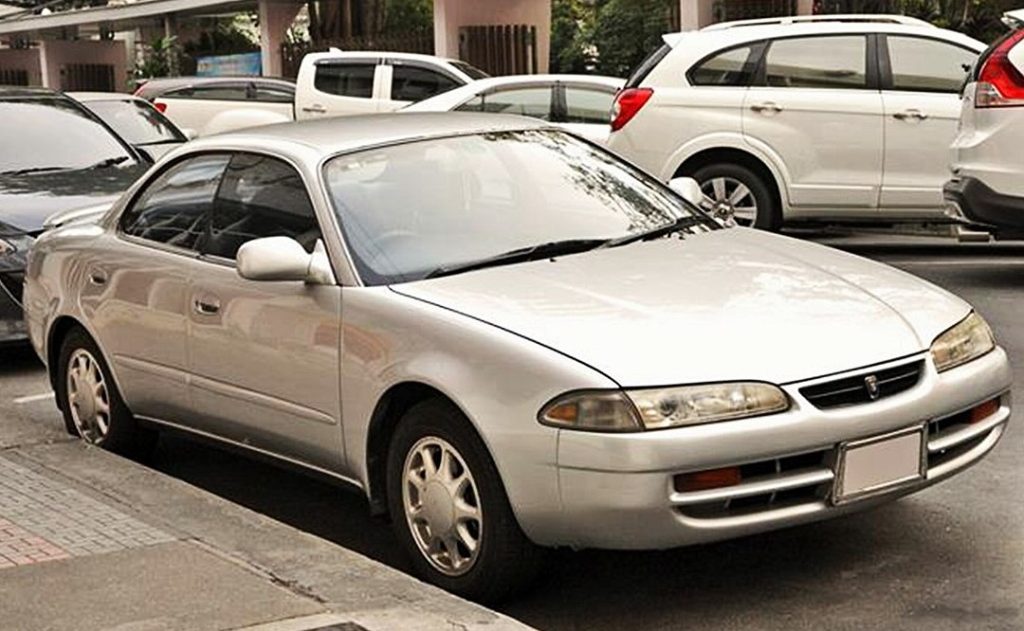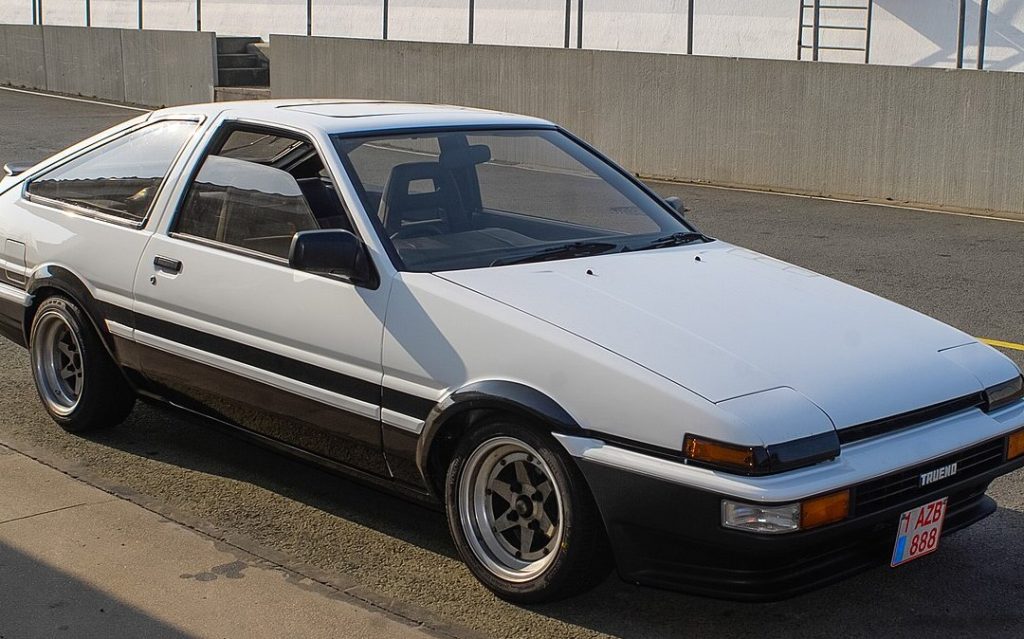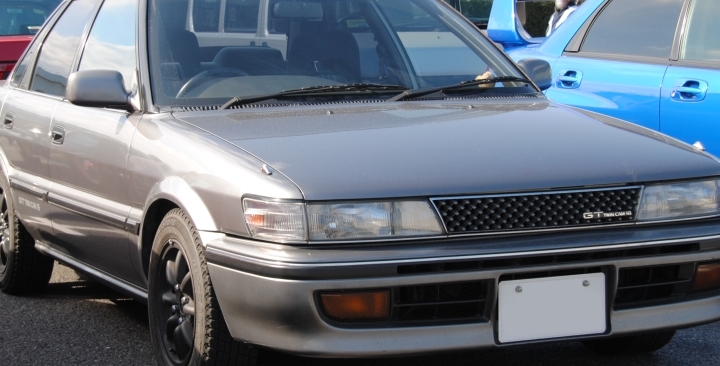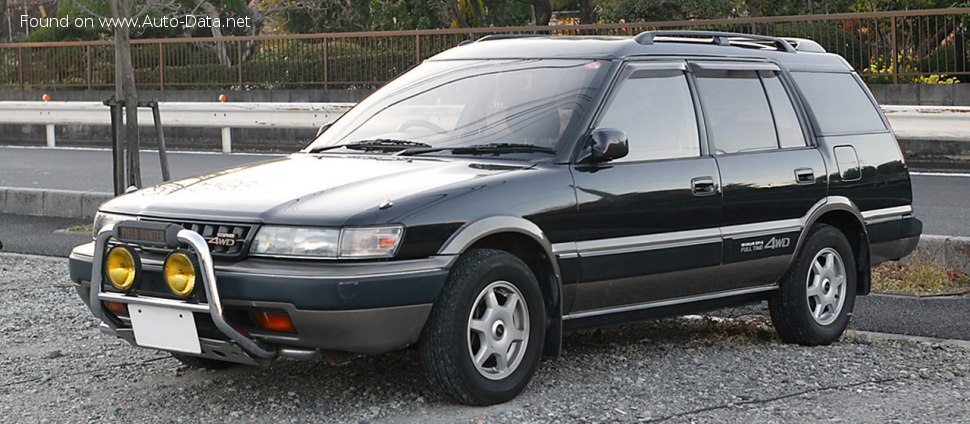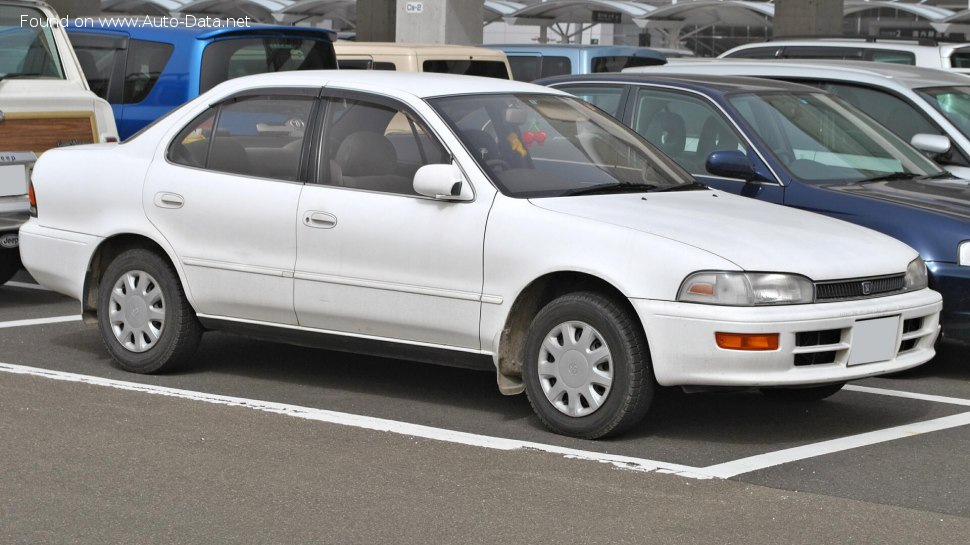
The Toyota Sprinter 1.5 16V (105 Hp), produced from 1991 to 1995, represents a significant chapter in Toyota’s history of compact sedans, primarily serving the Japanese domestic market (JDM) and various other Asian regions. While often overshadowed by its globally recognized sibling, the Corolla, the Sprinter carved out its own niche as a slightly sportier or more upscale variant, depending on the generation and trim. This particular iteration, featuring the robust 1.5-liter, 16-valve engine, was a testament to Toyota’s commitment to reliability, efficiency, and practical design during the early 1990s. It embodied the typical Japanese automotive philosophy of the era, offering a well-engineered, compact package designed for urban maneuverability and economical operation, yet capable of comfortable highway cruising. The Sprinter was more than just transportation; it was a dependable workhorse and a family vehicle, a staple in a market that demanded both longevity and value. Its role in its primary market was crucial, providing accessible personal mobility with a reputation for unwavering quality that solidified Toyota’s global standing. For enthusiasts and everyday drivers alike, the Toyota Sprinter 1.5 16V (105 Hp) remains a symbol of an era when automotive engineering focused on refined simplicity and enduring performance.
Engineering and Performance of the Toyota Sprinter
At the heart of the 1991-1995 Toyota Sprinter 1.5 16V (105 Hp) lay a meticulously engineered powertrain, designed to deliver a harmonious blend of efficiency and accessible power. The vehicle was equipped with a 1.5-liter (1497 cm3 or 91.35 cu. in.) inline four-cylinder engine, positioned transversely at the front of the vehicle. This configuration, coupled with front-wheel drive, was a standard and highly efficient layout for compact cars of the period, optimizing interior space and manufacturing costs while providing predictable handling characteristics. The engine’s architecture featured a Double Overhead Camshaft (DOHC) valvetrain with four valves per cylinder, a total of 16 valves. This 16-valve setup was advanced for its time in the compact segment, allowing for improved volumetric efficiency, better airflow into and out of the combustion chambers, and ultimately, a more responsive and powerful engine compared to older 8-valve designs.
The naturally aspirated engine produced a respectable 105 horsepower at a relatively high 6400 revolutions per minute (rpm). This power output, translating to a power-per-liter ratio of 70.1 Hp/l, demonstrated Toyota’s ability to extract significant performance from a small displacement engine without resorting to forced induction. More importantly for daily driving, the engine delivered 93.67 lb.-ft. (127 Nm) of torque at a lower 3200 rpm. This earlier peak torque delivery meant that the Sprinter felt sprightly and responsive in city traffic, requiring less effort to accelerate from a standstill or overtake at moderate speeds. The multi-port manifold injection system ensured precise fuel delivery to each cylinder, contributing to both fuel efficiency and consistent performance across the rev range. With a compression ratio of 9.4:1, the engine was optimized for regular gasoline (petrol), balancing performance with economical fuel consumption.
The bore and stroke measurements of 2.91 inches (74 mm) and 3.43 inches (87 mm) respectively indicated an “undersquare” engine design, where the stroke is longer than the bore. This design typically favors torque production at lower engine speeds and contributes to better fuel efficiency, aligning perfectly with the Sprinter’s role as an economical daily driver. The internal combustion engine (ICE) driving the front wheels provided a straightforward and reliable drivetrain architecture, minimizing power loss and mechanical complexity. Overall, the powertrain of the Toyota Sprinter 1.5 16V (105 Hp) was a masterclass in compact engine design for its era, offering a blend of durability, efficiency, and adequate performance that solidified its reputation in the market.
Design and Features
The Toyota Sprinter of the 1991-1995 generation adopted a classic and timeless sedan body type, emphasizing practicality and understated elegance. As a 4-door, 5-seat vehicle, it was designed to accommodate small families or groups of adults comfortably, making it an ideal choice for both personal and professional use in its target markets. Its dimensions were carefully calibrated for urban environments and crowded roadways, typical of Japanese cities. The overall length measured 168.9 inches (4290 mm), providing a compact footprint, while a width of 71.65 inches (1820 mm) ensured a stable stance and reasonable shoulder room. The height of 54.13 inches (1375 mm) contributed to a low center of gravity, aiding in handling stability without compromising headroom significantly. These dimensions, combined with a wheelbase of 97.05 inches (2465 mm), allowed for a surprisingly spacious interior given its exterior size, a hallmark of Toyota’s efficient packaging.
The exterior design was characterized by clean lines and an aerodynamic profile that was contemporary for the early 1990s. While not overtly sporty, its aesthetic conveyed a sense of reliability and understated sophistication. The relatively wide front track of 57.87 inches (1470 mm) and rear track of 57.48 inches (1460 mm) further contributed to stability and confident roadholding. Maneuverability was a key consideration, as evidenced by a minimum turning circle of 32.15 feet (9.8 meters), making it agile in tight parking situations and narrow city streets. The design prioritized visibility and ease of use, with large glass areas and logically placed controls within the cabin.
Interior features, though not extensively detailed in the raw data, would have focused on durability and functionality, consistent with Toyota’s philosophy. Expect robust fabric upholstery, hard-wearing plastics, and an ergonomic dashboard layout. While advanced infotainment systems were still nascent in this segment during the early 90s, the Sprinter would have offered essential amenities such as air conditioning (optional or standard depending on trim), a basic audio system, and power windows/locks on higher trims. Safety features, while not as comprehensive as modern vehicles, would have included standard seatbelts for all five occupants and potentially basic crumple zones in the body structure. The 13.21 US gallon (50-liter) fuel tank capacity provided a practical driving range, reinforcing its suitability for daily commuting and longer journeys alike. The Sprinter’s design ethos was firmly rooted in providing dependable, no-nonsense transportation with a touch of refinement, making it a beloved choice in markets where practicality and long-term value were paramount.
Technical Specifications: Toyota Sprinter 1.5 16V (105 Hp)
| Brand | Toyota |
| Model | Sprinter |
| Generation | Sprinter |
| Type (Engine) | 1.5 16V (105 Hp) |
| Start of production | 1991 year |
| End of production | 1995 year |
| Powertrain Architecture | Internal Combustion engine |
| Body type | Sedan |
| Seats | 5 |
| Doors | 4 |
| Fuel Type | Petrol (Gasoline) |
| Power | 105 Hp @ 6400 rpm. |
| Power per liter | 70.1 Hp/l |
| Torque | 93.67 lb.-ft. @ 3200 rpm. (127 Nm) |
| Engine layout | Front, Transverse |
| Engine displacement | 91.35 cu. in. (1497 cm3) |
| Number of cylinders | 4 |
| Engine configuration | Inline |
| Cylinder Bore | 2.91 in. (74 mm) |
| Piston Stroke | 3.43 in. (87 mm) |
| Compression ratio | 9.4:1 |
| Number of valves per cylinder | 4 |
| Fuel injection system | Multi-port manifold injection |
| Engine aspiration | Naturally aspirated engine |
| Valvetrain | DOHC |
| Fuel tank capacity | 13.21 US gal (50 l) |
| Length | 168.9 in. (4290 mm) |
| Width | 71.65 in. (1820 mm) |
| Height | 54.13 in. (1375 mm) |
| Wheelbase | 97.05 in. (2465 mm) |
| Front track | 57.87 in. (1470 mm) |
| Rear (Back) track | 57.48 in. (1460 mm) |
| Minimum turning circle (turning diameter) | 32.15 ft. (9.8 m) |
| Drivetrain Architecture | The Internal combustion engine (ICE) drives the front wheels of the vehicle. |
| Drive wheel | Front wheel drive |