The Toyota Sprinter Carib 1.6i, produced between 1995 and 2002, represents a fascinating niche within Toyota’s extensive lineup. While not officially sold in the United States, the Sprinter Carib – and the broader Sprinter family – was a popular choice in Japan and export markets, particularly as a practical and relatively sporty compact station wagon. It’s important to understand the Sprinter’s position within Toyota’s strategy; it was largely a rebadged version of the Toyota Corolla Wagon, often sold through Toyota’s Japanese dealership network called Toyota Vista Store, alongside other models like the Vista itself. The Carib trim level denoted a slightly more upscale and feature-rich version of the Corolla Wagon, aimed at buyers seeking a blend of practicality, comfort, and a touch of style. This generation, specifically the 1.6i variant with its 165 horsepower engine, offered a compelling package for families and individuals needing a versatile vehicle.
Toyota Sprinter Carib 1.6i: A Detailed Overview
The Sprinter Carib occupied a segment that, in the US market, was increasingly being filled by SUVs and minivans during the late 1990s and early 2000s. However, in Japan and other markets, the compact station wagon remained a popular and sensible choice, offering car-like handling and fuel efficiency with the added benefit of increased cargo space. The Carib distinguished itself with a focus on a slightly more refined interior and available features compared to the base Corolla Wagon. It was designed to appeal to those who wanted a practical vehicle without sacrificing comfort or a degree of driving enjoyment.
Engine & Performance
The heart of the Sprinter Carib 1.6i is the 4A-GE engine, a 1.6-liter inline four-cylinder powerplant. This engine, producing 165 horsepower at 7800 rpm and 162 Nm (119.49 lb.-ft.) of torque at 5600 rpm, was known for its responsiveness and willingness to rev. The power-to-liter ratio of 104.6 hp/l was respectable for its time, contributing to a lively driving experience. The 4A-GE featured multi-port fuel injection and a double overhead camshaft (DOHC) valvetrain, technologies that enhanced both performance and efficiency. The engine’s naturally aspirated design meant it relied on displacement and efficient combustion rather than forced induction for its power output. Paired with a 5-speed manual transmission, the Sprinter Carib 1.6i offered drivers a direct connection to the engine and a satisfying level of control. While acceleration figures weren’t groundbreaking, the combination of a relatively lightweight body and a spirited engine made for a capable and enjoyable daily driver.
Design & Features
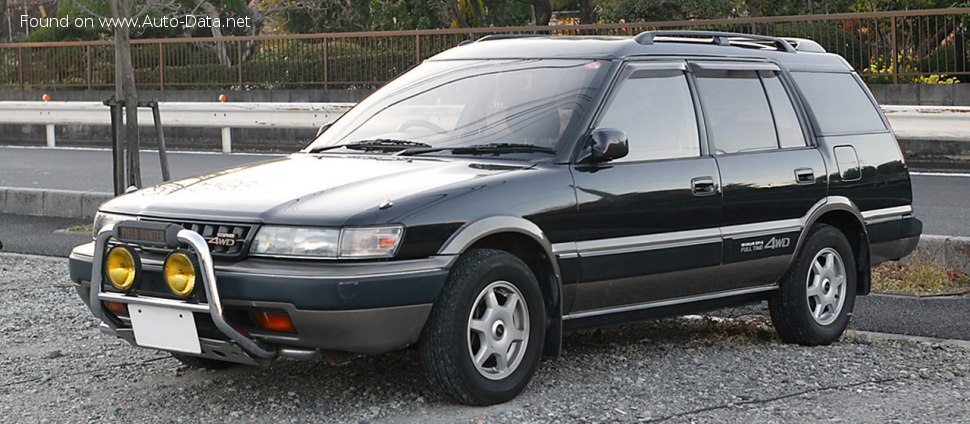
The Sprinter Carib’s body style is that of a traditional five-door station wagon (estate). Its design prioritized practicality and maximizing interior space. The exterior styling was conservative yet pleasant, reflecting the Japanese automotive aesthetic of the mid-1990s. The Carib trim level typically included features such as upgraded interior trim, power windows, and potentially air conditioning as standard or optional equipment. The spacious interior comfortably accommodated five passengers, and with the rear seats folded down, the Carib offered a substantial cargo area, making it ideal for families, outdoor enthusiasts, or anyone needing to transport larger items. Safety features for the era included ventilated disc brakes on the front wheels and disc brakes on the rear, providing adequate stopping power. The vehicle’s relatively compact dimensions made it easy to maneuver in urban environments, while its front-wheel-drive configuration offered good traction in various weather conditions. The 185/60 R14 tires mounted on 5.5J x 14 inch wheel rims provided a balance between ride comfort and handling.
Technical Specifications
| Brand | Toyota |
| Model | Sprinter |
| Generation | Sprinter Carib |
| Type (Engine) | 1.6i (165 Hp) |
| Start of production | 1995 |
| End of production | 2002 |
| Powertrain Architecture | Internal Combustion engine |
| Body type | Station wagon (estate) |
| Seats | 5 |
| Doors | 5 |
| Fuel Type | Petrol (Gasoline) |
| Power | 165 Hp @ 7800 rpm |
| Power per litre | 104.6 Hp/l |
| Torque | 162 Nm @ 5600 rpm / 119.49 lb.-ft. @ 5600 rpm |
| Engine Model/Code | 4A-GE |
| Engine displacement | 1578 cm3 / 96.3 cu. in. |
| Number of cylinders | 4 |
| Engine configuration | Inline |
| Number of valves per cylinder | 4 |
| Fuel injection system | Multi-port manifold injection |
| Engine aspiration | Naturally aspirated engine |
| Valvetrain | DOHC |
| Fuel tank capacity | 50 l / 13.21 US gal | 11 UK gal |
| Length | 4360 mm / 171.65 in. |
| Width | 1690 mm / 66.54 in. |
| Height | 1490 mm / 58.66 in. |
| Front track | 1460 mm / 57.48 in. |
| Rear (Back) track | 1440 mm / 56.69 in. |
| Drivetrain Architecture | The Internal combustion engine (ICE) drives the front wheels of the vehicle. |
| Drive wheel | Front wheel drive |
| Number of gears and type of gearbox | 5 gears, manual transmission |
| Front brakes | Ventilated discs |
| Rear brakes | Disc |
| Tires size | 185/60 R14 |
| Wheel rims size | 5.5J x 14 |
In conclusion, the Toyota Sprinter Carib 1.6i was a well-rounded and practical vehicle that offered a compelling combination of performance, efficiency, and versatility. While it may not have been a common sight on American roads, it played a significant role in the Japanese automotive market and remains a testament to Toyota’s commitment to building reliable and functional vehicles. Its 4A-GE engine, combined with its spacious interior and car-like handling, made it a popular choice for those seeking a sensible and enjoyable driving experience.