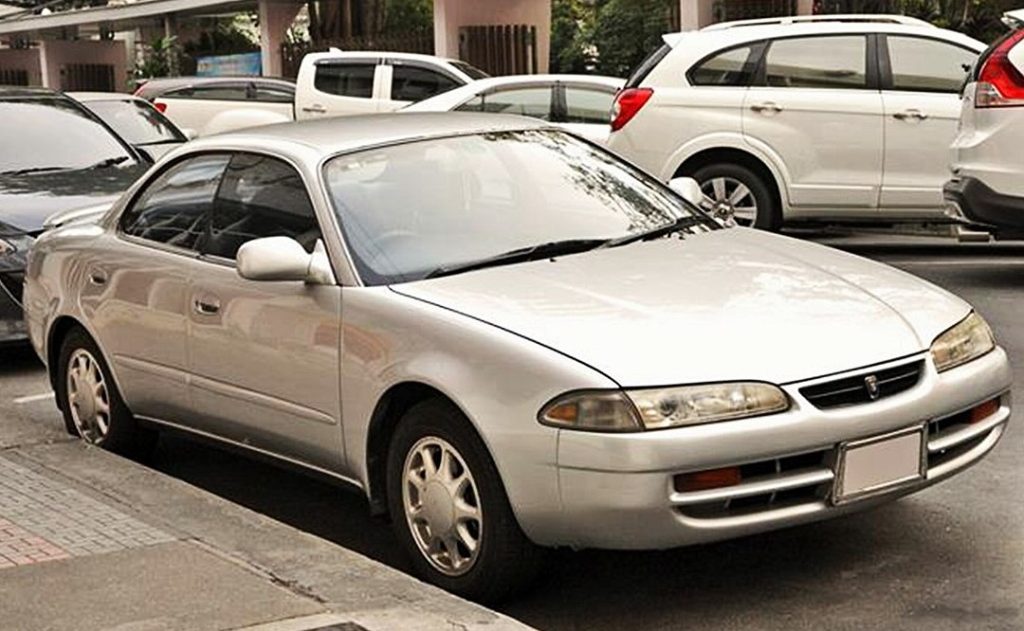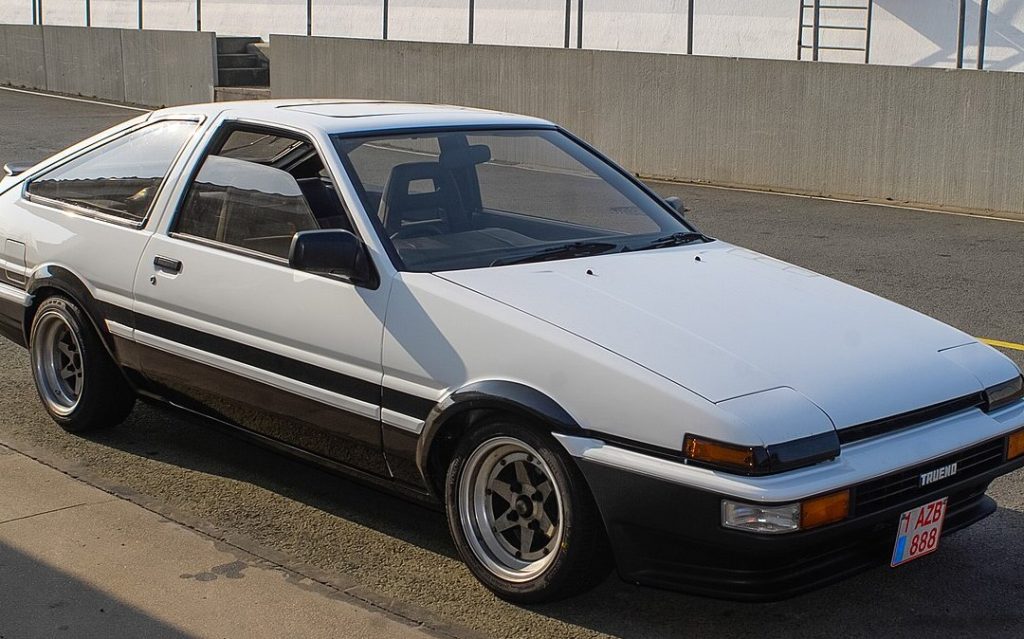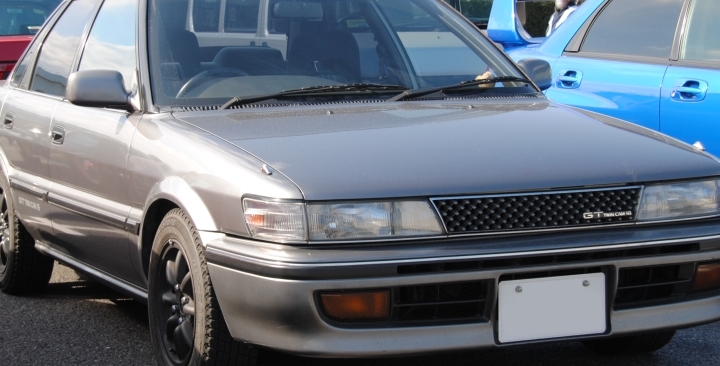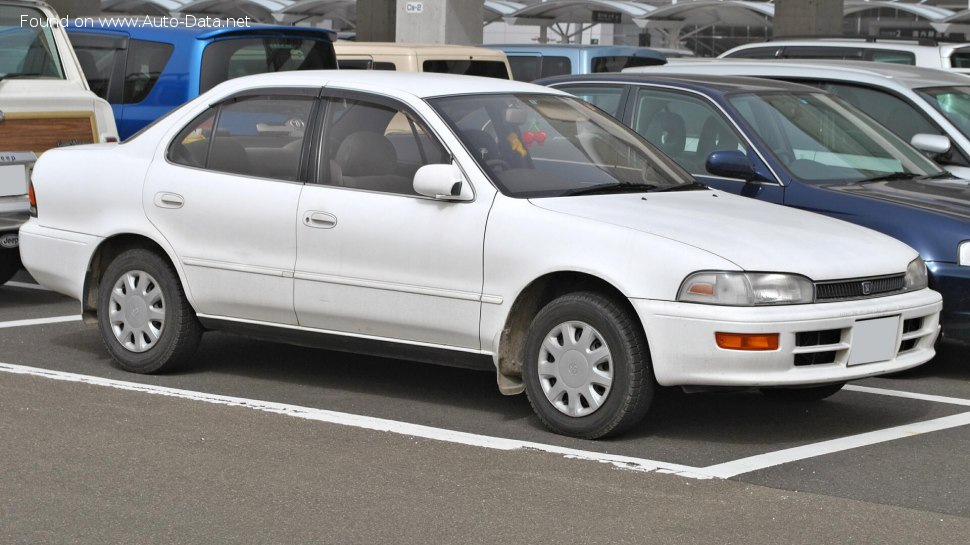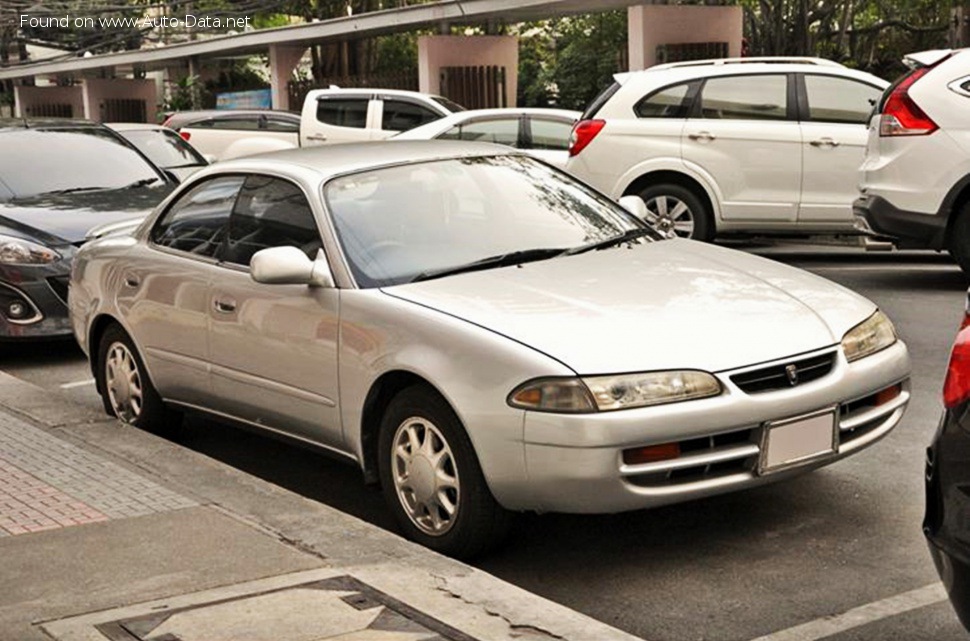
The Toyota Sprinter Marino, a distinctive offering from the Japanese domestic market (JDM), emerged in 1992 as a stylish and performance-oriented compact sedan. Representing a unique facet of Toyota’s extensive Sprinter lineage, the Marino variant was not merely another sedan but a “pillarless hardtop” designed to appeal to a younger, more style-conscious demographic. Positioned as a sportier, more upscale counterpart to the standard Corolla/Sprinter sedan, it shared its platform with the popular E100 series, but distinguished itself with a sleek, low-slung profile and frameless windows, creating an airy, open cabin when all windows were lowered. The {original_title} model, specifically, stood out for its potent 1.6-liter engine, offering an impressive blend of agility and spirited performance that made it a compelling choice in its home market throughout its production run from 1992 to 1997. While never officially imported to the United States, its engineering and design philosophies resonate with Toyota’s global reputation for reliability and performance.
Engine and Performance: The Heart of the Toyota Sprinter Marino 1.6i (165 Hp)
At the core of the Toyota Sprinter Marino 1.6i’s appeal was its remarkable powertrain, featuring the legendary 4A-GE engine. This particular iteration, producing 165 horsepower at a soaring 7800 rpm, was a testament to Toyota’s engineering prowess in extracting significant power from a naturally aspirated, relatively small displacement engine. With a specific output of 104.6 Hp per liter, it rivaled many sports cars of its era, showcasing a commitment to high-revving performance. The engine’s peak torque of 162 Nm (119.49 lb-ft) arrived at 5600 rpm, indicating a powerband that encouraged drivers to explore the upper reaches of the tachometer for maximum exhilaration. This characteristic high-revving nature, coupled with its DOHC (Double Overhead Camshaft) valvetrain and four valves per cylinder, ensured excellent breathing and efficiency across the rev range.
The 4A-GE engine, known for its robust construction and reliability, utilized a multi-port manifold injection system to precisely deliver fuel, optimizing combustion and response. Its naturally aspirated design meant a linear power delivery, free from the lag associated with turbochargers, providing a purer driving experience. Mated to a crisp 5-speed manual transmission, the Sprinter Marino 1.6i offered engaging control over its power delivery. The drivetrain architecture, with its internal combustion engine driving the front wheels, provided predictable handling dynamics, suitable for both spirited driving and daily commuting.
Weighing in at a svelte 1030 kg (2270.76 lbs), the Sprinter Marino 1.6i boasted an impressive power-to-weight ratio of 6.2 kg per horsepower, or 160.2 Hp per tonne. This lightweight construction, combined with the potent 4A-GE engine, translated into lively acceleration and responsive handling. The weight-to-torque ratio of 6.4 kg/Nm further underscored its sprightly character, ensuring that the car felt agile and eager to respond to driver inputs. For a compact sedan of its time, these figures placed the Sprinter Marino in a performance category often reserved for dedicated sports coupes or hot hatches, making it a “sleeper” in the Japanese market.
Design and Features of the Sprinter Marino
The design of the Toyota Sprinter Marino was a significant departure from its more conventional Sprinter siblings. Its most defining characteristic was the “pillarless hardtop” body style, a design trend popular in Japan during the late 1980s and early 1990s. This meant the absence of a B-pillar, allowing for a completely open side profile when both front and rear windows were lowered, creating an expansive and airy cabin feel. This design not only enhanced aesthetics but also contributed to a sense of freedom and sportiness, aligning with the car’s performance aspirations.
Measuring 4385 mm (172.64 inches) in length, 1695 mm (66.73 inches) in width, and 1315 mm (51.77 inches) in height, the Sprinter Marino was a compact vehicle, perfectly suited for Japan’s often crowded urban environments. Its wheelbase of 2465 mm (97.05 inches) contributed to its nimble handling and a tight minimum turning circle of 9.8 meters (32.15 feet), making it exceptionally maneuverable in city traffic and tight parking spaces. The front track of 1470 mm (57.87 inches) and rear track of 1460 mm (57.48 inches) provided a stable stance, further enhancing its dynamic capabilities.
The sedan body type offered seating for five occupants across four doors, blending practicality with its distinctive styling. While specific interior features are not detailed, typical JDM vehicles of this era would have included amenities such as air conditioning, power windows, and a decent audio system, all wrapped in an ergonomically designed cabin. The focus on a sporty yet comfortable environment was evident, aiming to provide an enjoyable experience for both driver and passengers. The car rode on 13-inch wheel rims, shod with 175/70 R13 tires, a common setup for compact cars of the period, balancing ride comfort with adequate grip for its intended performance.
In terms of safety and chassis components, the Sprinter Marino 1.6i was equipped with ventilated disc brakes at the front, offering robust stopping power, while the rear utilized drum brakes, a standard configuration for many compact cars of the 1990s. This braking setup was well-matched to the vehicle’s weight and performance capabilities. The suspension system, designed for a balance of comfort and sporty handling, further contributed to the car’s overall dynamic appeal. The Sprinter Marino represented a blend of Toyota’s traditional reliability with a flair for design and performance that made it a memorable, albeit exclusive, offering in the Japanese market.
Technical Specifications
| Brand | Toyota |
| Model | Sprinter |
| Generation | Sprinter Marino |
| Type (Engine) | 1.6i (165 Hp) |
| Start of production | 1992 year |
| End of production | 1997 year |
| Powertrain Architecture | Internal Combustion engine |
| Body type | Sedan |
| Seats | 5 |
| Doors | 4 |
| Fuel Type | Petrol (Gasoline) |
| Weight-to-power ratio | 6.2 kg/Hp, 160.2 Hp/tonne |
| Weight-to-torque ratio | 6.4 kg/Nm, 157.3 Nm/tonne |
| Power | 165 Hp @ 7800 rpm. |
| Power per litre | 104.6 Hp/l |
| Torque | 162 Nm @ 5600 rpm. (119.49 lb.-ft. @ 5600 rpm.) |
| Engine Model/Code | 4A-GE |
| Engine displacement | 1578 cm3 (96.3 cu. in.) |
| Number of cylinders | 4 |
| Engine configuration | Inline |
| Number of valves per cylinder | 4 |
| Fuel injection system | Multi-port manifold injection |
| Engine aspiration | Naturally aspirated engine |
| Valvetrain | DOHC |
| Kerb Weight | 1030 kg (2270.76 lbs.) |
| Fuel tank capacity | 50 l (13.21 US gal | 11 UK gal) |
| Length | 4385 mm (172.64 in.) |
| Width | 1695 mm (66.73 in.) |
| Height | 1315 mm (51.77 in.) |
| Wheelbase | 2465 mm (97.05 in.) |
| Front track | 1470 mm (57.87 in.) |
| Rear (Back) track | 1460 mm (57.48 in.) |
| Minimum turning circle (turning diameter) | 9.8 m (32.15 ft.) |
| Drivetrain Architecture | The Internal combustion engine (ICE) drives the front wheels of the vehicle. |
| Drive wheel | Front wheel drive |
| Number of gears and type of gearbox | 5 gears, manual transmission |
| Front brakes | Ventilated discs |
| Rear brakes | Drum |
| Tires size | 175/70 R13 |
| Wheel rims size | 13 |